











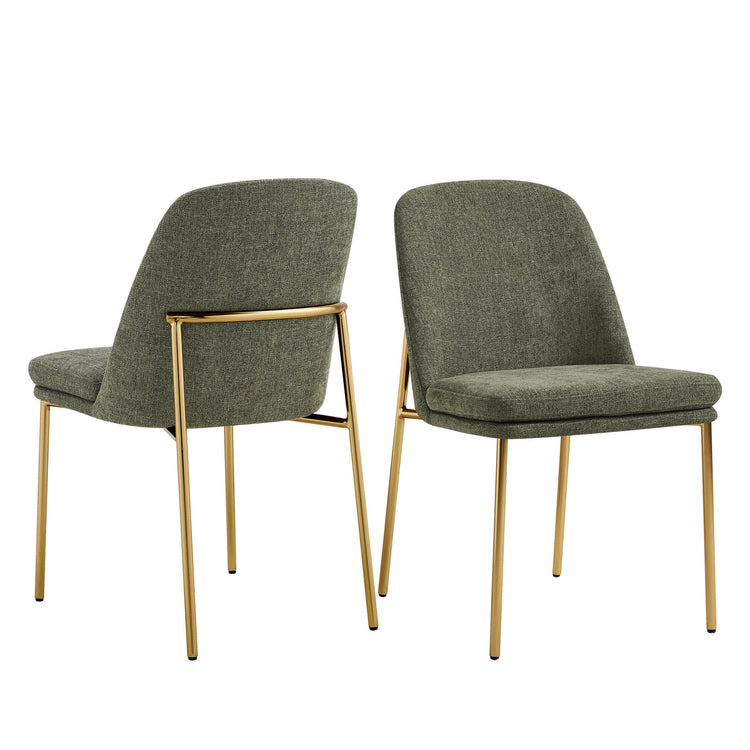
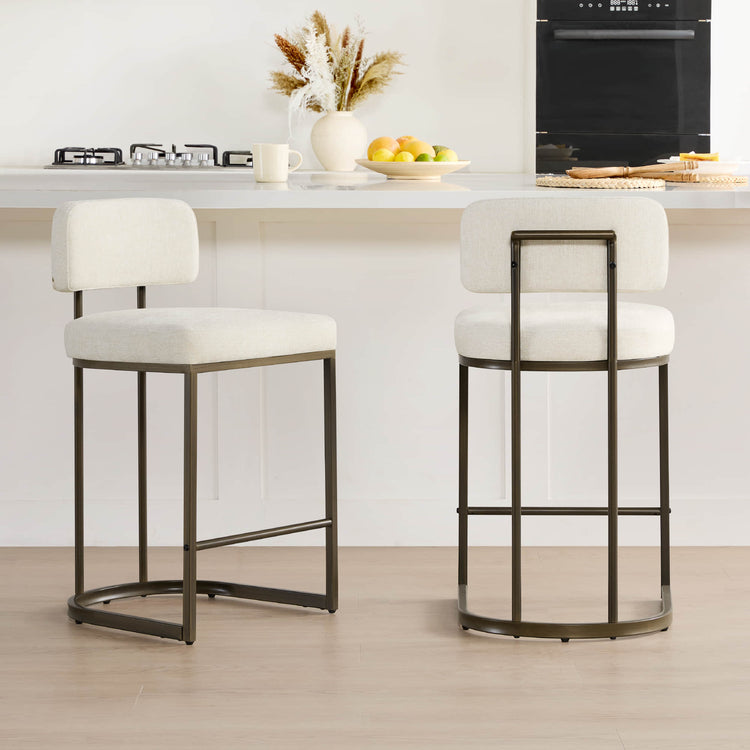


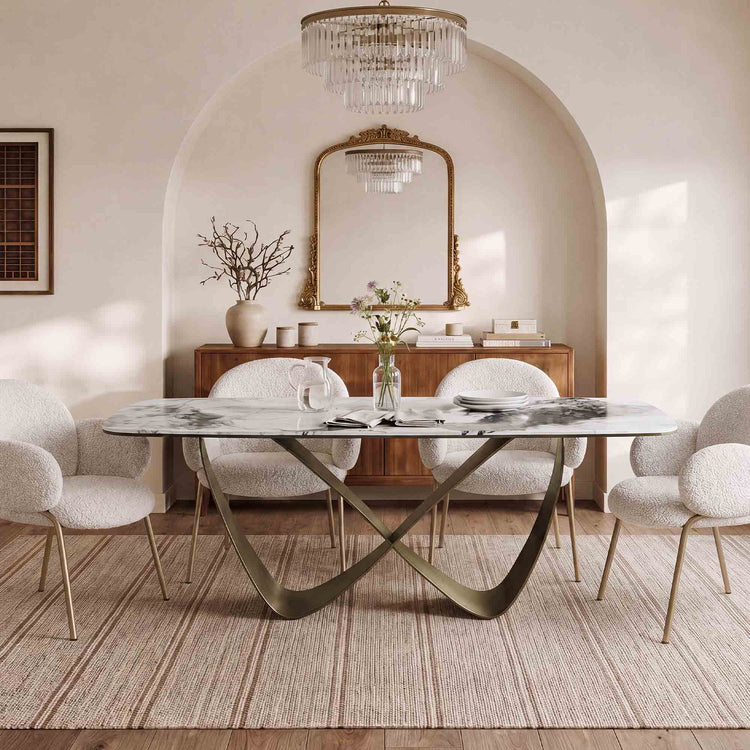
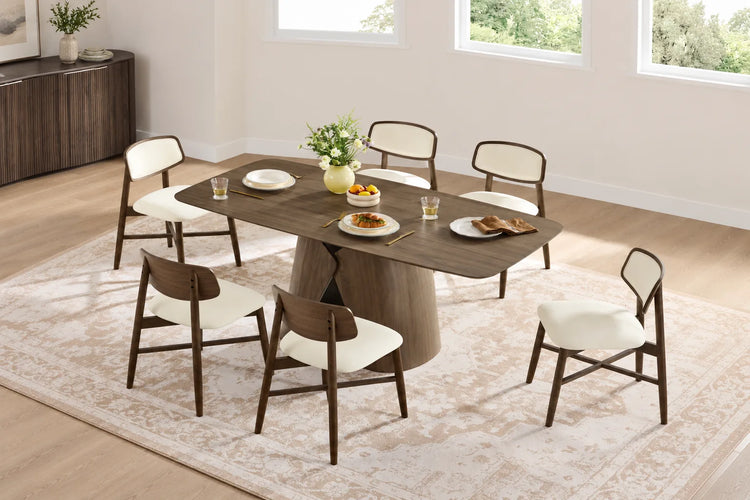












When choosing black dining chairs for a contemporary dining room, neither matte metal nor solid wood legs are automatically the more durable choice. The real durability difference comes down to the exact finish, the joint and fastener construction, and how the legs meet your floor, not the material label alone.

If your table sees daily family meals, prioritize verified finish care and structural evidence over a look. If you are furnishing a lower-frequency, design-led room, visual warmth or a streamlined profile can break the tie once those same construction facts check out.
Matte Metal vs. Solid Wood: Which Is the Better Durability Fit?
Matte metal and solid wood legs solve durability differently, and each still depends on details you have to verify yourself. Use this table to see what is typically known and what always needs confirmation from the product listing.
| Durability question | Matte metal legs | Solid wood legs |
|---|---|---|
| Surface evidence | Some powder-coating systems publish scratch and abrasion results, but only for that specific coating | Depends entirely on the applied finish; wood species alone does not rate scratch resistance |
| Care dependency | Cleaning method should match the coating maker's instructions | Cleaning and spill response must match the exact finish, whether varnish, oil, or lacquer |
| Joint evidence | Look for welded or bolted frame details and any chair-level test reference | Look for joint design, fastener type, and how the maker handles wood movement |
| Wobble evidence | Even leg geometry and floor-contact hardware matter regardless of frame material | Same geometry and floor-contact checks apply; wood does not fix an uneven base on its own |
| Best initial fit | Frequent use, if finish and frame evidence are documented | Frequent use or design-led rooms, if finish and joint evidence are documented |
The table shows the same pattern for both materials: real durability comes from documentation, not the leg's name. When a listing gives you finish, joint, and floor-contact facts for either option, you can compare them fairly. When it does not, the material choice alone will not protect you from scuffs or a wobbly chair.
Scratch Resistance and Finish Maintenance Are Finish Questions
Scratch resistance is a finish question, not a material question. Matte black can come from a powder coating on metal or a stain, paint, or oil finish on wood, and each behaves differently under daily wear.
Some interior-furniture powder-coating systems publish scratch and abrasion test results for pencil hardness and mar resistance, but those numbers belong to the specific formula tested, not to every matte black metal chair on the market. A trade group's note on powder coating for wood substrates frames a tough, scratch-resistant surface as a design goal for the coating category, which is useful context but not proof for an unlabeled chair.
Solid wood works the same way. Research from the USDA Forest Products Laboratory explains that wood finishes protect the surface and provide a cleanable surface, so the applied finish, not the wood species, does most of the protective work. Ask for the exact finish name, its care instructions, and any published test method before assuming black dining chairs with wood legs resist scratches better than metal ones, or the reverse.
Whichever finish you choose, use the maker's recommended cleaner and clean chairs safely so you do not strip a protective topcoat or dull a powder coat during routine spills and wipe-downs.
Joint Integrity: Look Past the Leg Material
Joint integrity depends on fastener choice and joint design, not on whether the leg is metal or wood. A documented chair-level structural standard is a stronger signal than a material label, as long as its scope actually covers dining seating.
Under material-neutral seating durability standards, ISO 7173 specifies test methods for the strength and durability of seating structures "without specific regard to end use, materials, design/construction or manufacturing process." A documented test reference matters more than whether the legs are metal or wood, provided the standard's scope fits dining seating rather than a different furniture category.
For wood-frame chairs, wood fastening and joint design affect structural stability because joint designs must account for how wood expands and contracts across the grain as moisture levels change. A joint that loosens months after purchase is often a sign the joint was not designed for that movement, not proof that solid wood is inherently unstable.
Before buying, check for these details in the listing or by asking the seller:
- Joint design: mortise-and-tenon, dowel, or welded and bolted connections built for repeated stress
- Fasteners: screws, bolts, or brackets sized and placed for the frame material
- Chair-level testing: a referenced standard, such as ANSI/BIFMA X5.4 or ISO 7173, with scope matching dining seating
- Use conditions: care guidance that accounts for humidity, spills, and everyday chair movement
Wobble Prevention Depends on Geometry, Floor Contact, and Assembly
A dining chair wobbles when its contact points do not sit evenly, not because of the leg material. Even a substantial-looking wood or metal leg can rock if the geometry or floor hardware is off.
Check leg geometry and floor-contact hardware, such as glides or leveling pads, in the product description before you buy. Assemble the chair exactly as directed, since a misaligned bracket or an under-tightened bolt can create rocking that has nothing to do with the leg material. After assembly, set the chair on your actual dining-room floor and check for rocking before regular use; this confirms fit on your floor, not long-term structural performance.
Choose by Dining Frequency and Aesthetic Priority
How often your table sees family meals should guide how much evidence you require before choosing a look. Use these two paths to decide.
Frequent Family Dining
For daily meals, spills, and repeated chair movement, prioritize documentation over appearance.
- Choose a chair with a clearly named finish and stated care instructions.
- Confirm joint, fastener, or frame-construction details, plus any chair-level test reference.
- Verify floor-contact hardware and assembly guidance before ordering.
Lower-Frequency, Design-Led Dining
For occasional use in a design-focused room, aesthetics can carry more weight once durability facts check out.
- Let solid wood's warmth or matte metal's clean lines guide the decision.
- Still confirm the exact finish and care instructions before buying.
- Treat a missing decision-critical fact as a reason to pause, not proof of a lesser chair.
The Product Facts to Verify Before Ordering
Before you order black dining chairs, confirm five specific facts instead of trusting a material label or a photo.
- Exact finish or coating name, plus its written care instructions.
- Joint, fastener, or frame-construction description, not just words like sturdy or durable.
- Any chair-level test reference and confirmation that its scope covers dining seating.
- Floor-contact hardware, such as glides or pads, listed in the specs.
- Assembly instructions clear enough to let you check for rocking once the chair is built.
If a listing cannot answer one of these questions to ask before ordering and that answer would change your decision, choose a better-documented chair or hold off on the order.
FAQs
Can a product photo tell me whether black dining chair legs will resist scratches?
No. A photo shows color and shape, not the coating or wood-finish system, sheen, or care requirements. Ask the seller for the exact finish name, its care instructions, and any published test method before assuming a matte black finish resists scratches.
What does chair-level durability testing tell me?
It tells you the chair's structure was evaluated against a stated test method, such as ISO 7173, within that standard's defined scope. It does not mean the chair is certified for every use, and it is not a promise that the chair will never wobble.
Why does the finish matter when the dining-chair legs are solid wood?
Because the applied finish, not the wood species, protects the surface and determines how easily you can clean it. Follow the exact finish's care instructions for spills, since a varnish, oil, and lacquer finish each respond differently to moisture and cleaning products.
Can floor pads stop a dining chair from wobbling?
Glides and leveling pads can correct uneven floor contact, but they do not fix a loose joint or a poorly assembled frame. If a chair still rocks after you have checked and adjusted the floor-contact hardware, the cause is likely the joint or assembly, not the floor.
Sources
- IFS Coatings. Furniture Coatings Guide.
- Powder Coating Institute. Powder Coating on Wood.
- USDA Forest Products Laboratory. Finishing Wood Research.
- BIFMA. Standards Descriptions.
- USDA Forest Products Laboratory. Wood Fastenings Chapter.
Recommended Products


More to Read
 7 Sofa Trends That Actually Improve Comfort in 2026
Upgrade your living room with furniture that supports your body. Here are 7 modern sofa features designed to maximize your daily comfort...
7 Sofa Trends That Actually Improve Comfort in 2026
Upgrade your living room with furniture that supports your body. Here are 7 modern sofa features designed to maximize your daily comfort...
 Mother's Day Gift Guide: Cozy and Stylish Furniture Picks for Modern Moms
Make Mother's Day more meaningful with furniture gifts that bring comfort, smart features, storage, and quiet luxury into her everyday routine.
Mother's Day Gift Guide: Cozy and Stylish Furniture Picks for Modern Moms
Make Mother's Day more meaningful with furniture gifts that bring comfort, smart features, storage, and quiet luxury into her everyday routine.
 Performance Fabric Reality Check: Does It Really Repel Pet Hair and Stains?
Performance fabric is often marketed as a miracle solution for homes with pets and kids, but the reality is more nuanced. It...
Performance Fabric Reality Check: Does It Really Repel Pet Hair and Stains?
Performance fabric is often marketed as a miracle solution for homes with pets and kids, but the reality is more nuanced. It...