






















How to Choose outdoor furniture for poolside lounging

Start with four filters before you compare styles: the primary poolside activity, the usable length and depth, the pattern of sun and splash exposure, and your tolerance for moving or storing cushions. That brief keeps outdoor furniture decisions tied to the actual deck instead of a product photo. Then compare the complete assembled grouping, component care instructions, comfort features, and retailer terms before you buy.

Measure Your Poolside Space and Classify Its Exposure Before Shopping
Write down your maximum usable length and depth after accounting for fixed features, access routes, doors, pool steps, equipment, and the space needed to clean around the furniture. Record whether the area is in full sun or partial shade, how often it receives water or chlorinated splashes, and whether cushions can be moved, dried, ventilated, or stored.
The usable footprint is the area your household can realistically furnish, not the entire deck. Compare that footprint with the complete assembled grouping, including tables, chairs, sofa arms, and any pieces that need to be pulled out for use. A single chair dimension cannot prove that a sofa-and-table arrangement will preserve access.

Use this one-line shopping brief before opening product pages: "For [primary activity], I have [maximum usable length] by [maximum usable depth], with [sun/shade and splash pattern], and [high/low] tolerance for cushion handling." Primary activities might include reclining, reading, conversation, drinks, or occasional dining. This brief screens candidates before appearance becomes the deciding factor.
A full-sun pool deck raises the importance of shade access and exact fabric and finish guidance. A frequently splashed area raises the importance of rinsing, drying, cleaner restrictions, and storage instructions. Neither exposure label proves that a product is chlorine-resistant or UV-resistant; those are finished-product claims to verify.
Choose a Layout That Preserves Circulation and Supports the Way You Lounge
Choose the layout from the primary activity in your shopping brief, then test the complete grouping against the routes your household actually uses. The right arrangement leaves pool, step, door, equipment, cleaning, shade, and cushion-movement access workable without relying on a universal clearance number.
For a Compact Pool Deck
Start with the fewest pieces that meet the main use. A single lounge chair or a small conversation arrangement may be more practical than a full sofa set when fixed features consume much of the footprint. Add a drink or towel surface only if it does not obstruct access, and favor pieces that can be moved for cleaning or stored when needed.
For Conversation and Entertaining
Face seats toward one another, but do not route normal traffic through the seating group. Keep drinks and towels within reach without placing a table where it blocks a door, step, or equipment route. A sofa or modular grouping makes sense only when its full assembled footprint preserves those routes, including the room needed to move cushions.
For Reclining and Reading
Orient lounge pieces toward the preferred view or shade access. Decide where towels, drinks, and cushions will go between uses before finalizing the placement. The arrangement should leave enough practical access to clean around the pieces and to move them or their cushions when the care instructions require it.
Compare Poolside Outdoor Furniture Frames, Finishes, Surfaces, Cushions, and Fabrics by Tradeoff
Compare each component separately. A wood or metal frame, a finish, a woven or hard surface, a cushion, and a fabric solve different problems. Terms such as outdoor, weather-resistant, or performance are screening clues only; they do not establish chlorine, UV, moisture, splash, or poolside suitability for the finished product.
| Component | Choice implication for poolside lounging | Tradeoff to weigh |
|---|---|---|
| Frame material | Changes the visual character, weight, feel, and maintenance questions of the seating | Ask how the exact frame is finished, cleaned, dried, and placed in the intended exposure |
| Finish | Affects the surface care routine and how the maker describes exposure limits | Do not treat a finish name as proof of UV or chlorine resistance; seek product-specific guidance |
| Surface construction | Woven, rope, slatted, mesh, or hard surfaces change ventilation, touch, debris handling, and cleaning access | Check gaps, edges, trapped debris, approved cleaners, and drying requirements for the finished piece |
| Cushion setup | Cushions can support longer lounging but add handling, drying, ventilation, and storage decisions | Compare cushion thickness, cover construction, removability, and care instructions with your routine |
| Fabric | Fiber, weave, finish, color, and cover construction affect the care questions to ask | Require exact fabric-line documentation for sun, water, chlorine, and cleaning claims; check finished-furniture warranty terms separately |
A material name cannot answer the poolside question by itself. For example, a named fabric line may publish specific chlorine or UV-related claims, while another outdoor upholstery label may not. The Sunbrella Marine Product Book is one example of the level of exact, line-specific documentation to seek; its claims should not be transferred to other fabrics or to CHITA products.
Treat comfort specifications as fit information, not performance proof. Seat depth, seat height, back height, arm height, and cushion construction help you compare how a piece may support the intended activity. They do not establish that the materials can handle full sun, chlorinated splashes, in-water placement, or a particular cleaning product.
Choose Comfort-First Cushions or a Simpler-Care Setup
Choose cushions when extended lounging is the priority and your household can follow the required moving, drying, ventilation, storage, and cleaning routine. Choose simpler-care seating when frequent splashes, quick resets, limited storage, or low handling tolerance matter more. In either case, the exact product instructions control the decision.
Choose Cushions for Longer Lounging
Cushions suit long reading sessions, conversation, and relaxing when there is a practical place to move them after splashes or cleaning. Check where they will dry, whether airflow is possible, whether storage is available, and which cleaners or washing methods the manufacturer permits. A comfort-first setup is not maintenance-free simply because it is labeled outdoor.
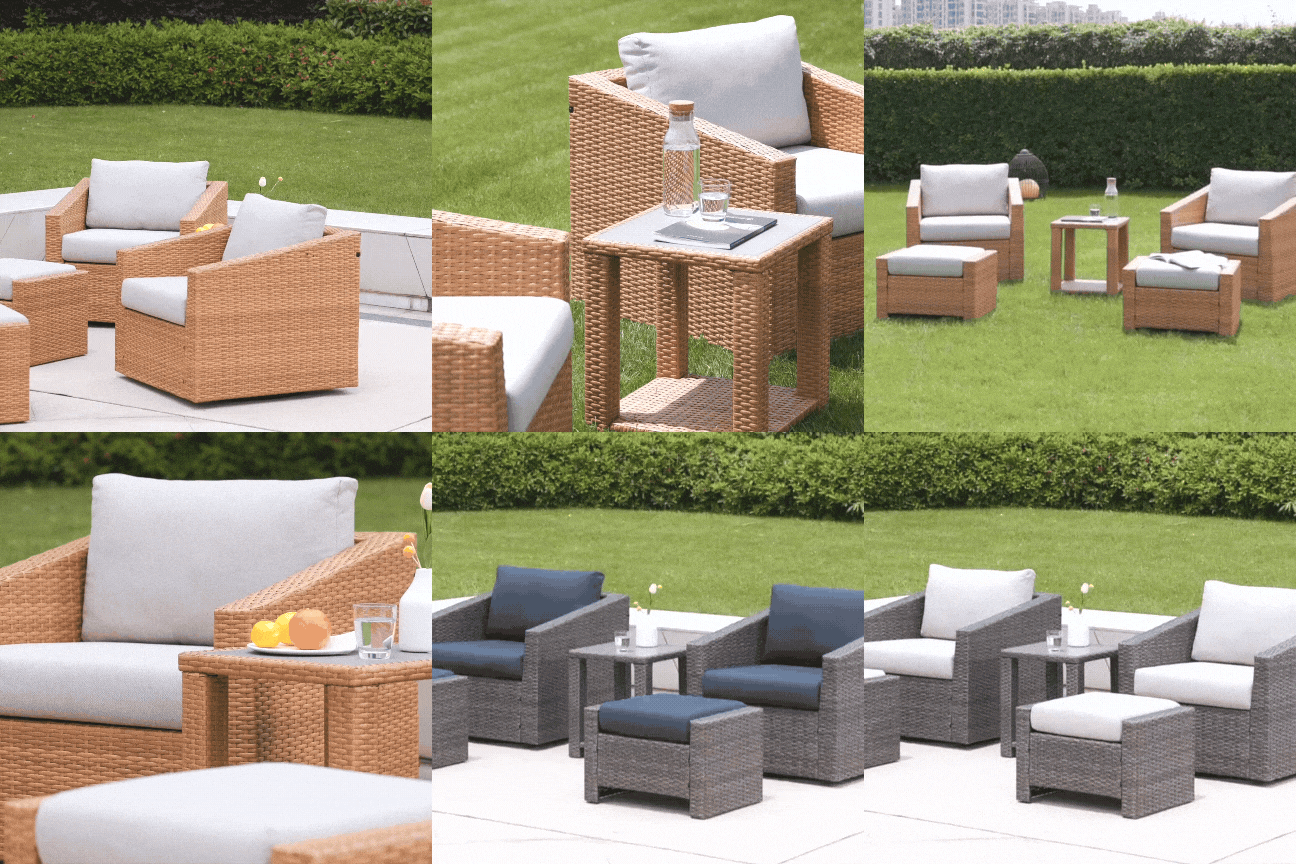
As a concrete specification example, the Clover sofa set lists an FSC-certified acacia frame, polypropylene rope, 100% Olefin fabric, high-resilience polyfoam with a polyester-fiber topping, loose reversible back cushions and arm pillows, and an over-7-inch sofa seat cushion. Its listing also includes 360-degree swivel chairs and a slatted coffee table. These are listed features for comparison, not proof of poolside, chlorine, UV, or in-water suitability.
For outdoor upholstery, a manufacturer may specify mild cleaning, thorough rinsing, and air-drying, while removable-cover washing can depend on the cushion construction and furniture maker's instructions. The documented upholstery cleaning and drying process is a Sunbrella example only, not a universal method for all outdoor fabrics.
Choose Simpler-Care Seating for Faster Resets
Simpler-care seating fits a poolside routine built around short breaks, frequent splashes, or fast resets. It can reduce cushion handling, but it still needs a suitable seat shape for the activity and a documented cleaning routine. Check whether the surface allows debris and water to clear as directed, and whether you can reach the surrounding area for cleaning.
Use the household routine as the deciding condition: if cushions will regularly remain wet because there is no drying or storage option, do not choose a cushioned arrangement solely for its appearance. If extended lounging is the main goal and the care routine is manageable, the added handling may be worthwhile.
Verify Performance, Care, Warranty, and Delivery Terms Before Checkout
Make documentation the final purchase gate. A product that fits on paper can still be a poor poolside choice if its exposure guidance, care routine, delivery access, warranty obligations, or return terms do not match the setting.
- Confirm the complete fit. Record the assembled dimensions, piece count, seat and table dimensions, weight, assembly status, and doorway or delivery access. Compare the full grouping with the usable footprint and actual routes, not with an isolated product dimension.
- Request an exposure statement. Look for explicit guidance covering full sun, moisture, water or chlorinated splashes, and the intended poolside placement. If the product page does not state how the finished piece is intended to be placed and cared for in that exposure, ask the retailer for that answer in writing. Outdoor or weather-resistant wording alone does not establish chlorine or UV resistance.
- Identify every component and care limit. Confirm the frame, finish, surface, cushion filling, fabric fiber, cover construction, approved cleaners, removable-cover rules, drying method, airflow needs, and storage instructions. NMSU's fabric-care guidance supports checking fiber content, construction, finishes, labels, and hang tags; use the furniture or fabric maker's own instructions for the actual routine.
- Set the maintenance expectation. Plan regular cleaning and periodic checks of nuts, bolts, and screws, following the maker's material-specific directions. Maintenance guidance on regular cleaning and hardware checks supports treating those tasks as recurring care; it does not establish compatibility with chlorinated water.
- Read the retailer terms. Confirm the current warranty coverage, maintenance obligations, shipping method, delivery appointment or access requirements, damage-reporting process, assembly terms, return window, and any return costs or exclusions. Use the retailer's current terms rather than relying on a general product-page summary.
- Make the documented decision. Buy when the complete footprint, exposure guidance, care routine, storage or drying plan, delivery access, warranty, and returns fit your actual setting. If one critical detail is missing, ask the retailer for the exact answer or choose a better-documented alternative rather than assuming compatibility.
For cushion-heavy setups, review the product's own drying and storage instructions first. A separate cushion moisture guide can provide additional context about airflow and drying, but it does not replace product-specific instructions.
The practical choice is simple: measure the usable poolside footprint, classify sun and splash exposure, select the layout that preserves real access, and then buy only the outdoor furniture whose component care and retailer terms are documented for your routine.
Frequently Asked Questions
Use these questions to resolve details that product photos and category labels do not show.
Which Outdoor Furniture Material Is Best for a Poolside Area?
There is no universal best material. If a listing names only a frame material, treat the comparison as incomplete: request the finish, surface, cushion, fabric, and care details before deciding.
Are Cushions a Good Idea for Poolside Outdoor Furniture?
Yes, when extended lounging matters and you have a workable plan to move, dry, ventilate, clean, or store them as directed. Before ordering, decide where the cushions will dry after a splash; if that location and routine are not workable, choose simpler-care seating.
How Can I Check Whether Outdoor Furniture Can Handle Chlorine Splashes?
Ask the retailer to identify the exact finished-product and fabric documentation covering placement, cleaning, material care, and warranty terms, and request that statement in writing. Keep it with the order details so the care routine is clear after purchase.
How Do I Measure Space for Furniture Around a Pool?
Measure the full grouping using assembled dimensions, then mark the routes to the pool, steps, doors, equipment, and cleaning areas. If the arrangement fits only when one of those routes is blocked, remove a piece or change its orientation rather than relying on an unmeasured clearance.
Recommended Products

More to Read
 7 Sofa Trends That Actually Improve Comfort in 2026
Upgrade your living room with furniture that supports your body. Here are 7 modern sofa features designed to maximize your daily comfort...
7 Sofa Trends That Actually Improve Comfort in 2026
Upgrade your living room with furniture that supports your body. Here are 7 modern sofa features designed to maximize your daily comfort...
 Mother's Day Gift Guide: Cozy and Stylish Furniture Picks for Modern Moms
Make Mother's Day more meaningful with furniture gifts that bring comfort, smart features, storage, and quiet luxury into her everyday routine.
Mother's Day Gift Guide: Cozy and Stylish Furniture Picks for Modern Moms
Make Mother's Day more meaningful with furniture gifts that bring comfort, smart features, storage, and quiet luxury into her everyday routine.
 Performance Fabric Reality Check: Does It Really Repel Pet Hair and Stains?
Performance fabric is often marketed as a miracle solution for homes with pets and kids, but the reality is more nuanced. It...
Performance Fabric Reality Check: Does It Really Repel Pet Hair and Stains?
Performance fabric is often marketed as a miracle solution for homes with pets and kids, but the reality is more nuanced. It...