



































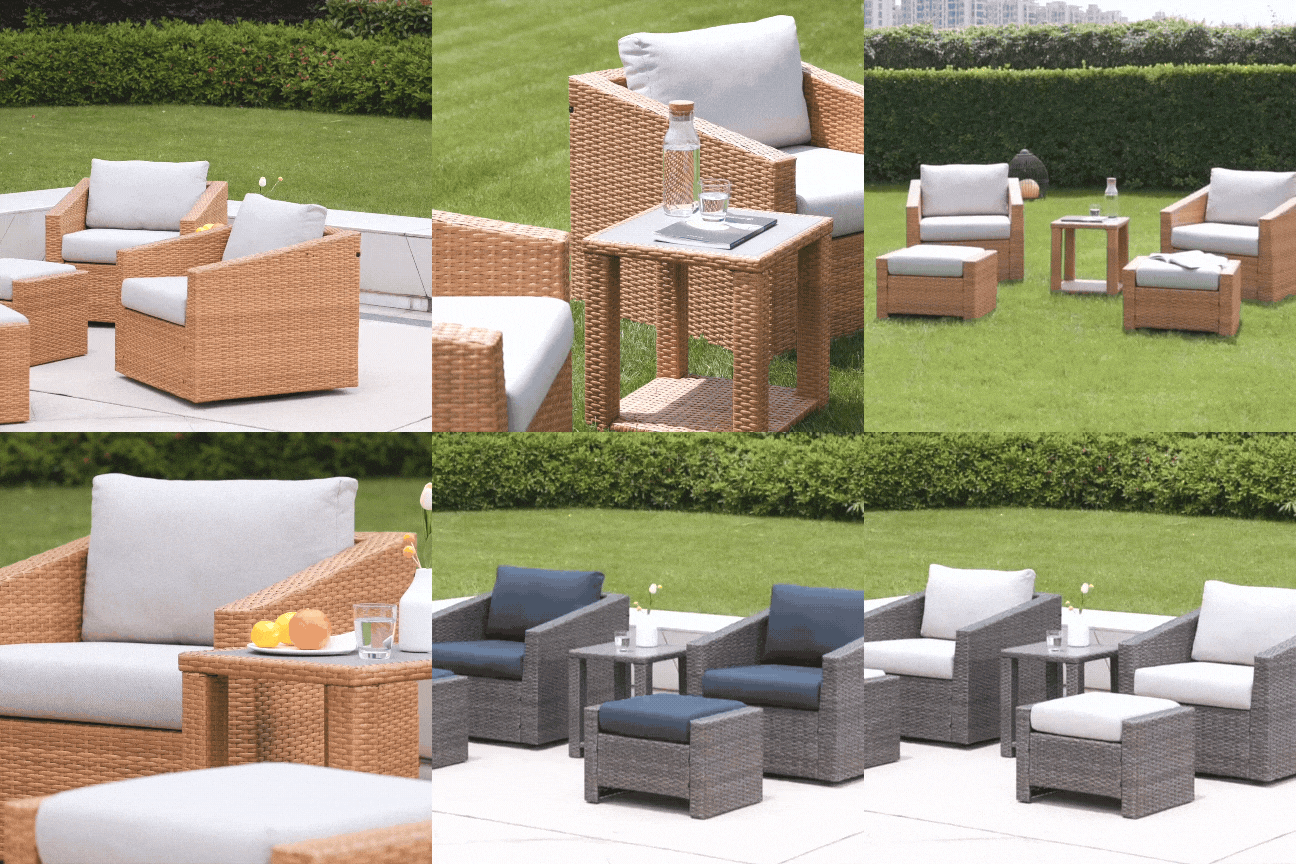







Start by treating unidentified wicker as unverified: read the furniture maker’s care instructions, remove the cushions, lift off dry debris with a soft tool, and use only the mildest approved cleaning method. Rinse only when the instructions allow it, prevent water from pooling, and let the weave, frame, and cushions dry completely before you reset, cover, or store the furniture. This is the core of how to clean wicker outdoor furniture without turning routine care into an avoidable material problem.
How to Clean Wicker Outdoor Furniture: Start With This Gentle Routine
The safest first routine for outdoor furniture is a five-step progression from dry cleaning to conditional light cleaning, followed by complete drying. Stop before introducing moisture or cleaner if the material, finish, or care instructions are unclear.
- Identify and inspect the furniture. Look for a care label or manual and determine whether the weave is natural, synthetic, or resin-based. If you cannot confirm the material, treat it as unverified. Remove cushions and inspect the weave, frame, hardware, and cushion fabric for visible damage before cleaning.
- Remove loose debris while dry. Use a soft brush, cloth, or vacuum brush attachment on the lowest suction setting. Lift away pollen, dust, leaves, and grit before adding moisture. Avoid stiff bristles and abrasive tools that can disturb the weave or finish.
- Clean lightly only when approved. For heavier everyday dirt, use a lightly dampened cloth and mild soap only if the maker permits that method for the identified surface. Work gently rather than scrubbing aggressively, and test any unfamiliar method in an inconspicuous area first.
- Rinse only when the instructions permit it. Use the approved rinse method and keep water from pooling or saturating the weave. If the maker does not clearly approve rinsing, stop after the permitted light-cleaning step instead of assuming plain water is safe.
- Dry every component completely. Leave the weave and frame ventilated, and follow the cushion and fabric instructions separately. Compatible performance upholstery may require an approved mild-soap method, thorough rinsing, and air drying, but those directions do not automatically apply to every cushion; separate cushion care from wicker care. Do not replace cushions, cover the set, or store it while any relevant component remains damp.
Choose the Cleaning Approach for Natural or Synthetic Wicker
Material identification changes how conservative your cleaning approach should be. Natural wicker generally calls for less moisture and less scrubbing, while synthetic or resin wicker still depends on the specific product’s material, finish, and maker instructions.
Wicker Cleaning Decision Path
Qualitative action matrix, not a cleaning specification. 0 = dry removal; 1 = approved light cleaning; 3 = dry, verify maker instructions, and stop before escalation. Rinse, cleaners, pressure, prolonged water, covers, and storage remain maker-dependent; test unfamiliar methods in an inconspicuous area.
View chart data
| Scenario | Loose debris | Ordinary dirt | Fresh spill | Mildew-like buildup |
|---|---|---|---|---|
| Identified natural | 0.0 | 1.0 | 1.0 | 3.0 |
| Identified synthetic/resin | 0.0 | 1.0 | 1.0 | 3.0 |
| Material unverified | 0.0 | 3.0 | 3.0 | 3.0 |
If the Wicker Is Natural
Natural or plant-based wicker deserves the more conservative moisture path. Use the least-wet method allowed by the maker’s instructions, prioritize thorough drying, and avoid aggressive scrubbing, saturation, and water pooling. A natural-looking appearance is not proof of material identity, so do not assign an unlabeled weave to this category.
Test an unfamiliar method in a hidden area before treating the visible surface. Stop if the test causes color transfer, softening, fraying, lifting, or a change in texture or finish. If the material cannot be confirmed, return to dry debris removal and the maker’s instructions rather than guessing.
If the Wicker Is Synthetic or Resin
Synthetic or resin wicker may have different approved cleaning methods, but the label alone does not authorize pressure washing, abrasive tools, solvents, or prolonged soaking. Check the instructions for the resin or PE rattan, finish, frame, cushions, and hardware before changing the method.
Begin with soft-tool debris removal and mild approved surface cleaning. If the product instructions do not address rinsing or stronger treatment, use the least-wet known method and stop. This bounded approach is the practical basis of synthetic wicker care when products do not share the same finish or construction.
Handle Pollen, Spills, and Mildew-Like Buildup in Order
Common outdoor residue should be handled in order of least risk, not by immediately reaching for a stronger cleaner. Dry pollen comes first, fresh spills next, and mildew-like buildup requires drying and verification before escalation.
- Dry pollen and dust: Remove the residue with a soft brush, cloth, or low-suction attachment before wet cleaning. Adding water too soon can turn loose material into residue that is harder to lift from the weave.
- Fresh food or drink spills: Blot or address the spill promptly with the mildest method approved for that surface or compatible cushion fabric. Keep cushions separate from the woven frame. Fabric-specific instructions, including those for Sunbrella upholstery, should not be transferred to cushions with an unknown fabric or construction.
- Mildew-like spots or odor: Improve airflow and let the affected components dry fully before considering any specialty treatment. Do not assume the appearance identifies the cause, promise complete removal, mix cleaners, or increase chemical strength, pressure, or soaking without maker approval.
For residue that does not respond safely to the basic method, stop and verify the material and instructions. If cushion moisture and debris are the main concern, our guide to moisture and debris in cushions offers a relevant follow-up without changing the wicker-care boundary.
Verify the Furniture Maker’s Instructions Before You Escalate
Use one stop-and-check rule for every uncertain change: confirm the care label or manual, identified material, finish, and component before using a stronger cleaner, more water, pressure, a cover, or a storage method. Product-specific instructions outrank general cleaning advice.
Check whether the woven surface, frame, hardware, and cushions have separate requirements. A cushion’s fabric instructions may limit washing or treatment even when the frame has a different approved method. Likewise, a finish may change what is appropriate for an otherwise similar-looking weave.
Test an unfamiliar method in an inconspicuous area first. Stop immediately if you see color transfer, softening, fraying, lifting, corrosion, spotting, pooling, or a finish change. If the method is not clearly approved for the identified material and component, do not escalate; use the least aggressive known method or contact the furniture maker.
This boundary also applies to pressure washing, solvents, prolonged soaking, specialty mildew treatments, covers, and off-season storage. Do not treat a general wicker patio furniture care tip as permission to override the product’s own instructions.
Protect Wicker Outdoor Furniture Through Weather and Off-Season Storage
Drying and airflow are the main prevention decisions between cleanings. After cleaning or rain, keep the weave, frame, and cushions ventilated, use shade when appropriate for the drying setup, and delay covering or storage until every relevant component is fully dry.
Humid or rainy conditions make hidden and low-airflow areas worth closer inspection before you reset cushions or seal the furniture under a cover. High-sun exposure calls for the maker’s approved placement and cover guidance, not an invented schedule or universal UV-treatment claim. Covers and storage arrangements are product-specific, so verify them before use.
Before off-season storage, clean the furniture as directed, separate cushions according to their own instructions, dry everything completely, and choose an arrangement that follows the maker’s guidance for ventilation and protection. If any part remains damp, delay storage and keep the components ventilated.
For readers comparing materials while shopping, the Liana sofa details identify a handwoven all-weather resin wicker or PE rattan surface, a powder-coated steel frame, reversible cushions, and water-resistant 100% Olefin fabric. Those supplied details are navigation information, not proof of a particular cleaning, cover, storage, warranty, or durability method.
The practical next action is simple: identify the material, remove dry debris, use the mildest approved method, dry completely, and verify before any escalation, covering, or storage decision.
Frequently Asked Questions About Cleaning Wicker Outdoor Furniture
These quick answers apply the same material and drying boundaries used above, with the condition that product-specific instructions control whenever the material or component is uncertain.
What is the safest cleaner for wicker outdoor furniture?
There is no universal cleaner for every weave and finish. Choose the mildest method allowed by the maker’s instructions, test an unfamiliar product in a hidden area, and stop if the surface changes.
Can natural wicker and synthetic wicker be cleaned the same way?
No. Natural wicker generally needs a more conservative moisture and scrubbing approach. Synthetic or resin wicker may allow different approved methods, but you still need the identified product’s instructions before rinsing or escalating.
How should I clean pollen or mildew-like buildup from outdoor wicker furniture?
Remove loose pollen while dry. For mildew-like spots or odor, improve airflow and dry the area fully first, then verify the material and instructions before considering any specialty treatment. Do not mix cleaners or promise complete removal.
Can I cover wicker outdoor furniture right after cleaning?
No. Wait until the weave, frame, and cushions are fully dry. Use a cover or storage method only when the maker’s guidance supports it without trapping moisture, especially after rain or in humid conditions.
Recommended Products


More to Read
 7 Sofa Trends That Actually Improve Comfort in 2026
Upgrade your living room with furniture that supports your body. Here are 7 modern sofa features designed to maximize your daily comfort...
7 Sofa Trends That Actually Improve Comfort in 2026
Upgrade your living room with furniture that supports your body. Here are 7 modern sofa features designed to maximize your daily comfort...
 Mother's Day Gift Guide: Cozy and Stylish Furniture Picks for Modern Moms
Make Mother's Day more meaningful with furniture gifts that bring comfort, smart features, storage, and quiet luxury into her everyday routine.
Mother's Day Gift Guide: Cozy and Stylish Furniture Picks for Modern Moms
Make Mother's Day more meaningful with furniture gifts that bring comfort, smart features, storage, and quiet luxury into her everyday routine.
 Performance Fabric Reality Check: Does It Really Repel Pet Hair and Stains?
Performance fabric is often marketed as a miracle solution for homes with pets and kids, but the reality is more nuanced. It...
Performance Fabric Reality Check: Does It Really Repel Pet Hair and Stains?
Performance fabric is often marketed as a miracle solution for homes with pets and kids, but the reality is more nuanced. It...