






















Coffee Tables Mistakes to Avoid in work-from-couch

The biggest work-from-couch mistakes with a coffee table are choosing based on appearance, skipping the seated laptop-reach test, ignoring legroom and traffic flow, and expecting storage or attractive materials to compensate for a poor fit. This surface can support occasional laptop use when the setup is reachable, stable, easy to clear, and compatible with the room. If work is frequent or extended and repeatedly feels awkward, use a more dedicated surface.

Check Coffee Table Height and Reach Before You Shop
The first check is your seated laptop position—not how the table looks beside the sofa. Measure your sofa seat height, sit in your normal position, and place a laptop-sized object at the proposed table edge with the hand and notebook space you actually need.
Make sure you can reach the keyboard without repeatedly perching on the sofa edge or leaning farther than feels practical. OSHA identifies extended keyboard reaching and raised shoulders as warning signs of awkward posture in its guidance on awkward keyboard reach and raised shoulders. This is a practical fit warning, not a coffee-table-specific height rule or a medical conclusion.
For occasional laptop sessions, keep the table in consideration only when the tested reach, legroom, and comfort work in the actual room. For frequent or extended work, recurring awkward reach or limited position changes are reasons to consider a more dedicated or adjustable work surface. Don’t let a product photo decide the issue: test the complete work-from-couch setup while seated.
Map Sofa Clearance Before the Table Blocks Daily Movement
A table can fit its nominal floor footprint and still fail the room. Keep it only if your legs, feet, standing path, walking route, doors, and transitions between work and relaxation remain usable.
Use this short room test before buying:
- Tape the proposed footprint on the floor, or simulate it with boxes.
- Mark the main walking route and any path to doors or other seating.
- Sit with the laptop in its intended position and test legroom and foot placement.
- Stand, walk past the sofa, and carry a drink through the room.
- Repeat the movement check under the household’s real conditions, including children, pets, and transitions between work, relaxing, and entertaining.
- Reject, resize, reshape, or reposition the table if it disrupts ordinary movement.
Don’t treat a retailer’s sofa-spacing heuristic as a universal safety or ergonomic requirement. Your taped footprint and actual movement are the deciding evidence. Use the result to determine whether to reject, resize, reshape, or reposition the piece.
Choose the Smallest Table Surface That Fits Work and Living
Choose the smallest footprint that holds the items you genuinely use while keeping the room functional for drinks, conversation, entertaining, and relaxation. Count the laptop, reachable hand space, and only the drink, notebook, or other essentials that must stay nearby.
| Intended use | Mistake to avoid | Practical selection check |
|---|---|---|
| Occasional laptop only | Buying extra surface that dominates the room | Confirm the laptop’s usable position and preserve open circulation |
| Laptop plus drink or notebook | Treating decorative corners or inaccessible areas as workspace | Test the actual edge and corners with every essential item in place |
| Small, high-traffic room | Choosing a footprint that crowds routes for the sake of surface area | Compare a slimmer or differently shaped piece with the taped traffic path |
| Entertaining-first room | Leaving work equipment permanently on the main shared surface | Choose a surface that clears quickly, or use a separate work surface |
Shape is a fit decision, not a style guarantee. A different shape may align better with the sofa or preserve movement, while a smaller piece may be the better answer when the work essentials don’t justify the lost floor space. If no shape can hold the essentials without crowding the room, stop treating the living-room surface as the workspace.
Inspect Stability and Construction Instead of Judging the Look
Screen the table for visible steadiness and complete, relevant listing information before comparing finishes. A piece that wobbles under ordinary hand contact or leaves important construction details unanswered deserves a pause or rejection, regardless of its appearance.
If you can inspect it in person, place a laptop-sized load on the surface and apply ordinary hand contact near the edge. Look for movement, an insecure-looking base or leg connection, and clearly stated assembly details. In the listing, look for materials, base or leg attachment information, assembly or joinery details, and stated capacity when provided. These are inspection inputs, not proof of performance in every household.
Don’t rank solid wood, veneer, stone, or another category as universally more durable. Listings may state materials and capacity, but they don’t provide independent durability testing or prove laptop suitability. The practical purchase standard is visible steadiness plus enough documented information to compare the piece with your actual use.
Match the Material and Care Routine to Everyday Use
A material fits the household only when its care requirements match what people can reliably do every day. Appearance alone doesn’t tell you whether a finish suits drinks, food, pets, children, heat, dust, fingerprints, or the cleaning products already used in the home.
Before buying, list the routine the table will face. Then read the current model-specific care instructions for moisture, heat, abrasives, and spill handling. If those requirements conflict with dependable household habits, choose another finish or change the routine before committing. Don’t assume that a material is scratch-resistant, stain-resistant, heat-resistant, or low-maintenance without direct product evidence.
Match documented care demands to real habits rather than trying to rank material categories. If the listing doesn’t answer a care question that could change your decision, pause and obtain the current instructions.
Use Storage to Clear the Work Surface, Not Hide a Bad Fit
Storage reduces clutter only when it’s reachable from the sofa, sized for the household’s actual items, compatible with a clear laptop area, and arranged so cables don’t cross walking paths. It can’t fix poor height, reach, clearance, or stability.
List what needs a home, such as remotes, chargers, papers, and small living-room essentials. Check whether the compartments can be reached from the sofa and whether the work surface can be reset after a session. Concealed storage isn’t evidence that a compartment fits a particular laptop, charger, or cable arrangement.

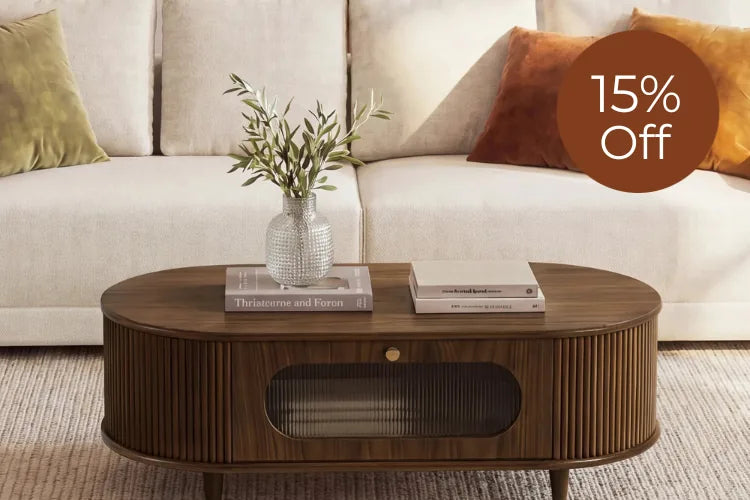
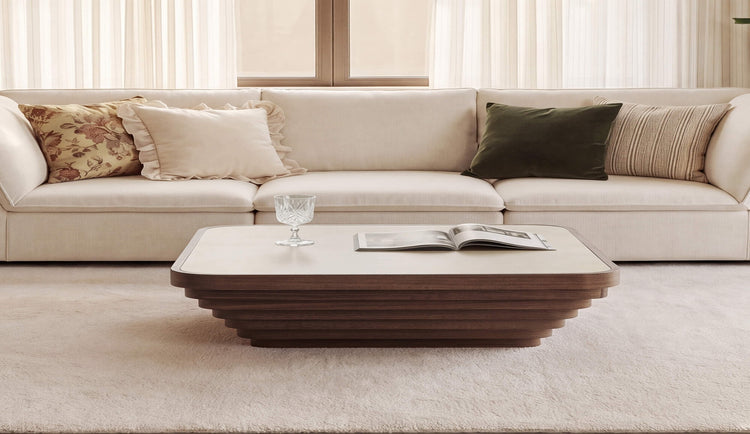
The Ari modular storage format is listed with one drawer and two sliding panels. Its listed overall dimensions are 39.37 inches wide by 39.37 inches deep by 10.01 inches high, and its stated weight capacity is 220 pounds. These are current listing facts for comparison, not proof of ergonomic suitability, stability in every use, or durability.
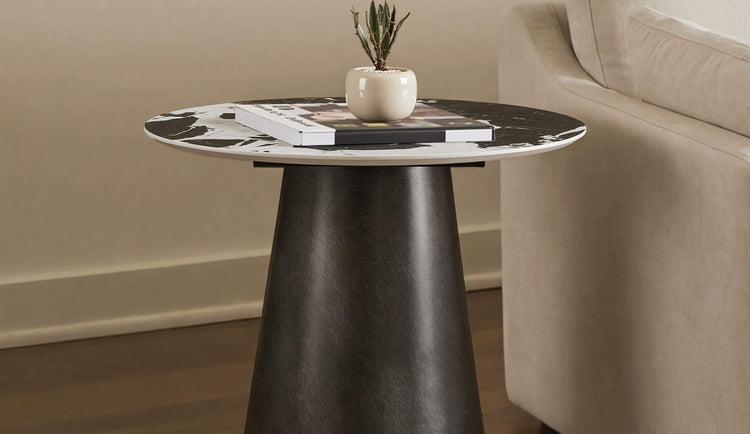
The Vanessa hidden-drawer format is listed at 35.43 inches wide by 35.43 inches deep by 12.99 inches high, with dual concealed drawers and rounded edges. The listing also states a 220-pound capacity and fully assembled construction. Use those details to compare the footprint and storage format with your room, not to assume that a round shape or hidden drawers solves work-from-couch fit.
Choose Between Occasional Work and a Dedicated Setup
Keep this option in consideration for occasional laptop work only when the tested seated position, legroom, movement, stability, usable surface, and reset routine all work. Choose a more dedicated setup when frequent or extended use repeatedly exposes awkward reach, limited position changes, cramped movement, insufficient surface, or equipment that must remain out.
The choice is about the whole room, not a session-time cutoff. A temporary setup can be reasonable when it clears quickly and supports both work and relaxation. A dedicated setup is the better choice when the piece is repeatedly asked to behave like a desk but can’t provide a workable position or easy reset. The OSHA monitor guidance supports evaluating the complete temporary arrangement and considering a more adjustable work surface when awkward posture persists; it doesn’t establish a coffee-table threshold.
For occasional use, the deciding pattern is a short, resettable session in which the tested position and room movement remain workable. For frequent or extended use, persistent awkwardness, limited position changes, cramped movement, or equipment that stays out are reasons to favor a dedicated setup. These are qualitative choice conditions, not scores or a ranking.
Before checkout, tape the footprint, test seated reach, and write down what must fit on or in the table. Compare those results with the current listing’s dimensions, materials, care instructions, construction details, stated use guidance, shipping, returns, and warranty terms when provided. If a fit-changing detail remains unanswered, pause or choose a better-documented option rather than assuming the piece will work.
Frequently Asked Questions
These questions focus on feature priorities and shape choices that can change how the room functions.
Which coffee table features matter most when the setup must reset quickly?
Prioritize a usable laptop area first, then storage that is reachable and sized for the items that need a home. A feature matters only if it helps clear the surface without blocking movement or forcing a cable across a walking path.
Can concealed storage replace a separate work surface?
No. Storage can reduce clutter and make a session easier to reset, but it can’t correct an awkward seated position, blocked movement, insufficient usable surface, or visible wobble.
Does a round shape help in a high-traffic room?
It can be considered when the taped footprint, usable edge, sofa alignment, and surrounding movement all work. The shape alone isn’t proof that the room will remain easy to navigate.
What should I compare on the product listing before checkout?
Compare the listed dimensions and materials with your measurements, then read the current care instructions, construction details, stated use guidance, and any shipping, return, or warranty terms provided. Stop when an unanswered detail could change the fit decision.
Recommended Products



More to Read
 7 Sofa Trends That Actually Improve Comfort in 2026
Upgrade your living room with furniture that supports your body. Here are 7 modern sofa features designed to maximize your daily comfort...
7 Sofa Trends That Actually Improve Comfort in 2026
Upgrade your living room with furniture that supports your body. Here are 7 modern sofa features designed to maximize your daily comfort...
 Mother's Day Gift Guide: Cozy and Stylish Furniture Picks for Modern Moms
Make Mother's Day more meaningful with furniture gifts that bring comfort, smart features, storage, and quiet luxury into her everyday routine.
Mother's Day Gift Guide: Cozy and Stylish Furniture Picks for Modern Moms
Make Mother's Day more meaningful with furniture gifts that bring comfort, smart features, storage, and quiet luxury into her everyday routine.
 Performance Fabric Reality Check: Does It Really Repel Pet Hair and Stains?
Performance fabric is often marketed as a miracle solution for homes with pets and kids, but the reality is more nuanced. It...
Performance Fabric Reality Check: Does It Really Repel Pet Hair and Stains?
Performance fabric is often marketed as a miracle solution for homes with pets and kids, but the reality is more nuanced. It...