
































The 2026 Guide to Contract-Grade Home Furniture: Why Industrial Specs are the New Luxury

What Does Contract Grade Mean for Home Furniture?
Contract grade refers to furniture engineered and tested to meet BIFMA (Business and Institutional Furniture Manufacturers Association) standards for safety, durability, and structural performance in high-traffic commercial environments. According to the BIFMA Standards Overview, these requirements are defined through rigorous mechanical testing—such as load-bearing cycles and stability checks—rather than aesthetics alone.
For homeowners, the "Industrial Arbitrage" strategy involves a shift in perspective: investing in commercial-specification pieces to enjoy a residential service life that, depending on maintenance and usage intensity, can span 15–25 years. This contrasts with the typical 5–7 year cycle often seen with entry-level residential furniture. This approach is designed to mitigate common failure points like sagging cushions, wobbly joints, and premature fabric pilling.
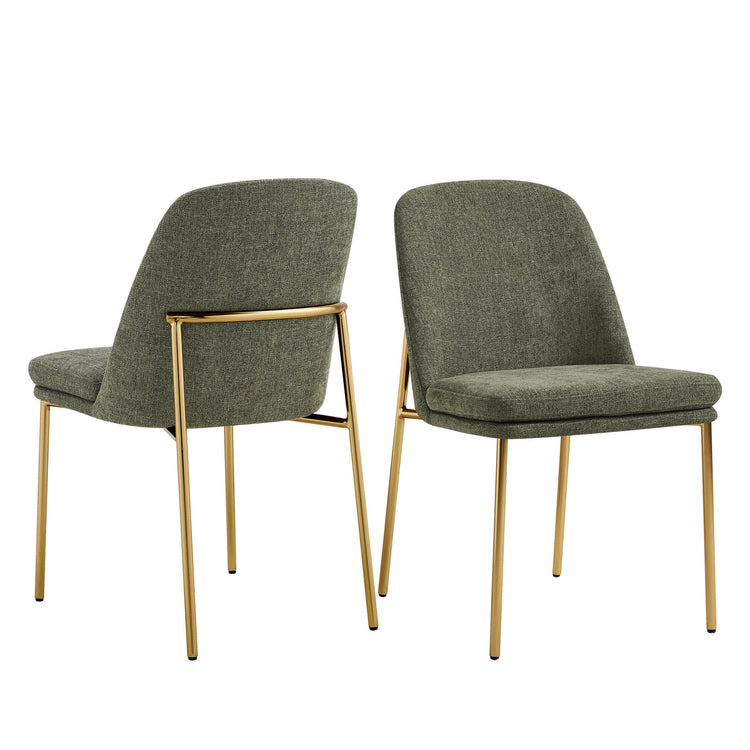
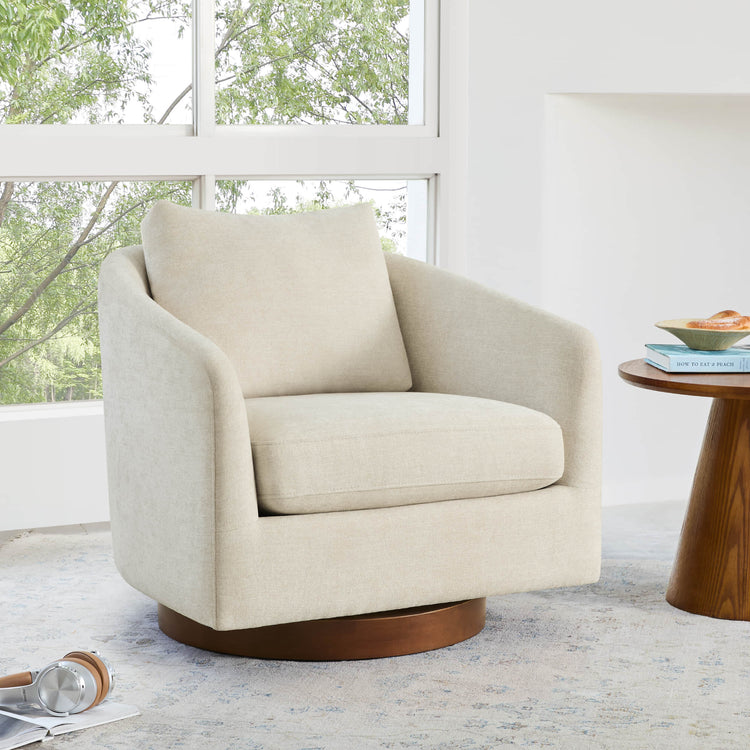
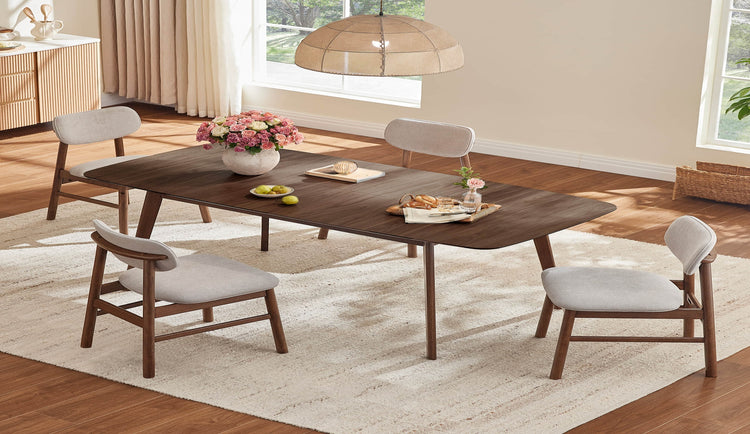
It is important to note that "contract grade" is a performance standard, not a design style. In 2026, many manufacturers offer pieces that pair commercial-grade internals with warm, inviting aesthetics—such as walnut veneers, brushed steel accents, and soft performance chenille. This allows buyers to secure durability without the "institutional" look of traditional office furniture.
The 'Industrial' Spec Sheet: Frames, Foam, and Fasteners
The longevity of contract-grade furniture is rooted in invisible construction details. While residential pieces may vary wildly in quality, contract-grade items typically follow specific engineering benchmarks:
- Frames: Often constructed from kiln-dried hardwoods with a moisture content typically maintained below 8% to minimize warping. Joints generally utilize double-doweled, screwed, and corner-blocked construction rather than the staples and glue common in mass-market options.
- Foam Density: This is a primary indicator of cushion "memory." Contract-grade seating frequently employs high-resilience (HR) polyurethane foam with a density of 2.5 lb per cubic foot or higher. In contrast, standard residential foam often ranges from 1.2–1.8 lb. Higher density foam is designed to resist "bottoming out" over years of daily use.
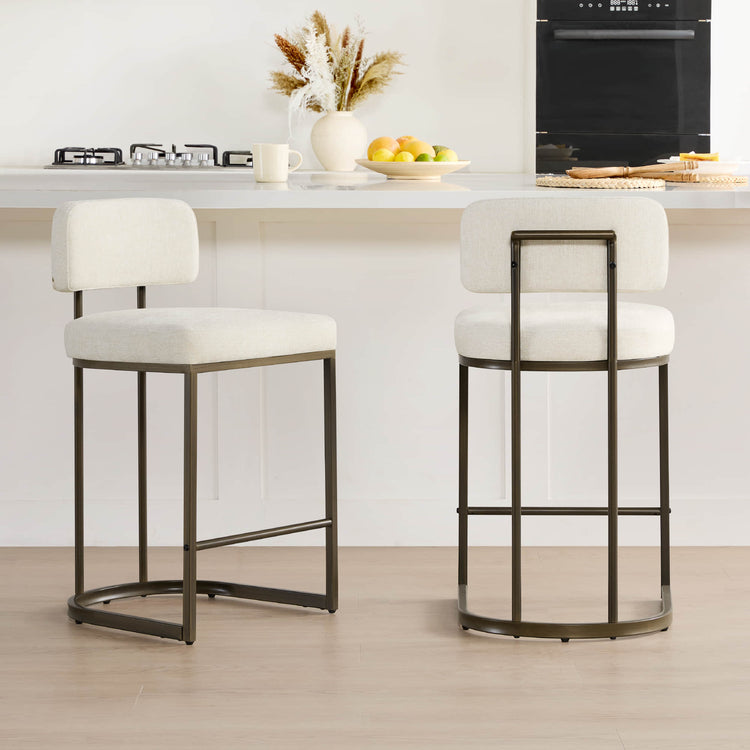
- Steel Gauge: For metal-framed stools or tables, contract specs commonly call for 16–18 gauge steel. This is significantly thicker than the 22–24 gauge steel often found in budget residential furniture. Thicker steel, combined with BIFMA-compliant welding, allows many pieces to be rated for 400+ lb weight capacities, providing greater stability for active households.
These specifications are most impactful in high-traffic zones like kitchens and living rooms. For a deeper look at how engineering affects longevity, see our guide on Spec-Sheet Savvy: How to Compare Furniture Engineering Like a Pro.
Technical Standards for 2026 Performance Fabrics
Evaluating a fabric spec sheet requires looking past the "softness" to the laboratory data. The following metrics are industry benchmarks for durability:
- Abrasion Resistance: For high-traffic homes, look for upholstery with a minimum of 30,000 Wyzenbeek double rubs or 40,000 Martindale cycles. These tests, detailed in the ACT Abrasion Guidelines, simulate long-term wear.
- Pilling Resistance: A rating of 4 or higher on the ASTM D3511 scale is a common target for contract fabrics. This helps prevent the formation of small fiber balls (pills) that can make a sofa look aged prematurely. As noted in the ACT Performance Guidelines, high abrasion numbers do not always guarantee pilling resistance; both should be verified.
- Dimensional Stability: This measures a fabric's ability to resist stretching or "puddling" on seat cushions. Quality contract textiles are engineered to maintain their tension over time.
While 100,000+ cycle fabrics exist for airport lounges, they may offer diminishing returns in a home setting where comfort is a priority. For more on balancing texture and toughness, explore The 2026 Guide to Performance Chenille.

Is Contract Grade Worth the Investment for Your Home?
The decision to upgrade to contract grade usually depends on a Total Cost of Ownership (TCO) calculation. While the upfront cost can be 2 to 4 times higher than mass-market residential furniture, the extended replacement cycle often results in long-term savings.
The table below provides an illustrative 20-year comparison based on typical industry replacement patterns:
| Category | Contract-Grade (High Spec) | Standard Residential Furniture |
|---|---|---|
| Estimated Upfront Price | $4,500 | $1,200 |
| Assumed Lifespan | 20 Years | 5 Years |
| Replacements Needed | 0 | 3 |
| 20-Year TCO (Estimated) | $4,500 | $4,800 |
Note: This table is an illustrative model. Actual TCO depends on usage intensity, maintenance, and specific warranty terms. Prices are estimates for a standard 3-seat sofa.
This "post-disposable" mindset is gaining traction among 2026 homeowners who prefer pieces that retain structural integrity and resale value. For specific room-by-room trade-offs, see Home Bar & Counter Stools: Should You Go Commercial or Residential?.
Safety and Certifications: Verifying the Claims
Safety certifications in the contract world are often more stringent than residential requirements, but they are not universal. It is essential to verify which standards a specific product actually meets:
- Flammability: While residential pieces typically meet CAL TB 117-2013, some contract-grade items may be tested against more rigorous standards like BS 5852 Crib 5 or CAL TB 133, depending on the intended environment. Always ask for the specific test report for the model you are considering.
- Air Quality: Certifications like GREENGUARD Gold are highly recommended for residential use, as they verify low chemical emissions (VOCs), which is particularly relevant for families with children.
- Weight & Stability: BIFMA testing protocols, such as those described in ANSI/BIFMA Seating Standards, involve drop tests and leg-strength tests that exceed standard residential checks.
Editor's Tip: Always confirm that the manufacturer’s warranty covers "residential use." Some commercial warranties are voided if the furniture is not placed in a business setting.

The 2026 Buyer's Checklist: How to Source and Verify
To ensure you are getting true contract-grade quality and not just "spec-washed" marketing, follow these steps before purchasing:
- Request the "Technical Data Sheet" (TDS): Do not rely on the product description alone. Ask for the full spec sheet that lists foam density (look for 2.5 lb+), steel gauge (16–18 is ideal), and specific BIFMA tests passed.
- Identify "Spec-Washing": Be wary of vague terms like "commercial quality" or "extra durable" without accompanying numbers. If a retailer cannot provide the double-rub count or the frame material (e.g., "solid wood" vs. "kiln-dried hardwood"), the piece may not meet true contract standards.
- Verify the Testing Body: Check if the tests were conducted by independent third-party labs.
- Check the Joinery: If possible, ask for a cross-section image or a detailed description of the frame joints. Look for "corner-blocked and screwed" language.
- Evaluate the Warranty: Look for a minimum 5-year structural warranty that explicitly includes residential environments.
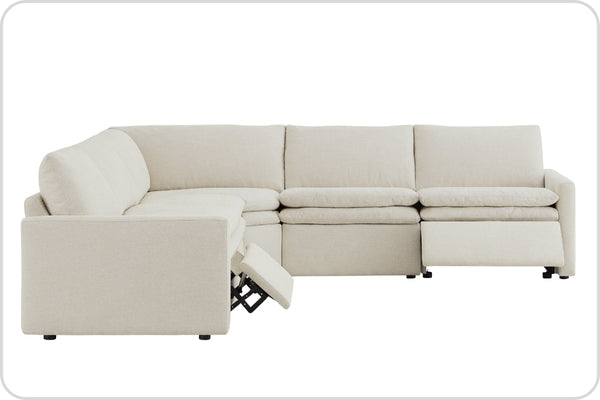
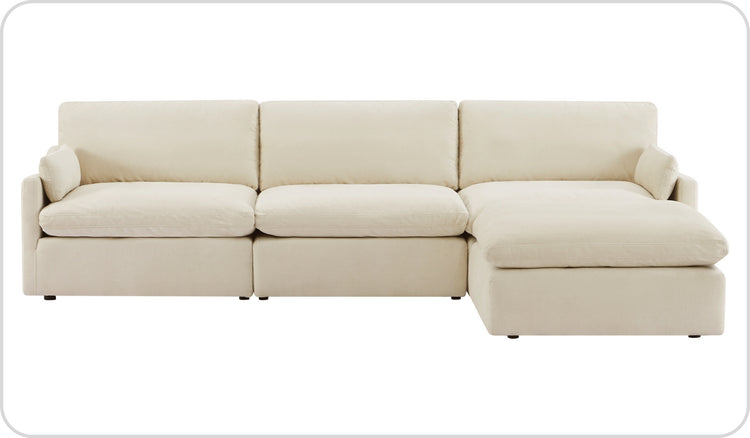
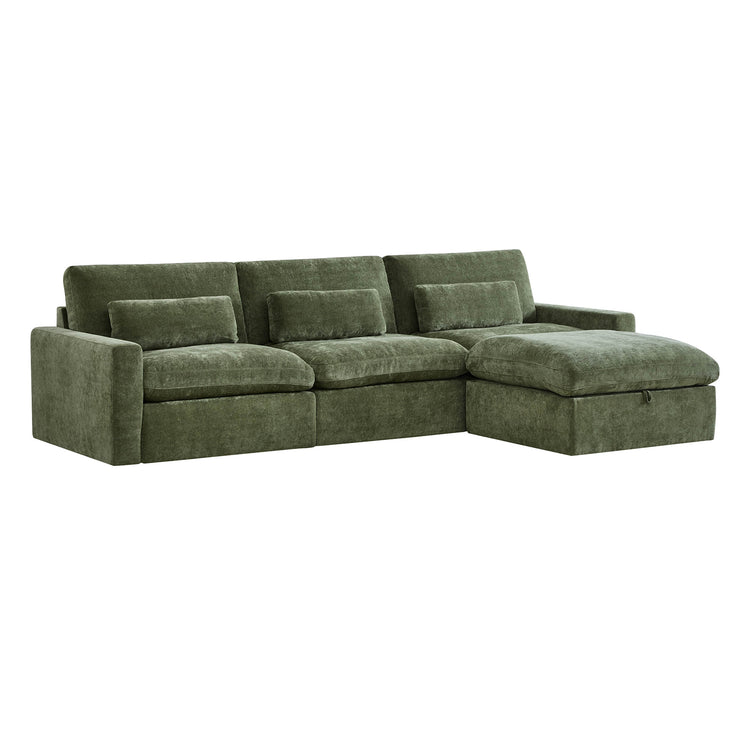
Products like the Delaney 3-Seat Modular Sofa and Blair Industrial Wood Seat Counter Stools demonstrate how these high-performance specs can be integrated into modern home design. You can also browse our FSC Certified Furniture for options that combine durability with responsible sourcing.
FAQs
What is the main difference between contract grade and residential furniture?
Contract-grade furniture is engineered for the high-frequency use of commercial spaces (hotels, offices), meaning it typically uses denser foam, thicker steel, and reinforced joinery. Residential furniture is designed for lighter use and often prioritizes lower price points over long-term structural "over-engineering."
Does contract-grade furniture always look industrial?
No. While the "industrial" look is a popular aesthetic, contract grade refers to the internal build quality. Many 2026 designs use high-spec internals hidden beneath residential-style fabrics like boucle, velvet, or performance chenille.
How much more expensive is contract-grade furniture?
Typically, expect to pay 2 to 4 times more than mass-market residential equivalents. However, the value is found in the "cost per year of use," which is often lower due to the extended lifespan of the piece.
Are performance fabrics required for contract-grade furniture?
Not strictly, but they are common. To meet contract standards, a fabric must pass specific abrasion and pilling tests. While many performance synthetics are used, high-quality leathers and heavy-weight natural blends can also meet these benchmarks.
What should I check first when shopping?
Prioritize the frame material and foam density. A beautiful sofa with low-density foam (under 1.8 lb) will likely begin to sag within 2–3 years of heavy family use, regardless of how durable the outer fabric is. Always ask for the spec sheet first.
Recommended Products




More to Read
 7 Sofa Trends That Actually Improve Comfort in 2026
Upgrade your living room with furniture that supports your body. Here are 7 modern sofa features designed to maximize your daily comfort...
7 Sofa Trends That Actually Improve Comfort in 2026
Upgrade your living room with furniture that supports your body. Here are 7 modern sofa features designed to maximize your daily comfort...
 Mother's Day Gift Guide: Cozy and Stylish Furniture Picks for Modern Moms
Make Mother's Day more meaningful with furniture gifts that bring comfort, smart features, storage, and quiet luxury into her everyday routine.
Mother's Day Gift Guide: Cozy and Stylish Furniture Picks for Modern Moms
Make Mother's Day more meaningful with furniture gifts that bring comfort, smart features, storage, and quiet luxury into her everyday routine.
 Performance Fabric Reality Check: Does It Really Repel Pet Hair and Stains?
Performance fabric is often marketed as a miracle solution for homes with pets and kids, but the reality is more nuanced. It...
Performance Fabric Reality Check: Does It Really Repel Pet Hair and Stains?
Performance fabric is often marketed as a miracle solution for homes with pets and kids, but the reality is more nuanced. It...