





























Yes, an electric fireplace can damage a TV mounted or placed above it, but only under specific conditions. The risk depends on where the unit discharges heat, whether that airflow gets blocked or redirected, and whether the fireplace and TV manufacturers actually approve the arrangement. A generic electric fireplace label does not confirm that the space above it is safe for a television.
Can an Electric Fireplace Damage a TV Above It?
The honest answer is conditional: damage becomes possible when heated air reaches the TV, when airflow or documented clearance is compromised, or when the manufacturer instructions simply do not authorize placing a TV in that spot. None of those three conditions means every electric fireplace console is unsafe for a TV above it.
Treat the question as a proceed-or-hold decision rather than a search for one universal safe distance. Some inserts direct heat forward and away from the TV zone; others may not. Without checking the exact model's documentation, you cannot assume either outcome. The rest of this guide walks through the mechanics, the scenario differences, and the verification steps that resolve the decision for your specific setup.
How Heat Reaches the TV
Heat can reach the TV area through the fireplace's outlet direction, blower airflow, or simple upward drift, and any of these paths can be blocked or redirected by nearby objects. None of this is guaranteed safe or unsafe without checking the exact insert's documented airflow pattern.
Front-Discharge Heat Is a Conditional Advantage
Many electric fireplace inserts push heated air out through a front-facing vent rather than straight up toward a shelf or TV. That design can reduce direct exposure, but only when the outlet stays unobstructed. A front-discharge vent that is partly blocked by a rug, décor, or a low shelf can push warm air sideways or upward instead of forward, so the discharge direction printed in a spec sheet does not by itself confirm what happens in your room.

Why Controls Do Not Measure TV Exposure
The heater's temperature range, flame brightness, and timer describe how the fireplace behaves in the room, not what happens at the TV's surface. Two identical settings can produce different results at the TV depending on the console's shape, nearby cables, a soundbar, or anything else sitting between the outlet and the screen. Treat those controls as comfort settings, not as a clearance measurement.
Surface-Placed vs Wall-Mounted TVs: Which Setup Needs What Check?
A TV resting on the console needs a different inspection than one attached to a wall mount above the fireplace. Neither arrangement is automatically safer; each shifts where you should look first.
Surface-Placed TV on the Console
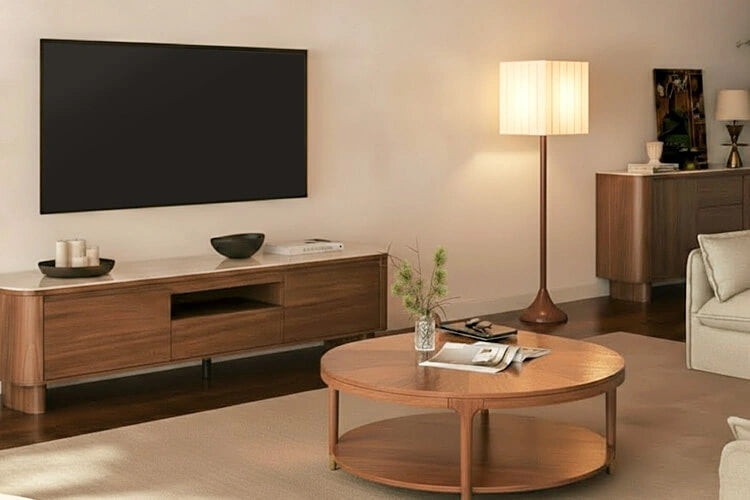
When the TV sits directly on the console top, check whether its base, a soundbar, or any décor crowds the fireplace opening or heat outlet. The console surface and the TV's base effectively become part of the heat path, so anything narrowing that gap can concentrate warm air right where the electronics sit.
Wall-Mounted TV Above the Console
Planning a wall-mounted TV setup shifts the questions to vertical offset, wall-side airflow, and two separate instruction sets: the mount and TV documentation, plus the fireplace's own manual. Choosing a TV stand with a wall mount changes the room layout and cable routing, but it does not certify a safe heat clearance on its own. The fireplace manufacturer's stated boundary for the space above the unit still governs the decision.
Verify Clearances Before Operating
The exact fireplace insert's installation manual is the primary authority here, and the TV or mount documentation can add a separate limit on top of it. Do not operate the fireplace heater until those instructions establish the required clearance and heat path for your arrangement; if the manuals are missing or conflict, contact the manufacturer or a qualified service technician before using the heater.
Follow the Documentation in Order
- Identify the exact fireplace insert model and locate its installation and operating manual.
- Read that manual's stated clearance and outlet requirements for anything placed or mounted above the unit.
- Check the TV and mount manufacturer's documentation for any separate placement or operating-environment limit.
- If the instructions conflict or a needed detail is missing, contact the fireplace manufacturer or a qualified installer instead of guessing.
What Certification Can and Cannot Prove
A relevant safety standard confirms the heater itself was evaluated for how it operates, not that a specific TV placement above it is safe. The CPSC's electric heater standards page identifies UL 2021 for fixed, location-dedicated electric room heaters and UL 1278 for movable or wall- and ceiling-hung units, but neither standard sets a distance between a heater and a television. Use the certification as one item on your checklist, not as the final answer.
Safe Heat-Clearance Checklist for an Existing Setup
If you already have a TV installed above an electric fireplace, work through this checklist in order and stop at the first item you cannot confirm.
- Identify the exact fireplace and TV models, and pull up both manuals before doing anything else.
- Confirm the heat outlet's direction and make sure nothing blocks or redirects that airflow.
- Inspect the TV's position along with the console top, mount, soundbar, and any nearby components for crowding.
- Note any unusual warmth at the TV or cabinet; if you feel it, turn the heater off and investigate before restarting.
- Confirm the fireplace plugs directly into a wall outlet, not an extension cord or power strip, and keep combustible items at least three feet away.
- Avoid running the heater overnight or unattended while sleeping.
- Check whether the fireplace model has an open recall.
- Only resume operation once the clearance and heat path from the previous section are documented and confirmed.
The CPSC advises keeping portable heaters away from combustibles, plugging them directly into a wall outlet, turning them off while sleeping, and checking for recalls before use. If your console also routes speaker or power cables near the heat outlet, tidying that path with hidden cable management can reduce clutter that might otherwise sit close to the vent, though it does not replace the manual check above.

FAQs
Can I leave the electric fireplace heater on while I sleep?
General guidance from the CPSC is to turn portable and space heaters off while sleeping, and that applies here as a baseline precaution. Check your exact fireplace insert's manual too, since some models may include additional operating restrictions beyond that general advice.
Does a timer make an unknown TV clearance safe?
No. A timer limits how long the heater runs, but it does not verify airflow, clearance, or whether the TV placement is approved. If you have not confirmed the heat path and documented clearance, having a timer is not a reason to go ahead and operate the unit.
What should I do if the TV becomes unusually hot during fireplace use?
Turn the fireplace off right away and do not resume until you have checked the airflow path, the TV's position, and both manuals. If the cause is not clear after that check, contact the fireplace manufacturer or a qualified service technician rather than continuing to test it by trial and error.
References
- U.S. Consumer Product Safety Commission. Keep Warm and Safe This Winter.
- U.S. Consumer Product Safety Commission. Electric Heaters.
Recommended Products



More to Read
 7 Sofa Trends That Actually Improve Comfort in 2026
Upgrade your living room with furniture that supports your body. Here are 7 modern sofa features designed to maximize your daily comfort...
7 Sofa Trends That Actually Improve Comfort in 2026
Upgrade your living room with furniture that supports your body. Here are 7 modern sofa features designed to maximize your daily comfort...
 Mother's Day Gift Guide: Cozy and Stylish Furniture Picks for Modern Moms
Make Mother's Day more meaningful with furniture gifts that bring comfort, smart features, storage, and quiet luxury into her everyday routine.
Mother's Day Gift Guide: Cozy and Stylish Furniture Picks for Modern Moms
Make Mother's Day more meaningful with furniture gifts that bring comfort, smart features, storage, and quiet luxury into her everyday routine.
 Performance Fabric Reality Check: Does It Really Repel Pet Hair and Stains?
Performance fabric is often marketed as a miracle solution for homes with pets and kids, but the reality is more nuanced. It...
Performance Fabric Reality Check: Does It Really Repel Pet Hair and Stains?
Performance fabric is often marketed as a miracle solution for homes with pets and kids, but the reality is more nuanced. It...