























When your ottoman doubles as guest seating, the fill type directly affects whether visitors feel supported and can stand up easily or end up feeling stuck in a soft cloud. High-density foam generally offers better immediate recovery and shape retention for frequent use, while feather fill delivers a plusher initial sink-in feel at the cost of more daily maintenance and less consistent support. The right choice depends on how often you host, whether the piece also serves as a table, and how much upkeep you are willing to accept in a small living room.

The Decision Problem: Why Ottoman Fill Matters for Guest Seating
Ottomans sit lower than standard chairs, which already makes the sit-to-stand motion more demanding for many guests, especially older adults or anyone with limited mobility. The fill inside determines how much the surface compresses under weight and how quickly it rebounds when someone tries to push themselves up. A too-soft fill can create a “slouch trap” that leaves guests feeling temporarily stuck, while overly rigid foam may feel unwelcoming for lounging.
In 2026 living rooms, multifunctional furniture is the norm. One ottoman often serves as a footrest, extra seat, and impromptu coffee table in apartments or compact family rooms. This versatility raises the stakes: the fill must balance plush comfort for casual use with enough structure to remain presentable and supportive when guests arrive. Choosing based only on initial softness frequently leads to regret once real-world maintenance and shape retention become apparent.
Sit-to-Stand Support: The Ergonomic Threshold for Guests
The key ergonomic factor for guest-ready ottomans is how well the fill helps someone transition from sitting to standing. A medium-firm feel, typically measured in the 35–45 ILD range, supplies the “push-back” needed for safe, effortless rising according to cushion industry guidance. Lower ILD ratings allow deeper compression that can make standing feel labored, particularly from a low seat height.
High-density foam rated between 1.8 and 2.5 pounds per cubic foot (PCF) has become the residential durability baseline because it resists premature sagging and bottoming out under repeated use. This density range helps the ottoman keep its shape even after multiple guests over a weekend. Feather fill, by contrast, compresses gradually and recovers more slowly, which can feel luxurious at first but often leaves a flattened surface that offers less consistent support on subsequent sits.
This heatmap helps visualize the trade-offs. Foam typically scores highest for stand-up ease and durability with the lowest bottoming-out risk, making it the safer default for frequent guest seating. Feather performs best for initial plushness but lags in recovery and long-term shape retention. Hybrid options land in the middle, offering a practical compromise for many households.
Maintenance Realities: Daily Fluffing vs. Set-and-Forget Durability
Feather fill requires regular attention to look its best. Owners must fluff and redistribute the feathers daily, and periodically beat the cushion to prevent clumping and flat spots. In a small apartment where the ottoman is always visible, this maintenance tax can become frustrating quickly, especially when hosting guests on short notice.
High-density foam, by comparison, holds its shape without intervention. Once the cover is on, the surface stays relatively crisp and tidy even after repeated use. This “set-and-forget” quality makes foam the lower-friction choice for busy households or anyone who dislikes extra chores. The difference becomes most noticeable after a few months of real-life use rather than in the showroom.
Multifunctional Room Fit: Using Your Ottoman as a Table
Many ottomans also function as coffee tables for drinks, books, or laptops. Structured high-density foam creates a level, stable surface that resists tipping and contains spills better than a soft, uneven feather-filled top. Placing a tray on a feather ottoman often results in an unstable platform that shifts under weight, increasing the chance of accidents during gatherings.
Foam’s firmness therefore improves safety and convenience in multifunctional rooms. Hybrid constructions that pair a foam core with a thin feather wrap can soften the seating surface while still providing enough underlying stability for light table use, though they may not feel quite as rock-solid as pure foam.

The Hybrid Solution: Why 2026 Designs Favor Foam-Core Wraps
Modern modular systems increasingly rely on hybrid cushion construction: a high-resilience foam core wrapped in a feather or down envelope. This approach delivers the structural benefits of foam for support and shape retention while adding a luxurious, sink-in surface layer that many people prefer for lounging. The design has become a popular middle ground for 2026 living rooms that must handle both everyday relaxation and occasional guest seating.
To identify a quality hybrid, look for clear specifications on the foam density (ideally 1.8 PCF or higher) and the thickness of the feather wrap. Thicker wraps emphasize plushness; thinner wraps favor support. Not every hybrid performs equally, so checking the exact layering helps avoid a product that feels too soft for stand-up use or too firm for comfort.
Which Fill Works Best for Your Guest-Ready Ottoman?
Start by answering three practical questions. First, is the ottoman mainly for feet or will it regularly seat guests? Second, do you prefer low-maintenance durability or the initial luxury of a plush sink-in feel? Third, will the piece also serve as a table for drinks or trays?
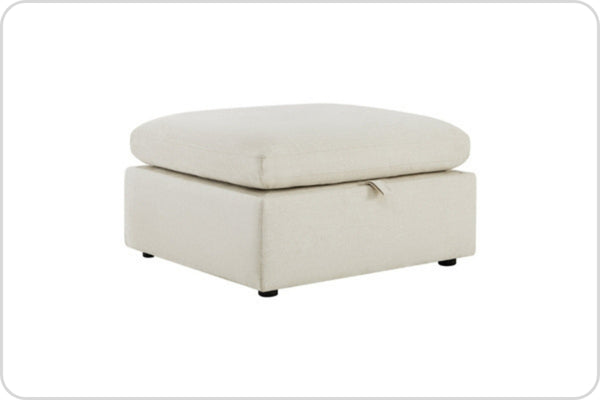
If you host frequently, need reliable support for older guests, or use the ottoman as a table, choose high-density foam. The Delaney Storage Ottoman and Vault Rectangle Storage Flip Ottoman are strong examples that prioritize structure and easy care while still providing comfortable seating. These pieces suit small-space apartments where one item must perform multiple roles without constant upkeep.
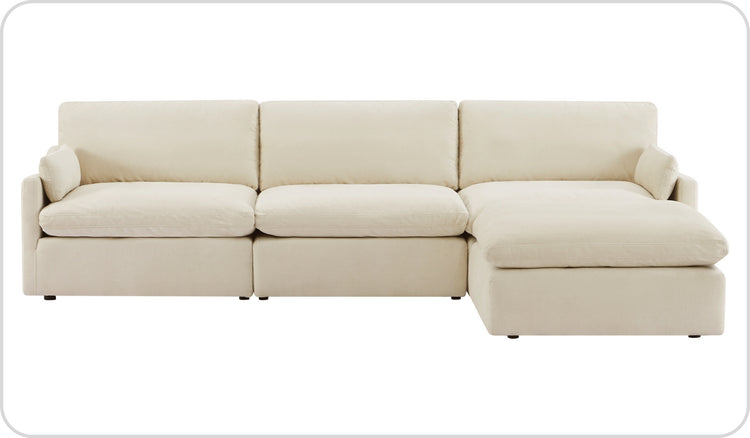
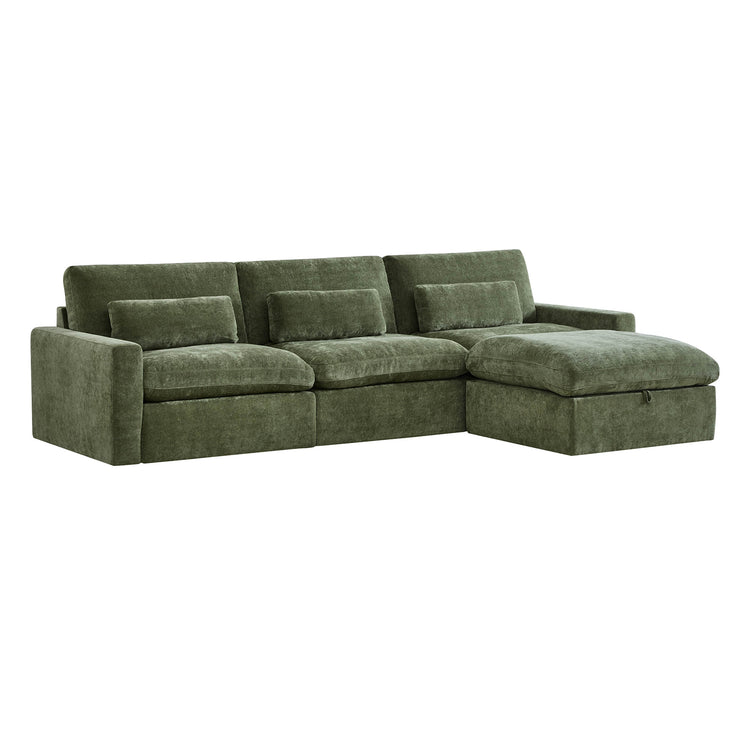
If your space is lounge-first, you entertain less often, and you are willing to fluff daily, feather fill can feel more inviting. The Liam Overstuffed Feather Ottoman offers generous cushioning that many people love for casual use. For the best of both worlds, consider a hybrid from the Sophia Storage Ottoman or pieces in the Sophia Feather Modular Sofa Collection. These options balance comfort with enough foam core to improve stand-up ease and shape retention.
A quick self-check before buying: sit on the ottoman and try standing up several times. If you feel supported and the surface returns to shape quickly, it will likely perform well for guests. If it feels like you are fighting the cushion or notice significant compression, consider a firmer or hybrid alternative. This simple test in the showroom or at home often reveals more than spec sheets alone.
Is High-Density Foam Better Than Feather for Ottomans Used as Guest Seating?
High-density foam generally provides superior support and shape retention for ottomans that double as guest chairs. The consistent push-back and resistance to sagging make it safer and more practical for frequent stand-up use, especially in small spaces. Feather fill excels at initial softness but demands regular fluffing and can feel less supportive over time.
How Often Do You Need to Fluff a Feather-Fill Ottoman?
Daily fluffing is typically required to maintain the plump, cloud-like appearance of feather-filled cushions. Without this routine, the fill clumps and the surface develops permanent-looking dents that look untidy when guests arrive. Many owners also beat the cushion weekly or monthly to redistribute the feathers more thoroughly.
Can a Feather Ottoman Safely Hold Drinks or a Serving Tray?
Feather ottomans create an uneven, compressible surface that makes them less stable for trays or drinks. The risk of tipping or spilling is higher than with a firm foam top. A hybrid model with a substantial foam core underneath the feather wrap offers a safer compromise if you need both softness and occasional table use.
What Does ILD and PCF Mean When Choosing an Ottoman?
ILD (indentation load deflection) measures firmness—how much weight it takes to compress the cushion a set amount. Higher ILD numbers feel firmer and usually supply better stand-up assistance. PCF (pounds per cubic foot) indicates density and relates to durability; 1.8–2.5 PCF is widely accepted as adequate for residential guest seating that must hold its shape over years of use.
Are Hybrid Ottomans Worth the Extra Cost for Small Apartments?
Hybrid ottomans often deliver the best value in small apartments because they reduce the maintenance burden of pure feather while avoiding the sometimes-too-firm feel of solid foam. The combination supports occasional guests, works as a stable surface, and still feels plush for everyday lounging. For many buyers the modest price difference pays off in daily convenience and longer usable life.
Should I Avoid Feather Fill If I Host Older Guests?
Feather fill is often less ideal for households that regularly host older guests. The deeper compression and slower recovery can make standing up more difficult from a low ottoman. High-density foam or a hybrid with a firm core usually provides a more reassuring and stable seating experience that reduces the chance of guests feeling unsteady when rising.
Recommended Products


More to Read
 7 Sofa Trends That Actually Improve Comfort in 2026
Upgrade your living room with furniture that supports your body. Here are 7 modern sofa features designed to maximize your daily comfort...
7 Sofa Trends That Actually Improve Comfort in 2026
Upgrade your living room with furniture that supports your body. Here are 7 modern sofa features designed to maximize your daily comfort...
 Mother's Day Gift Guide: Cozy and Stylish Furniture Picks for Modern Moms
Make Mother's Day more meaningful with furniture gifts that bring comfort, smart features, storage, and quiet luxury into her everyday routine.
Mother's Day Gift Guide: Cozy and Stylish Furniture Picks for Modern Moms
Make Mother's Day more meaningful with furniture gifts that bring comfort, smart features, storage, and quiet luxury into her everyday routine.
 Performance Fabric Reality Check: Does It Really Repel Pet Hair and Stains?
Performance fabric is often marketed as a miracle solution for homes with pets and kids, but the reality is more nuanced. It...
Performance Fabric Reality Check: Does It Really Repel Pet Hair and Stains?
Performance fabric is often marketed as a miracle solution for homes with pets and kids, but the reality is more nuanced. It...