

























Modular Sofa Stability: A 2026 Guide to Connectors, Clips, and Base Grips

The Mechanics of Modular Drift: Why Stability Matters in 2026
Modular drift occurs when sofa sections gradually separate, slide sideways, or create visible gaps between cushions during everyday use. Unlike single-piece sofas, modular designs rely on discrete sections that must stay aligned without a continuous internal frame. In 2026, as modular furniture becomes the standard for flexible living spaces, stability is no longer just about "not moving"—it is about maintaining structural alignment under the dynamic loads of modern life.
The issue is most pronounced on smooth, hard floors such as hardwood, polished concrete, or tile. On these surfaces, low friction allows sections to move under lateral forces—the side-to-side pressure generated when someone sits down or shifts weight. Even on rugs, repeated use can compress fibers, reducing the "bite" of the sofa's feet. While high-quality engineering can significantly reduce this, it is important to note that minor movement may still occur depending on floor levelness and the intensity of use. Stability is a core element of engineered comfort; it directly affects how premium a modular sofa feels after the first few months of ownership.

Friction vs. Locking: Choosing Between Non-Slip Bases and Mechanical Connectors
The central decision for most buyers is whether to rely on friction-based solutions or mechanical locking hardware.
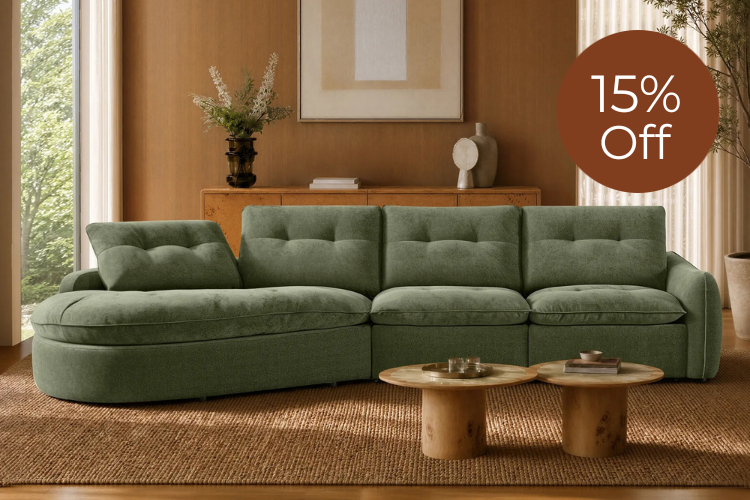
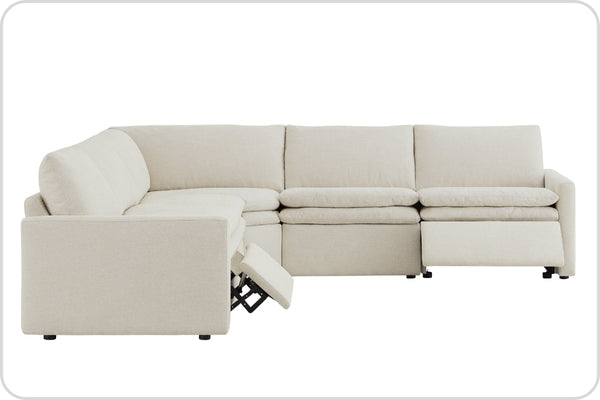
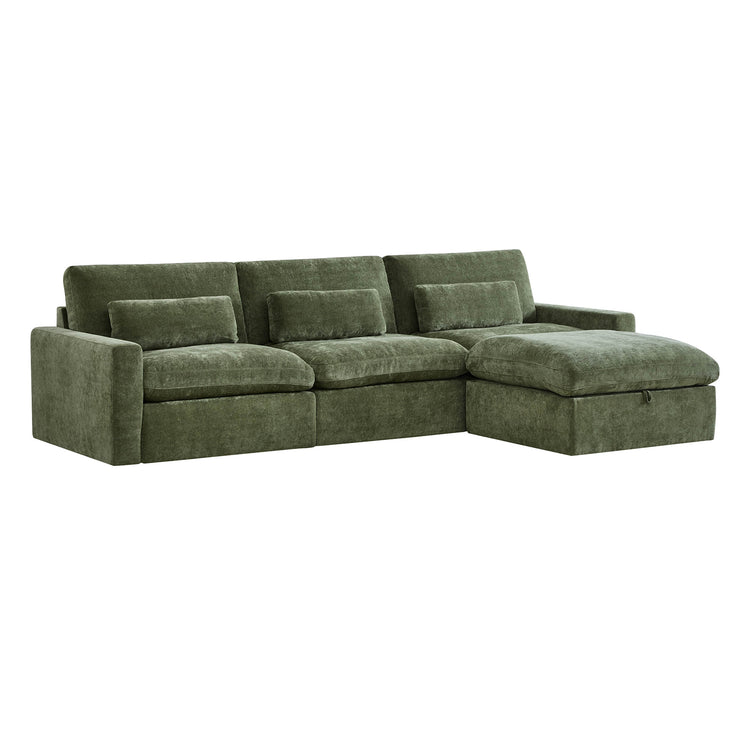
Non-slip bases, like those found on the Kenna Modular 5 Seat Sofa Chaise Sectional, utilize specialized rubber or polymer pads. These are designed to maximize the coefficient of friction against the floor. They offer a clean, hardware-free aesthetic and are ideal for users who frequently reconfigure their layout. However, their effectiveness is highly dependent on the cleanliness of both the pads and the floor; dust or floor wax can significantly reduce grip.
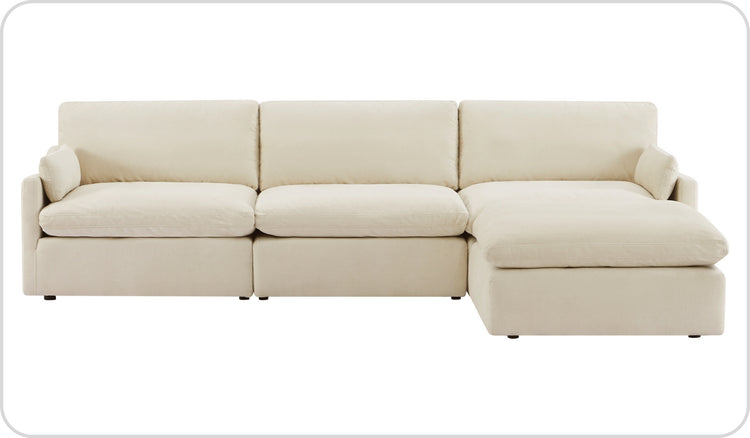
Mechanical connectors, featured in collections like the Liam Overstuffed Feather Modular Corner Seat and Ivy 2-Seat Performance Fabric Modular Sofa, use hidden metal brackets or slide-locks to physically join sections. In most hard-floor or high-traffic scenarios, these are the more reliable choice because they provide a physical barrier against separation that friction alone cannot match.
Living Room Fit by Floor and Traffic: Friction vs Mechanical Locking
Use this as a setup guide for modular sofas. It highlights where friction-based feet usually suffice and where mechanical locking is the safer fit, based on typical floor contact, traffic, and stability guidance.
View chart data
| Category | Low traffic | Medium traffic | High traffic |
|---|---|---|---|
| Hardwood / Tile | 2.0 | 2.0 | 2.0 |
| Low-pile Rug | 1.0 | 2.0 | 2.0 |
| High-pile Rug | 1.0 | 1.0 | 2.0 |
This chart illustrates the recommended stability approach based on floor type and traffic. Higher values indicate a stronger recommendation for mechanical locking.
- Hard Floors + High Traffic: Mechanical connectors are essential to resist the cumulative lateral stress of daily use.
- Textured Rugs + Low Traffic: High-quality non-slip pads are often sufficient, as the rug fibers provide natural resistance to drifting.
- Boundary Condition: On exceptionally plush or high-pile carpets, mechanical connectors are still preferred to prevent sections from "leaning" away from each other as the foam or frame settles into the pile.

Anatomy of a Secure Joint: Alligator Clips, Brackets, and Slide-Locks
Modern modular sofas typically employ one of three hardware styles. Alligator (crocodile) clips are spring-loaded and grip opposing teeth; they are versatile but can occasionally require re-tensioning. Rigid metal brackets offer a more permanent feel and are often found in premium "fixed-modular" setups.
Slide-lock or lift-and-hook systems are a growing trend for 2026 due to their tool-free nature. These require precise alignment where an upper hook drops into a lower bracket (how to keep a modular sofa together).
A common pattern observed in long-term performance is that the precision of the initial "drop" matters immensely. If the hardware is only partially engaged, the sections will eventually drift. Based on hands-on assembly reviews, systems like the Liam series maintain better alignment when users verify that the male and female ends of the connectors are fully seated and flush before applying weight to the cushions.
Engineering Quality: Standards and BIFMA Benchmarks
To move beyond marketing claims, look for evidence of structural testing. ANSI/BIFMA X5.4 is the industry benchmark for lounge and modular seating. While this standard covers safety and durability, two specific testing areas relate directly to stability:
- Joint Fatigue Testing: This simulates thousands of cycles of weight being applied and removed. Hardware that meets these standards is less likely to develop the "play" or looseness that leads to gaps.
- Horizontal Lateral Force: This tests how well the unit resists tipping or sliding when pushed from the side.
However, BIFMA compliance is a baseline for structural integrity, not a guarantee of zero movement on a slippery floor. A sofa may be "stable" by engineering standards but still slide if the floor-to-foot interface lacks friction. For 2026, the highest-performing models combine BIFMA-rated internal hardware with high-surface-area base grips to address both internal separation and external drifting.
For more on evaluating the "bones" of your furniture, see our guide on how to identify if a sofa or chair is good or bad quality.
Installation and Maintenance: The 2026 "Active Care" Approach
Stability is not a "set it and forget it" feature. Proper maintenance ensures the hardware continues to perform as intended.
- Initial Alignment: Always assemble on a level surface. If your floor is uneven, even the strongest clips will be under constant tension, which can lead to premature hardware failure.
- The 30-Day Check: After the first month of use, the sofa frame and cushions will have "settled." This is the best time to check that all connectors are still tightly engaged.
- Cleaning the "Grip": For sofas with non-slip feet, dust is the enemy. Every 6 months, wipe the bottom of the rubber pads with a damp cloth to restore their "tackiness."
- Hardware Tension: If your sofa uses screw-in brackets, check their tightness annually. Refer to your specific manufacturer’s manual for torque recommendations to avoid stripping the wood frame.
For insights on maintaining the upper half of your sofa, explore our 2026 guide to performance fabric durability.
The 2026 Stability Checklist: Matching Hardware to Your Lifestyle
Before purchasing, evaluate your environment against these criteria:
- High-Activity Homes (Kids/Pets): Prioritize mechanical slide-locks with reinforced metal plates. These distribute lateral stress across a larger surface area of the frame.
- Minimalist/Modern Aesthetics: If you prefer a "floating" look without visible hardware, ensure the model uses extra-wide non-slip pads (at least 2 inches in diameter) and is placed on a rug.
- Frequent Reconfigurators: Look for alligator clips or magnetic alignment systems (an emerging 2026 trend) that allow for tool-free separation.
- Hardwood Floors: Always choose a system that includes non-marring rubber bases to prevent the sofa from acting like a "skate" across your finish.
Explore our Modular Sectional Sofas collection to see how these engineering principles are applied across different styles and configurations.
Frequently Asked Questions
Do modular sofa connectors loosen over time?
Yes, mechanical connectors can experience "creep" or loosening due to the dynamic forces of people sitting and moving. This is generally not a defect but a result of the hardware settling into the wooden frame. Periodic tightening of mounting screws (every 6–12 months) is a standard maintenance task for modular owners.
What is the best solution for a modular sofa sliding on hardwood floors?
The most effective setup is a "hybrid" approach: mechanical connectors to keep the sections joined to each other, and high-friction rubber pads to keep the entire unit from sliding across the floor. If you cannot use connectors, placing a rug with a dedicated non-slip rug pad underneath the sofa is the next best alternative.
Are grip pads or mechanical clips more effective?
It depends on the goal. Mechanical clips are 100% more effective at preventing separation (gaps between cushions). Grip pads are effective at preventing the entire sofa from drifting. For the best experience, look for a sofa that utilizes both.
Can I add aftermarket connectors to my sofa?
While possible, success varies. Aftermarket "alligator clips" require drilling into the frame, which may void your warranty. It is always safer to choose a sofa with integrated, factory-tested hardware designed for that specific frame's weight and balance.
How often should I check the connectors?
Perform a visual check whenever you clean under the sofa. A more thorough "hand-check" of hardware tension should be done every 6 to 12 months, or immediately if you notice a new gap appearing between modules. Always follow the specific maintenance intervals provided in your product's assembly guide.
Recommended Products


More to Read
 7 Sofa Trends That Actually Improve Comfort in 2026
Upgrade your living room with furniture that supports your body. Here are 7 modern sofa features designed to maximize your daily comfort...
7 Sofa Trends That Actually Improve Comfort in 2026
Upgrade your living room with furniture that supports your body. Here are 7 modern sofa features designed to maximize your daily comfort...
 Mother's Day Gift Guide: Cozy and Stylish Furniture Picks for Modern Moms
Make Mother's Day more meaningful with furniture gifts that bring comfort, smart features, storage, and quiet luxury into her everyday routine.
Mother's Day Gift Guide: Cozy and Stylish Furniture Picks for Modern Moms
Make Mother's Day more meaningful with furniture gifts that bring comfort, smart features, storage, and quiet luxury into her everyday routine.
 Performance Fabric Reality Check: Does It Really Repel Pet Hair and Stains?
Performance fabric is often marketed as a miracle solution for homes with pets and kids, but the reality is more nuanced. It...
Performance Fabric Reality Check: Does It Really Repel Pet Hair and Stains?
Performance fabric is often marketed as a miracle solution for homes with pets and kids, but the reality is more nuanced. It...