















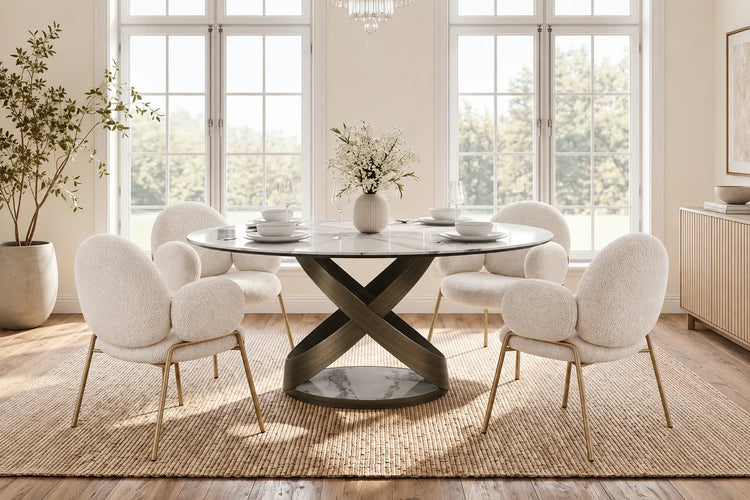
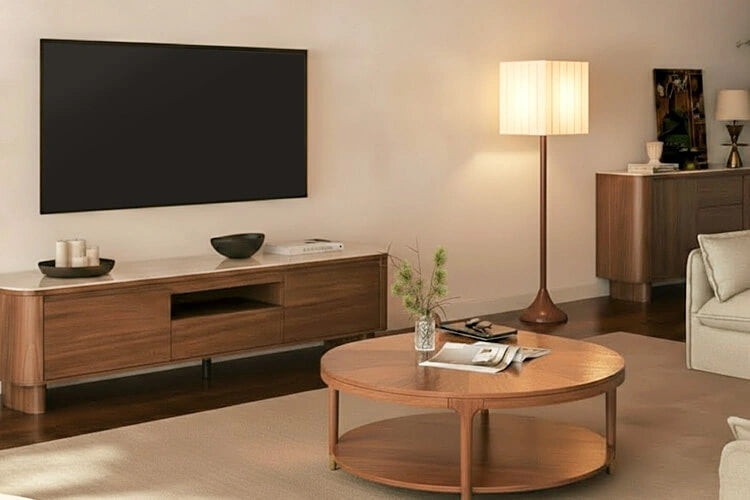










In 2026, a tech-friendly sideboard does more than hide your gaming console and VR headset—it actively supports them with ventilation, cable routing, and light protection so your expensive hardware stays safe and your living room stays clean. The right unit turns a sideboard into the central infrastructure for consoles, VR gear, and smart home hubs, but only if you match the design to your specific hardware mix and room constraints.

Standard sideboards often create hidden problems: trapped heat that throttles performance, sunlight that ruins VR lenses in under a minute, or signal-blocking enclosures that kill smart-home connectivity. This guide walks through the exact checks you need before buying so your sideboard actually improves—not risks—your setup.
The 2026 Sideboard: From Dining Storage to High-Tech Infrastructure
Tech-heavy households now treat the living room sideboard as active hardware infrastructure rather than passive storage. Traditional open media stands expose cables and gear, while today's designs hide everything behind sleek doors while managing the heat, light, and signal demands of 2026 devices.
A true tech-infrastructure sideboard includes built-in ventilation paths, separated cable channels, opaque storage bays for VR equipment, and materials that preserve wireless performance. Without these features, you risk thermal throttling on consoles, permanent pixel burn on VR headsets, or dropped connections from smart hubs. The core challenge is balancing the clean “stealth tech” aesthetic with the real airflow, darkness, and signal needs of modern electronics.
For most families running a PS5 or Xbox Series X alongside a Meta Quest and several smart speakers, this means choosing a unit with adjustable shelves, multiple rear cutouts, and wood construction rather than metal. Checking these requirements early prevents the common regret of buying beautiful furniture that harms the devices inside it.
Managing Thermal Loads: Keeping Consoles Cool Inside Closed Furniture
High-heat consoles like the PS5 and Xbox Series X require at least 4–6 inches of clearance around vents and should never run inside a fully closed cabinet without modifications, according to official manufacturer safety guides. Without this space, fans spin louder, temperatures climb, and the system may throttle performance or risk long-term hardware damage.
Official PlayStation safety documentation and comparable Xbox guidelines emphasize keeping exhaust paths clear. In practice this often means removing the back panel of your sideboard during gaming sessions or leaving the doors cracked open. Passive cooling (rear panel removal) works for many setups; active cooling with a small USB fan becomes necessary in tighter apartments or when the sideboard sits against a wall.
Electronics generally stay healthiest between 50 °F and 80 °F. Position your sideboard away from heat sources such as radiators or direct afternoon sun. If your room regularly exceeds this range, consider a unit with larger factory ventilation cutouts or plan to run the console with the doors open. These steps keep performance stable and extend the life of $500-plus consoles.
Protecting the Lenses: Dark Storage for VR Headsets and Accessories
VR headset lenses function like tiny magnifying glasses: direct sunlight for less than one minute can cause permanent pixel burn on the internal displays. This Meta Quest care guide warning makes opaque, light-tight storage non-negotiable.
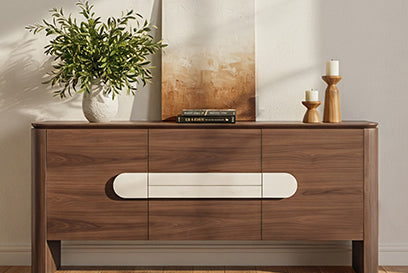
Sideboards with solid doors, such as the Samuel or Bryan, create the required dark environment when placed away from windows. Inside the cabinet, dedicate a padded “VR bay” on an upper shelf so the headset sits securely without its lenses touching surfaces that could cause scratches. Controllers and charging docks belong on the same level or in a separate compartment to keep everything organized and dust-free.
A practical self-check is to stand in your intended placement spot at different times of day and confirm no direct light reaches the closed doors. UV-blocking film on nearby windows offers extra insurance, but the safest approach remains choosing a fully enclosed wood unit and maintaining the “one-minute rule” for any accidental exposure.
Routing the Chaos: Separating Power and Data for Signal Integrity
Bundled cables create two problems at once: they block exhaust airflow and generate electromagnetic interference (EMI) that causes screen flickering or dropped signals. Maintaining 3–4 inches of separation between power bricks and high-speed HDMI or data lines is a widely recommended heuristic from AV professionals.
Many modern sideboards now include multiple rear ports or vertical channels so you can route power on one side and data cables on the other. This separation also prevents the “cable dam” that traps heat behind the console. For smart home hubs using Zigbee, Thread, or Matter, wood construction is clearly preferable: it typically causes only 3–8 dB of signal attenuation, while metal cabinets can block 90–99 % of wireless signals by acting as a Faraday cage.
Adjustable shelves let you create distinct tiers—one for the console and power components, another for the networking hub—further reducing interference. Test signal strength with your hub in the final position before committing to the layout; minor repositioning inside the cabinet often restores full range without sacrificing the clean exterior look.
Choosing Your Tech Hub: Material, Assembly, and Final Setup Checks
The best tech-friendly sideboard matches your dominant hardware. Wood units with solid doors excel for mixed console, VR, and smart-hub setups because they balance ventilation options, light protection, and wireless transparency. Metal-accent pieces may look striking but often create signal dead zones for smart-home devices and require more careful ventilation planning.
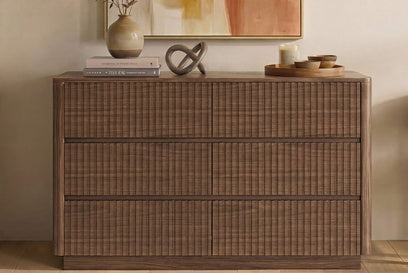
Fully assembled models handle the weight of heavy consoles better than flat-pack alternatives and arrive with precise factory cutouts already in place. The Samuel offers high-end aesthetics and metallic lacquer doors that still allow some airflow when positioned correctly, while the Bowen’s fluted design and high-leg base improve under-cabinet ventilation and ease of cleaning.
Chita Sideboard Fit for Console, VR, and Smart Hub Setups
Helps visualize typical suitability patterns in 2026 tech setups across heat management, signal integrity, VR protection, and structural stability.
View chart data
| Category | Heat management | Signal integrity | VR protection | Structural stability |
|---|---|---|---|---|
| Samuel | 3.0 | 3.0 | 2.0 | 3.0 |
| Bryan | 2.0 | 2.0 | 3.0 | 1.0 |
| Bowen | 2.0 | 2.0 | 1.0 | 2.0 |
| Vito | 1.0 | 1.0 | 2.0 | 3.0 |
Setup checklist before final placement
- Confirm at least 4–6 inches of rear clearance or plan to remove the back panel.
- Verify the VR compartment is completely light-tight.
- Route power and data cables on separate paths.
- Test smart-hub signal strength inside the closed cabinet.
- Ensure internal temperature stays below 80 °F during use.
These checks determine whether a particular sideboard will serve as reliable infrastructure or simply a stylish box that harms your gear. Wood models like the 63" Samuel Scandinavian Sideboard with Metallic Lacquer Door or the 61" Bowen Fluted Wood Sideboard, High-Leg consistently meet the majority of these criteria for mixed 2026 tech loads.

If your setup is console-dominant and you already have strong ventilation plans, explore deeper gaming-focused options in our Level Up Your Setup: The Best TV Stands for Gamers and High-End Consoles. For pure cable organization strategies, see Banish Clutter: TV Stands with Hidden Cable Management. Renters or those needing instant setup should review The 2026 Guide to Fully Assembled TV Stands & Storage. Finally, understand the layout differences in Sideboard vs. Buffet: What's the Real Difference? (2026 Guide) before you buy.
Frequently Asked Questions
Can any closed sideboard safely hold a running PS5 or Xbox?
No. Official guidelines require 4–6 inches of clearance and open airflow paths. Fully closed operation without back-panel removal or added fans risks overheating and performance throttling.
How long can a VR headset be exposed to indirect room light?
Indirect light is generally safe, but any direct sunlight—even through a window—can damage lenses in under a minute. Always store in a completely opaque compartment.
Does wood really preserve smart-hub signals better than metal?
Yes. Wood typically causes only minor 3–8 dB attenuation, while metal enclosures can block the majority of Zigbee, Thread, or Matter signals. Test your specific hub after installation.
Is it worth paying extra for a fully assembled tech sideboard?
For heavy consoles and precise ventilation cutouts, factory-assembled units provide better structural integrity and arrive ready for immediate cable routing and shelf adjustment.
What temperature range should I maintain inside the sideboard?
Keep the internal environment between 50 °F and 80 °F. Exceeding this range accelerates battery wear in VR headsets and smart devices and may trigger console thermal protection.
Can I add my own fans or modifications to improve ventilation?
Many owners remove rear panels or install low-noise USB fans. Just ensure modifications do not compromise the structural integrity or light-tightness needed for VR storage.
Will a sideboard with fluted or decorative doors still provide enough airflow?
Fluted designs like the Bowen can improve passive airflow when paired with elevated legs and strategic rear cutouts, but you should still plan for open-door or modified-back operation during intense gaming sessions.
Recommended Products


More to Read
 7 Sofa Trends That Actually Improve Comfort in 2026
Upgrade your living room with furniture that supports your body. Here are 7 modern sofa features designed to maximize your daily comfort...
7 Sofa Trends That Actually Improve Comfort in 2026
Upgrade your living room with furniture that supports your body. Here are 7 modern sofa features designed to maximize your daily comfort...
 Mother's Day Gift Guide: Cozy and Stylish Furniture Picks for Modern Moms
Make Mother's Day more meaningful with furniture gifts that bring comfort, smart features, storage, and quiet luxury into her everyday routine.
Mother's Day Gift Guide: Cozy and Stylish Furniture Picks for Modern Moms
Make Mother's Day more meaningful with furniture gifts that bring comfort, smart features, storage, and quiet luxury into her everyday routine.
 Performance Fabric Reality Check: Does It Really Repel Pet Hair and Stains?
Performance fabric is often marketed as a miracle solution for homes with pets and kids, but the reality is more nuanced. It...
Performance Fabric Reality Check: Does It Really Repel Pet Hair and Stains?
Performance fabric is often marketed as a miracle solution for homes with pets and kids, but the reality is more nuanced. It...