




















Outdoor Furniture Mistakes to Avoid in small balconies

The biggest outdoor furniture mistakes on a small balcony happen before style enters the picture: buying without measuring, filling the usable footprint, choosing a format before deciding how you’ll use it, and overlooking exposure, storage, property rules, or delivery access. Start with a fit map, choose the primary activity, then assess materials and logistics. Reject any piece that blocks the door, prevents the intended movement, or can’t be delivered along the route to the balcony.
Measure the Balcony’s Usable Footprint Before Buying Outdoor Furniture
The first purchase gate is a measured fit map—not a product label or staged photo. Record the space you can actually use, then compare it with the furniture’s complete assembled dimensions and the movement your activity requires.
A balcony can accommodate a piece on paper and still fail at the doorway or during delivery. Measure the balcony and doorway before comparing styles, and use the complete dimensions instead of relying on a word such as “compact.” This approach also appears in small-balcony measuring guidance.
- Measure usable floor length and width. Exclude fixed features, blocked corners, access openings, and any area that cannot hold furniture.
- Mark the fully open door or slider. Include the door’s swing or sliding movement, the threshold, and the route you use to enter and leave.
- Record fixed obstacles and access points. Note railings, posts, utility equipment, drains, built-in storage, and areas that must remain open.
- Map the activity. Allow for the movement needed to sit, stand, pull out a chair, reach a table, or turn toward a view. Let the tightest usable passage govern the decision; don’t apply a universal clearance number.
- Compare complete product dimensions. Check width, depth, and height where relevant, along with arm width, seat depth, table dimensions, and any movement such as swiveling.
- Measure delivery separately. Check doors, elevators, stairs, hallways, turns, and the balcony entrance. A final assembled footprint doesn’t prove that the boxed product can reach it.
Use this map to make a pass-or-reject decision. Reject a candidate when its assembled footprint, operating movement, door path, or delivery route is incompatible or unknown. Use small-balcony layout ideas to compare examples, but treat each layout as a starting point—not proof that a particular piece fits your balcony.

Choose the Furniture Format Around the Activity, Not the Balcony Photo
Choose the primary activity before selecting the format. Lounging, dining or working, and occasional entertaining call for different arrangements, so a matching set that looks balanced in a photo may make a real balcony harder to use.
For lounging, start with the fewest pieces that support the posture you want. Compare seat depth, seat height, arm width, and back support with the fit map. A loveseat or compact sofa may suit a balcony used mainly for sitting, but reject it if its depth blocks the door or leaves no practical way to sit and stand.

For dining or working, prioritize the surface and the space around it. Check table height, chair movement, reach to the tabletop, and whether the chair can be pulled out without closing the entry route. A bistro setup is a starting format, not an automatic solution.
For occasional entertaining, movable or modular pieces can change the arrangement, but flexibility helps only if you can move the pieces without blocking the door or consuming the usable area between occasions. Swivel furniture also needs an operating-space test: the chair’s listed footprint isn’t the same as the area needed to rotate or use it comfortably.
The table below is an illustrative planning aid, not a categorical recommendation. Investigate the format associated with your primary activity, then reject it if the measured fit map, door movement, comfort, or operating space fails.
| Primary activity | Format to investigate first | Condition that can rule it out |
|---|---|---|
| Lounging | Loveseat or two movable chairs | Seat depth or operating space blocks entry or doesn’t support the intended posture |
| Dining or working | Bistro setup | Table access or chair movement closes the entry route |
| Occasional entertaining | Movable or modular pieces | Rearranging them blocks the door or leaves no usable area between occasions |
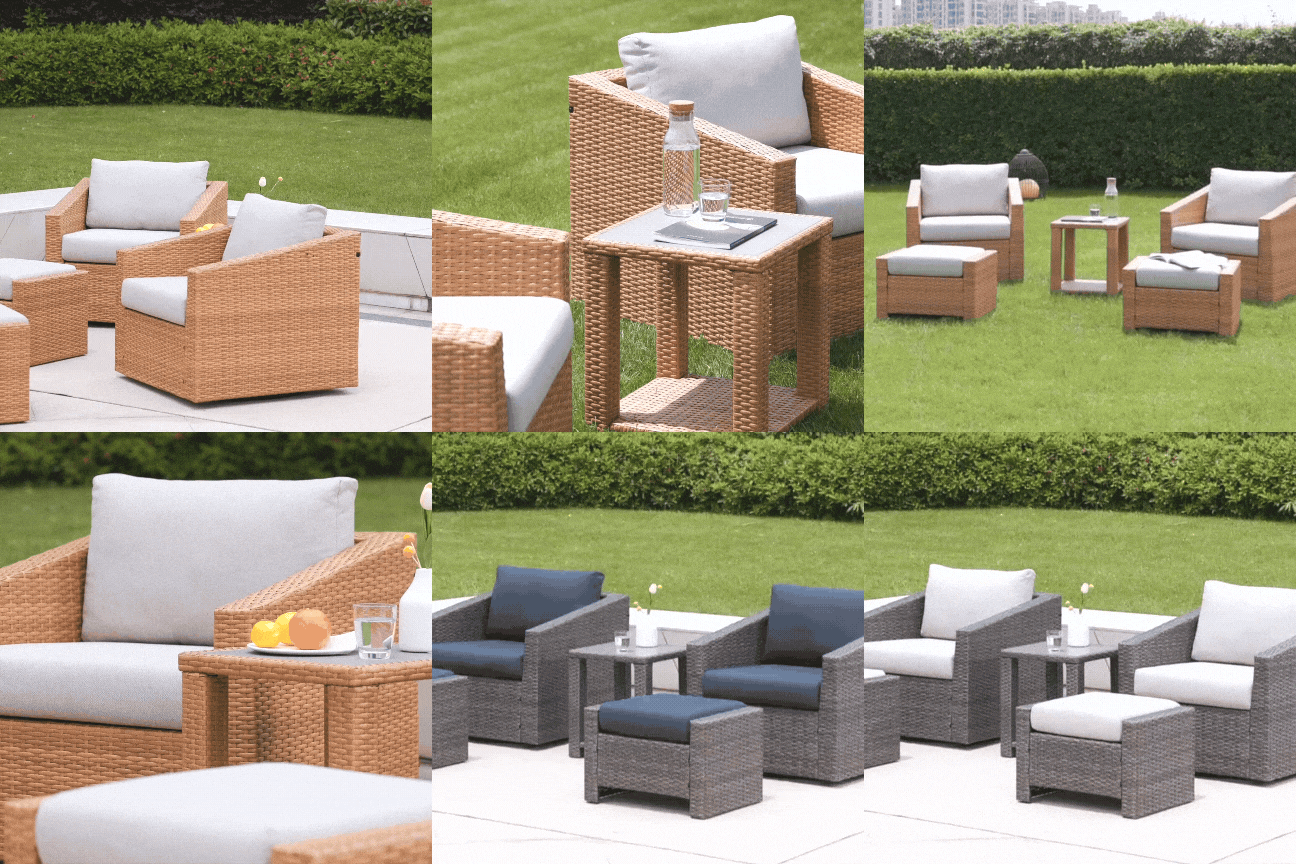
CHITA examples illustrate different formats, but they still require a reader-specific fit check. The modular outdoor sofa is offered in three-seat and loveseat configurations. Compare the exact selected configuration’s dimensions and package details with your map; the format options don’t establish small-balcony suitability.
The swivel bistro set lists a chair at 31.9 inches deep by 30.7 inches wide by 33.5 inches high. Confirm the current listing’s package contents before treating the set as a complete layout. The two-piece swivel chairs have different listed dimensions depending on the armrest version: the regular-arm version is 28.3 inches wide by 32.3 inches deep, while the flared-arm version is 33.9 inches wide by 32.7 inches deep. Test the swivel movement and the path between both chairs before treating either format as workable.
Match Materials, Cushions, and Storage to the Balcony’s Exposure
Match the frame, finish, fabric, cushion care, drying needs, and storage plan to the balcony’s actual exposure. Covered, partially sheltered, and fully exposed balconies create different maintenance tasks, but shelter doesn’t eliminate them.
Start by identifying what reaches the furniture: direct sun, rain, wind, salt air, temperature changes, or only occasional moisture. Then read the product’s material and care details. Terms such as water-resistant, water-repellent, UV-resistant, weather-resistant, and weather-ready describe particular features; they don’t promise maintenance-free use or mean cushions can remain wet.
For a covered balcony, check whether wind-driven rain still reaches the seating and decide where cushions will dry. For a fully exposed balcony, make drying and routine cleaning part of the layout. If cushions must be carried indoors, the storage destination shouldn’t block the balcony route or make daily use impractical. A home without storage may call for fewer upholstered pieces, removable components, or a realistic place for covers and cushions.
Product care details show why this check matters. The Dylan, Emberly, and Haven examples list olefin fabric, but their configurations and care instructions still need to be compared with your exposure and storage situation. Emberly’s listed fabric-care instruction says to machine-wash in cold water on a gentle cycle and dry flat. That’s a stated care instruction, not evidence that the set requires no maintenance. For wet-cushion handling and drying considerations, see this guide to outdoor cushion care after rain.
A useful comparison isn’t simply “Which material is most durable?” Instead, ask: Can I clean the stated fabric or finish as directed? Where will wet cushions go? Can movable pieces be protected during severe weather? Does the storage plan preserve the movement path? Those answers determine whether the setup is manageable in your home.
Verify Property Rules, Balcony Safety, and Delivery Access Before Checkout
The final purchase gate is written permission and practical access—not product availability. Read the lease, condo or apartment rules, property-manager guidance, and applicable local requirements before bringing furniture onto the balcony.
- Verify placement rules. Look for limits on furniture, storage, clear pathways, railing use, permanent attachments, and removal during severe weather. A local Fairhaven policy, for example, shows how a housing authority may set specific rules for outdoor furniture, clear pathways, storage, and severe-weather removal. Use it as a local example, not a nationwide standard, and compare its furniture and clear-pathway examples with your own property documents.
- Resolve safety questions without guessing. Don’t assume a balcony can support a particular arrangement, that a railing can hold an attachment, or that an emergency route remains acceptable. A HUD housing-safety reference points readers to applicable state and local requirements; use it as background, not as a national balcony-furniture rule. Ask the property manager and seek qualified local guidance when the documents don’t answer the question.
- Keep renter changes removable unless permitted. Don’t drill, anchor, or modify the property without the required permission. A removable arrangement is suitable only when the lease and building rules allow the furniture and its placement.
- Prepare for high winds. For an exposed balcony, follow the property’s storm procedure. Before high-wind events, bring unsecured balcony objects inside before high winds or secure outdoor objects appropriately according to applicable guidance. Don’t improvise permanent attachments.
- Confirm delivery and returns. Compare the boxed dimensions, package count, door and hallway route, shipping terms, and return conditions with your access map. Confirm the retailer’s current terms before relying on shipping coverage, delivery timing, or a stated return window.
Order only when the primary activity, measured footprint, movement path, exposure and cushion-storage plan, property rules, delivery route, package dimensions, shipping terms, and returns all pass. If one of those checks is unknown, pause the style comparison and resolve that specific question first.
Frequently Asked Questions
These questions address the purchase gates that most often remain after you’ve measured the balcony and compared formats.
How do I measure a small balcony for outdoor furniture?
Measure usable floor area rather than the advertised balcony footprint. Record the fully open door or slider, fixed obstacles, railings and access points, then compare the complete assembled dimensions with the movement needed for the chosen activity. Measure the delivery route separately.
What is the best outdoor furniture for a very narrow balcony?
There’s no universal best format. Choose the least-deep option that supports your main activity, then test its full dimensions, door path, and operating space against the narrowest usable part of the balcony. A compact label alone isn’t a fit decision.
Can I put outdoor furniture on an apartment or condo balcony?
Permission depends on the lease, building or association rules, balcony conditions, and applicable local guidance. Before buying, verify furniture placement, railing and attachment rules, stability questions, high-wind procedures, and access requirements with the property manager or another qualified local authority.
How should I choose balcony furniture for rain and sun?
Compare the frame, finish, fabric, cushion-care instructions, drying needs, and storage plan with the balcony’s actual exposure. Water-resistant and UV-resistant describe particular features, so keep a maintenance and cushion-drying plan instead of assuming no care is needed.
Recommended Products


More to Read
 7 Sofa Trends That Actually Improve Comfort in 2026
Upgrade your living room with furniture that supports your body. Here are 7 modern sofa features designed to maximize your daily comfort...
7 Sofa Trends That Actually Improve Comfort in 2026
Upgrade your living room with furniture that supports your body. Here are 7 modern sofa features designed to maximize your daily comfort...
 Mother's Day Gift Guide: Cozy and Stylish Furniture Picks for Modern Moms
Make Mother's Day more meaningful with furniture gifts that bring comfort, smart features, storage, and quiet luxury into her everyday routine.
Mother's Day Gift Guide: Cozy and Stylish Furniture Picks for Modern Moms
Make Mother's Day more meaningful with furniture gifts that bring comfort, smart features, storage, and quiet luxury into her everyday routine.
 Performance Fabric Reality Check: Does It Really Repel Pet Hair and Stains?
Performance fabric is often marketed as a miracle solution for homes with pets and kids, but the reality is more nuanced. It...
Performance Fabric Reality Check: Does It Really Repel Pet Hair and Stains?
Performance fabric is often marketed as a miracle solution for homes with pets and kids, but the reality is more nuanced. It...