



























Pedestal vs leg dining table is a practical choice, not just a style one. If your room feels tight, a pedestal dining table often helps with flow and chair placement. If your layout is more open, a four-leg table can still work well. The right pick depends on room size, seating comfort, tabletop shape, and how much visual weight you want in the space.

What Changes Between Pedestal and Four-Leg Tables
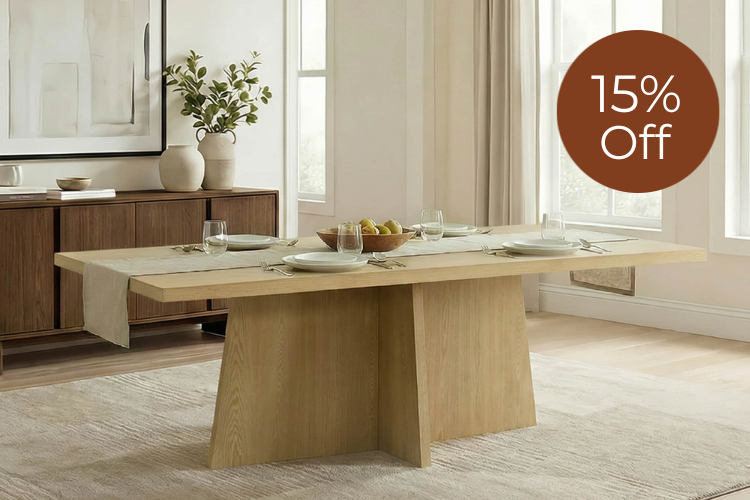
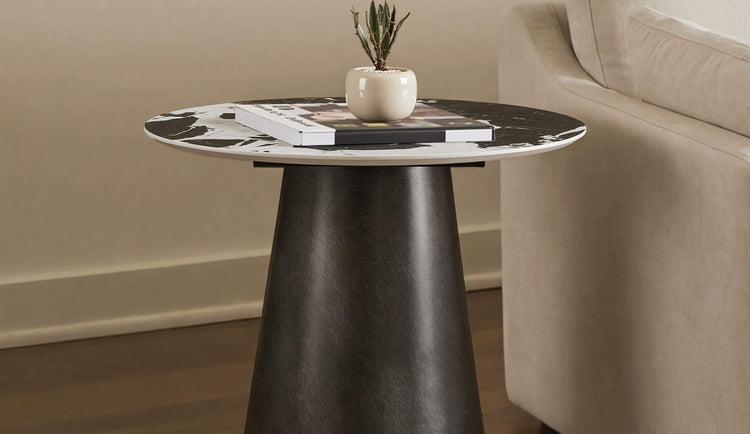
A pedestal base uses a single center support instead of four corner legs. A four-leg dining table places its supports near the corners or along the edges. That simple difference changes how the table feels in a room, how chairs tuck in, and how easy it is to move around it.
In day-to-day use, the base style affects legroom, seating flexibility, and visual openness more than many shoppers expect. A pedestal dining table can look lighter in a compact nook, while a four-leg table can feel more familiar and grounded. Neither base is automatically better. The better choice is the one that matches your room, chair style, and eating habits.
If you want a quick planning aid before buying, this small dining area guide is a useful next stop.
Pedestal vs Four-Leg Dining Table for Small Spaces
Pedestal tables often have the edge in tight rooms because the center support reduces corner clutter and gives chairs more freedom to slide in and out. Architectural Digest’s small-space take on pedestal tables supports that idea, especially when the goal is a cleaner visual footprint and easier chair placement. That makes pedestal a strong fit when the room is narrow, the table sits near a walkway, or the dining area opens into another space.

That said, a pedestal table is not automatically the better apartment choice. A bulky base can still crowd the room if the footprint is too wide. A slim four-leg table can work just fine when the legs sit far enough toward the corners and the top is scaled appropriately. The real question is not pedestal versus four-leg in the abstract. It is whether the actual base leaves enough room for chairs, traffic, and everyday movement.
A simple rule of thumb is to check the base shape before you fall in love with the tabletop. If the room already feels crowded, prioritize the model that leaves the cleanest path around the chairs. If the space is open enough, you can afford to choose more for style and less for compactness.
For readers focused on room flow, round table layout ideas can help explain why a pedestal often feels so natural in smaller spaces.
Which Base Feels Better at the Table
For everyday dining comfort, pedestal tables often feel easier when you are sliding chairs in and out, changing seat positions, or squeezing in an extra guest. The center support can reduce knee interference in the middle of the table, which is why many shoppers describe pedestal seating as more forgiving. That does not mean a four-leg table is uncomfortable. It means the comfort difference shows up most when the seating pattern gets less predictable.
Four-leg tables can feel perfectly fine for routine family meals, especially when the legs sit well toward the corners. The friction usually appears at the edges of the seating layout, where a corner leg can limit where someone wants to sit or how easily a chair pulls in. Community discussions often describe that as a "knee-knocking" problem, especially when guests squeeze in at the ends or corners. Real-world seating friction is one reason some shoppers prefer pedestal even when the room is not especially small.
For most families, the question is how the table works on an average Tuesday, not just at holiday dinner. If you usually seat the same number of people in the same places, either style can feel comfortable. If your seating changes often, pedestal usually gives you more freedom. The better base is the one that supports your most common setup without constant chair shuffling.
Table Shape and Base Pairings That Work Best
Round tables usually pair naturally with pedestal bases. The shape keeps traffic flowing smoothly, and the central support avoids the corner-leg problem that can interrupt seating. That is one reason a round pedestal dining table often feels like the first shape to check when the dining area is compact or conversation-focused.
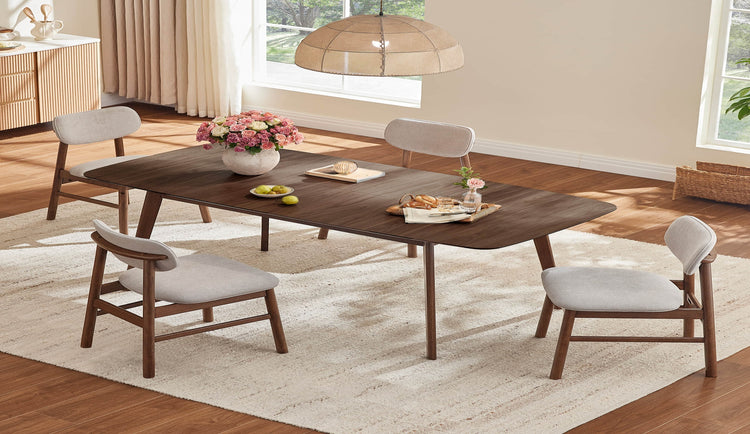
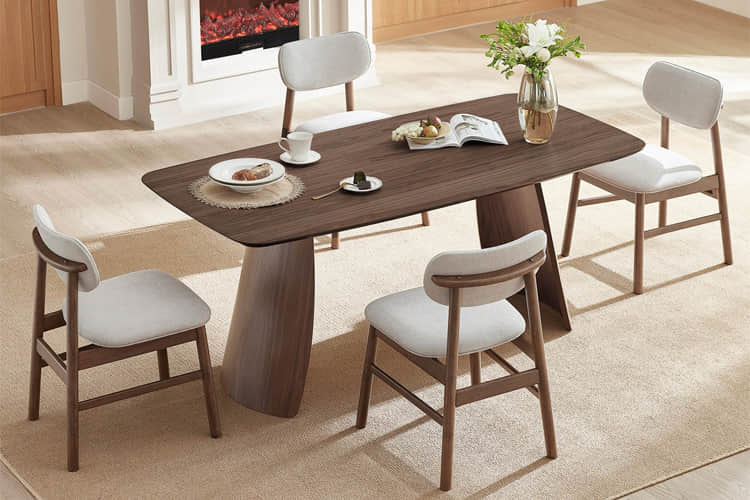
Square and rectangular tables commonly use four legs, and for many rooms that is the most straightforward match. The shape lines up well with the room geometry, and the base can feel visually balanced when the legs are placed cleanly near the corners. Just keep in mind that leg placement matters more than the category label. A poorly placed corner leg can be more annoying than a center base, while a well-scaled four-leg table may be easier to live with than a large pedestal.
Oval tables sit in the middle. Some use four legs, some use a center support, and some use sculptural bases that behave more like a pedestal than a classic legged frame. If you like the softer look of an oval top, check how the base affects knee room and chair pull-in before you assume the shape alone guarantees a better fit.
Cleaning, Style, and Long-Term Fit
Pedestal bases can make floor cleaning simpler because there are fewer contact points to work around. You do not have as many legs to vacuum around, and the space under the table can feel less cluttered. The tradeoff is that the base itself may need dusting, especially if it has carved or sculptural details. So the cleaning advantage is real, but it is not a total win.
- If you want easier floor access, pedestal usually helps around the table perimeter.
- If you want a lighter, more classic look, a four-leg table can feel less visually dense depending on the leg profile and finish.
- If your room already has a lot of visual weight, the table's shape, finish, and chair style may matter more than the base style alone.
- If you dislike dusting decorative details, look closely at how complex the base actually is before buying.
For a dining room refresh, the finish and proportions often do as much work as the base style. A pedestal can feel modern or traditional depending on the wood tone and silhouette, and a four-leg table can look airy if the legs are slim. In other words, style is real, but it is not separate from function. The right-looking table should also fit the way you use the room.
If you are updating the whole space, these dining room refresh tips can help you match the table choice to the rest of the room.
Choose This Base If...
- Choose a pedestal table if your dining area is tight, your chairs need more flexible placement, or you want a round top that feels easy to move around.
- Choose a four-leg table if your room is more open, you like a classic rectangular look, or the legs sit far enough toward the corners to avoid seating friction.
- Check the actual base footprint, not just the table category, before you buy.
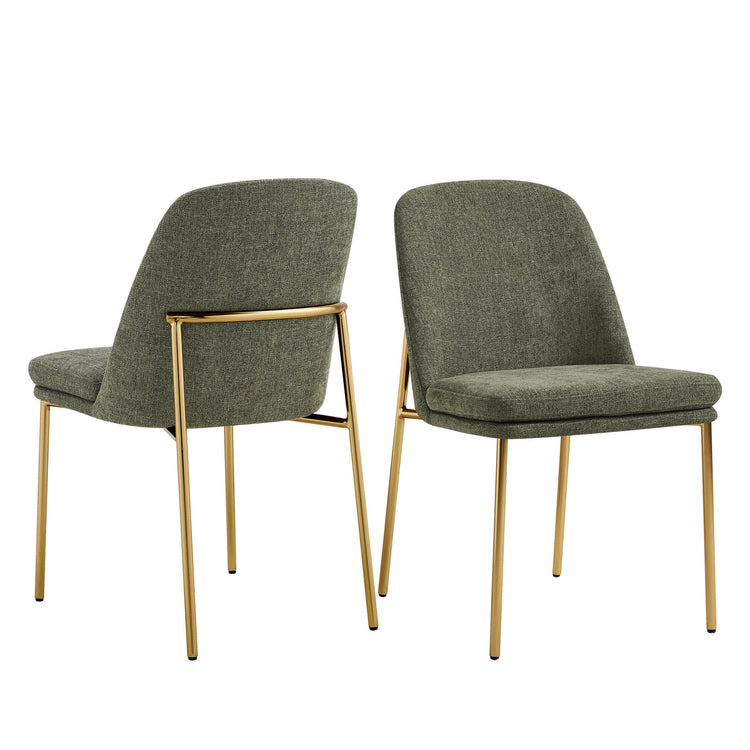
If you are still furnishing the space, browse dining seating options after you settle on the table base so the proportions work together.
The simplest answer in the pedestal vs leg dining table debate is to choose the base that fits your room and seating pattern first, then pick the style you will enjoy living with. Pedestal usually wins on compactness and flexibility, while four legs can be a smart choice when the room has enough breathing room. Before you add anything to cart, check the footprint, chair width, and traffic path one more time.
FAQs
What Dining Table Base Is Better for a Small Room?
Pedestal tables usually have the edge in smaller rooms because they can feel more open and give chairs more flexibility. Still, the actual base footprint matters more than the label. A compact four-leg table can work well if the room layout is simple and the legs do not interfere with seating.
Why Do Pedestal Tables Often Feel Easier to Sit At?
The center support can reduce the chance of bumping a leg against a corner support, which makes chair placement feel more flexible. That does not make every pedestal table comfortable by default. A wide or bulky base can still get in the way if the design is oversized for the room.
Can a Four-Leg Dining Table Work in a Tight Space?
Yes, it can. The key is whether the legs sit far enough toward the corners and whether the table size matches the room. If the layout is already crowded, a slim four-leg table may still work better than a pedestal with a large base.
What Table Shape Works Best With a Pedestal Base?
Round tops usually pair most naturally with pedestal bases because they support easier circulation and avoid corner interference. Oval and some square or even rectangular designs can also work, but the base footprint and chair layout should guide the final choice.
How Do I Choose Between Style and Function?
Start with function: room flow, seating comfort, and chair clearance. Then narrow by shape, finish, and the look you want in the room. If the table makes daily movement awkward, the style will not matter much after the first week.