


























A pre-assembled sideboard is the smarter choice when you want dining room storage ready to use right away and would rather skip cabinet hardware entirely. Choose a flat-pack sideboard instead when your delivery route is tight or you expect to move again soon, since separate components are easier to carry and later take apart.

The right pick comes down to which friction costs you more: setup time or route access. The rest of this guide walks through that trade-off, how to judge real build quality, what stability actually requires, and how to size and style the piece once it's in your dining room.
Pre-Assembled vs. Flat-Pack: Which Is Smarter for Your Dining Room?
Pre-assembled furniture removes the cabinet-building step, while flat-pack furniture trades that convenience for easier carrying and future disassembly. Neither format is automatically better; the right one depends on your setup tolerance and your delivery path.

| Decision factor | Pre-assembled sideboard | Flat-pack sideboard |
|---|---|---|
| Setup effort | None to minimal (legs only, in some cases) | Panel joining, hardware, and alignment |
| Time to use | Ready at delivery | Ready after assembly time |
| Route and relocation | Larger single package to route and carry | Components carried and moved separately |
| Quality checks | Verify materials and hardware on the listing | Verify materials and hardware on the listing |
| Best fit | Buyers who want storage working immediately | Buyers with tight routes or planned future moves |
Choose Pre-Assembled When Setup Friction Is the Main Cost
Pick this route when you want usable dining storage the same day it arrives and don't want to spend time on cabinet assembly. Our 79-inch Riley sideboard ships fully assembled, while our 55-inch Mason sideboard has its main body assembled with only the legs left to attach. That leg step is still much less work than building a full cabinet, but it isn't quite zero assembly, so check the exact listing language before you buy.
Choose Flat-Pack When Access or Future Moves Dominate
Flat-pack construction is worth the extra setup time when a winding staircase, narrow hallway, or an upcoming move is the bigger concern. Knockdown hardware lets large pieces travel apart and go back together at the destination, which is exactly why some buyers choose it on purpose, according to WOOD Magazine's discussion of knockdown hardware. The trade-off is that you take on drilling, alignment, and tool work that a finished piece skips.
Compare the Listing, Not the Label
Before you decide based on the word "assembled," read the exact assembly line, package count, and weight on the product page. A model billed as fully assembled and one billed as legs-only are both convenient, but they aren't identical purchases. Treat "fully assembled" as a setup fact, not a stand-in for higher quality or better stability.
How to Judge Build Quality Beyond Assembly Status
Assembly status tells you how much setup work is left, not how well the piece is built. To judge quality, compare the specific materials, hardware, storage function, and certifications each listing discloses.
Start with the Material and Finish Disclosure
- Record the exact body material, veneer, coating, and finish listed, such as MDF, oak veneer, or a UV-cured matte finish.
- Note any certification, like FSC certification for responsibly sourced wood.
- Treat words like "premium," "sturdy," or "durable" as marketing shorthand until a specification backs them up.
Check the Working Parts and Load Information
- Look for shelf adjustability, drawer glide type, door construction, and any cable-routing openings.
- Note any stated weight capacity or net weight, since heavier constructions often signal more substantial cabinetry.
- Match the storage layout, such as adjustable shelves or multiple cabinets, against what you actually plan to store.
Stability Is a Product Detail, Not a Format Guarantee
Stability depends on the specific product and how it's set up, not on whether it arrived assembled. A finished case can still need a product-specific anchoring step before it's safe to load.
Separate Stability Evidence from Assembly Format
An "assembled" label describes setup convenience only. It does not certify tip resistance or meet any particular safety classification on its own. The federal rule that regulates clothing storage units specifically excludes dining room furniture from its scope, so that rule doesn't automatically apply to a sideboard; the product's own instructions and documentation still govern, per CPSC's clothing-storage scope.
Apply the Anti-Tip Step When Instructed
- Read the current product instructions for your specific sideboard before placing it.
- Install any supplied or recommended anti-tip hardware exactly as directed.
- Keep climb-attracting objects, like remotes or toys, off the top if children are in the home.
Following manufacturer anti-tip instructions and installing supplied hardware right away is standard advice from the CPSC's anti-tip guidance. If your intended placement can't support the anchoring the instructions call for, stop and resolve that before loading or using the piece.
Choose a Sideboard Size and Storage Layout for the Room
Pick a sideboard only after measuring your wall and matching its storage layout to the items you actually plan to keep in it. Fit and function both come from checking the exact listing dimensions, not from eyeballing the room.
Measure the Footprint and Circulation
- Measure the available wall width, depth zone, and any height limits from baseboards or outlets.
- Note nearby furniture and walkway space so doors and drawers can open freely.
- Compare those numbers to the product's actual width, depth, and height, not a rounded estimate.
Match Storage to What You Use
Put daily dinnerware and linens in the easiest-to-reach cabinets or drawers, and reserve deeper or higher shelves for serving pieces and entertaining supplies you use less often. This keeps the pieces you grab weekly from getting buried behind occasional items. Our storage collection is a useful starting point if you're still comparing sizes and layouts.
Check Doors, Drawers, and Shelves
Confirm that cabinet doors and drawers can fully open without hitting the dining table or a walkway. Where a listing confirms adjustable or removable shelves, use that flexibility to fit taller platters or stacked linens without wasted space.
Plan Delivery for a Fully Assembled Piece
A fully assembled sideboard is only useful if it can actually reach your dining room in one piece, so treat route measurement as a pass or fail check before you order. Measure the path, not just the final wall space.
Measure the Route, Not Just the Wall
- Measure the narrowest doorway, hallway, stair turn, or elevator opening along the delivery path.
- Measure the final approach into the dining room itself.
- Compare all of those numbers against the product or package dimensions and weight listed on the page.
Confirm What Delivery Includes
Check the current appointment process, room-of-choice options, and packaging-removal terms on the listing before checkout. Free shipping doesn't automatically mean placement inside the room, so verify that detail directly rather than assuming it.
Record the Assembly Status Before Checkout
Note whether the model you're ordering is fully assembled, has an assembled main body, or needs legs attached, and save that listing detail for your exact variant. One assembled package can be harder to route through tight spaces than separate flat-pack components, so this is where the two formats' trade-offs meet in practice.
Style and Organize the Sideboard Without Crowding the Room
A sideboard adds real storage without crowding the room when its interior is zoned by how often you use each item and its top stays intentional rather than covered. Both choices depend more on your habits than on the piece itself.
Give Each Compartment a Job
- Reserve one drawer or shelf for everyday dinnerware and flatware.
- Keep linens in a dedicated cabinet section, folded and easy to grab.
- Store serving pieces you use occasionally in a deeper or higher spot.
- Use any remaining space for entertaining extras like table runners or extra glassware.
Keep the Top Useful, Not Overloaded
Build one focal arrangement, such as a lamp, a tray, and a plant, rather than lining the entire surface with objects. Leaving open space keeps the top usable for serving during dinners or holiday gatherings.
Tie Finish and Scale to the Dining Table
Balance the sideboard's visual weight and finish with your dining table and the wall around it so the room reads as one composed space rather than two mismatched pieces. For more detail on matching size, finish, and placement, see our guide on how to pair sideboard with table.
Two CHITA Assembly Profiles to Compare
If a no-assembly or near-no-assembly priority is driving your decision, two of our sideboards illustrate the range worth comparing.
79-Inch Riley Sideboard
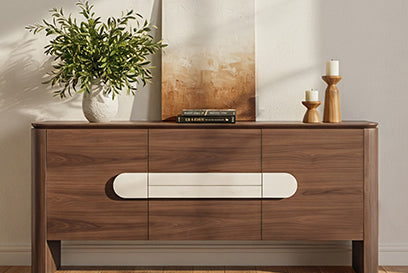
Our 79-inch Riley sideboard arrives fully assembled, measuring about 78.74 inches wide, 18.90 inches deep, and 29.53 inches high, with a net weight of 207 pounds. It offers adjustable removable shelves, oak veneer and MDF construction, and FSC certification. It suits readers whose delivery route and wall can accommodate a larger, finished piece with no cabinet assembly at all.
55-Inch Mason Sideboard
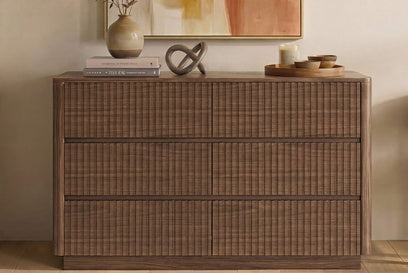
Our 55-inch Mason sideboard has its main body assembled, with only the legs left to attach. It measures about 55.12 inches wide, 15.75 inches deep, and 34.25 inches high, weighs 172 pounds net, and includes three cabinets plus an anti-tip accessory. It fits readers who want a narrower footprint and are fine with a short leg-installation step.
Use Dimensions and Assembly Details for the Final Choice
Pick whichever model passes both your room-fit measurements and your delivery-route measurements from the sections above. Once those checks confirm a fit, we invite you to review our current sideboard listings for the latest dimensions, materials, and delivery terms before you order.
FAQs
Does a pre-assembled sideboard still need any assembly?
It depends on the model. Our Riley sideboard ships fully assembled, while our Mason sideboard has its main body finished but needs its legs attached. Always confirm the exact assembly line on the current listing before checkout, since the same phrase like "pre-assembled" can describe slightly different setup steps between models.
Is a pre-assembled sideboard automatically better made than a flat-pack one?
No. Assembly status only tells you how much setup is left, not how the piece is built. Compare the disclosed materials, finish, hardware or joinery, storage components, weight capacity, and any certification on both options before assuming either format is the higher-quality choice.
What should I measure before a fully assembled sideboard arrives?
Measure every doorway, hallway, stair turn, and elevator opening along the delivery path, plus the final approach into your dining room, and compare those numbers with the product or package dimensions and weight on the listing. Then confirm the current delivery appointment and placement terms, since free shipping doesn't guarantee in-room placement.
Do dining sideboards need anti-tip hardware?
Follow the manufacturer's instructions and install any supplied or recommended anti-tip hardware, especially if children are in the home. The federal rule written specifically for clothing storage units excludes dining room furniture, so that particular rule isn't a universal dining-sideboard standard, but the product's own anchoring instructions still apply.
Sources
- WOOD Magazine. Choosing and using knockdown hardware.
- U.S. Consumer Product Safety Commission. AnchorIt.gov.
- U.S. Consumer Product Safety Commission. Clothing storage units.
Recommended Products



More to Read
 7 Sofa Trends That Actually Improve Comfort in 2026
Upgrade your living room with furniture that supports your body. Here are 7 modern sofa features designed to maximize your daily comfort...
7 Sofa Trends That Actually Improve Comfort in 2026
Upgrade your living room with furniture that supports your body. Here are 7 modern sofa features designed to maximize your daily comfort...
 Mother's Day Gift Guide: Cozy and Stylish Furniture Picks for Modern Moms
Make Mother's Day more meaningful with furniture gifts that bring comfort, smart features, storage, and quiet luxury into her everyday routine.
Mother's Day Gift Guide: Cozy and Stylish Furniture Picks for Modern Moms
Make Mother's Day more meaningful with furniture gifts that bring comfort, smart features, storage, and quiet luxury into her everyday routine.
 Performance Fabric Reality Check: Does It Really Repel Pet Hair and Stains?
Performance fabric is often marketed as a miracle solution for homes with pets and kids, but the reality is more nuanced. It...
Performance Fabric Reality Check: Does It Really Repel Pet Hair and Stains?
Performance fabric is often marketed as a miracle solution for homes with pets and kids, but the reality is more nuanced. It...