























The 2026 Guide to Hiding Home Office Clutter: Sideboards as Stealth Tech Hubs

The 2026 Guide to Hiding Home Office Clutter: Sideboards as Stealth Tech Hubs
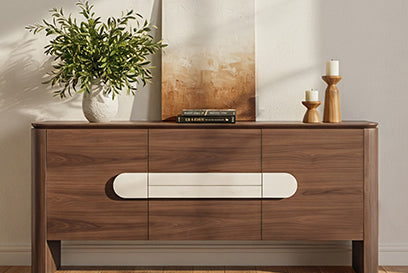
In 2026, the "Invisible Office" trend is transforming shared living spaces into seamless hybrid environments. A well-chosen sideboard with cable management serves as a stealth tech hub, hiding routers, chargers, and power strips while preserving your room’s aesthetic. The secret to success lies in selecting ventilated materials, maintaining sensible clearance, and performing simple checks to ensure your gear stays cool and your connection stays fast.

The Rise of the Stealth Tech Hub: Why Sideboards Rule the 2026 Home Office
Hybrid workers and small-space households are moving away from dedicated desks that dominate a room's visual profile. Instead, they are turning to furniture that "disappears" into the living or dining area while still organizing essential tech. A storage sideboard is often superior to a traditional desk for this purpose; its enclosed volume and adjustable shelves allow you to tuck away mesh routers, laptop docks, and power strips without a single visible cord.
The 2026 Invisible Office movement emphasizes “soft tech”—the integration of electronics behind natural textures rather than glossy plastic. As noted in this biophilic design trend report, warm minimalist and Japandi aesthetics help reduce visual noise. A modern buffet for office supplies can transition from a decorative piece to a fully functional tech station in seconds, making it ideal for multi-use rooms.
For renters and design-conscious homeowners, this approach solves a major pain point: the "cable nest" and blinking router lights that clash with a curated interior.
The Signal Challenge: Balancing Aesthetics and Connectivity
Hiding a router inside furniture involves a trade-off. Standard wooden furniture typically introduces a signal attenuation of approximately 3 to 10 dB, according to NIST-based data. While this reduction is often negligible for high-performance home networks, it can become noticeable if the router is placed behind very thick solid wood or dense metallic hardware.
Materials matter significantly:
- Wood and Glass: Generally "signal-friendly," though very dense hardwoods or leaded glass can cause more interference.
- Metal: Acts as a partial Faraday cage. In certain configurations, solid metal doors or heavy steel linings can block a significant portion of the signal—sometimes up to 90% in extreme cases—depending on the frequency band (2.4GHz vs. 5GHz) and antenna orientation.
To optimize performance, position your router on the highest shelf possible and toward the center of the sideboard. If you notice a drop in speed with the doors closed, consider furniture with woven fabric or fluted doors, which offer less physical obstruction for radio waves.
Managing the 'Heat Soak' Risk in Enclosed Sideboards
Sideboards were originally designed for linens and dishes, not heat-generating electronics that run 24/7. Without proper airflow, "heat soak" can occur. While the impact varies by device, some OSHA-related safety discussions and engineering heuristics suggest that excessive heat—such as a sustained 10°C (18°F) rise above recommended operating temperatures—can potentially degrade the lifespan of sensitive components over time.
Pro Tip: Always prioritize the manufacturer’s specific installation and operating temperature guidelines found in your device manual. High-power gaming routers and multi-port PoE switches generate significantly more heat than a standard mesh node and may require more aggressive ventilation.
Passive ventilation is usually sufficient for standard home office gear. Fluted wood doors create natural airflow channels, while woven fabric panels allow for excellent circulation. If you are using solid wood doors, ensure the sideboard has large rear cutouts for exhaust, or consider leaving a door slightly ajar during periods of heavy data use.
Choosing the Right Material: Fluted, Fabric, or Solid Wood?
Your choice of material determines whether your stealth hub is a high-performer or a bottleneck.
- Woven Fabric: Models like the Hazel Vintage Wood Sideboard offer the highest signal transparency and passive cooling. These are the "gold standard" for housing mesh routers or primary modems.
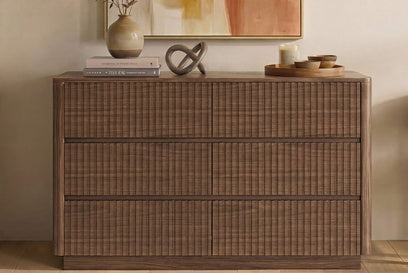
- Fluted Wood: Designs like the Bowen Fluted Wood Sideboard strike a balance. The vertical grooves allow for subtle airflow while providing a high-end, sculptural look that hides the tech inside.
- Glass Doors: Seen on the Kyle 4-Door Black Solid Wood Display Sideboard, glass minimizes signal loss and allows you to monitor status lights. However, glass traps heat more effectively than fabric, so ensure there is ample rear ventilation.
Avoid placing high-heat equipment in completely sealed, solid wood enclosures without modifications. The chart below visualizes these trade-offs.
Sideboard Materials for Stealth Tech Hubs: Trade-offs for 2026 Home Offices
A bounded comparison of how common sideboard materials balance Wi‑Fi transparency, airflow, styling, and overall fit for hiding routers and chargers in hybrid work setups.
View chart data
| Category | Woven fabric | Fluted wood | Solid wood / glass |
|---|---|---|---|
| Wi‑Fi transparency | 3 | 4 | 2 |
| Heat dissipation / airflow | 5 | 4 | 2 |
| Aesthetic appeal | 4 | 5 | 4 |
| Overall stealth-tech suitability | 5 | 4 | 2 |

Internal Layout: The 4-Inch Starting Recommendation
To prevent heat buildup, a good starting point is to maintain at least 4 inches of open space on all sides of routers and power bricks. This recommendation, often cited in environmental cabinet preparation guides, helps facilitate natural convection. However, this is a heuristic; the actual space needed depends on your device's power draw and the cabinet's total volume.
Cable management is equally vital for safety and troubleshooting. NIST electrical safety standards emphasize keeping plugs fully inserted and cords free of strain.
- Vertical Mounting: Attaching a power strip vertically to the back panel keeps outlets accessible and prevents "cable knots" that can trap heat.
- Tension Check: Ensure no cables are pulled tight or pinched by doors or shelves.
Stealth Hub Troubleshooting Tree
If your setup isn't performing as expected, use this logic to identify the culprit:
-
Issue: Interior feels hot to the touch.
- Check: Is there 4 inches of clearance? Are vents blocked?
- Fix: Increase spacing, move high-heat power bricks away from the router, or add a low-speed USB cooling fan.
-
Issue: Wi-Fi speeds drop significantly when doors are closed.
- Check: Is the door material metal or very thick wood?
- Fix: Move the router closer to the front of the shelf, adjust antenna orientation (if applicable), or swap to a fabric-door sideboard.
-
Issue: Connection is "spotty" or drops frequently.
- Check: Is the router sitting on the floor of the cabinet?
- Fix: Elevate the router to the highest shelf. If the sideboard has metal legs or frames, ensure the router is not placed directly against them.
Is Your Sideboard Tech-Ready? The Final Checklist
Before finalizing your setup, run this 3-step verification:
- The 2-Hour Heat Check: Run your full setup (laptop docked, router active) for two hours with the doors closed. Open the cabinet and feel the air and the top of the devices. It should feel warm, but never "hot" or uncomfortable to touch.
- The Speed Comparison: Run a speed test with the doors wide open, then again with them closed. If the drop is more than 20%, your material choice or placement needs adjustment.
- The 5-Second Access Rule: You should be able to reach any power switch or unplug your laptop charger in under five seconds. If you have to move furniture or untangle a "nest," your cable management needs a reset.
When shopping for a tech-ready piece, the 61" Bowen Fluted Wood Sideboard and 63" Hazel Vintage Wood Sideboard are top contenders for their ventilation-friendly designs. For those who need to see their gear, the 71'' Kyle 4-Door Display Sideboard offers glass visibility. Explore the full Storage Bestseller collection to find a match for your specific tech load.
For more tips on organizing your home, see our guides on TV stands with hidden cable management or maximizing small home spaces.
FAQs
Will hiding my router in a sideboard slow my Wi-Fi? In most cases, the 3–10 dB loss from wood is not noticeable. However, dense materials or metal accents can cause significant interference. For best results, use a mesh system and place nodes in "signal-transparent" furniture like those with woven or fluted fronts.
How much clearance do I really need for a router? While 4 inches is a standard recommendation for airflow, you should always check your device's manual. High-performance routers may require more space or active ventilation (like a small fan) if kept in a confined area.
Is it a fire hazard to put a power strip in a sideboard? It is generally safe if the power strip is high-quality, not overloaded, and has enough space to dissipate heat. Avoid "daisy-chaining" strips and ensure cables aren't pinched or strained, following basic electrical safety standards.
What is the best material for Wi-Fi signals? Woven fabric and thin wood slats (fluted) are excellent. Glass is also good for signals but less effective at allowing heat to escape. Avoid solid metal cabinets for any wireless networking gear.
How do I handle devices that run very hot? If a device (like a server or high-end switch) feels hot to the touch, do not keep it in a fully enclosed sideboard. Use a piece with an open back, add a USB-powered cooling fan, or keep the door ajar during use. Always follow the manufacturer's temperature limits to protect your warranty.
Recommended Products

More to Read
 7 Sofa Trends That Actually Improve Comfort in 2026
Upgrade your living room with furniture that supports your body. Here are 7 modern sofa features designed to maximize your daily comfort...
7 Sofa Trends That Actually Improve Comfort in 2026
Upgrade your living room with furniture that supports your body. Here are 7 modern sofa features designed to maximize your daily comfort...
 Mother's Day Gift Guide: Cozy and Stylish Furniture Picks for Modern Moms
Make Mother's Day more meaningful with furniture gifts that bring comfort, smart features, storage, and quiet luxury into her everyday routine.
Mother's Day Gift Guide: Cozy and Stylish Furniture Picks for Modern Moms
Make Mother's Day more meaningful with furniture gifts that bring comfort, smart features, storage, and quiet luxury into her everyday routine.
 Performance Fabric Reality Check: Does It Really Repel Pet Hair and Stains?
Performance fabric is often marketed as a miracle solution for homes with pets and kids, but the reality is more nuanced. It...
Performance Fabric Reality Check: Does It Really Repel Pet Hair and Stains?
Performance fabric is often marketed as a miracle solution for homes with pets and kids, but the reality is more nuanced. It...