



























Choosing between sintered stone and solid wood dining room sets comes down to which surface behavior matters most in your house. Sintered stone tends to suit families who want documented resistance to heat, stains, and everyday abrasion with minimal upkeep. Solid wood tends to suit families who prefer a warmer, changing surface and are willing to refinish or repair it over time.
Neither material is damage-proof, and the exact table's care instructions, not the material name alone, decide what you can safely do at the table. The sections below test that choice split against hot pans, scratches, spills, and the product facts worth checking before you buy.
Which Table Material Fits an Active Family Dining Space?
There is no single winner between sintered stone and solid wood. The better fit depends on which everyday risk worries you most and whether the exact table's documentation backs up the surface claim you're relying on.
| Family priority | Lean toward | Verify before buying |
|---|---|---|
| Hot cookware at the table | Sintered stone | Exact hot-pan permission in the product's care guide |
| Scratches from crafts or utensils | Sintered stone | Whether "scratch-resistant" wording applies to your model |
| Spills and frequent wipe-downs | Sintered stone | Approved cleaners and wiping method for the finish |
| Repairability after damage | Solid wood | Whether the specific finish can be sanded or refinished |
| Room and seating fit | Either | Table dimensions, extension range, and seating capacity |
Use this table as a starting filter, not a final verdict. The next sections walk through why each row matters and what to check before you commit to either material.
How Should You Handle Hot Pans and Serving Dishes?
Do not set a hot pan, casserole dish, or serving platter directly on either tabletop unless the exact product's care instructions explicitly say it's safe. When that permission is missing or unclear, use a trivet every time.
What the Current Evidence Can and Cannot Show
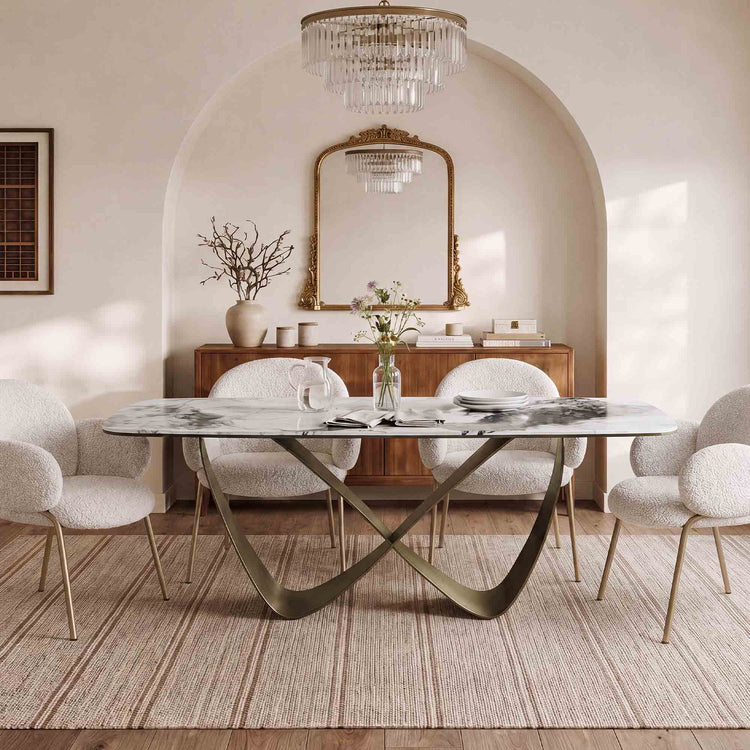
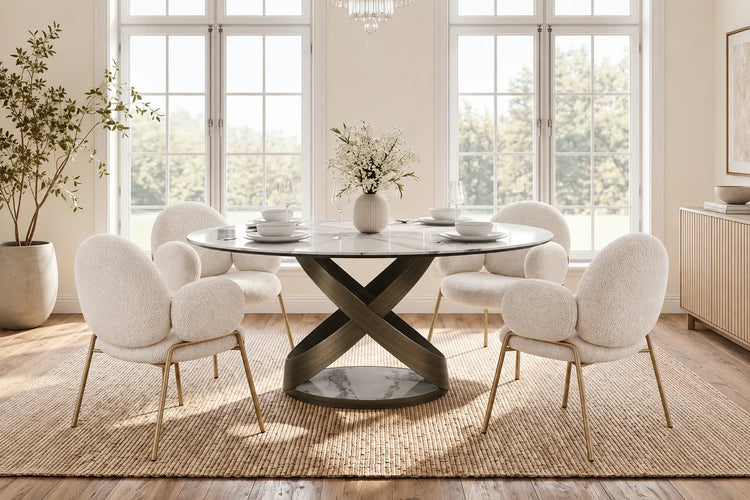
Some sintered stone dining tables, including our Sean extendable dining table, are listed with a heat-resistant, scratch-resistant, and stain-resistant Pandora glossy sintered stone top. That wording describes this specific model's construction. It does not establish a universal temperature limit for every sintered stone table, and it should not be read as blanket heat-proof permission for a different table or finish.

The Practical Rule for Family Meals
- Check the exact product page or owner's manual for direct hot-item language before your first family dinner with a hot dish.
- Use a trivet, hot pad, or serving board for pans, casseroles, and hot cookware whenever that permission is absent or unclear.
How Do Scratches and Everyday Surface Damage Change the Choice?
Scratch resistance and repairability answer two different family concerns, and a table can be strong in one without being strong in the other. Weigh both before deciding which risk matters more to your household.
Resistance Is Not Scratch-Proof
A scratch-resistant surface, like the one listed on the Sean table, is built to shrug off routine wear from plates, cups, and light utensil contact. That wording reduces day-to-day worry, but it doesn't mean sharp tools, gritty crafts, or dragged cookware can't leave a mark. Rough or abrasive contact is still a care question, and the exact product's guidance should tell you what to avoid.
Repairability Is a Separate Purchase Factor
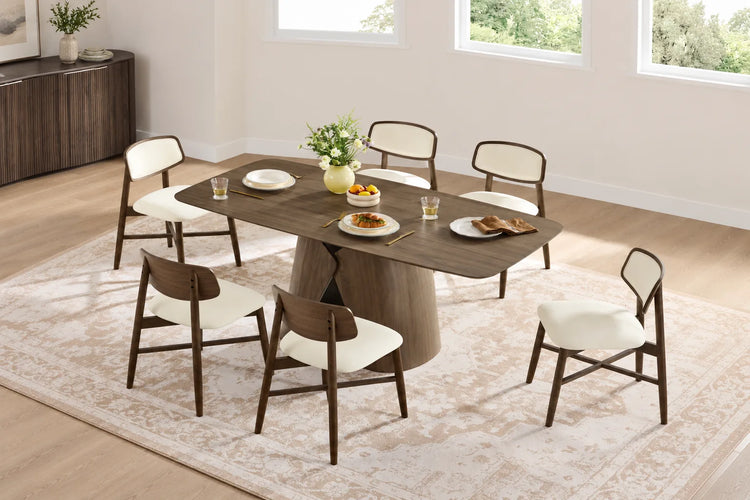
Solid wood has a reputation for being repairable, but that depends entirely on the finish. A painted or heavily lacquered wood top may not sand out scratches as easily as an oiled one, and not every solid-wood dining set comes with a documented refinishing process. Before assuming wood wins on repairability, ask the seller or manufacturer what cosmetic repair, touch-up, or replacement path actually applies to the table you're considering.
Which Surface Is Easier to Live With After Spills?
Stain resistance, low porosity, and "easy to clean" are three different claims, and a table can meet one without meeting the others. Confirm which claims actually apply to your table before counting on it for daily family messes.
Sintered stone is generally described as a dense, low-porosity material, which is one reason it's often marketed for stain resistance on tables like ours. That density can make everyday wipe-downs faster, but it does not automatically mean every household cleaner is safe on the finish. Solid wood tops usually need a sealed or oiled finish to resist staining, and that finish, not the wood itself, determines how well spilled juice, sauce, or crayon wipes away.
Before choosing a table for a house with kids or frequent guests, get the exact approved cleaner and spill-response instructions for that finish. Treat any "stain-resistant" or "easy-clean" label as a starting point, not a substitute for the actual care sheet.
What Product Facts Should You Verify Before Buying a Dining Room Set?
Start with the surface and care details, then confirm the table fits your room and household. Skipping either check is how a durable-looking table ends up being the wrong table.
Verify the Surface and Care Facts First
- Confirm the tabletop material and, where listed, its thickness or support-layer construction.
- Check for a direct statement on hot-item contact, cutting, or abrasive use.
- Identify the approved cleaners and wiping method for that exact finish.
- Treat any scratch-, heat-, or stain-resistant wording as specific to that model unless the brand states otherwise.
Then Verify Family and Room Fit
- Confirm width, depth, height, seating count, and extension range against your dining space and doorway clearance.
- Check the table's weight capacity and net weight, especially if you plan to move it during a downsize or rearrange.
- Review delivery timelines and the return window before finalizing an order.
Our Sean extendable dining table extends from 55.12 inches to 78.74 inches, seats four to eight, and carries a 300-pound weight capacity, which suits households that host occasionally and need the extra length only some nights. The 79-inch Irais dining table stays at a fixed 78.74-inch top with a 1.46-inch tabletop and a 250-pound weight capacity, which fits families who consistently need a larger table without the extension mechanism. Before buying either, or any other set, check your own room dimensions against a dining table size guide so seating and walkway space work in your actual space, not just on paper.
FAQs
Can I Place a Hot Pan Directly on a Sintered-Stone Dining Table?
Only if the exact table's care instructions explicitly say direct hot-item contact is safe. If that permission is missing or unclear, use a trivet or hot pad instead of testing the surface.
What Cleaner Should I Use on a Sintered-Stone Dining Tabletop?
Use only the cleaners and wiping method listed in that table's approved care guidance. A stain-resistant label doesn't confirm that every household chemical or abrasive cleaner is safe for the finish.
What Should I Do if Crafts or Utensils Scratch the Tabletop?
Stop the activity or tool causing the mark right away, and avoid improvised fixes like sanding or solvent cleaners. Contact the seller or check the product's care documentation for the approved repair or touch-up option.
What if Dining Table Care Instructions Do Not Mention Hot Cookware?
Treat silence as no permission. Don't test heat, cutting, or abrasive limits on your own; contact the seller or manufacturer for a clear answer before placing anything hot or sharp directly on the surface.
The Practical Verdict: Choose for Your Family's Main Exposure
There is no single best material for every family. If hot cookware, scratches, and spills are your biggest daily worry and the exact table's documentation backs up its resistance claims, a sintered stone table like our Sean or Irais model is worth prioritizing. If you value a warmer surface and a documented refinishing or repair path more than resistance claims, a solid-wood table may fit better.
Either way, the deciding factor is the exact care documentation for the table you're considering, not the material label on its own. Once you've matched a priority to a model, compare its care instructions, dimensions, seating, and delivery details before adding it to your cart.
Recommended Products



More to Read
 7 Sofa Trends That Actually Improve Comfort in 2026
Upgrade your living room with furniture that supports your body. Here are 7 modern sofa features designed to maximize your daily comfort...
7 Sofa Trends That Actually Improve Comfort in 2026
Upgrade your living room with furniture that supports your body. Here are 7 modern sofa features designed to maximize your daily comfort...
 Mother's Day Gift Guide: Cozy and Stylish Furniture Picks for Modern Moms
Make Mother's Day more meaningful with furniture gifts that bring comfort, smart features, storage, and quiet luxury into her everyday routine.
Mother's Day Gift Guide: Cozy and Stylish Furniture Picks for Modern Moms
Make Mother's Day more meaningful with furniture gifts that bring comfort, smart features, storage, and quiet luxury into her everyday routine.
 Performance Fabric Reality Check: Does It Really Repel Pet Hair and Stains?
Performance fabric is often marketed as a miracle solution for homes with pets and kids, but the reality is more nuanced. It...
Performance Fabric Reality Check: Does It Really Repel Pet Hair and Stains?
Performance fabric is often marketed as a miracle solution for homes with pets and kids, but the reality is more nuanced. It...