









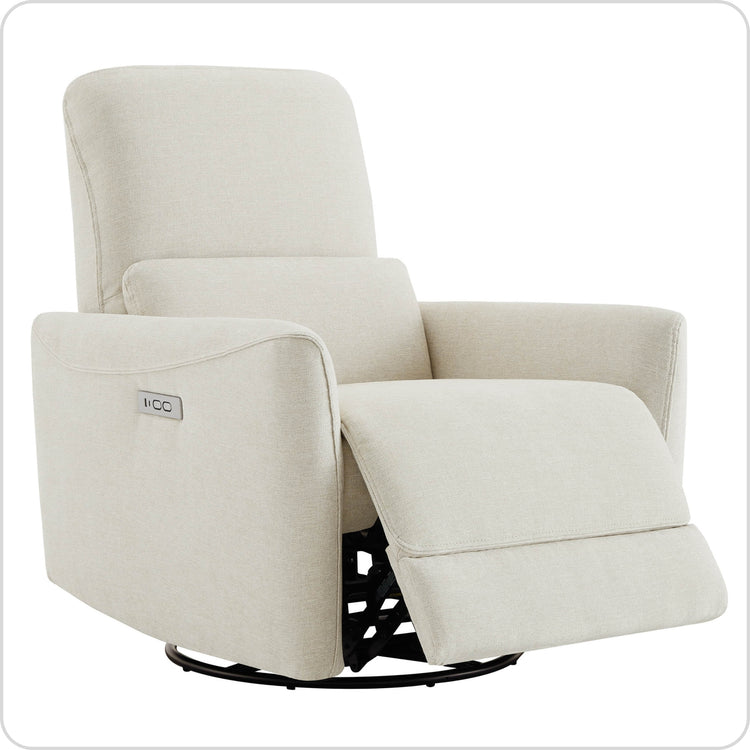
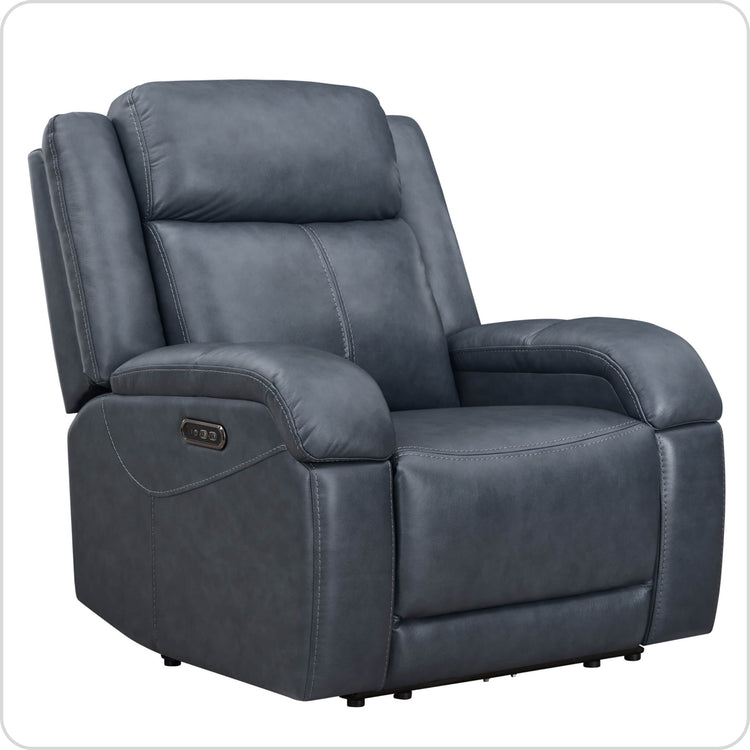
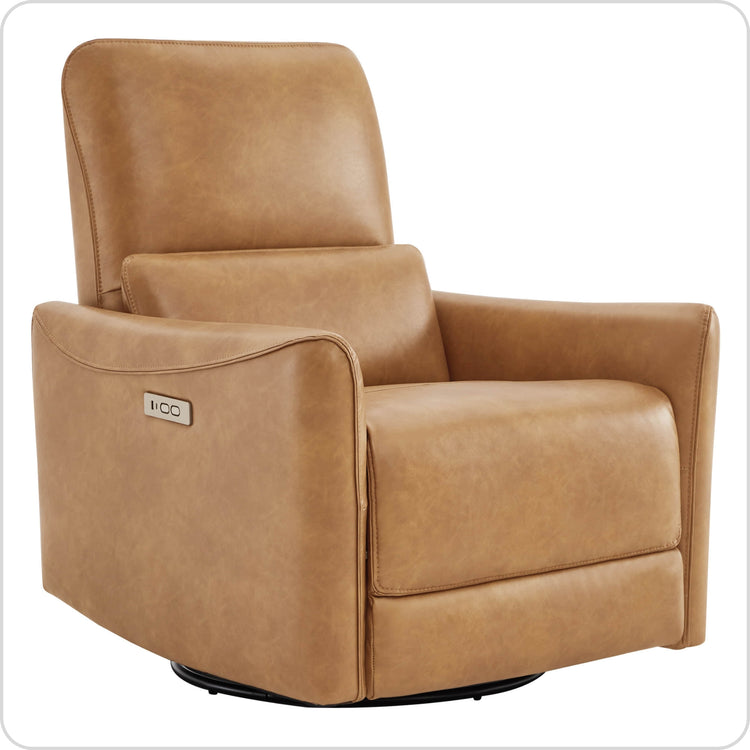


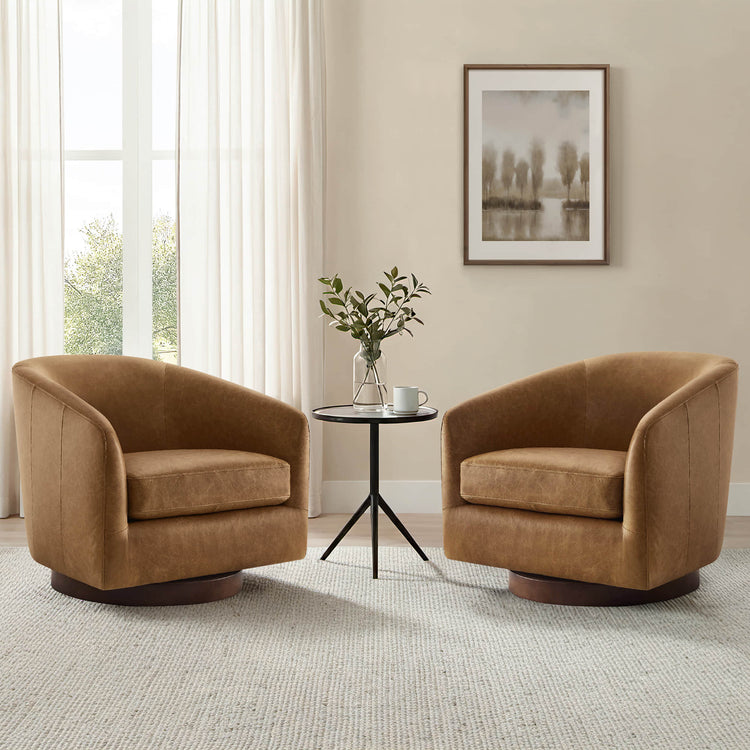















A stationary sectional couch keeps a clean, fixed silhouette and is usually simpler to place, while a power reclining sectional adds button-controlled motion for individualized lounging. Choose stationary when a continuous visual line and easy placement matter most. Choose power reclining when frequent, personalized recline adjustments are worth planning for outlets, clearance, and mechanism upkeep.
Neither option wins in every room. The right pick depends on your space, your household's actual lounging habits, and how carefully you verify the exact model's dimensions, care instructions, and warranty terms before it ships.
Stationary vs. Power Reclining Sectionals: The Choice at a Glance
Start with how the sectional will be used, not just how it looks in a photo. A fixed profile favors visual restraint and simple placement, while a powered profile favors adjustable comfort in exchange for extra planning.
| Type | Pros when it fits | Cons or not-fit conditions |
|---|---|---|
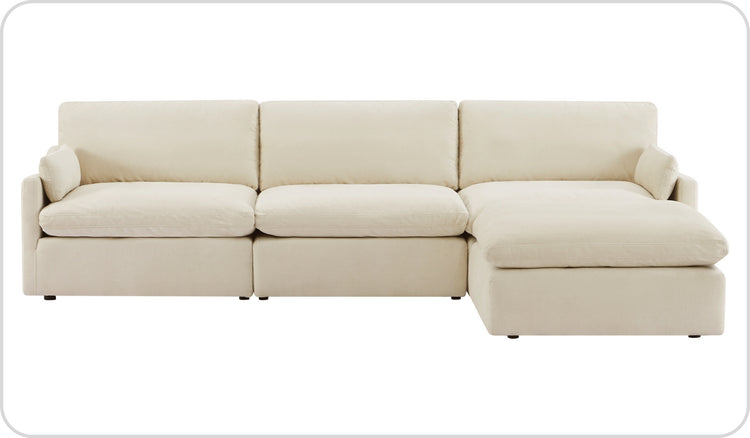
| Stationary sectional (like our Joyce stationary sectional) | Continuous curved outline, modular layout, no outlet planning required | Fixed seat angle; no powered position changes |
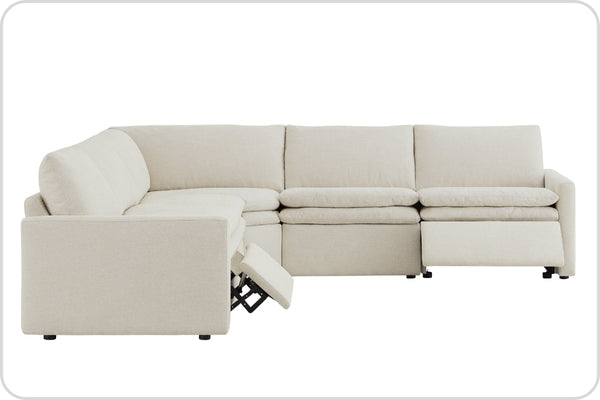
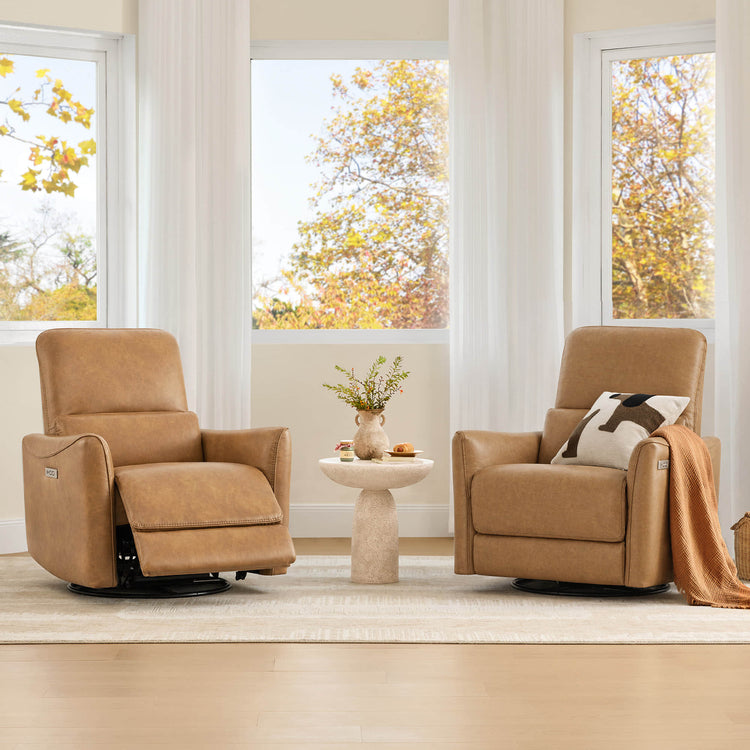
| Power reclining sectional (like our Oliver power reclining sectional) | Button-controlled headrest and recline for individualized comfort | Needs outlet access, cord routing, and a heavier delivery plan |
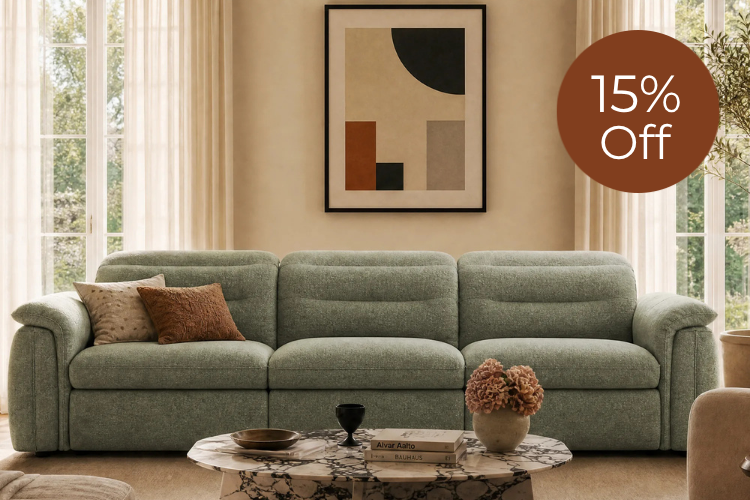
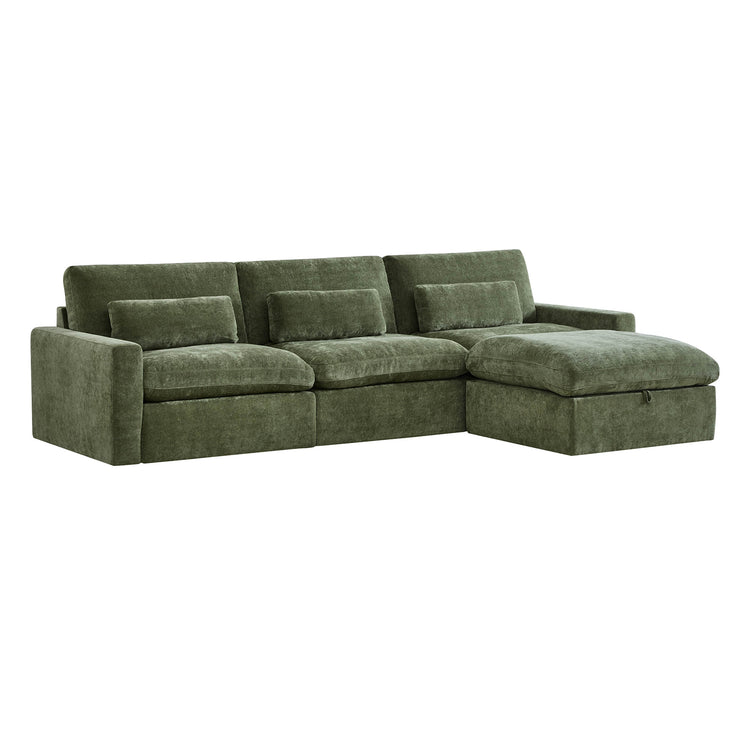
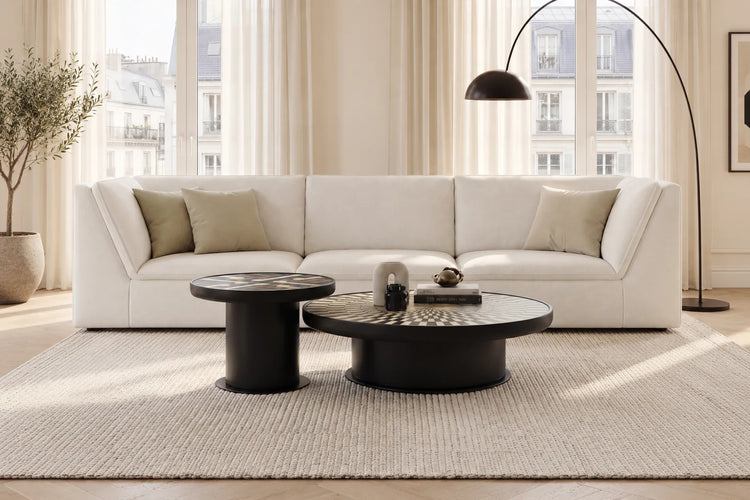
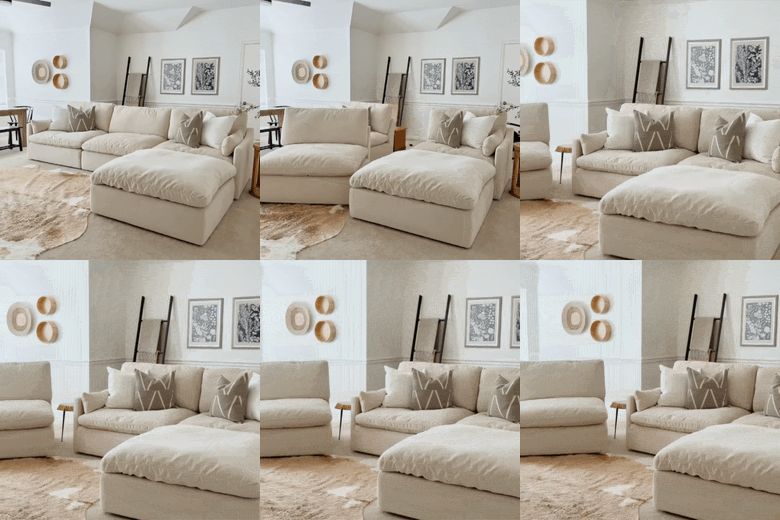
Our Joyce sectional demonstrates the stationary side well: it has a seamless curved silhouette, a modular layout you can rearrange, deep plush seating, and a rounded chaise for stretching out, all without any documented power-routing task. Our Oliver sectional demonstrates the powered side: a button-adjustable power headrest and a reclining mechanism give each seat its own comfort setting, but that control comes with a documented two-outlet requirement and an 8.2-foot cord to route. These are named-model examples, not category averages, so the exact configuration you select still needs its own check against your room and your ownership tolerance.
How the Mechanisms Change Comfort and Style
Stationary seating holds one fixed position; power seating adds a motor and controls that change position on demand. That mechanical difference is also what changes how the sectional reads visually in a room.
Fixed Seating vs. Button-Controlled Movement
Fixed seating gives every sitter the same seat depth and chaise angle, while button-controlled movement lets each person set their own position. Our Joyce sectional's deep seating and rounded chaise deliver stretch-out comfort without any moving parts, which works well when the household is happy sharing one general posture. Our Oliver sectional's power headrest and reclining control let a user tilt back or raise head support independently, which matters more when different people want different positions during the same sitting session. The deciding factor is frequency: if adjustment would only get used occasionally, a fixed chaise may deliver comparable comfort with less complexity.
How Motion Changes the Visual Line
A stationary silhouette stays visually continuous because no section pivots, reclines, or extends outward. A power sectional is judged as both furniture and equipment, since its backrests, footrests, or headrests can change shape at rest and in use. This does not make every stationary sectional minimalist or every power sectional bulky. It means a power model's resting profile, not just its brochure photo, is what determines whether it keeps the clean line a design-led room needs.

Match the Sectional to How the Room Is Used
The best fit follows the room's role and the household's actual routine, not a fixed ranking between categories. Three common scenes point to different priorities.
For a Design-Led Living Room
Prioritize a continuous fixed outline when the sectional is the room's main visual anchor. Our Joyce sectional's curved silhouette is one example of that look, but it is not proof that every stationary sectional keeps the same line, so confirm the resting profile of any specific model you're considering.
For Frequent Movie Nights or Reading
Choose power motion when different household members regularly want different head or recline positions during the same session. Choose fixed chaise comfort instead when everyone is comfortable sharing one posture and the main need is room to stretch out rather than individual adjustment.
For Apartments, Condos, or a Future Move
Treat box dimensions, hallway turns, doorway width, total weight, and handling as the first filter, before style enters the decision. A modular design makes reconfiguration easier once the sectional is inside, but it does not guarantee the boxes will clear a narrow stairwell or elevator, so that still needs to be measured directly.
Room Planning: Clearance, Outlets, and Moving Weight
Room fit and delivery fit are two separate tests, and published model values only help once you have measured your own space. Treat this section as the point where the decision becomes concrete.
Measure the Room and Operating Zone
Map the sectional's full assembled footprint first, then add the operating zone for any powered piece. A "zero-wall" or wall-hugger label describes one placement feature, not a complete clearance specification, so it does not replace checking the space a footrest or headrest needs when extended. Walkways, coffee-table clearance, outlet access, and cord routing should all be checked together, since a layout that works for the sofa's footprint can still fail once the recline path or the cord route is added.
Trace the Delivery Path Box by Box
Measure the narrowest doorway, hallway, stair turn, elevator, and any low ceiling along the delivery route, then compare that measurement against every box, not just the assembled sofa. Our Joyce sectional ships at roughly 344.3 pounds and lists a doorway threshold of 30 inches or wider, while our Oliver sectional ships at roughly 612.3 pounds and lists a doorway threshold of 33 inches or wider. Those figures apply only to these two named models; any other configuration needs its own published weight and doorway statement checked against your actual route, including the measure delivery paths approach for narrow entries.
Run the Pre-Cart Pass/Fail Check
Work through this sequence before adding anything to your cart, and stop at the first item that fails.
- Confirm the exact configuration and its published assembled dimensions against your room's footprint.
- Confirm the narrowest measurement along the delivery path against every box in the shipment, not just the assembled sofa.
- For power models, confirm the required outlet count, outlet location, and cord length against your planned placement.
- Confirm who handles delivery, assembly, and placement, and whether that matches the service level you selected.
- Confirm the current care instructions, warranty terms, and return window before finalizing the order.
If any step fails, adjust the configuration or placement first. Add to cart only once every step passes.
Maintenance, Reliability, and Ownership Checks
Documented care access is something you can verify today; long-term durability and mechanical reliability require stronger evidence than a product description alone. Treat the two separately instead of assuming either category is automatically easier to live with.
Compare Care Access, Not Category Stereotypes
Removable or reversible components can make upkeep easier, but only the exact product's care instructions control what is safe to clean. Our Joyce sectional has reversible cushions and zip-off back and lumbar pillow covers, with a dry-clean recommendation for those covers. Our Oliver sectional has non-removable, non-reversible cushions and a listed W cleaning code, which calls for a water-based cleaning approach rather than dry cleaning. Neither cleaning code tells you how stain-resistant or long-wearing the fabric will be over years of use, so treat it as a care instruction, not a durability score.
Verify Mechanism, Testing, and Service Support
Ask whether the mechanism and any electrical components have documentation or testing applicable to your exact model before treating a smooth demo as proof of long-term performance. Recognized BIFMA seating durability methods describe how seating strength and durability are commonly evaluated, and UL furniture safety testing covers broader stability, strength, and fire-hazard considerations, but neither confirms certification for a specific sectional unless the product listing states it. Powered seating adds electrical components, and UL electrified-furniture guidance explains why those components warrant their own verification rather than being assumed safe by default. Our Joyce and Oliver sectionals each carry a one-year furniture warranty from the delivery date; that confirms a coverage period, not a proven cycle life, so check exclusions, mechanism coverage, and the service process for parts or repairs before you rely on it long term. Our anti-fast furniture guide walks through additional sofa durability checks worth running on any model you're comparing.
Once you have verified the care requirements and warranty boundaries, choose the stationary model if you prefer a continuous visual profile with straightforward cushion upkeep, or choose the power reclining model if individualized positioning is your priority. Take final measurements of your room footprint and delivery path before placing your order.
FAQs
Can I assume a wall-hugger reclining sectional needs no clearance?
No. A wall-hugger or zero-wall label describes reduced clearance behind the sofa, not a complete operating footprint. The footrest, headrest, or recline path can still extend forward, so confirm the exact model's operating diagram and measure that space before placing it against a wall.
How should I plan outlets for a power reclining sectional?
Outlet count, outlet location, and cord length vary by model, so check the specific product's power requirements rather than assuming one outlet nearby is enough. Map the cord's actual route to the outlet and make sure it does not cross a walkway, where it could become a trip hazard.
Is a stationary sectional always easier to maintain?
Not automatically. Ease of care depends on the exact product's cleaning code, whether cushion covers are removable, and whether cushions are reversible, and these features vary by model rather than by category. Compare those specific details before assuming a stationary sofa needs less upkeep than a power model.
Does a furniture warranty prove a reclining mechanism will last?
A warranty confirms a coverage period, not how many recline cycles the mechanism can handle or how likely it is to fail. Check what the warranty excludes, whether it covers the motor and electrical components, and how service and parts requests are handled before treating the warranty length as reliability evidence.
Sources
Recommended Products


More to Read
 7 Sofa Trends That Actually Improve Comfort in 2026
Upgrade your living room with furniture that supports your body. Here are 7 modern sofa features designed to maximize your daily comfort...
7 Sofa Trends That Actually Improve Comfort in 2026
Upgrade your living room with furniture that supports your body. Here are 7 modern sofa features designed to maximize your daily comfort...
 Mother's Day Gift Guide: Cozy and Stylish Furniture Picks for Modern Moms
Make Mother's Day more meaningful with furniture gifts that bring comfort, smart features, storage, and quiet luxury into her everyday routine.
Mother's Day Gift Guide: Cozy and Stylish Furniture Picks for Modern Moms
Make Mother's Day more meaningful with furniture gifts that bring comfort, smart features, storage, and quiet luxury into her everyday routine.
 Performance Fabric Reality Check: Does It Really Repel Pet Hair and Stains?
Performance fabric is often marketed as a miracle solution for homes with pets and kids, but the reality is more nuanced. It...
Performance Fabric Reality Check: Does It Really Repel Pet Hair and Stains?
Performance fabric is often marketed as a miracle solution for homes with pets and kids, but the reality is more nuanced. It...