






















What Is Sintered Stone & Why It's Used in Furniture

Sintered stone is an engineered stone-like surface, not a quarried natural stone. In plain English, what is sintered stone? It is a manufactured material made by fusing minerals under intense heat and pressure into a dense surface used on furniture, especially tables and storage pieces. The name refers to the sintering process, not to a specific natural slab or color.

What Sintered Stone Is
Sintered stone is best understood as a factory-made surface that aims to deliver the look of stone with more consistency than a natural slab. The Natural Stone Institute describes it as an engineered surface created through heat and pressure that binds minerals together. That is why it often appears in searches for sintered stone furniture rather than in discussions of raw building stone.
The practical takeaway is simple: if you are comparing furniture materials, sintered stone belongs in the category of engineered surfaces, not quarried stone. It can resemble marble or granite, but the way it is made changes what buyers should expect from the finish, consistency, and care routine.
How It Is Made
At a high level, the material starts with minerals that are compressed and heated until they form a slab-like surface. The exact recipe can vary, but the important shopper detail is that the finish is created by process, not by quarrying a block from the ground. That is why the name refers to sintering, the way the material is fused together, not just to its appearance.
One reason this matters is that the process can produce a more uniform surface than many natural stones. In interior-design terms, that often gives furniture a cleaner, calmer look. It also helps explain why the same material can appear on a dining top, a coffee table, or a cabinet surface without looking out of place.
A second detail is that the rest of the furniture still matters. Thickness, edge treatment, backing, and base construction can change how the finished piece looks and feels. In other words, the surface material is only part of the buying decision, which is why shoppers should still check the full product listing instead of stopping at the material name.
For a more technical explanation of the mineral-fusion process, Swatchbox also notes that the material is formed through high heat and pressure rather than quarrying.
Why Furniture Makers Use It
Furniture makers use sintered stone because it gives them a modern, stone-like surface that fits contemporary rooms without the maintenance expectations many shoppers associate with natural stone. It works well in clean, minimal spaces, but it can also pair with wood or metal bases if you want a softer look. For many buyers, that mix of style and practicality is the main appeal.
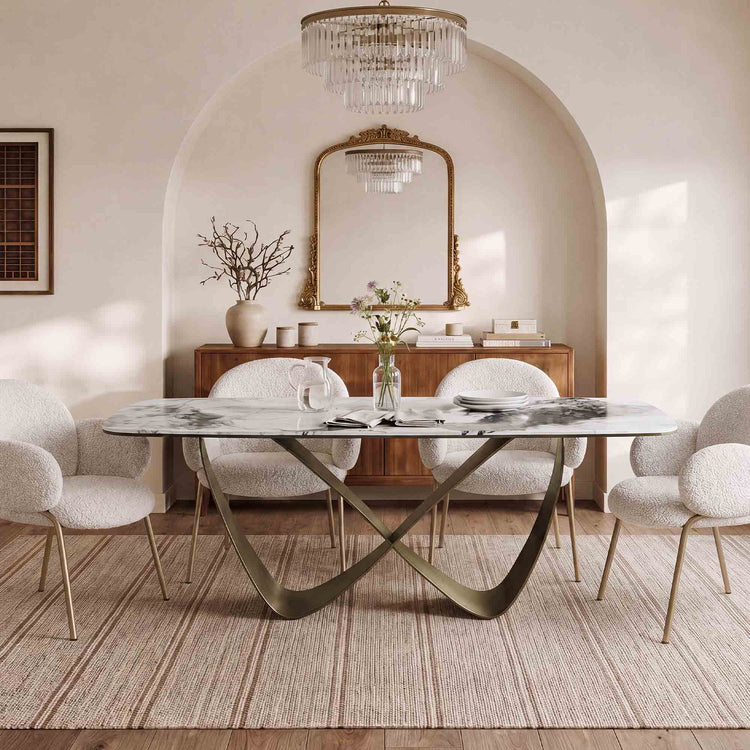
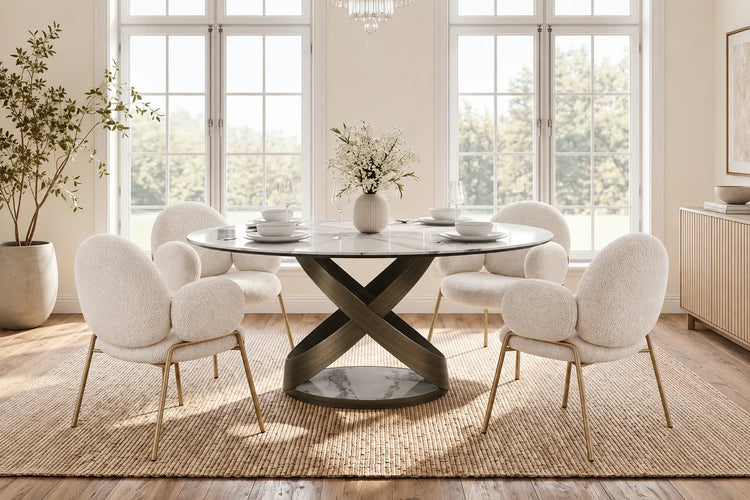
There is also a day-to-day use angle. Sintered stone is often described as virtually non-porous, which is one reason it is discussed as easier to live with than many natural stones. That can matter on dining tables and other high-touch surfaces where spills, fingerprints, and routine cleanup are part of normal use. A modern dining table with this kind of top may feel like a good fit when you want a polished look without constant upkeep.
It is also useful in bright rooms. Because some sintered stone constructions are resin-free, they are often discussed as more UV-stable than quartz in certain contexts, which can matter near windows or in sun-heavy spaces. That does not make every piece automatically right for direct outdoor exposure, but it does help explain why the material gets attention in light-filled interiors.

Benefits and Tradeoffs to Know
Here is the balanced version: sintered stone can be a smart furniture surface when you want a modern look and easier everyday care, but it is not a magic material. It is often chosen for stain resistance, moisture resistance, and a polished finish that holds up well in typical indoor use. Those are useful advantages, especially for busy homes, but they are still product-dependent.
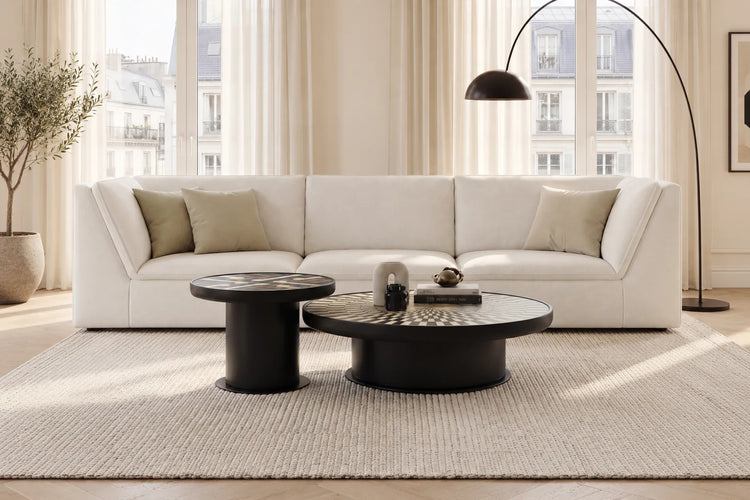
The limits matter just as much. The surface is rigid, so sharp impacts to edges can cause chips, and repairs may be more difficult than with softer materials. That means the best-looking piece on a product page is not always the best choice if the room gets a lot of bumping, shifting, or rough use. For shoppers comparing coffee table options, edge shape and base stability can matter as much as the surface itself.
A useful rule of thumb is this: choose sintered stone when you want a refined stone look, straightforward upkeep, and a surface that suits regular daily use. Look elsewhere if you expect the top to be carefree in every situation or if the piece has fragile edges, a lightweight base, or a finish that does not match the room's actual traffic.
| Practical Upside | Tradeoff To Consider | Best-Fit Use Case |
|---|---|---|
| Clean, modern stone-like look | Appearance can vary by finish, edge, and base design | Rooms where style matters as much as function |
| Often easier everyday care than many natural stones | Not a promise of maintenance-free ownership | Dining and living surfaces with routine spills and wipe-downs |
| Often discussed as a good choice for bright rooms | UV and heat claims are still product-sensitive | Spaces near windows or with strong daylight |
| Dense, rigid surface feel | Edges can chip more easily than softer materials | Homes that can handle a more careful tabletop |
| Works across tables and storage pieces | The whole furniture build still matters | Buyers comparing tops, cabinets, and consoles |
How to Shop for Sintered Stone Furniture
Before you buy, start with the room and the job the piece has to do. A dining table, coffee table, and storage top all face different kinds of use, so the material alone does not tell you enough. If the piece will see daily meals, kids' projects, or lots of movement around it, the support structure and edge profile matter as much as the surface name.
Use this quick checklist:
- Confirm the room size and use case. A surface that looks great in photos may still feel too large, too small, or too formal once it is in your space.
- Check the dimensions and proportions. Make sure the top fits the room and leaves enough clearance for chairs, walking paths, or nearby seating.
- Review the base and support structure. A stone-like top needs a stable foundation, especially on extendable or larger pieces.
- Read care language carefully. Treat maintenance notes as a real buying signal, not a generic promise.
- Compare the style to the rest of the room. The best piece is the one that fits your actual use, not just your saved inspiration board.
If you are narrowing down furniture by category, browsing storage pieces or dining tables can help you compare shape and scale after you understand the surface material. For shoppers who want a room-specific article next, the dining table selection guide is a useful follow-up.
Final Takeaway
If you are deciding what sintered stone means for furniture, think of it as an engineered surface that brings a stone-like look with practical everyday appeal. It is popular for dining tables, coffee tables, and storage tops because it can feel modern and relatively easy to live with. Just keep the tradeoff in view: the whole piece matters, and edge durability, base support, and care instructions should guide the final choice. If you are ready to shop, start with the room first and the material second.
FAQs
How Is Sintered Stone Different From Natural Stone?
Sintered stone is manufactured, while natural stone is quarried. That difference affects surface consistency, pattern variation, and how the piece is made. If you want a more uniform look for furniture, sintered stone is often easier to shop for, but natural stone may appeal if you prefer more variation and a one-of-a-kind feel.
Can Sintered Stone Be Used on Dining Tables and Coffee Tables?
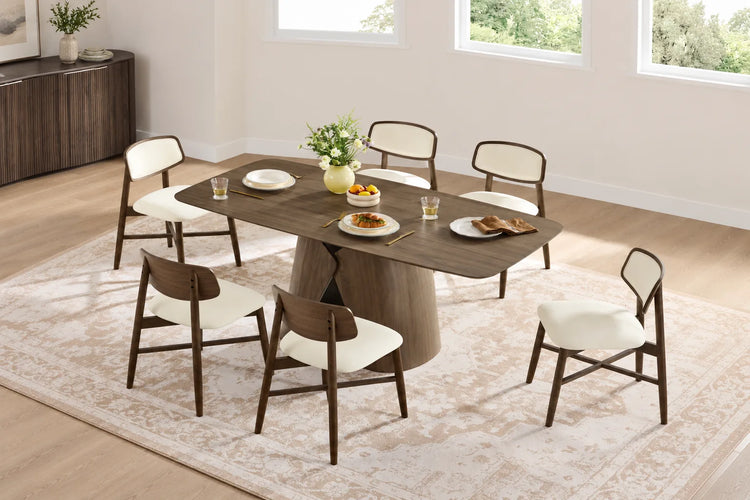
Yes, it is commonly used on tabletops and other furniture surfaces. The better question is whether the whole piece fits the room and use case. A table with a sintered stone top still needs a strong base, sensible proportions, and an edge profile that suits everyday use.
What Should I Check Before Buying Sintered Stone Furniture?
Check the dimensions, the support structure, the edge detail, and the care instructions. Also look at how the piece will function in your room. A surface description tells you only part of the story, especially for larger furniture where the base and shape affect day-to-day use.
Is Sintered Stone Easy to Maintain?
It is often chosen because it is relatively straightforward to care for in normal indoor use. But easy care is not the same as no care. The finish, edge treatment, and exact product build still matter, so the best approach is to read the manufacturer's cleaning guidance before you buy.
Does Sintered Stone Work Well for Busy Households?
It can be a practical choice for busy homes because it is often associated with everyday resilience and simple wipe-down care. Still, busy-household fit depends on the exact piece. If you expect a lot of impact around the edges or rough handling, pay close attention to the construction details before assuming it is the right match.
Recommended Products

More to Read
 7 Sofa Trends That Actually Improve Comfort in 2026
Upgrade your living room with furniture that supports your body. Here are 7 modern sofa features designed to maximize your daily comfort...
7 Sofa Trends That Actually Improve Comfort in 2026
Upgrade your living room with furniture that supports your body. Here are 7 modern sofa features designed to maximize your daily comfort...
 Mother's Day Gift Guide: Cozy and Stylish Furniture Picks for Modern Moms
Make Mother's Day more meaningful with furniture gifts that bring comfort, smart features, storage, and quiet luxury into her everyday routine.
Mother's Day Gift Guide: Cozy and Stylish Furniture Picks for Modern Moms
Make Mother's Day more meaningful with furniture gifts that bring comfort, smart features, storage, and quiet luxury into her everyday routine.
 Performance Fabric Reality Check: Does It Really Repel Pet Hair and Stains?
Performance fabric is often marketed as a miracle solution for homes with pets and kids, but the reality is more nuanced. It...
Performance Fabric Reality Check: Does It Really Repel Pet Hair and Stains?
Performance fabric is often marketed as a miracle solution for homes with pets and kids, but the reality is more nuanced. It...