






















Modular Sofas for Renters: Moving, Fit, and Value

A sofa that works in your current apartment may face a different doorway, wall length, or room shape at your next address. A modular sofa gives you separate pieces to work with. Its usefulness for a renter comes from the pieces you can carry, the layouts they can form, and the cost of keeping them through a move.
When a modular sofa makes sense for renting
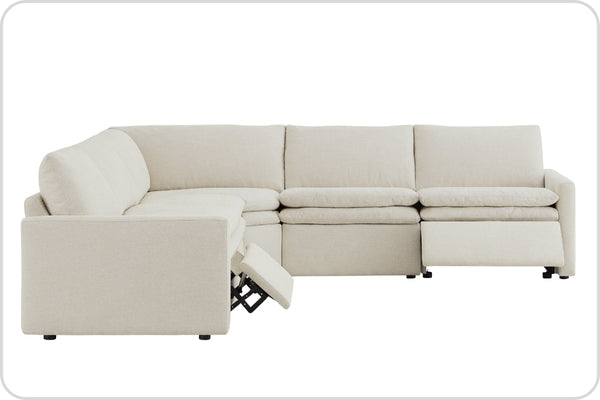
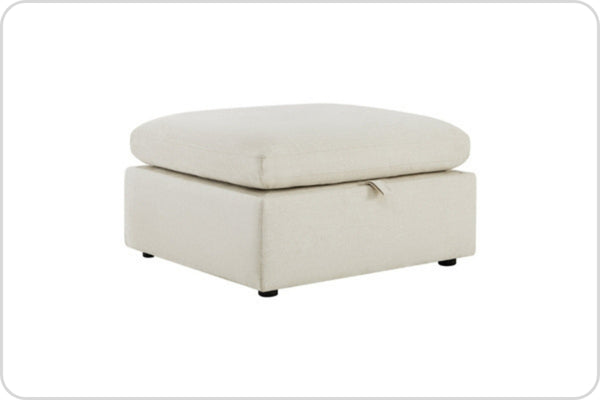
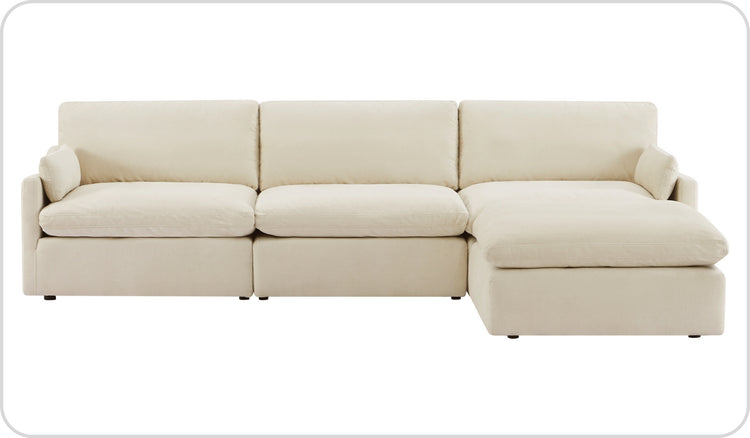
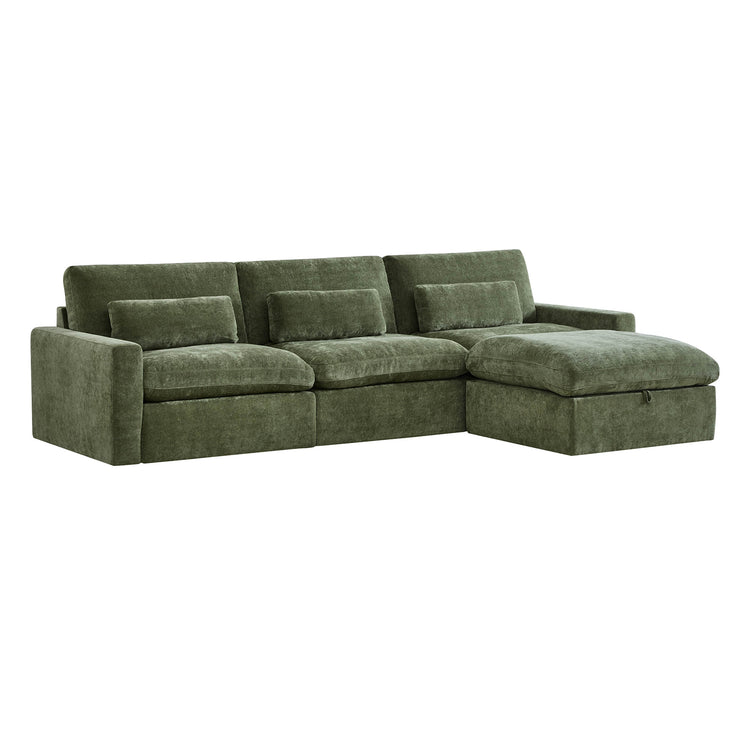
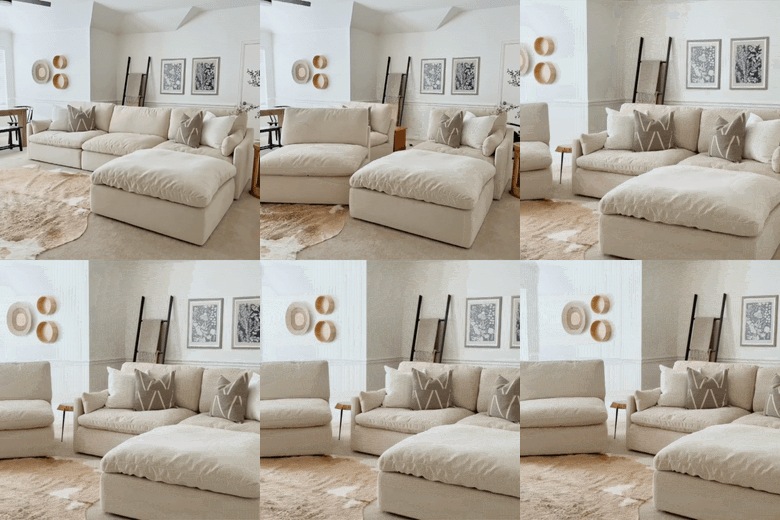
Modular seating is useful when separate units fit your delivery route and can form more than one layout you would use. You might place an ottoman in front of a seat for lounging, move it away to open a walkway, or rearrange compatible seats after moving to a room with a different wall position.
A compact fixed sofa can suit a small apartment with a straightforward delivery route and a layout you expect to keep. Compare the usable seats, overall dimensions, and delivery requirements of the specific options. A large modular configuration still occupies a large room.
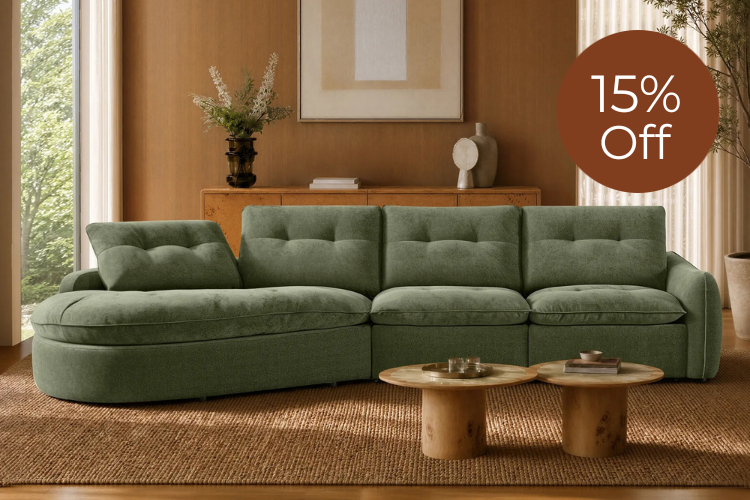
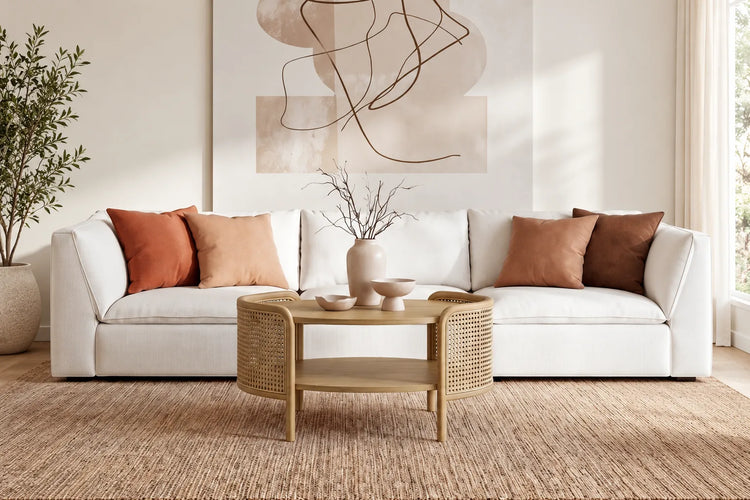
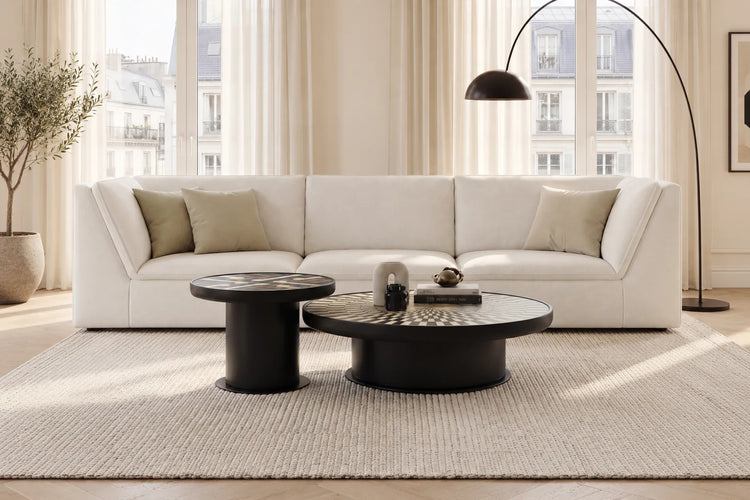
For the value comparison, start with today's room and one plausible future layout. Buying extra modules for an unknown home adds cost and storage needs immediately. Choose a configuration you can use now, then check which compatible pieces are currently available separately. Our modular sofa collection lets you compare the available layouts and the pieces included in each configuration.

Measure every package along the delivery route
Write down the packaged width, depth, height, and weight of every component. If the instructions permit unpacking or removing a part before moving it, also record the permitted moving dimensions. Seat width describes the sitting area; it does not describe the shipping carton.
- Start at the building entrance. Measure the clear opening with the door open. Include door hardware and any narrow gate.
- Continue through the shared areas. Record lift openings and internal space, stair width, handrails, and landing depth.
- Check each turn. A long box needs room to rotate. Measure both the opening and the approach to a corner.
- Finish inside the room. Leave space to set boxes down and complete the assembly steps.
Share the package list and difficult points with the delivery team before ordering if the fit is close. Building rules may also require a delivery booking, lift reservation, or proof of insurance from the mover.
Compare two different package arrangements
Our Maisie two-seat modular sofa arrives in three packages: arms, left seat and backrest, and right seat and backrest. Its product instructions state that it fits through doorways 20 inches or wider. Keep the full package measurements in your route check, especially for turns and stairs. Gather all boxes before starting, then follow the instruction sequence beginning with the arms box.
Our Ivy five-piece configuration lists five packages: a left-arm chair, an armless chair, a right-arm chair, and two ottomans. Its product information states a 29-inch doorway requirement. These are model-specific arrangements with different component shapes.
For CHITA's left-arm and right-arm descriptions, face the furniture: the arm is on your left or right. Save a labeled plan with the modules you ordered so you can distinguish arm pieces from armless seats when planning the next layout.

Plan layouts the actual pieces can make
Draw the outline of each module to scale, or use painter's tape for a full-size plan. Include arm thickness, seat depth, an ottoman's footprint, and the space needed to open nearby doors. Walk from the entrance to the window and around the coffee table. Compare L-shaped, U-shaped, and chaise layouts using the seats, arm pieces, corners, and ottomans included in your configuration.
| Possible change | What makes it workable |
|---|---|
| Move the lounging position | A separate ottoman or a chaise component approved for that layout. |
| Split a large sofa into smaller groups | Modules with suitable finished sides and the arms needed for the new groups. |
| Add another seat | A matching, available module with compatible dimensions and connectors. |
| Use an armless seat separately | A model designed for that use with the correct finished surfaces and support. |
Our Kenna two-piece modular sofa provides another starting size within a collection offered in multiple configurations. Compare the configurations you can buy now and the components included in each one.
When adding to a sofa later, match the collection, component type, connector arrangement, dimensions, upholstery, and color. Keep the order details and contact us about current matching pieces. A future batch of the same fabric may have a visible color difference beside upholstery that has been in use.
Make everyday comfort part of the choice
Choose the seat depth and cushion firmness you enjoy for your usual activity. For upright reading, consider how your feet reach the floor and how the back cushion supports you. For curling up, allow for the lounging depth you want and the floor space it takes.
Look at how the seats connect and how the instructions tell you to move them. Fully engage the specified connectors during assembly. When relocating the sofa, release them as directed and move the separate pieces. Pulling an assembled group across the floor can strain connections and damage flooring.
Separate components still need enough people to carry their individual weight safely. Keep fasteners labeled, protect upholstery and corners, and photograph the original layout before packing. Bring the assembly instructions to the new home. The HSE's guidance on planning a lift recommends deciding where an item will go, arranging suitable help, and choosing handling aids before lifting.

Calculate the cost of keeping the sofa
Compare the purchase price plus the delivery and assembly services you need. For an expected move, obtain a quote using the actual piece count and dimensions. Add any planned extra modules at their current prices, and treat future availability as an item to confirm when you need it. For an interstate U.S. move, FMCSA's moving-document guidance identifies a written estimate and an inventory recording each item's condition as documents to obtain from your mover.
Read the return terms for your order while you still have the packaging. Note the return window, condition requirements, collection arrangements, and applicable charges. Those details help you choose a configuration you can realistically receive, try, and handle in your apartment. The FTC's online-shopping checklist also calls for checking who pays return shipping, the return period, and any restocking fee.
Resale value depends on the model, condition, local buyers, and transport costs. For a purchasing decision, base the value on the seats and layouts you expect to use yourself. Any eventual sale is a separate transaction.
Frequently asked questions
Are modular sofas worth it for renters who move often?
Yes, when their separate pieces fit your route and their layouts suit both your current room and a likely future one. Compare the delivered price and a mover's quote for those pieces with the fixed sofa you would otherwise buy.
Will a modular sofa fit through a narrow doorway?
It will fit when every required package or permitted unpacked component clears the entire route. Our Maisie two-seat model lists a 20-inch doorway requirement, while the Ivy five-piece configuration lists 29 inches. Check the exact configuration's boxes and turning space as well.
Can I add pieces from a different modular collection?
Use components confirmed as compatible with your existing collection. Different systems can have different connectors, seat heights, depths, and arm arrangements. Send us your order details and the piece you want to add so we can help check the match.
Can I move a modular sofa on my own?
Only handle a component alone if its weight, size, and route are manageable for you and its instructions allow it. Many moves need two people, especially on stairs. Separate the pieces as directed and arrange help for each component's weight.
Recommended Products


More to Read
 7 Sofa Trends That Actually Improve Comfort in 2026
Upgrade your living room with furniture that supports your body. Here are 7 modern sofa features designed to maximize your daily comfort...
7 Sofa Trends That Actually Improve Comfort in 2026
Upgrade your living room with furniture that supports your body. Here are 7 modern sofa features designed to maximize your daily comfort...
 Mother's Day Gift Guide: Cozy and Stylish Furniture Picks for Modern Moms
Make Mother's Day more meaningful with furniture gifts that bring comfort, smart features, storage, and quiet luxury into her everyday routine.
Mother's Day Gift Guide: Cozy and Stylish Furniture Picks for Modern Moms
Make Mother's Day more meaningful with furniture gifts that bring comfort, smart features, storage, and quiet luxury into her everyday routine.
 Performance Fabric Reality Check: Does It Really Repel Pet Hair and Stains?
Performance fabric is often marketed as a miracle solution for homes with pets and kids, but the reality is more nuanced. It...
Performance Fabric Reality Check: Does It Really Repel Pet Hair and Stains?
Performance fabric is often marketed as a miracle solution for homes with pets and kids, but the reality is more nuanced. It...