
























Why Fully Assembled TV Stands are the 2026 Anti-Fast Furniture Choice
In 2026, more homeowners and renters are choosing fully assembled TV stands and media consoles to skip the frustration of flat-pack assembly while gaining sturdier construction that lasts. These ready-to-use pieces deliver better stability for large screens, smarter storage, and cleaner cable management without the wobbly joints common in self-assembled furniture. The key is matching the console to your TV size, verifying real-world ventilation for electronics, and confirming it meets current safety standards.
Related Guides
- Banish Clutter: TV Stands with Hidden Cable Management
- Skip the Screws: Why Fully Assembled TV Stands Are the Ultimate 2026 Luxury Upgrade
- Finding the Perfect Proportion: How to Choose a Media Console for 75-Inch and 85-Inch TVs
- Level Up Your Setup: The Best TV Stands for Gamers and High-End Consoles

The shift away from “fast furniture” reflects growing frustration with particleboard pieces that loosen over time. Factory-assembled media consoles use stronger joinery techniques such as dovetailing and mortise-and-tenon joints that resist racking far better than cam-locks and cam bolts used in ready-to-assemble (RTA) kits. As noted in structural analyses of factory-assembled furniture, these professional connections create stable frames that better support today’s heavier 75- and 85-inch TVs.
For busy households, the biggest win is time. Instead of spending an evening deciphering instructions and hunting for missing hardware, the console arrives ready for placement. This convenience matters most when replacing an aging stand or setting up after a move. However, “fully assembled” rarely means zero effort. Most units still require attaching legs or minor leveling once unboxed, so solo buyers should check the weight before ordering.
Our related guide on Skip the Screws: The Case for Fully Assembled TV Stands in 2026 explores this anti-fast-furniture trend in greater depth.
What Does 'Fully Assembled' Really Mean in Practice?
“Fully assembled” marketing can sometimes be nuanced. In practice, most quality media consoles arrive with the main cabinet pre-joined at the factory, but legs, feet, or anti-tip hardware may still need attachment. Flipping a heavy unit—often exceeding 150 pounds—alone to install legs creates a real risk of injury or damage, which is exactly the hassle many shoppers hope to avoid.
Shipping damage risk is also a factor for pre-built pieces because the entire cabinet travels as one rigid object. Flat-pack kits break into smaller, lighter cartons that are easier to maneuver through tight doorways and stairwells. If you live alone or have limited help, verify the delivered weight and whether the piece can be positioned upright without flipping.
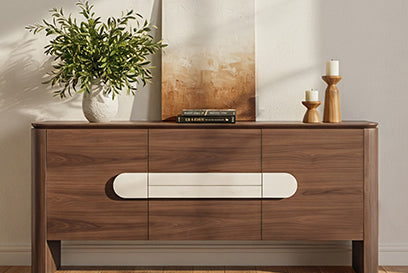
Look for clear product descriptions that state “only legs need assembly” versus true fully assembled models. Our 71" Eason Vintage Oak TV Stand with Drawers ships with only leg attachment required, while the 63" Samuel Scandinavian Sideboard with Metallic Lacquer Door arrives completely ready to place. Always confirm the exact condition upon delivery rather than assuming zero setup.
How to Size Your Media Console for 55- to 85-Inch Screens
A common sizing mistake is choosing a stand that is too narrow for the TV, creating a top-heavy look and potential stability concerns. A common design rule of thumb suggests the console should be at least 2 to 6 inches wider than the TV on each side for visual balance. A helpful planning heuristic is that the stand should be roughly 20% to 25% wider than the screen width, though exact TV cabinet dimensions vary by model.
TV Stand Width Guidance by Screen Size
Stand width ranges that keep common TV sizes within a comfortable fit margin.
View chart data
| Category | Recommended stand width range (in) | |
|---|---|---|
| 55 in | 47.0 | 58.0 |
| 65 in | 47.7 | 61.7 |
| 75 in | 52.7 | 69.7 |
| 85 in | 61.0 | 81.0 |
Built from the sizing rule that the stand should extend about 2–6 inches beyond each side of the TV, with a 25% wider check used as a secondary guide.
| TV Size (Diagonal) | Approx. Screen Width | Recommended Console Width |
|---|---|---|
| 55" | 48" | 52" – 60" |
| 65" | 57" | 61" – 69" |
| 75" | 65" | 69" – 77" |
| 85" | 74" | 78" – 86"+ |
This chart translates the common width-per-side rule into practical ranges. For an 85-inch TV (screen roughly 74-75 inches wide), choose a stand at least 85 inches wide whenever possible. Narrower supports can increase side-to-side wobble risk under dynamic loads. Our detailed 2026 Sizing Guide for 75-Inch and 85-Inch Screens provides room-depth and height considerations that complement these width targets.
Depth also matters. A minimum 16- to 18-inch depth generally prevents the TV from overhanging, while deeper consoles offer more storage. Always measure your TV’s actual base width rather than relying solely on the advertised diagonal.

Smart Storage: Cable Management and Device Ventilation
Clean cable management and proper ventilation often determine long-term satisfaction more than aesthetics. Look for consoles with rear cutouts, internal channels, or removable back panels that let you route HDMI, power cords, and streaming device cables without visible clutter. Fixed solid backs can trap heat from gaming consoles and soundbars, potentially shortening component life.
Before buying, verify airflow from the exterior. Mesh panels, generous rear clearance, or open shelving are positive signs. Enclosed cabinets should have dedicated ventilation paths; without them, high-power electronics can overheat. Technical experts stress that consistent heat buildup can reduce the lifespan of AV equipment.
Our Banish the Tangle: How to Choose a TV Stand for Flawless Cable Management offers practical routing techniques that work with fully assembled designs. Models like the Bennett 62" Modern Arched Wood TV Stand incorporate hidden channels while maintaining a clean front profile.
Safety First: Stability and Tip-Over Prevention
Stability becomes critical once a large TV sits atop the console. The U.S. Consumer Product Safety Commission (CPSC) requires storage units to meet the STURDY Act and ASTM F2057-23 stability tests to reduce tip-over accidents. AnchorIt.gov stresses using furniture specifically engineered to support television weight.
The American Academy of Pediatrics adds that heavy furniture, including media consoles, should be anchored to the wall with anti-tip straps regardless of assembly type. This secondary protection remains essential even with sturdy factory joinery. Perform a simple wobble test after setup: if the unit rocks noticeably under hand pressure, add anchoring hardware immediately.
Factory-assembled construction generally outperforms flat-pack cam-lock systems on dynamic loads because the joints resist loosening over years of use. Still, never exceed the manufacturer’s stated weight capacity, and keep heavier items on lower shelves.
Choosing the Right Style for Your Living Room
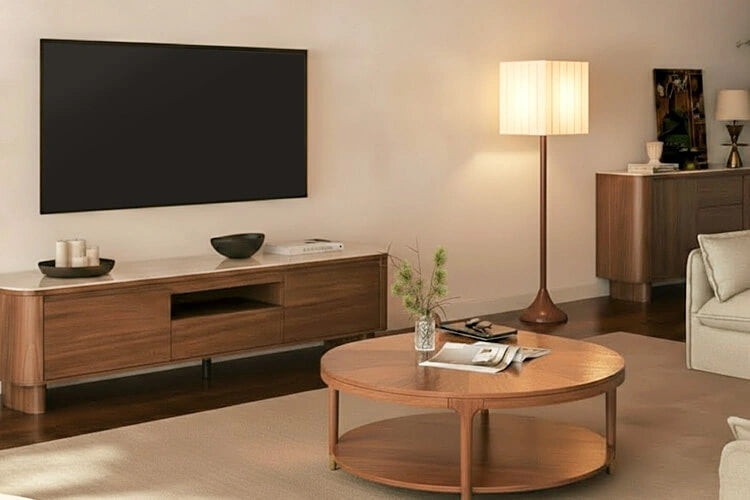
Style selection should follow the functional decisions above. A mid-century modern console with tapered legs suits minimalist rooms, while a traditional sideboard with drawers fits transitional or farmhouse settings. Consider finish durability: waterproof tops and scratch-resistant surfaces handle daily use better than delicate veneers.
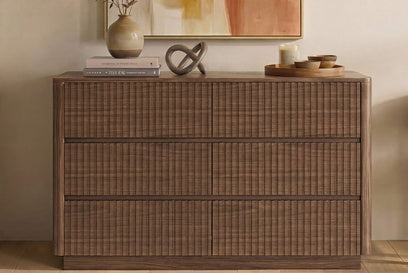
The 79" Moore Modern Wood TV Stand with Drawer offers clean lines and ample storage for contemporary spaces. For warmer tones, the 71" Eason Vintage Oak TV Stand with Drawers pairs beautifully with leather sofas and neutral palettes. Our Beyond the Screen: Expert Tips for Styling Your TV Stand and Media Console shares proven layering techniques using books, plants, and art that keep the setup uncluttered.
When shopping the Living Room Furniture & Decor Ideas collection, filter first by the exact width needed, then by storage features and finish. This order prevents attractive but undersized pieces from derailing your project.
Frequently Asked Questions
Do Fully Assembled TV Stands Require Any Setup After Delivery? Most quality units arrive with the main cabinet factory-joined, but many still require attaching legs or anti-tip brackets. True zero-assembly models exist but tend to be smaller. Always read the product specifications and confirm weight before purchase to avoid unexpected heavy lifting.
How Much Wider Should a Media Console Be Than My TV? A practical rule is 2 to 6 inches wider on each side of the TV screen. For an 85-inch TV with a roughly 75-inch-wide cabinet, aim for an 85-inch or wider console. This prevents a top-heavy appearance and improves stability. Measure your specific TV rather than relying solely on the diagonal size.
Are Fully Assembled Consoles Better for Cable Management? They can be, provided the design includes rear cutouts or internal channels. Some pre-built models hide cables effectively because factory routing is more precise. Check for mesh panels or removable backs to ensure electronics stay cool.
Is a Fully Assembled TV Stand Safer for Families With Children? Factory joinery often provides better inherent stability than cam-lock systems, but safety still depends on proper anchoring. All heavy media furniture should be secured to the wall per CPSC and safety guidelines. Weight rating and wobble resistance matter more than the assembly method alone.
What Should I Check First When Comparing Fully Assembled Options? Start with the exact delivered weight and whether legs must be attached. Next, verify ventilation for your specific devices, then confirm the stand width matches your TV. Style and finish should be the final filter. This sequence avoids buying an attractive piece that proves impractical at home.
Recommended Products


More to Read
 7 Sofa Trends That Actually Improve Comfort in 2026
Upgrade your living room with furniture that supports your body. Here are 7 modern sofa features designed to maximize your daily comfort...
7 Sofa Trends That Actually Improve Comfort in 2026
Upgrade your living room with furniture that supports your body. Here are 7 modern sofa features designed to maximize your daily comfort...
 Mother's Day Gift Guide: Cozy and Stylish Furniture Picks for Modern Moms
Make Mother's Day more meaningful with furniture gifts that bring comfort, smart features, storage, and quiet luxury into her everyday routine.
Mother's Day Gift Guide: Cozy and Stylish Furniture Picks for Modern Moms
Make Mother's Day more meaningful with furniture gifts that bring comfort, smart features, storage, and quiet luxury into her everyday routine.
 Performance Fabric Reality Check: Does It Really Repel Pet Hair and Stains?
Performance fabric is often marketed as a miracle solution for homes with pets and kids, but the reality is more nuanced. It...
Performance Fabric Reality Check: Does It Really Repel Pet Hair and Stains?
Performance fabric is often marketed as a miracle solution for homes with pets and kids, but the reality is more nuanced. It...