













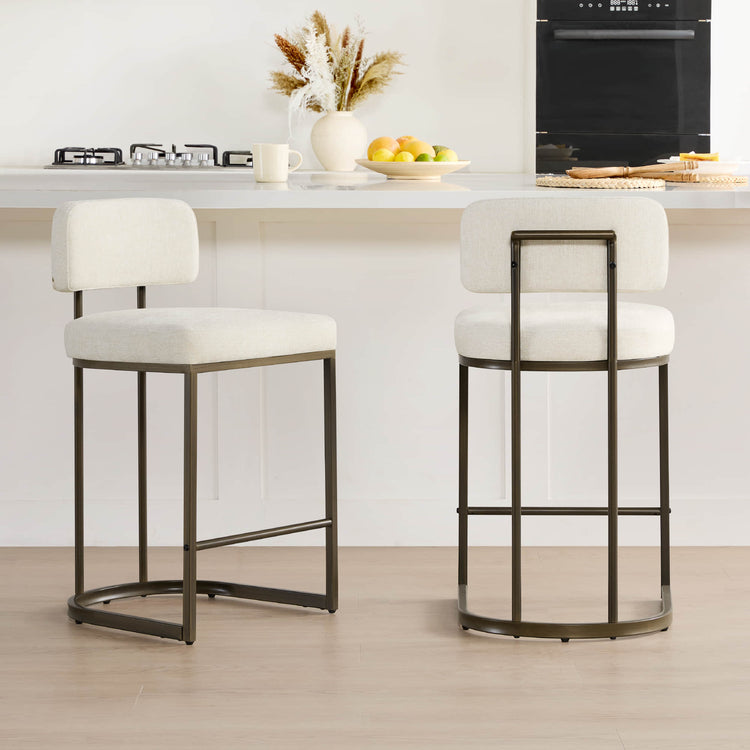















Neither a wood four-leg base nor a welded tubular-steel base wins by material alone when you're shopping for bar stools for kitchen counters. The better choice is whichever stool documents secure floor contact, solid joints or welds, a well-attached footrest, and a published weight rating that fits your household. Skip any stool that leaves those details unclear, no matter which material it uses.
Which Base Is Better for a Hardwood-Floor Kitchen?
The right base is the one with verified construction and a rating that matches how your household actually uses it. Material alone cannot answer that question.
When a Wooden Four-Leg Base Is the Better Fit
Choose a wooden four-leg stool when its listing spells out how the legs meet the frame, shows the legs sitting flat and level on your floor, and states a footrest attachment and weight capacity that fit your household. Solid oak or ash is a starting material, not proof that the joints are tight or that the base will stay stable through years of daily use. If those construction details are missing, the wood label alone is not a reason to buy.
When a Welded Tubular-Steel Base Is the Better Fit
Choose a welded tubular-steel base when the listing actually describes welded construction, shows secure floor glides, and states a footrest and capacity that suit your kitchen. Steel frames can feel heavier in the showroom, but that weight does not guarantee a higher rating or better hardwood-floor behavior on its own. Judge the specific stool, not the general idea of metal.
When Neither Base Can Be Selected Yet
Set a stool aside when the listing skips the weight capacity, leaves the base construction vague, wobbles on your actual floor, or arrives with cracked or missing glides. In that case, ask for the missing specification or move on to another candidate rather than guessing from material or appearance. Coming back to it once the details are confirmed is a better use of your time than assuming it will work out.
How to Assess Stability on Hardwood Floors
Stability on hardwood comes down to how the assembled stool actually sits on your floor, not which material its legs are made from. Two practical checks catch most problems before they cause surface damage.

Check Level Contact and Wobble
- Set the fully assembled stool on the actual hardwood floor and rock it gently in each direction.
- If it rocks, tips, or one leg lifts off the floor, treat that as an assembly or product defect to fix, not a wood-versus-metal issue.
- Recheck after tightening any hardware. Persistent wobble means the stool needs to be corrected or returned before regular use.
Check the Glide at Every Contact Point
Every leg that touches hardwood needs an intact protector pad. The NWFA floor-protector guidance calls for pads on furniture legs that directly contact wood floors, and that advice applies the same way whether the base is wood or metal.
- Confirm each glide is actually present. A missing pad on even one leg exposes bare wood or metal to the floor.
- Check that pads are clean. Grit trapped under a glide scratches hardwood as the stool moves.
- Look for cracked, flattened, or peeling glides, and replace them before the stool goes back into daily use.
- Make sure each pad sits flat and stays attached, not curling up at the edge.
Do not put a stool into regular use if it rocks, a leg or glide sits loose, or a protector is missing or damaged. Fix the issue or choose a different stool first.
What to Inspect for Footrest and Base Durability
A durable stool holds its joints and footrest together through years of daily contact, not just on delivery day. Three inspections verify structural integrity regardless of material.
Wooden Joints and Leg Attachment
- Check the listing for a stated joint type, such as doweled or mortise-and-tenon construction, rather than assuming a generic wood leg is built the same way as any other.
- After assembly, inspect each joint for gaps, glue squeeze-out, or visible separation.
- Sit down and shift your weight, then check whether any joint moves or creaks. Movement now usually gets worse with use.
- Treat a named joint as construction information only. It does not mean the product meets a particular furniture standard unless the listing says so.
Tubular-Steel Welds and Frame Connections
- Confirm the listing actually describes welded tubular steel. An iron or metal base is not automatically the same construction.
- Look for stated frame material and weld information in the specs before assuming quality from appearance.
- Once assembled, inspect any accessible welds or fasteners for obvious gaps, rust, or looseness.
- Treat this as a basic visual check, not a lab-grade weld inspection.
Footrest Kick Plates and Glide Condition
- Push down and side-to-side on the footrest or kick plate to confirm it is firmly attached, not just resting in place.
- Check the footrest edges for looseness or wear where shoes make repeated contact.
- Inspect each floor glide separately. A worn glide on one leg does not mean the rest match.
- Recheck attachment points periodically, since no available evidence points to one material lasting longer under normal footrest use.
How to Compare Published Weight Capacities
Compare the manufacturer's published capacity in pounds for the exact stool and configuration, not a category guess. Wood or metal alone tells you nothing about that number.
Read the Exact Product Rating
- Find the weight capacity listed on the specific product page for the model and configuration you are buying.
- Confirm it matches that exact stool, not a similar-looking model or a general collection page.
- Record the number in pounds and use it as your reference point going forward.
Apply the Rating to Regular Use
Compare that number with who will actually sit on the stool, including repeated use and footrest pressure over time. The ISO 7173:2023 seating standard defines strength and durability test methods without regard to material, design, or manufacturing process, which is why the published capacity, not the base material, is the number that matters. A high rating also does not confirm the stool will sit level or protect your hardwood floor; that is the separate check covered above.
Do not buy or keep using a stool when the capacity is missing or clearly too low for your household. Pick a model with a clear, suitable rating instead.
What Our Product Pages Let You Verify
Our own listings show why checking capacity, base description, and glide details separately matters more than guessing from material. Here is what each listing actually documents.
Our Wood-Base Examples
Our Troy solid wood stools list a carved U-shaped solid wood base and a 300-pound weight capacity, sized for kitchen islands, dining spaces, and breakfast nooks. Our Nova wood-leg stool lists a reinforced, kiln-dried wood frame rated to 350 pounds, paired with a smooth swivel base. Neither listing describes a traditional four-leg oak or ash base, so treat them as wood-base examples to verify, not stand-ins for that exact construction.
Our Metal-Base Example
Our Golda metal-base stools list a durable iron frame rated to 300 pounds, with felt pads on the legs for floor contact. The listing does not verify welded tubular-steel construction specifically, so use it as a metal-base example with its own published numbers rather than proof about welded steel as a category.
When selecting bar stools for kitchen counters, confirm the listed weight rating, measure your counter clearance, and check that protective glides are secured. Review our detailed product specifications to choose the base design and load capacity that best fit your home.
FAQs
Does a higher published weight capacity mean a bar stool will be more stable on hardwood floors?
No. Weight capacity and hardwood-floor stability are separate performance factors. A higher weight rating indicates structural frame strength under load, not whether the stool sits flat without rocking or has intact floor glides. Verify both the weight rating and floor-contact details independently.
What should you do if a bar stool wobbles on hardwood after assembly?
Check that all assembly fasteners are fully tightened and confirm that all glides or pads sit flush against the floor. If the stool continues to rock or a glide is damaged, adjust any built-in leveling feet, replace defective pads, or resolve the issue with the manufacturer before putting the stool into regular use.
Do wood bar stools require different floor protectors than metal base stools?
No. Both wood legs and metal bases require clean, intact floor protector pads to prevent direct friction and surface scratching on hardwood flooring. The essential maintenance step for either material is confirming that pads remain free of trapped grit, sit flat, and are replaced as soon as they show wear.
Sources
- International Organization for Standardization. ISO 7173:2023 Seating Standard.
- National Wood Flooring Association. Problem Prevention.
Recommended Products


More to Read
 7 Sofa Trends That Actually Improve Comfort in 2026
Upgrade your living room with furniture that supports your body. Here are 7 modern sofa features designed to maximize your daily comfort...
7 Sofa Trends That Actually Improve Comfort in 2026
Upgrade your living room with furniture that supports your body. Here are 7 modern sofa features designed to maximize your daily comfort...
 Mother's Day Gift Guide: Cozy and Stylish Furniture Picks for Modern Moms
Make Mother's Day more meaningful with furniture gifts that bring comfort, smart features, storage, and quiet luxury into her everyday routine.
Mother's Day Gift Guide: Cozy and Stylish Furniture Picks for Modern Moms
Make Mother's Day more meaningful with furniture gifts that bring comfort, smart features, storage, and quiet luxury into her everyday routine.
 Performance Fabric Reality Check: Does It Really Repel Pet Hair and Stains?
Performance fabric is often marketed as a miracle solution for homes with pets and kids, but the reality is more nuanced. It...
Performance Fabric Reality Check: Does It Really Repel Pet Hair and Stains?
Performance fabric is often marketed as a miracle solution for homes with pets and kids, but the reality is more nuanced. It...