























Why TV Stand Styling Matters for a Cohesive Living Room
An unstyled TV stand often draws the eye for the wrong reasons. Visible cords, mismatched heights, or too many small items can make the entire wall feel disorganized, even when the furniture itself is high quality. Thoughtful styling turns the console into a curated focal point that supports rather than competes with the television.
The core principle is simple: treat the surface as part of an overall composition. Scale and proportion guide every decision so objects feel balanced rather than crowded. When you start with function and add decor only where it improves the scheme, the result looks designed instead of decorated as an afterthought.
What to Consider Before Styling Your Media Console
Before placing a single decorative object, measure and map the available real estate. Note the width and depth of the console top, the height of the TV screen's bottom edge, and the location of vents or ports.
The Sightline Self-Check
To ensure your decor doesn't interfere with your viewing experience, consider this quick check:
- Sit in your primary viewing spot: Lean back as you normally would during a movie.
- Identify the "Hard Ceiling": Have a partner hold a ruler or object on the console. Note the height where it begins to overlap the screen or the infrared (IR) sensor.
- Establish a Buffer: As a starting point, many designers aim to keep decor roughly 2 inches below this "Hard Ceiling." While a height of 10–14 inches is a common experience-based range for many setups, your specific furniture height, screen size, and seating distance should be the final authority.
Basic design principles such as proportion, size, line, and sequence help objects relate to one another and to the television frame. This academic overview of core design strategies reminds us that successful interiors feel cohesive when individual pieces support a larger scheme.

Tailoring Your Layout: Common Scenarios
The most effective way to style depends heavily on your hardware configuration. Here are three common patterns:
-
Scenario A: Wall-Mounted TV with Soundbar
- Strategy: The soundbar acts as your central anchor. Place it directly under the TV. Since the console surface is now mostly clear, you might use "The Rule of Three" to create two distinct groupings on either end.
- Decor Tip: Use low-profile books or a long, shallow tray to bridge the gap between the soundbar and the outer decor groups.
-
Scenario B: TV on its Original Stand (No Soundbar)
- Strategy: The TV legs create "dead zones" on the surface. Use decor to mask the legs without touching the screen.
- Decor Tip: Place a medium-sized plant or a sculptural object slightly forward and to the side of the TV legs to add depth.
-
Scenario C: The Corner Console
- Strategy: Corner units often have deep "wedges" behind the TV.
- Decor Tip: Use the back corner for a taller, slim element like a floor lamp or a tall vase (if the TV is pulled forward) to fill the vertical void, while keeping the front edge minimalist.
How to Decorate a TV Stand Without Creating Clutter
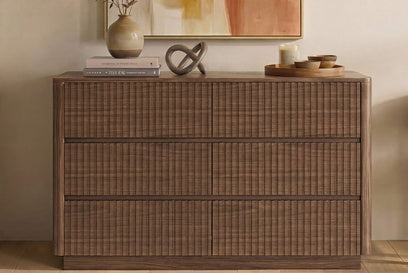
Start by selecting one clear concept—minimalist, modern, or warm layered. Then choose objects that reinforce that direction. A common pattern for success is to work in groupings of one to three items separated by visible breathing room (negative space).
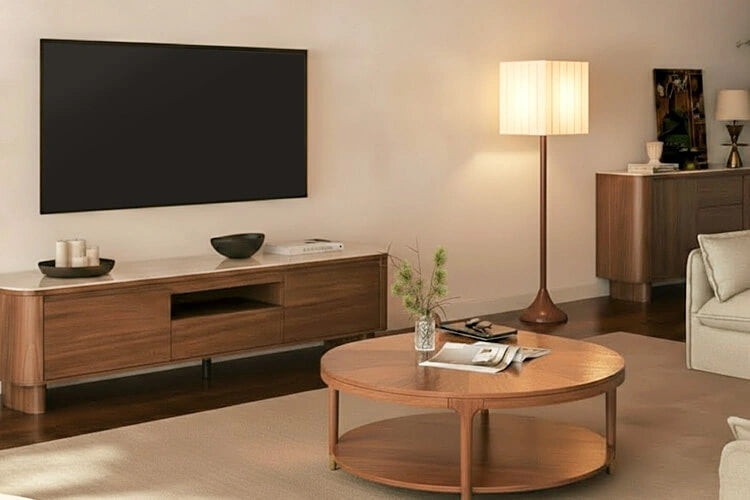
Use a mix of heights and textures. Books stacked horizontally can anchor one side, a sculptural vase or plant adds organic shape in the center, and a small framed print or object finishes the other side. A common observation is that lining up many small items across the full width can create visual noise; the eye often prefers distinct clusters.
One large statement piece often reads cleaner than several tiny ones. For example, a substantial ceramic bowl paired with two books creates more visual weight than five small candles. Follow the guidance in interior design fundamentals by selecting items as part of a complete scheme.
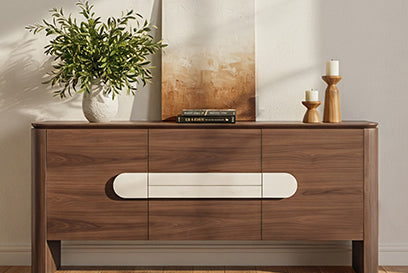
Our Bennett 62" Modern Arched Wood TV Stand offers clean lines and built-in storage that make styling easier. Similarly, the Rowan Modern Rattan TV Stand with LED-Lit Display Cabinets brings natural texture that pairs beautifully with organic decor.
How to Hide Cords and Electronics Safely
Organized cable management is not just about aesthetics; it is a safety and maintenance best practice. Based on general engineering constraints for home electronics, consider these principles:
- Thermal Management: Never block the intake or exhaust vents of gaming consoles or DVRs. As a general rule of thumb, aim for approximately 2–3 inches of clearance for airflow, though you should always prioritize the specific spacing requirements listed in your device's user manual.
- Signal Integrity: Ensure decor does not sit directly in front of the IR (Infrared) receiver on the TV or the mesh grilles of speakers.
- Cable Bend Radius: Avoid tightly kinking cables to hide them; use rounded loops secured with Velcro ties or cable clips to prevent internal wire damage.
Place power strips and streaming devices inside cabinets when possible. The 79" Samuel Rounded Panel TV Media Console features rear access panels designed for this purpose. If you must keep devices on the surface, tuck them behind a decorative box or a stack of books, ensuring the front of the device remains unobstructed for remote signals.
Read our related guide on How to Arrange Your TV Stand, Sofa & Recliner for the Perfect Entertainment Room for broader layout ideas.
Minimalist TV Stand Styling Ideas
Minimalist styling succeeds through restraint. Choose two or three larger objects and leave generous negative space. A single stack of art books, one sculptural plant, and a low ceramic bowl often provide enough interest.
Symmetry or near-symmetry tends to feel more disciplined in minimalist rooms. Keep colors neutral and textures subtle. Our 79" Aaron Travertine Electric Fireplace TV Stand embodies this aesthetic with its clean travertine surface that pairs perfectly with sparse, high-quality decor.
Layered and Warm Media Console Decor Ideas
Warmer, layered interiors can support more objects while still looking intentional. Vary heights, incorporate different materials, and introduce soft textiles such as a small linen runner. Books, candles, and collected objects can coexist when they share a limited color story.
Asymmetry often feels natural here. Place a taller lamp on one side and balance it with a lower grouping of books and a plant on the other. Explore our Mid-Century Modern Living Spaces: Design Tips and Inspiration for more ideas on blending natural materials.

Styling Formula and Quick Checklist for Any TV Stand
Use this practical framework as a starting point for your layout:
- Function First: Place the television, soundbar, and active electronics according to manufacturer guidelines.
- Cable Audit: Route and secure all cables using clips or channels.
- Style Anchor: Choose a dominant style (Minimalist vs. Layered).
- Grouping: Select one anchor object per grouping (often max 3 groupings).
- Clearance Check: Verify that no decor blocks the screen, IR sensors, or vents.
- The "Edit": Step back and remove one item if the surface feels busy.
The following radar chart illustrates how recommended styling density shifts across common scenarios. These values represent heuristic planning tools for visual balance, not strict engineering requirements.
Illustrative Styling Density Guide
Use this planning guide to balance room size and style preference without creating clutter.
View chart data
| Series | Recommended Max Items | Negative Space (%) | Max Decor Height (in.) |
|---|---|---|---|
| Small Minimalist | 3.0 | 70.0 | 10.0 |
| Small Layered | 4.0 | 55.0 | 12.0 |
| Large Minimalist | 3.0 | 80.0 | 11.0 |
| Large Layered | 5.0 | 60.0 | 14.0 |
Many of our storage TV stands include integrated cable management. Browse the full Storage collection for pieces that combine beauty with practical organization.
Learn more about blending materials in How to Mix and Match Wood and Fabric or explore Biophilic Design Furniture Ideas.
Common TV Stand Styling Mistakes to Avoid
- Blocking the IR Sensor: Even a small candle can stop your remote from working.
- Overcrowding: In small spaces, filling every inch can make the room feel claustrophobic.
- Ignoring Ventilation: Placing decor over the top of a warm gaming console can lead to hardware failure.
- Styling Before Setup: Always secure your electronics and cables before adding decorative elements.
Comfort and Setup Disclaimer
This article provides styling advice for visual aesthetics only. It does not constitute electrical or professional interior design advice. Proper ventilation and cable safety remain the responsibility of the user. Consult your device manuals for specific clearance requirements.
Frequently Asked Questions
How much decor is too much on a TV stand?
While there is no universal rule, a helpful starting point is to aim for roughly 30–50% negative space (empty surface area) to allow the eye to rest. If you can no longer see the console's surface material between items, or if decor touches the bottom of the TV screen, it may be overcrowded.
Should TV stand decor be symmetrical?
Not necessarily. Asymmetrical balance—where a tall item on the left is balanced by a wider, shorter grouping on the right—often feels more modern and relaxed.
How do I hide cords without buying extra accessories?
A common "tuck and tie" method involves bundling cables with household twist-ties and using the weight of the console or a heavy book stack to keep them pinned behind the furniture legs.
What height should decor be on a media console?
As a common heuristic, many find that keeping objects under 12 inches works well for standard consoles. However, the most reliable approach is to ensure items sit comfortably below your specific TV screen's bottom edge—often a gap of at least 2 inches is recommended to prevent visual distractions.
Can I put plants on my TV stand?
Yes, but it is advisable to use a saucer to prevent water damage to the wood and ensure the plant doesn't drop debris into the cooling vents of your electronics.
Recommended Products

More to Read
 7 Sofa Trends That Actually Improve Comfort in 2026
Upgrade your living room with furniture that supports your body. Here are 7 modern sofa features designed to maximize your daily comfort...
7 Sofa Trends That Actually Improve Comfort in 2026
Upgrade your living room with furniture that supports your body. Here are 7 modern sofa features designed to maximize your daily comfort...
 Mother's Day Gift Guide: Cozy and Stylish Furniture Picks for Modern Moms
Make Mother's Day more meaningful with furniture gifts that bring comfort, smart features, storage, and quiet luxury into her everyday routine.
Mother's Day Gift Guide: Cozy and Stylish Furniture Picks for Modern Moms
Make Mother's Day more meaningful with furniture gifts that bring comfort, smart features, storage, and quiet luxury into her everyday routine.
 Performance Fabric Reality Check: Does It Really Repel Pet Hair and Stains?
Performance fabric is often marketed as a miracle solution for homes with pets and kids, but the reality is more nuanced. It...
Performance Fabric Reality Check: Does It Really Repel Pet Hair and Stains?
Performance fabric is often marketed as a miracle solution for homes with pets and kids, but the reality is more nuanced. It...