


































How to Choose a Dining Table Material: Wood, Glass, and Stone

The best dining table material for your home depends on what happens at the table. Daily breakfasts, children's activities, occasional dinner parties, and working from home place different demands on its surface. Begin with those uses, then compare the finish and construction of the tables you like.
Start with meals, mess, and room measurements
Write down how many people sit at the table on a normal day, whether it doubles as a desk, and how often you move furniture. Decide which marks you are willing to maintain and which would bother you.
Measure the tabletop area and the space needed to pull out a chair. Open nearby cupboards and doors. For an extending table, mark both its closed and extended outline. A transparent or pale top can change the room's appearance while occupying the same measured floor area.

Solid wood and wood veneer
Solid wood and wood veneer both show real wood grain. Veneer uses a thinner layer of wood over a supporting core. That structure matters when choosing cleaning products or considering repairs.
A solid wood surface may allow refinishing, depending on its construction and finish. A veneered surface needs a repair approach suited to the thickness of that outer layer. Read the care instructions before applying oil, wax, polish, or an abrasive treatment. The Canadian Conservation Institute's furniture finish care guidance explains why cleaning methods depend on the coating and its condition.
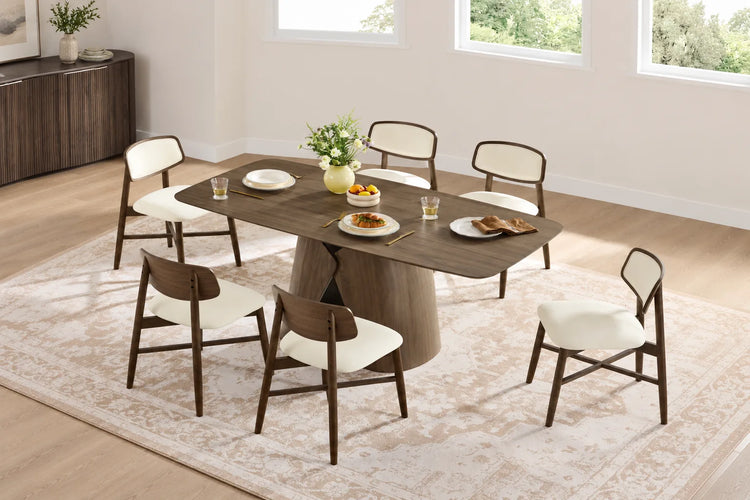
Our Coral oval dining table uses wood veneer over an MDF core, with rubberwood legs. It is an example of why the words wood table should be followed by a closer look at the material details.
For daily use, protect the finish from standing spills, hot items, and rough objects. Use table mats and coasters that suit the finish, and lift objects when moving them across the surface.

Glass tabletops
A glass top leaves the floor and base visible. That can suit a room where you want the table to feel visually open. Fingerprints, streaks, and items beneath the tabletop may also be more noticeable.
Check the type of glass, edge treatment, corner shape, and the way the top attaches to its base. Inspect a delivered glass top for chips or damage before use. Tempered glass can still break, so follow its care and handling instructions and avoid impacts at the edges. The National Glass Association's 2019 technical paper on glass used in furniture describes different break patterns and the impact exposure of glass edges.
In a household with children, consider the whole table: stability, corners, positioning, and the activities taking place around it. Those details deserve attention for every material.
Natural marble and sintered stone
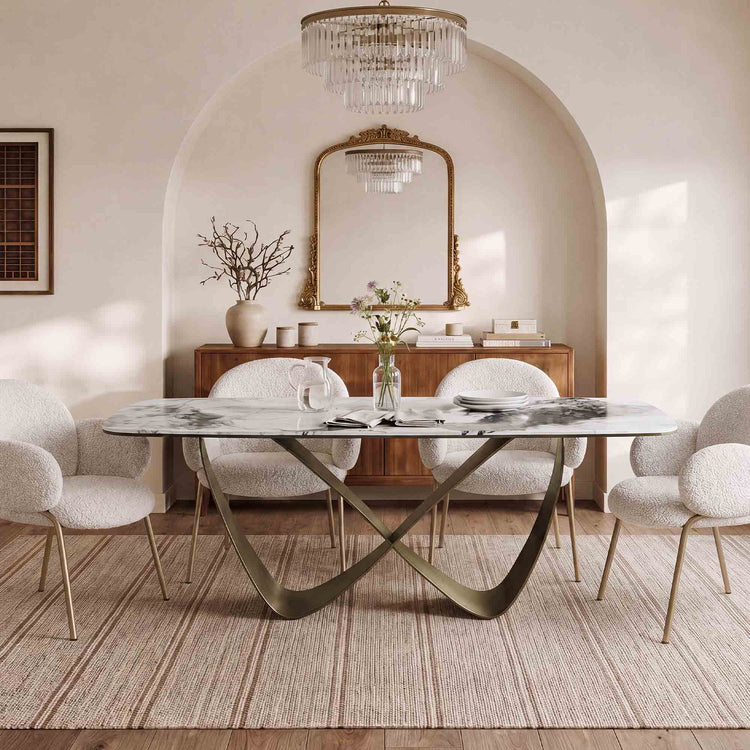
Natural marble offers individual veining. Its surface can stain and can react to acidic liquids such as citrus juice. Acid etching may appear as a dull mark in the finish. Spill handling and any sealing requirements belong to the specific stone and its treatment. The Natural Stone Institute distinguishes acid etching from stone stains and recommends surface-appropriate cleaners and prompt spill attention.
Sintered stone is a manufactured mineral surface. It often suits shoppers who want a veined appearance with straightforward daily care. Our 63-inch Teresa table has a sintered stone top.
Use appropriate trivets under hot cookware, and protect exposed edges from knocks. Our sintered stone and marble comparison explains their care differences in more detail.

Compare materials by daily care
| Surface | Why you might choose it | Check before ordering |
|---|---|---|
| Solid wood | Natural grain and a wood surface throughout the specified top. | Species, finish, moisture care, and repair options. |
| Wood veneer | Real wood grain over a constructed core. | Core material, edge construction, and finish-specific care. |
| Glass | A visible base and a more open view through the room. | Glass type, corners, attachment, and handling instructions. |
| Natural marble | Individual stone markings. | Stone treatment, acid-sensitive care, and delivery weight. |
| Sintered stone | A manufactured mineral surface in varied finishes. | Exact surface specification, edge profile, and cleaning instructions. |
Check the base, chairs, and delivery route
Measure the space between table legs and the position of any pedestal or stretcher. Check how far your chairs tuck in, whether arms clear the underside, and where diners' knees will sit.
Look at the table's packaged dimensions, delivery weight, assembly instructions, and access route. A detachable top can change the delivery process; the instructions determine how it should be handled.
When comparing our dining tables, keep a short list with the surface material, full dimensions, base layout, seating arrangement, and care requirements. That makes the final comparison easier to use.
Dining table material questions
Can every wood table be sanded and refinished?
No. A solid wood top may have enough material for refinishing, while wood veneer has a thin surface layer that can be sanded through. Wood-look laminate is a different surface and cannot be refinished like solid wood. For a light mark, start with cleaning suited to the existing finish. Before sanding a deeper mark, establish whether it is in the coating or the wood and whether the construction allows material to be removed.
Does glass save actual floor space?
No. A glass table occupies the same floor area as an opaque table with the same dimensions. Its transparency can make the room look more open because you can see the floor and base through it. To gain usable space, choose a smaller footprint or a base that lets the chairs tuck in farther, then check the layout with the chairs pulled out.
Which material needs the least attention?
Sintered stone is usually the simplest starting point for a dining table used for frequent meals and spills. Glass is easy to wipe but often shows fingerprints and streaks. Wood needs protection for its finish, especially from standing moisture and hot dishes. Marble asks for prompt attention to acidic spills and treatment-specific sealing care. Whichever you choose, use a soft cloth, suitable cleaner, and protection under hot cookware.
Recommended Products


More to Read
 7 Sofa Trends That Actually Improve Comfort in 2026
Upgrade your living room with furniture that supports your body. Here are 7 modern sofa features designed to maximize your daily comfort...
7 Sofa Trends That Actually Improve Comfort in 2026
Upgrade your living room with furniture that supports your body. Here are 7 modern sofa features designed to maximize your daily comfort...
 Mother's Day Gift Guide: Cozy and Stylish Furniture Picks for Modern Moms
Make Mother's Day more meaningful with furniture gifts that bring comfort, smart features, storage, and quiet luxury into her everyday routine.
Mother's Day Gift Guide: Cozy and Stylish Furniture Picks for Modern Moms
Make Mother's Day more meaningful with furniture gifts that bring comfort, smart features, storage, and quiet luxury into her everyday routine.
 Performance Fabric Reality Check: Does It Really Repel Pet Hair and Stains?
Performance fabric is often marketed as a miracle solution for homes with pets and kids, but the reality is more nuanced. It...
Performance Fabric Reality Check: Does It Really Repel Pet Hair and Stains?
Performance fabric is often marketed as a miracle solution for homes with pets and kids, but the reality is more nuanced. It...