







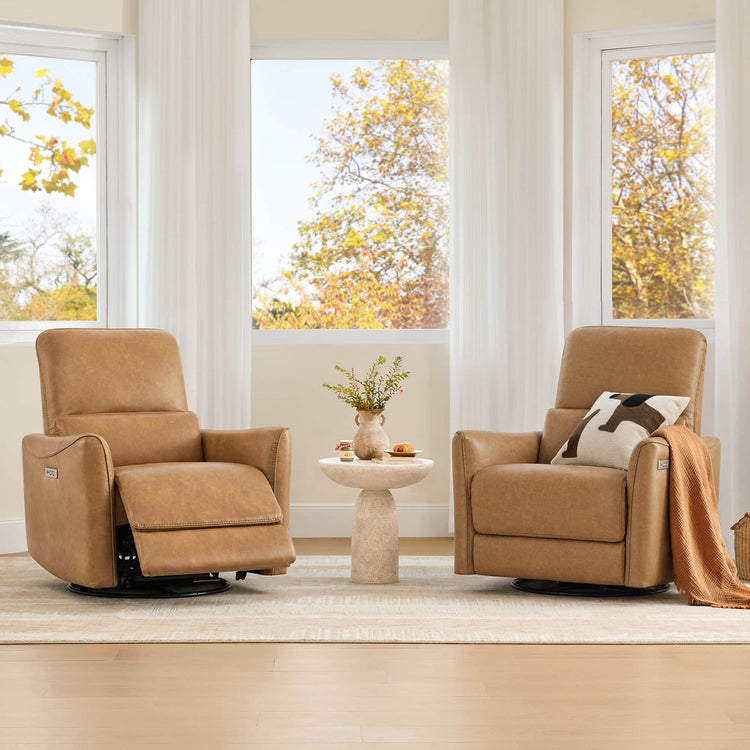

















Wall Hugger Recliner vs Traditional Recliner: Which One Fits Your Space Better?

Wall hugger recliners move the seat forward to cut rear clearance, while traditional models need 12 to 18 inches behind. Check reclined depth.

Key Takeaways About Wall Hugger Recliner vs Traditional
A wall hugger recliner can sit much closer to a wall because its seat moves forward as it reclines. A traditional recliner needs more room behind the chair for the backrest to move. Still, rear clearance only tells part of the story. Check the chair's full reclined depth, footrest extension, walkway, seat size, and any swivel or gliding movement. Measure the space in both the upright and fully reclined positions before choosing a recliner for your room.
A recliner can look like a perfect fit in a living room until you open the footrest and discover that it blocks the coffee table or cuts into a walkway. The same problem can happen behind the chair if the backrest needs more room to recline.
The main difference between a wall hugger recliner and a traditional recliner comes from how each chair moves. A wall hugger moves the seat forward as the backrest lowers, while a traditional recliner sends more of the backrest movement toward the wall.
That difference can change the way you arrange a small living room, apartment, nursery, or larger family room. The right choice starts with the space you have and the way you plan to use the chair.
Wall Hugger vs Traditional Recliner: What Changes in Your Room?
The reclining mechanism affects more than the chair itself. It also changes how much floor space remains available for tables, walkways, doors, and nearby furniture.
Wall Hugger Recliners Move Forward as They Recline
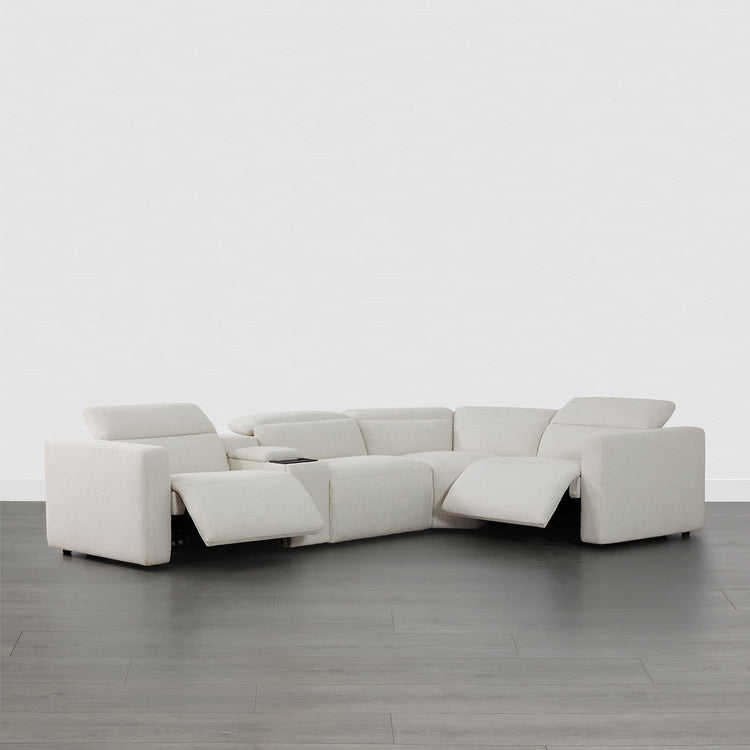
A wall hugger recliner uses a mechanism that moves the seat forward as the backrest reclines. This reduces the amount of room needed behind the chair and lets the recliner sit closer to a wall.
That makes a wall-saving recliner useful for apartments, narrow living rooms, bedrooms, and other areas where rear floor space has a high value. Many wall-hugger models need only a few inches of rear clearance, though the exact number depends on the model.

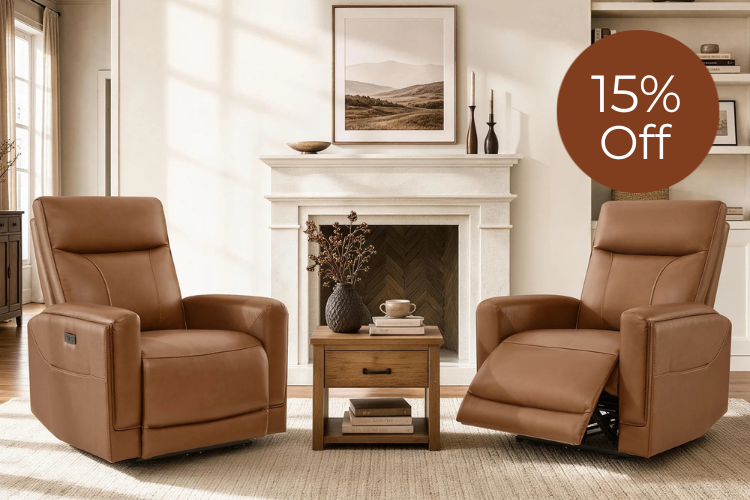
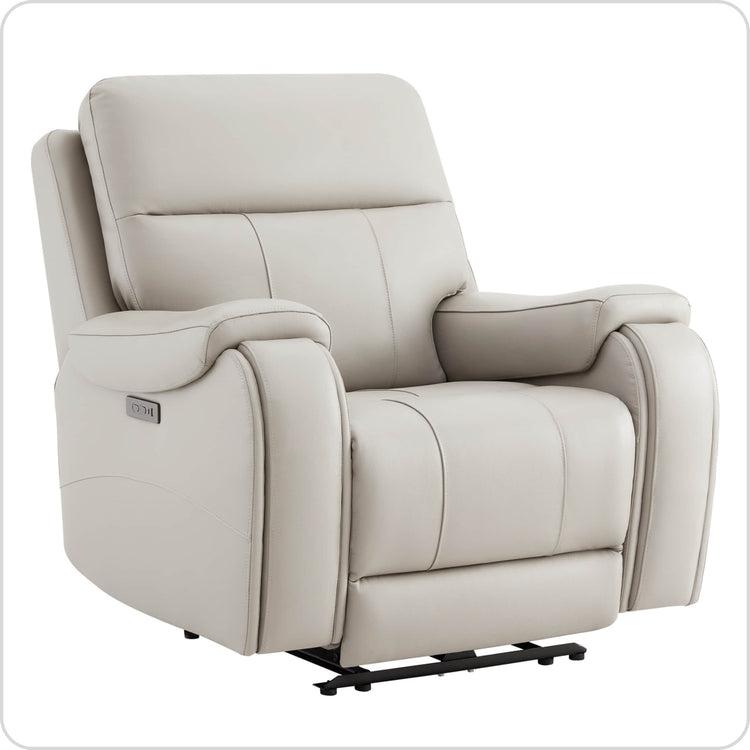
Lopez Genuine Leather Power Recliner with TV & Sleep Modes
Traditional Recliners Need More Room Behind the Chair
A traditional recliner generally sends the backrest farther toward the wall as it opens. That creates a larger space needed behind a recliner.
Many standard recliners around 12 to 18 inches from the wall, while many wall-hugger models need around 3 to 6 inches, or even less. These figures serve as planning ranges rather than fixed specifications for every chair.
Compare Recliner Clearance and Floor Space
Rear clearance gives you a useful starting point, but it should not be the only measurement. A recliner needs room to move, and that movement can extend into the main part of the room.
Check the Wall Clearance
The first question is simple: how far should a wall hugger recliner be from the wall?
There is no single answer for every model. Some wall-hugger chairs need only a few inches, while certain zero-wall designs can sit even closer. The product's stated clearance should always take priority over a general rule.
For planning purposes, it's commonly recommended to assume wall-hugger clearance around 3 to 6 inches and traditional recliner clearance around 12 to 18 inches.
Leave Space in Front of the Recliner
Do wall hugger recliners save space? Yes, mainly behind the chair. They do not remove the space needed in front.
As the seat moves forward and the footrest extends, the chair still takes up usable floor space. A small room can therefore have enough rear clearance but still feel crowded once the chair reaches its full reclined position. As the footrest extends, it can reach into the area occupied by a coffee table, ottoman, or walkway. Check the chair's fully reclined depth and make sure that area stays clear.
Measure the Fully Reclined Footprint
The fully reclined footprint shows the actual area a chair uses while in operation. It can be much more useful than the upright depth alone. Measure from the rear position of the chair to the furthest point of the extended footrest. Then check the distance from that point to the nearest table, wall, doorway, or other fixed object.
A chair can fit neatly against a wall yet still make a narrow room difficult to use if its footrest reaches too far into the walking path.
Which Recliner Fits Different Room Layouts?
The best choice changes with the room. A chair that works well in a narrow apartment may not offer a clear advantage in a large media room with plenty of open floor space.
Small Apartments and Narrow Living Rooms
A wall hugger recliner can make sense when the back of the chair needs to stay close to a wall. The reduced rear clearance can leave more room for a sofa, media console, or walkway. This makes a compact recliner useful for apartment living, especially in layouts where every few inches affect traffic flow.
A close-to-wall recliner can also work well beside other seating. Just check the chair's width and the distance needed to enter and exit the seat.
Large Living Rooms and Open Media Rooms
A traditional recliner can work well in a larger room because there may be plenty of space behind the chair. In this setup, rear clearance may not be a major concern. You can focus more on seat width, viewing angle, comfort, and how the recliner relates to the sofa and TV.
If the chair sits in the middle of an open room rather than against a wall, the main benefit of a wall-saving mechanism becomes less important.
Nurseries and Multi-Use Rooms
Nurseries and flexible rooms need another type of space planning. A nursery recliner may need to swivel, glide, or turn toward a crib, rather than simply recline in a straight line.
A 270-degree swivel recliner can provide more freedom to face different parts of the room. A nursery glider recliner can also provide a smooth gliding motion for feeding or settling a baby. These movements need clear space around the sides and front of the chair.
That makes a power swivel recliner a different space-planning case from a fixed wall hugger. The rear gap still matters, but the chair's full range of movement matters too.

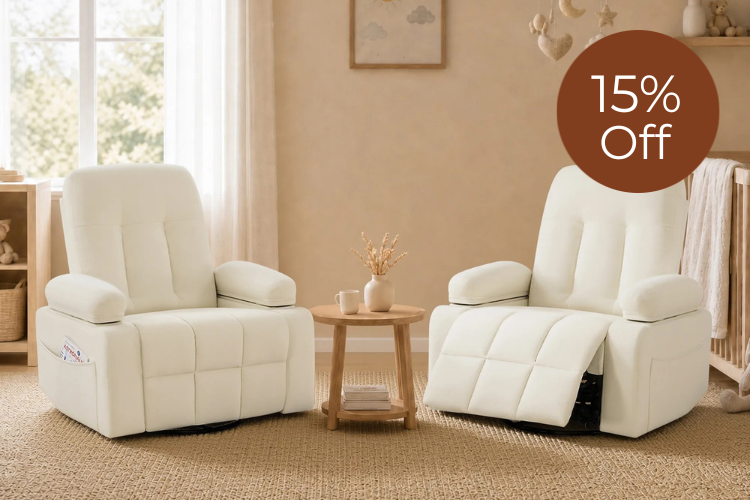
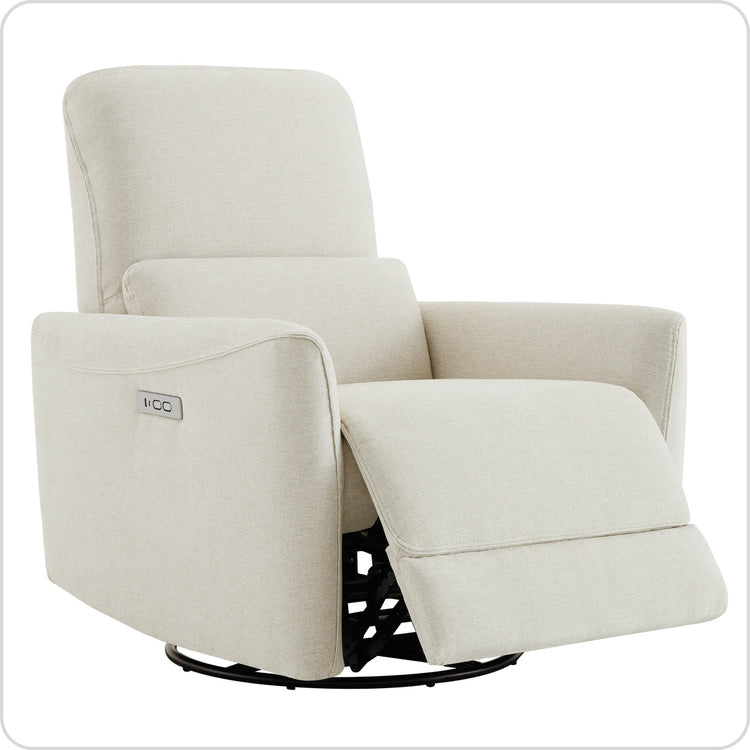
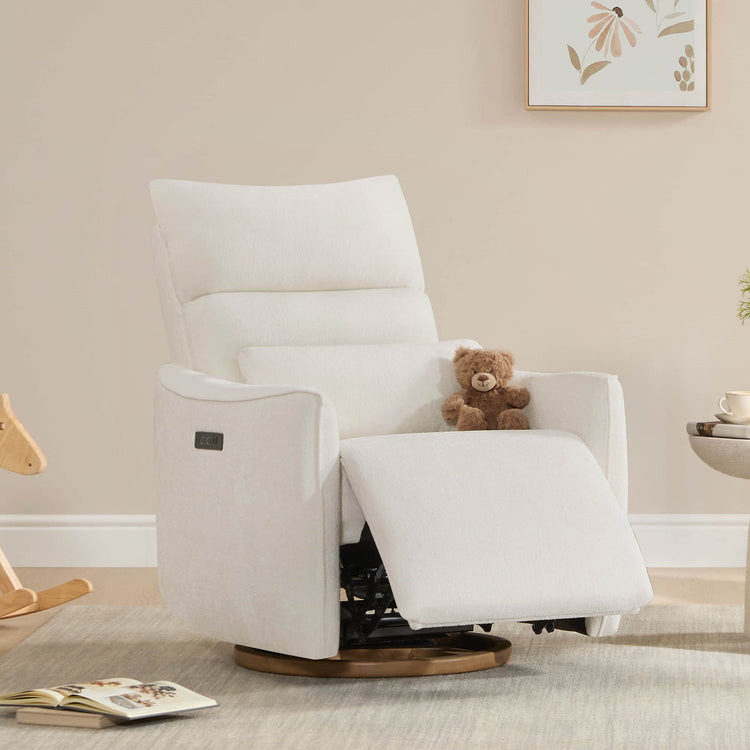
Janice Power Swivel Nursery Glider Recliner with Power Headrest
Look Beyond Wall Clearance When Choosing a Recliner
Space matters first, but comfort and function still need a place in the decision. Two recliners with similar clearance requirements can feel very different in daily use.
Consider Seat Size and Body Fit
A space-saving chair does not have to have a narrow seat. A wide-seat recliner or extra-large recliner can still use a wall-hugger mechanism.
Seat width, seat depth, back height, and footrest length should match the main user's body size. A chair that saves several inches behind the wall will not be a good fit if the seat feels too narrow or the leg support ends in the wrong place.
For larger users, compare the actual seat dimensions instead of judging the chair by its outside footprint.
Consider Recline and Headrest Functions
Power features can also affect how you use the chair. A 135-degree power recline can provide a comfortable position for reading, watching TV, or resting. A dual-motor recliner can offer separate movement for different parts of the chair, depending on the model.
An adjustable power headrest can also change the comfort setup without requiring the entire backrest to move farther. These features matter most when the chair will be used for long periods.

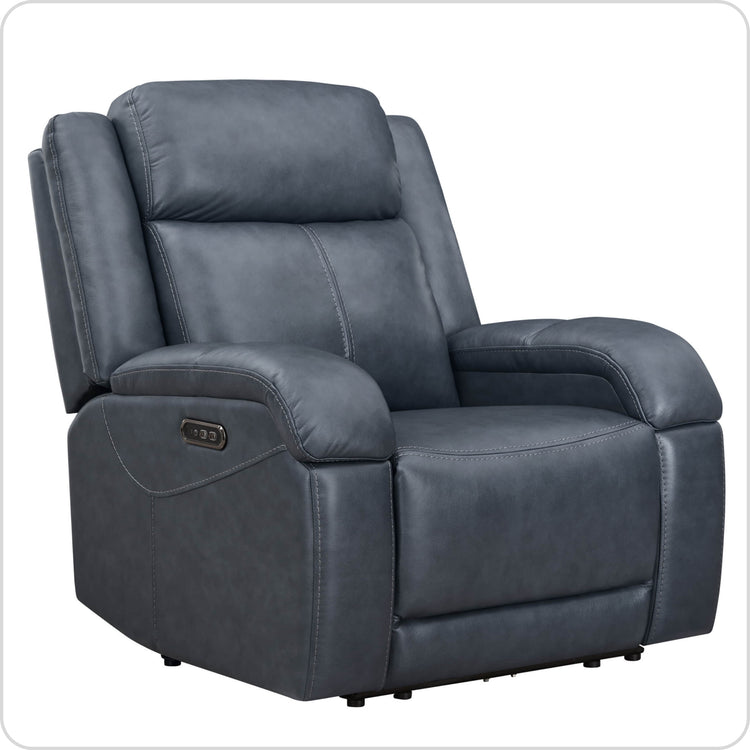
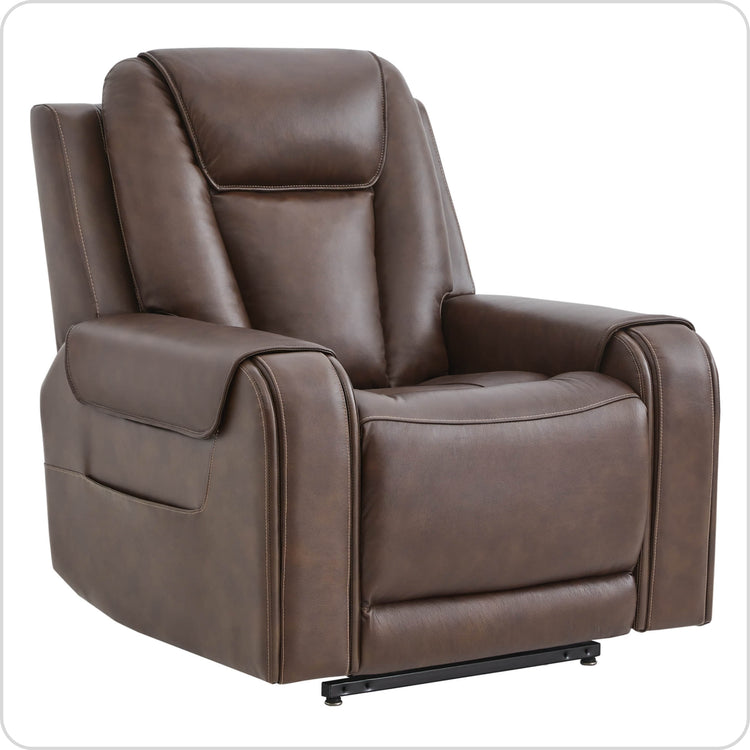
Isaac Genuine Leather Wall Hugger Power Recliner with Power Headrest
Consider How You Move Around the Chair
A fixed wall hugger may work well beside a wall. A swivel model needs room to turn. A glider needs room for its motion. A nursery chair may need clear access from several directions.
Convenience features can also affect placement. A recliner with USB charging, a recliner with Type-C charging, a recliner with cup holders, or a recliner with side pockets may work well beside a sofa or in a media area where you want daily-use items close at hand.
A leather power recliner can also suit a living room where the chair needs to function as a major piece of seating rather than a temporary accent.

How to Measure Your Space for a Recliner
A few simple measurements can prevent a large furniture mistake. Marking the chair's operating area on the floor gives you a much clearer picture than measuring the empty room alone.
Measure the Upright Footprint
- Start with the chair's overall width and depth.
- Measure the wall section where the recliner will sit. Then check the available width between nearby furniture, windows, doors, and other fixed features.
- Do not forget the space needed to sit down and stand up comfortably.
Measure the Rear Clearance
Next, check the manufacturer's required recliner wall clearance.
For a wall hugger recliner, the gap may only be a few inches. For a traditional recliner, the requirement can be much larger. Use the exact specification for the model rather than assuming all chairs in the same category have identical dimensions.
Also check baseboards, outlets, curtains, and window ledges. These can project into the space behind the chair.
Measure the Fully Reclined Footprint
Mark the chair's full reclined depth on the floor. Include the footrest at its maximum extension.
Painter's tape works well for this test. Mark the upright footprint first, then extend the tape to show the fully reclined footprint.
Place your coffee table and nearby furniture in their usual positions. If the marked chair overlaps them, the layout needs another adjustment.
Check Your Walking Path
A recliner should not turn a main walkway into an obstacle. Open the chair fully and check the path around it. People should still be able to pass through the room without stepping around the footrest or squeezing between pieces of furniture.
If the chair swivels or glides, check that movement too. The space beside and around the chair needs to work with the chair in use, not just when it is sitting upright.
Test the Layout Before Buying
After marking the footprint, move through the room as you normally would. Open nearby doors. Pull out drawers. Walk past the chair. Sit down and stand up. Check the distance from the footrest to the coffee table.
This simple test can reveal problems that a basic width and depth measurement may miss. It also helps answer the practical question: how much space does a recliner need?
Choose the Recliner That Matches Your Space
The final choice should come from the room's actual limits rather than a general rule about which recliner type is better. Start with the space that causes the biggest restriction.
Consider a Wall Hugger If:
- The chair needs to sit close to a wall.
- Rear clearance is limited.
- You have a small living room or apartment.
- You want to preserve more floor space behind the chair.
- Your main traffic path runs close to the seating wall.
A wall hugger recliner can be especially useful in tight layouts because the seat moves forward during recline instead of requiring the same amount of rear space as a traditional design.
A Traditional Recliner May Fit If:
- There is plenty of open space behind the chair.
- The recliner can sit away from the wall.
- Rear clearance does not restrict your furniture arrangement.
- You have enough room for the backrest to move without affecting nearby furniture.
In an open living room, the extra rear clearance may have little effect on the overall layout.
Consider a Swivel or Glider If:
- The room serves several purposes.
- You need to face different directions.
- The chair will sit in a nursery or reading area.
- You want movement beyond standard reclining.

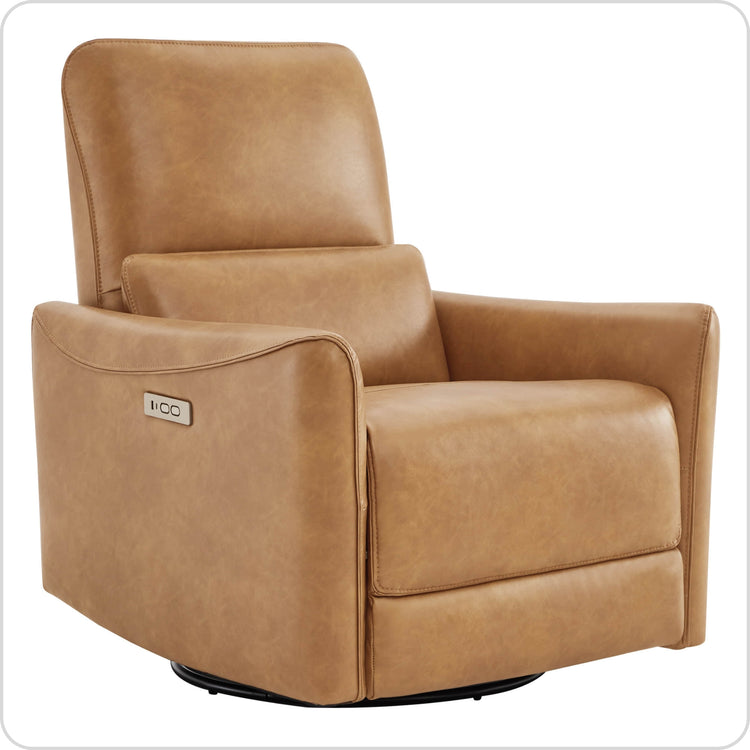
Tracee Power Swivel Nursery Glider Recline
The main point of the wall hugger recliner vs traditional recliner comparison is simple: match the chair's movement to the space available around it.
Match Your Recliner to Your Room Layout
The wall hugger vs traditional recliner choice starts with clearance, but it should end with the full room layout. A wall hugger can reduce the space needed behind the chair, while a traditional recliner may work well in a room with more open depth. Check rear clearance, the fully reclined footprint, front space, walkways, and movement features together. A few minutes of measuring can help you find a recliner that fits both the room and your daily routine.
FAQs About Wall Hugger and Traditional Recliners
Q1: How Much Space Does a Wall Hugger Recliner Need Behind It?
Many wall-hugger models need only a few inches of rear clearance, often around 3 to 6 inches. Exact requirements vary, so check the specifications for the specific chair you plan to buy.
Q2: Do Wall Hugger Recliners Still Need Space in Front?
Yes. The seat may move forward as the chair reclines, and the footrest also extends into the room. Leave enough open space for the full movement and keep tables and walkways clear.
Q3: Is a Wall Hugger Recliner Better for a Small Living Room?
A wall hugger can be a practical choice if limited rear clearance is the main problem. It does not automatically solve every space issue, though. Check the chair's fully reclined depth, width, front clearance, and surrounding walkway.
Q4: How Much Space Does a Traditional Recliner Need?
Many traditional recliners need roughly 12 to 18 inches behind the chair, though the exact requirement varies by model. Always use the manufacturer's dimensions for final placement.

More to Read
 7 Sofa Trends That Actually Improve Comfort in 2026
Upgrade your living room with furniture that supports your body. Here are 7 modern sofa features designed to maximize your daily comfort...
 Mother's Day Gift Guide: Cozy and Stylish Furniture Picks for Modern Moms
Make Mother's Day more meaningful with furniture gifts that bring comfort, smart features, storage, and quiet luxury into her everyday routine.
 Performance Fabric Reality Check: Does It Really Repel Pet Hair and Stains?
Performance fabric is often marketed as a miracle solution for homes with pets and kids, but the reality is more nuanced. It...