
























Choosing a Family Sectional That Leaves Room for Play

To choose a family sectional that leaves room for play, start with the floor instead of the sofa. Mark where your kids actually play and the paths people walk every day. Then compare each candidate's full footprint and seat count against that plan before you look at the biggest configuration.
This approach works for small living rooms and larger ones. Sectional sofas for small spaces aren't automatically the answer. The right size is the one that lets play, walking routes, and shared seating fit together in your room.
Plan Around Play Before Choosing a Sectional
Treat the play area and everyday routes as reserved floor, not as whatever space is left after the sofa goes in. Once those zones are on paper, the trade-off between seating and open floor gets easy to see.
- Measure the room and mark fixed features. Sketch the room's length and width in feet and inches. Add doors and their swing, windows, radiators or vents, built-ins, and the TV wall. These set limits you can't move.
- Reserve the play setup. Think about how your kids really play. That might be a train table, a block mat, a floor puzzle spread, or room to roll a ball. Draw that area on the plan at the size it needs.
- Mark the daily routes. Trace the paths from each doorway to the kitchen, hallway, or patio door, plus the path to the toy bins. In open rooms these paths are easy to block. Our guide to traffic paths in open rooms covers how floating a sofa can define zones while keeping walkways clear.
- Count the seats you need at once. Decide how many people sit together on an ordinary evening, like movie night or story time. Plan for that number, not for the rare holiday crowd.
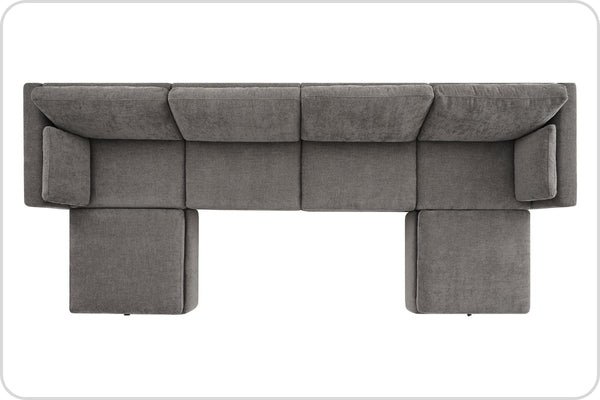
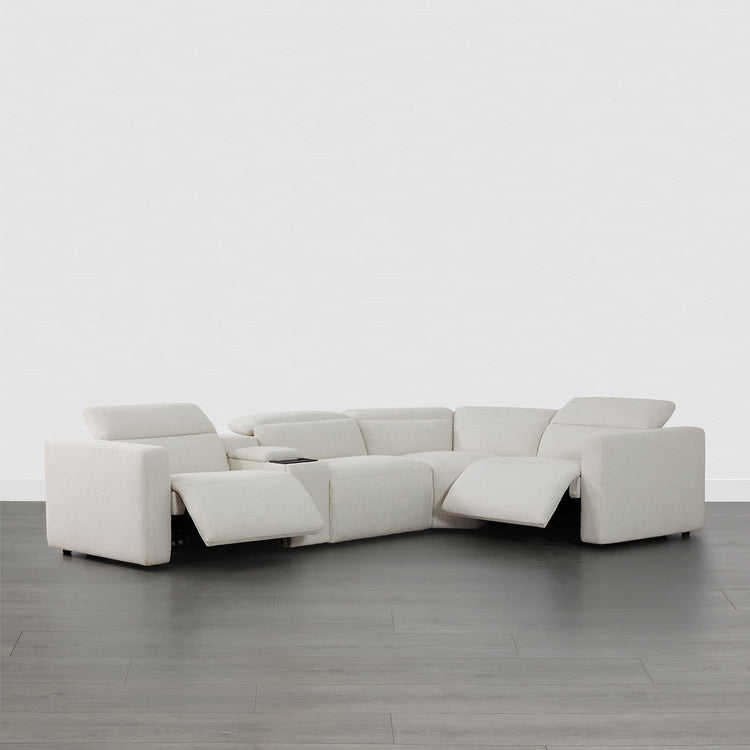
- Screen candidates by their full dimensions. Use the listed overall width and depth, including the chaise or return. A label like "compact" or "apartment size" doesn't tell you the footprint. Neither does a product photo.
- Adjust when something conflicts. If a candidate covers the play zone or cuts off a route, try another orientation first. Flip the chaise to the other side or turn the L toward a wall. If that still doesn't work, compare a smaller configuration that still meets your seat count.
The household-specific test is simple. A sectional passes when the play area stays usable, the routes stay open, and everyone who needs a seat has one. If it can't do all three, it isn't the right fit for this room, however good it looks.

Preview the Sectional Footprint in the Room
Before you order, put each finalist's outline on your plan and then on the actual floor. HGTV recommends scaled furniture outlines and painter's tape for this step. Its example uses a scale of one grid box per foot, and it suggests taping the arrangement on the floor to double-check the fit before ordering.
- Draw the outline to scale. Use the same scale as your room plan. Cut out a paper shape of the complete sectional, chaise or return included.
- Overlay it on the plan. Place the cutout on your sketch and see whether it lands on the reserved play area or a marked route.
- Tape it on the floor. Mark the full outline with painter's tape where you plan to put the sofa.
- Test real use. Set out the play mat or toys your kids use. Walk each route, carry a laundry basket through, and watch whether the play setup still fits.
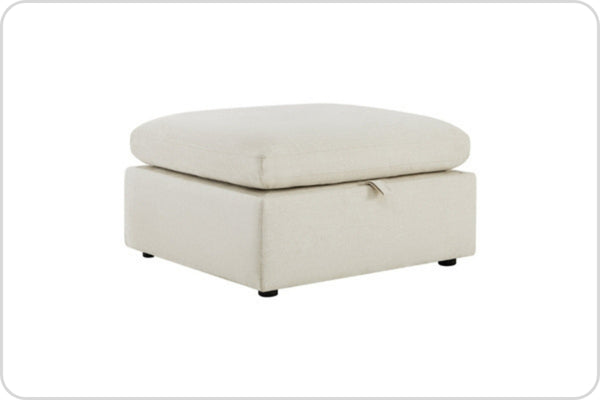
If the taped shape crowds the play area, move it or tape a smaller option and compare. Some families find a modular sectional easier to reshape here. Our comparison of modular layouts for kid zones looks at storage ottomans and modular setups for kid- and pet-friendly rooms.
FAQs
Is a sectional or a sofa plus a loveseat better for play space?
It depends on how your floor plan works. Two separate pieces can leave a gap that serves as a walkway, while a sectional fills a corner more fully. Tape both options and keep the one that protects your play area and routes. If you want to compare smaller pieces, our loveseats and 2-seater sofas are one place to start.
Can I add seats later if my family grows?
With a modular sectional, often yes, because pieces can be added over time. Plan the future size on paper now so you know where extra pieces would go without eating the play zone. Our article on scaling a modular sofa over time walks through growing a sectional in stages.
What if the play area changes as kids get older?
Redo the floor plan when the play setup changes, such as moving from a baby mat to a building set or a gaming spot. A layout that worked before may need a new orientation. Re-tape the outline before rearranging or buying anything new.
Should the sectional face the TV or the play area?
Pick based on what the room is used for most. If adults often watch kids while sitting, an orientation that faces or borders the play zone may help. Check that either choice still keeps your routes open.
Recommended Products
More to Read
 7 Sofa Trends That Actually Improve Comfort in 2026
Upgrade your living room with furniture that supports your body. Here are 7 modern sofa features designed to maximize your daily comfort...
 Mother's Day Gift Guide: Cozy and Stylish Furniture Picks for Modern Moms
Make Mother's Day more meaningful with furniture gifts that bring comfort, smart features, storage, and quiet luxury into her everyday routine.
 Performance Fabric Reality Check: Does It Really Repel Pet Hair and Stains?
Performance fabric is often marketed as a miracle solution for homes with pets and kids, but the reality is more nuanced. It...