






















Modular Sectional Sofas: storage ottoman vs Alternatives for pet and kid zones

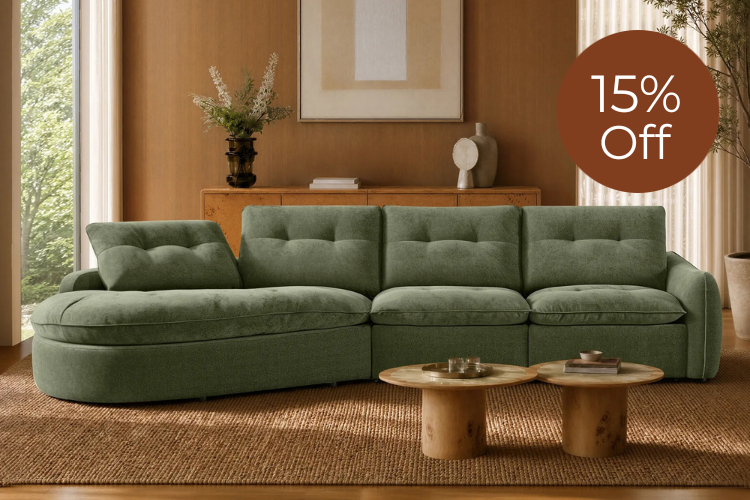
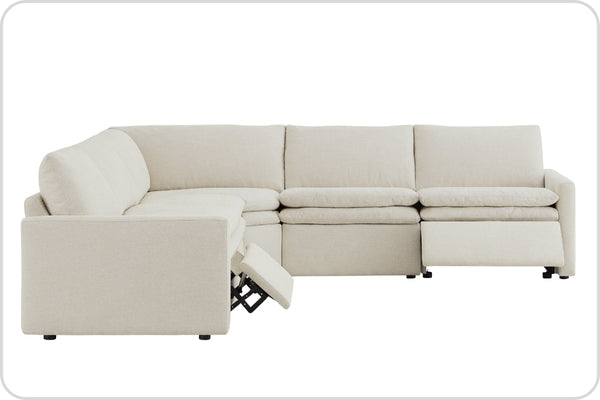
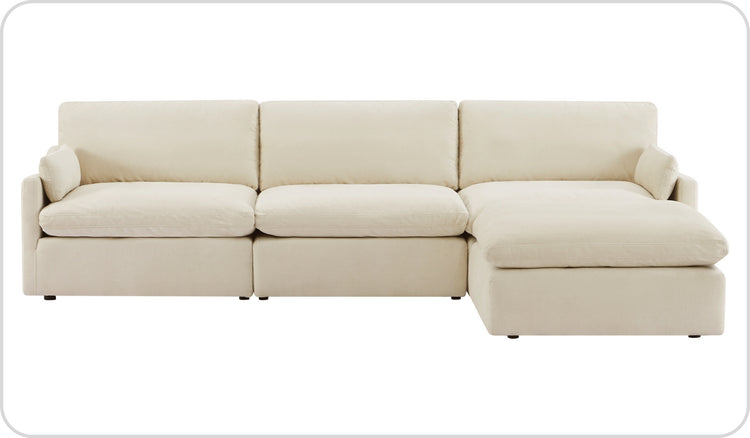
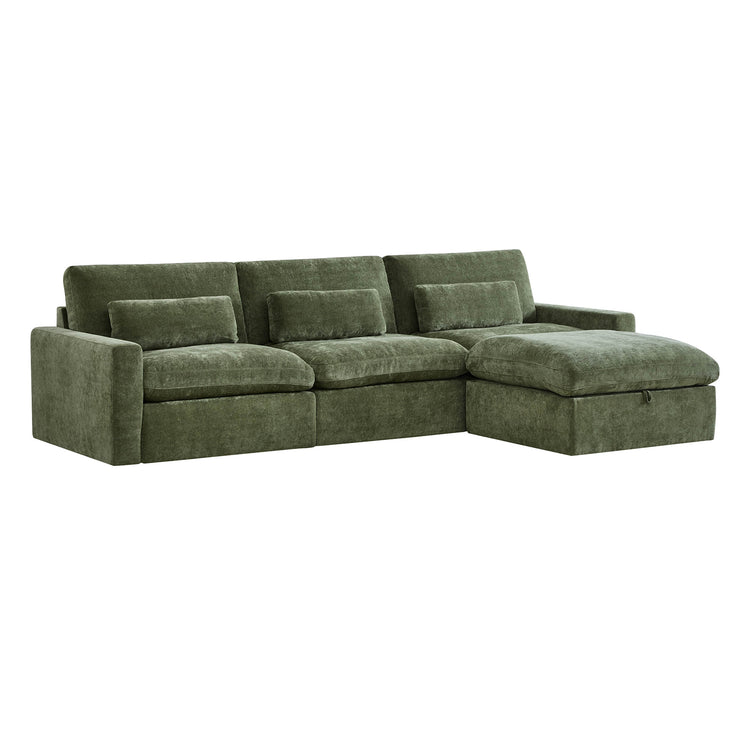
A modular sectional sofa can work very well in pet- and kid-heavy rooms, but the best layout depends on whether you need hidden storage, safer circulation, or easier reconfiguration. If the room is already crowded with toy traffic and pet movement, an open modular layout usually wins. If clutter is the bigger problem, a storage ottoman can be the smarter first add-on, as long as it does not swallow the walking space.

Storage Ottoman or Open Layout?
For most family rooms, this is the first decision to make: do you need the room to hold more stuff, or move more freely? A storage ottoman gives you a soft surface and a hiding place for remotes, blankets, or pet gear. An open modular layout gives you clearer paths for kids, pets, and adults who are constantly crossing the room.
When the room doubles as a play zone, the open layout usually feels less cramped. When the room is visually cluttered but the walkway is still generous, a storage ottoman can solve the daily mess without adding a cabinet. The catch is simple: once the ottoman gets oversized, it can steal the same floor space you were trying to preserve.
| Option | Clutter Control | Room Flow | Seating Flexibility | Best Fit |
|---|---|---|---|---|
| Storage ottoman | Better for small daily clutter | Can reduce open floor space if oversized | Good as footrest or extra perch | Rooms that need hidden storage first |
| Chaise | Limited hidden storage | Good if it follows the main traffic path | Strong lounging support | Lounging-heavy layouts |
| Separate ottoman | Moderate, depending on size | Easy to move when needed | Flexible, but not built-in | Families that want occasional reconfiguration |
| Fixed non-modular layout | Lowest flexibility | Often the least adaptable | Least change-friendly | Rooms that rarely change use or layout |
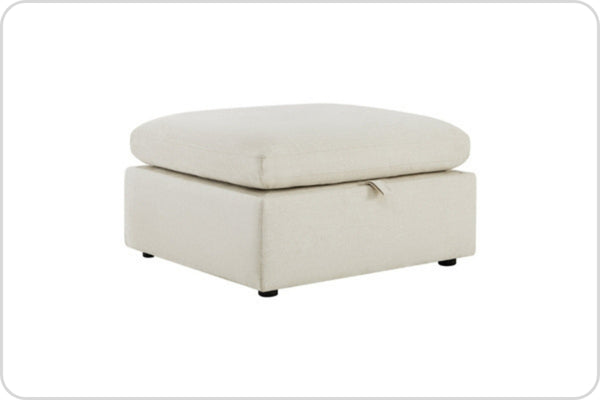
If you want a broader starting point, browse Modular Sofas as a category rather than treating one arrangement as the default answer. For a storage-first setup, a piece like Maisie Modular Ottoman with Storage is the kind of add-on to check, but only if the footprint still leaves enough room for play and pet movement.
The practical rule is this: choose storage when clutter is the main pain point, choose openness when movement is the main pain point, and choose a separate ottoman only when you want the option to pull storage in and out of the plan.
Which Fabrics Hold Up Best?
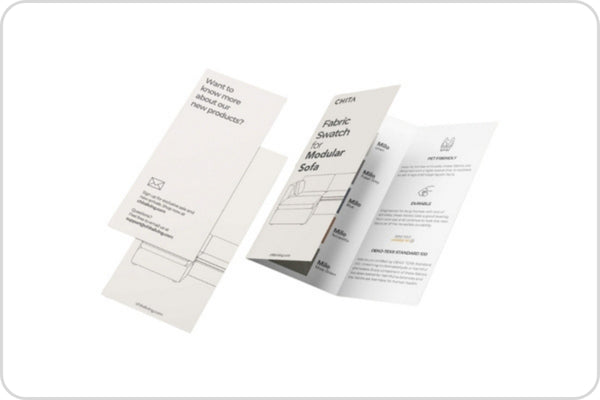
Performance fabric matters most when the sofa lives in a room that gets used all day, not just on weekends. It usually helps the room feel more forgiving around spills, pet hair, and muddy hands, but it does not remove the need for routine care. Upkeep still comes down to vacuuming, spot cleaning, and the specific weave or cleaning code.

What Performance Fabric Changes in Daily Use
In real family use, the biggest benefit is often lower regret, not magical durability. You still need to wipe messes quickly and vacuum often enough that crumbs and hair do not settle into seams. That is why a modular sectional sofa with easy-care upholstery tends to work better in busy homes than a showpiece fabric that looks great on day one but gets stressful by month three.
Care Realities for Spills, Hair, and Tracks
If the household has shedding pets, pay attention to texture as much as color. Smoother weaves can make hair easier to remove, while softer textures may feel nicer for lounging but ask a little more from your vacuum. For families with kids, the better question is not, "Is it stain-proof?" but, "Can I get it back to acceptable with normal effort?"
Texture and Comfort Trade-Offs in Family Spaces
A tougher weave can feel a little less plush, and that trade-off is normal. If the room is used for naps, movie nights, and floor play, comfort still matters. If the room is mostly a cleanup zone for pets and crafts, maintenance should weigh more heavily than softness.
A good shortcut is to pair easy-clean upholstery with a layout that leaves access around the sofa. The more room you have to vacuum under and beside the pieces, the less the upkeep feels like a weekly battle.
How Modular Layouts Adapt Over Time
- Start with the daily behavior pattern. If the room is mainly for lounging, build around comfort; if it is mainly for play and pet movement, leave more open floor.
- Map the walkways before you choose the configuration. The best modular sectional sofa is the one that does not create bottlenecks near doors, toy bins, or feeding areas.
- Place movable pieces where they can change with guests without forcing a full reset. A layout that takes 20 minutes to rearrange is useful; one that turns every gathering into a furniture project is not.
- Plan for future use, not just today's routine. If the room may later become a media zone, homework corner, or larger hangout space, a reconfigurable layout is usually the safer long-term bet.
If you want more layout ideas, the broader The 2026 Modular Living Manifesto: How to Design a 'Forever Home' with Reconfigurable Seating guide is a useful follow-up, and Delaney Modular Sofas is a logical category to browse when you are comparing shaped seating options rather than shopping for a single fixed piece.
That flexibility is why modular designs often beat fixed sectionals in active homes. The recommendation flips, though, if the room almost never changes and you care more about a tidy, anchored look than future rearrangement.
Where Hidden Storage Helps Most
A storage ottoman earns its keep when the clutter is small, frequent, and easy to forget. That includes throws, board games, remote controls, and pet accessories that tend to pile up in plain sight. It is less useful when the things you want to hide are bulky enough that the ottoman becomes a storage bin that also has to function as seating.
Families often like the idea of hidden storage more than the daily reality of hidden storage. The win is visual calm, especially in open-concept rooms where toys and pet items would otherwise stay out all day. The drawback is that a too-small ottoman becomes another object to manage, not a relief.
For that reason, match the storage ottoman to actual household items, not an ideal wish list. If the room needs a bigger storage reset, start by browsing Ottomans as a category, then check whether the storage piece supports the everyday objects you really want out of sight. A piece like Cube Storage Ottoman - Fabric & Leather is best treated as a compact navigation point unless its scale fits the room.
A separate storage solution may still be the better move when the ottoman would have to do too much at once. In that case, it is usually smarter to keep seating and storage roles separate instead of forcing one object to carry both.
What to Check Before You Buy
Measure for Traffic, Play, and Cleaning Access
Start with the room footprint, then subtract the space kids and pets actually use. It helps to sketch the ottoman, chaise, and main seating path on the floor before buying. If the layout makes vacuuming awkward or blocks a toy route, the design will feel annoying fast.
Check Stability, Connectors, and Seat Placement
For storage furniture around children, stability deserves real attention. The CPSC's furniture tip-over guidance and the Federal Register notice on ASTM F2057-23 storage-furniture testing show why placement and anchoring matter in child-heavy homes. For seating, the practical lesson is simpler: choose stable connections, avoid wobbly add-ons, and do not assume a soft ottoman can replace a safer arrangement.
Match Storage Volume to Real Household Clutter
This is where many buyers get it wrong. They shop for a storage ottoman as if it should solve all toy, blanket, and pet-item storage at once, then discover it is only useful for the things that already live in the room every day. If the load is too ambitious, the room ends up more cluttered than before.
Pick Upholstery for Normal Cleanup, Not Perfection
A durable sectional sofa for kids and pets should be chosen for repeat cleanup, not for fantasy-level resistance. Look for a fabric and layout that make crumbs, hair, and sticky hands easier to deal with after meals, crafts, and play. If a piece only looks good in a low-use room, it is probably not the right family-room answer.
If you are narrowing down styles, Easy-Clean Sofas is the best browsing path for upkeep-first shoppers, while The 2026 Buyer's Guide to Pet and Kid-Proof Modular Sofas is a helpful read for buyers comparing durability features across layouts.
The best modular sectional sofa for a kid-and-pet household is the one that fits your daily movement, cleanup habits, and storage needs without creating a new bottleneck. If you are still torn, favor the layout that keeps walking paths open and adds storage only where it truly solves a mess.
What Should You Do First When Choosing a Family-Friendly Layout?
FAQs
Q1. How Do You Size a Modular Sectional for a Family Room?
Measure the sofa footprint first, then leave room for traffic lanes, toy play, and the ottoman opening if storage is involved. A layout that technically fits the room can still fail if it blocks the path between the couch, TV, toy bin, or pet bed. The safer rule is to size for daily movement, not just wall-to-wall fit.
Q2. What Is the Easiest Fabric to Clean Around Kids and Pets?
The easiest fabric is usually the one that lets you vacuum, wipe, and spot-clean without fighting the weave. Performance-style upholstery helps, but it still depends on the exact texture and care code. If cleanup is your top priority, choose the fabric you can maintain consistently, not the one that sounds toughest on paper.
Q3. Can a Storage Ottoman Replace a Coffee Table in a Kid Zone?
It can, if you want a softer surface and you are comfortable using trays or removable tops for drinks and snacks. It is less ideal when you need a rigid table edge for work, books, or stable decor. In kid zones, soft edges are often a plus, but only if the ottoman stays stable and does not become a trip point.
Q4. Why Do Modular Sofas Work Better Than Fixed Sectionals in Active Homes?
They make it easier to reset the room when guests arrive, a pet bed moves, or the family starts using the room differently. Fixed sectionals can look cleaner, but they lock in the layout. Modular seating is better when your household changes often, while fixed seating is better when the room almost never changes.
Q5. How Often Should You Reconfigure a Modular Sofa Layout?
There is no fixed schedule. Reconfigure when the room's use changes, when traffic starts getting awkward, or when you need more seating for a season or event. If you are rearranging just because the setup is trendy, you probably do not need a new layout yet.
The Simplest Family-Room Decision Path
If you need the room to feel less cluttered, start with hidden storage. If you need the room to feel easier to move through, start with an open modular layout. If you need both, choose the configuration that protects the walkway first and adds storage second. That order usually keeps a modular sectional sofa useful long after the novelty fades. Check traffic lanes and stability before finalizing any ottoman or chaise addition.
Related Resources
Recommended Products

More to Read
 7 Sofa Trends That Actually Improve Comfort in 2026
Upgrade your living room with furniture that supports your body. Here are 7 modern sofa features designed to maximize your daily comfort...
7 Sofa Trends That Actually Improve Comfort in 2026
Upgrade your living room with furniture that supports your body. Here are 7 modern sofa features designed to maximize your daily comfort...
 Mother's Day Gift Guide: Cozy and Stylish Furniture Picks for Modern Moms
Make Mother's Day more meaningful with furniture gifts that bring comfort, smart features, storage, and quiet luxury into her everyday routine.
Mother's Day Gift Guide: Cozy and Stylish Furniture Picks for Modern Moms
Make Mother's Day more meaningful with furniture gifts that bring comfort, smart features, storage, and quiet luxury into her everyday routine.
 Performance Fabric Reality Check: Does It Really Repel Pet Hair and Stains?
Performance fabric is often marketed as a miracle solution for homes with pets and kids, but the reality is more nuanced. It...
Performance Fabric Reality Check: Does It Really Repel Pet Hair and Stains?
Performance fabric is often marketed as a miracle solution for homes with pets and kids, but the reality is more nuanced. It...