


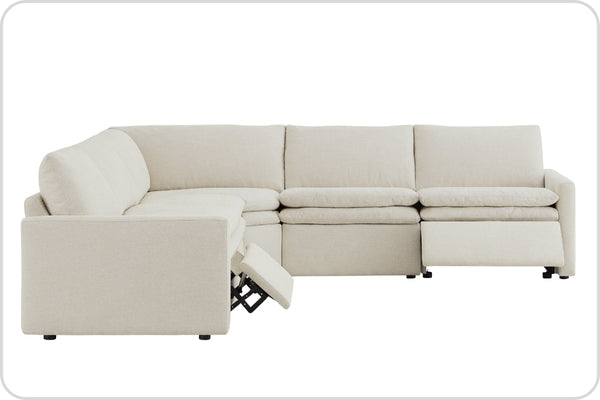



























If you're shopping for a cloud couch, the fill label on the cushions matters less than how much fluffing you're willing to do and how consistent you want the seat to feel. A feather-down or feather-blend cushion is a good fit when you accept regular fluffing and a slightly less uniform look between cleanings. A high-density foam-led cushion is the more logical direction when you want steadier support with fewer hands-on adjustments, provided the exact construction is verified.
Neither fill type by itself guarantees how the cushion will hold its shape after five years or more. That outcome depends on the core, the top layer, the suspension underneath the cushion, and whether you actually keep up with the care routine the product specifies.
Which Cushion Type Fits Your Maintenance Tolerance and Support Preference?
Match the cloud couch cushions to your realistic care habits first, then to your preferred support feel. The table below gives a conditional starting point, not a universal winner.
| Cushion type | Fit if you... | Support/shape question to weigh | Fact to request before buying |
|---|---|---|---|
| Feather-down or feather-blend | Enjoy a relaxed, sink-in feel and will fluff or reshape cushions on a schedule | How much reshaping is needed to keep the seat looking even | Exact fill ratio, wrap material, and recommended fluffing frequency |
| High-density foam-led | Want consistent support with fewer manual adjustments | Whether the top layer and suspension match the stated firmness over time | Foam density, top layer material, and suspension type |
A listing that leaves out the core, the top layer, or the care instructions is a reason to hold off on a five-year judgment, not a reason to assume either material will perform better.
What Construction Details Matter More Than the Fill Label?
The word "feather" or "foam" on a spec sheet describes one layer, not the whole cushion. Before comparing two cloud couch cushions, ask for the core material, the top layer or wrap, the suspension system, whether the cushion is reversible or adjustable, the stated care instructions, and any warranty or durability coverage tied to the seat.
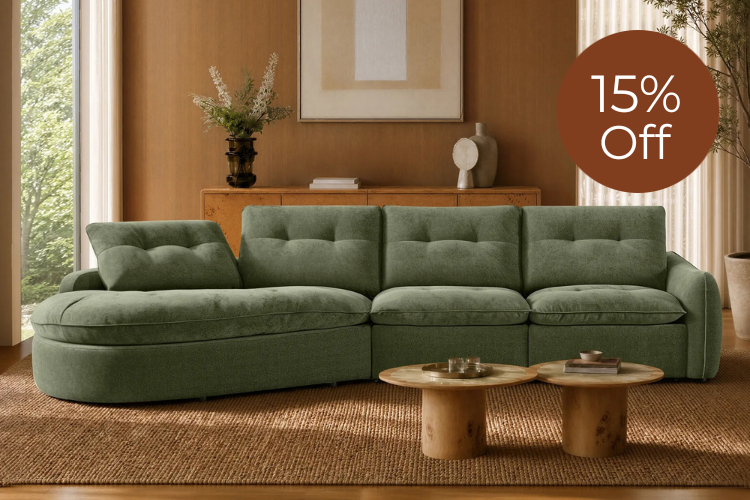
Layered construction is common enough that a feather-blend top can sit over a foam core in the same cushion. Our Winsley feather-filled sofa is one example: its seat pairs premium high-density foam with a soft blend of fiber and sterilized feathers, and the foam layer is built to hold its shape while the top blend delivers the softer feel. That combination is specific to this construction, not a general rule for every feather-labeled cushion.
Foam density is worth asking about too. The Polyurethane Foam Association notes that polyurethane foams performing well in seating tend to carry a polymer density of 1.8 pounds per cubic foot or higher. Treat that figure as one useful specification question, not a five-year guarantee. A dense foam core with a thin, poorly supported top layer can still feel and wear differently than the number alone suggests.

What Routine Care Does Each Cushion Require?
Expect two separate kinds of care: immediate checks for visible problems, and recurring adjustment that depends on the cushion's design. Follow the product's own instructions rather than assuming one schedule applies to every cushion.
Routine Checks Versus Recurring Adjustment
Watch for these two categories separately:
- Immediate checks: visible displacement, wrinkling, or uneven compression after regular use, especially on the most-used seat.
- Recurring adjustment: fluffing, repositioning, or rotating cushions where the product design allows it, following the frequency the manufacturer recommends.
Our guide on how to rotate and fluff sofa cushions walks through specific methods for sectionals and attached-back cushions if your product allows that kind of adjustment.
The Maintenance-Tolerance Test
Before you commit to a cushion type, ask whether your household will actually maintain every seat, not just the one you sit in most. A relaxed feather-blend feel that requires weekly fluffing is a poor fit if nobody in the house will do it, no matter how comfortable it feels in the showroom. If the honest answer is "probably not," a configuration with a documented lower-adjustment routine is the safer choice.
How Should You Judge Sagging and Five-Year-Plus Shape Retention?
Judge sagging by comparing the complete seat build and how it matches your use pattern, not by the fill label alone. When the core, top layer, suspension, and care instructions are all documented, you can form a more confident opinion; when they're missing, withhold a longevity conclusion instead of guessing based on material type.
What the Foam Evidence Can and Cannot Tell You
Flexible polyurethane foam is widely used in seat cushions because it can be engineered for support and comfort, and the Polyurethane Foam Association associates high-resilience foam grades with greater support and durability in seating applications. That's useful background, but it describes foam in general, not any single sofa's five-year performance. Treat density and resilience ratings as one input alongside the top layer, suspension, and your actual use pattern, and see our related guide on how to choose a deep-seat sectional that resists sagging for a closer look at frame and foam pairing.
The Shape-Retention Questions to Ask
Work through these five questions for any cushion you're considering:
- What is the actual core, and what sits on top of it?
- What suspension system supports the seat from underneath?
- Can the cushion be reversed or repositioned to even out wear?
- What care routine does the manufacturer specify?
- Does your expected use match how the product is designed to be used?
If you can answer all five with confidence, you have a reasonable basis for a five-year-plus expectation. If several answers are missing, treat the longevity question as unresolved until you get them.
Which Choice Fits Relaxed Lounging, Daily Use, and Low-Upkeep Homes?
Your everyday habits, not just your seating preference, should decide between feather-blend and foam-led cloud couch cushions. Here's how three common situations tend to shake out.
Relaxed Lounging
A soft, sink-in feel makes sense if you genuinely don't mind reshaping cushions and accept a slightly lived-in look between adjustments. Softness alone doesn't tell you how the cushion will hold up, so still confirm the construction before assuming it will last.
High-Frequency Living Rooms
A primary living room with frequent, uneven seating calls for closer scrutiny of the full build. Check the suspension, the top layer, and how the product handles repeated loading on one seat before deciding, rather than picking based on material type alone.

Low-Upkeep Households
If you want fewer hands-on steps, a verified foam-led construction is often the more practical direction, since less recurring adjustment is usually part of that design. Don't assume low maintenance just because a listing mentions foam. Confirm the documented care routine first.
FAQs
Does a Feather-Filled Cushion Always Mean It Has No Foam Core?
No. "Feather-filled" often describes only the top layer or wrap, not the entire cushion. Ask for the core material, the top layer, and the suspension before assuming a feather-labeled cushion lacks a foam base.
Is High-Density Foam Enough to Guarantee a Sofa Will Not Sag?
No. Foam density is a useful specification to ask about, but it doesn't independently predict five-year shape retention. Check the top layer, suspension, and your actual use pattern alongside the density figure before drawing a conclusion.
What Should I Ask a Retailer When Cushion Construction Details Are Missing?
Ask for the exact care instructions, the full cushion configuration including core and top layer, the suspension type, and any stated warranty or durability coverage. Treat a listing that can't answer these as an unresolved risk rather than assuming it performs well.
Which Cushion Type Is Easier to Live With Every Day?
It depends on whether you'll actually follow the documented care routine. A feather-blend cushion suits buyers who will fluff or reshape it regularly, while a verified foam-led cushion suits buyers who want steadier support with less recurring adjustment. Neither is a universal winner.
Sources
- Polyurethane Foam Association. Furniture Case Study.
Recommended Products


More to Read
 7 Sofa Trends That Actually Improve Comfort in 2026
Upgrade your living room with furniture that supports your body. Here are 7 modern sofa features designed to maximize your daily comfort...
7 Sofa Trends That Actually Improve Comfort in 2026
Upgrade your living room with furniture that supports your body. Here are 7 modern sofa features designed to maximize your daily comfort...
 Mother's Day Gift Guide: Cozy and Stylish Furniture Picks for Modern Moms
Make Mother's Day more meaningful with furniture gifts that bring comfort, smart features, storage, and quiet luxury into her everyday routine.
Mother's Day Gift Guide: Cozy and Stylish Furniture Picks for Modern Moms
Make Mother's Day more meaningful with furniture gifts that bring comfort, smart features, storage, and quiet luxury into her everyday routine.
 Performance Fabric Reality Check: Does It Really Repel Pet Hair and Stains?
Performance fabric is often marketed as a miracle solution for homes with pets and kids, but the reality is more nuanced. It...
Performance Fabric Reality Check: Does It Really Repel Pet Hair and Stains?
Performance fabric is often marketed as a miracle solution for homes with pets and kids, but the reality is more nuanced. It...