














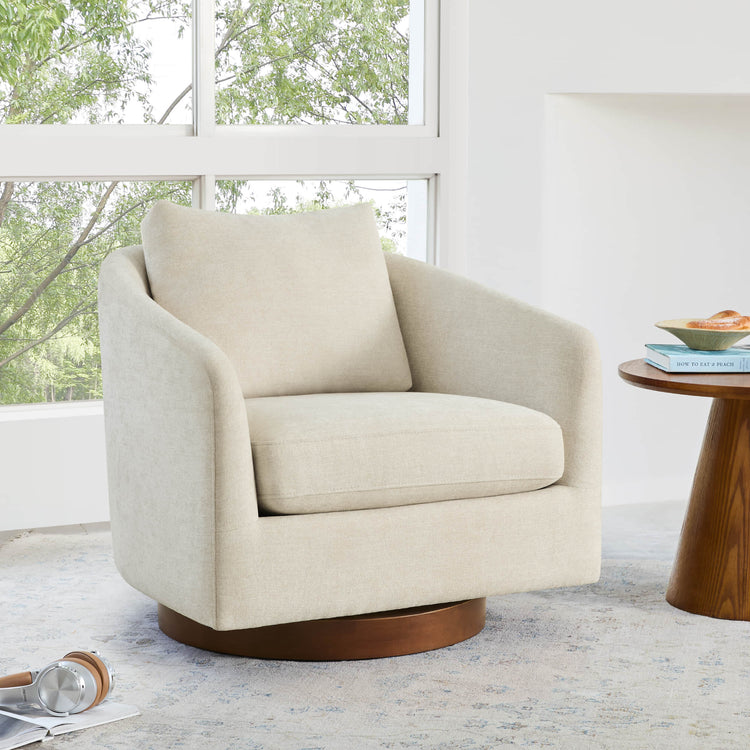









Match your grey swivel chair to a warm rug when the upholstery already leans taupe or beige, match it to a cool rug when it leans blue or green, and reach for deliberate contrast only when a shared color or texture connects the two. Room light acts as the tie-breaker when the undertone is hard to call. Test the pairing with a real fabric sample and a rug swatch before you commit.
How to Choose the Rug Direction for a Grey Swivel Chair
The right rug direction depends on what the chair's grey already looks like next to the room's other finishes, not on the word "grey" itself. Start with an undertone match, then use contrast only when the room supports it.
Match the Rug to the Chair's Apparent Temperature
Choose a warm rug when the chair's grey looks softened by taupe, beige, or brown surroundings, since those cues signal a warmer-leaning upholstery. Choose a cool rug when the grey visibly leans blue or green and the room already contains other cool furnishings, because that combination reinforces a look the space is already building toward.
Use Controlled Contrast with a Bridge
A grey swivel chair can carry a contrasting rug, but only when a repeated color, wood tone, or texture connects the two pieces. A jute rug can offset a blue-leaning slate chair if the room already has natural wood nearby, while a crisp white rug can work with a warm charcoal chair if a matching white accent shows up elsewhere. Skip a contrasting rug that introduces a one-off color with no relationship to anything else in the room, since that combination tends to look like two separate decisions instead of one styled room.
Let Room Light Break the Tie
When the undertone still feels ambiguous, let the room's light settle it. In a room with low or blue-leaning light, lean on warmer neighboring materials to keep the space from feeling flat. In a room that gets strong warm afternoon sun, a cooler neighboring color can keep the grey from reading overly yellow.
How to Tell Whether Grey Upholstery Reads Warm, Cool, or Neutral
Grey upholstery rarely reads as pure grey. Most fabrics carry a subtle lean toward another hue family, and that lean determines whether a warm or cool rug will feel connected once it's in the room.
Use a White Reference
Comparing the chair against a clean white surface is the fastest way to spot a hidden undertone, according to color theory guidance. Look for a pull in one of these directions:

- Warm-looking: a subtle push toward taupe, pink, yellow, or brown
- Cool-looking: a subtle push toward blue, green, or violet
- Neutral-looking: little visible pull in either direction, even beside white
Check the Room, Not Just the Sample
A fabric swatch can look different once it sits in your actual seating area, so view the chair and rug sample there at different times of day. Pay attention to nearby oak furniture, flooring, wall color, and textiles, since any of them can pull the grey warmer or cooler than it looked in isolation or online.
Separate Undertone from Depth
Charcoal, slate, and heather describe how deep and how mixed a grey looks, not a fixed undertone. Charcoal is the deepest and visually heaviest of the three, slate commonly reads cooler or more blue-leaning, and heather has a softer, mixed appearance from its blended fibers. Treat these as practical visual categories you can check by eye, not as technical color standards.
Warm Rug Pairings for Charcoal, Slate, and Heather Grey Chairs
Warm rugs work best when the room already has a wood tone, texture, or accent color that the rug can echo. Jute, natural oak, beige, tan, and other earth tones are the most reliable warm directions for grey seating.
Charcoal with Warm Texture and Lighter Earth Tones
Deep charcoal upholstery can dominate a room if nothing balances its weight, so pairing it with jute, tan, beige, or natural oak keeps the seating area from feeling heavy. Repeat one of those warm finishes somewhere else nearby, like a side table, flooring, or a basket, so the rug doesn't look like an isolated addition.
Slate with Oak, Sand, and Muted Earth Tones
When slate leans visibly cooler, natural oak or a sandy beige rug can bridge the gap and add warmth without fighting the chair's undertone. Keep the warm accents muted rather than saturated if the slate has an obvious blue cast, since a strong warm rug next to a strong cool chair can look mismatched instead of balanced.
Heather Grey with Jute and Layered Neutrals
Heather's mixed, flecked appearance connects naturally with jute, oatmeal, taupe, and soft tan layers, since those materials share a similarly complex texture. Avoid stacking several competing beige or yellow accents at once, since heather already carries enough visual texture on its own and extra warm accents can compete rather than complement. Rooms already leaning into an organic warm wood palette tend to give heather grey the most cohesive result.
Cool Rug Pairings for Charcoal, Slate, and Heather Grey Chairs
Cool rugs work when the room already leans toward blue, grey, or crisp white, and when the rug echoes something the chair or the room is already showing. Without that echo, a cool rug can feel disconnected or make the space feel colder than intended.
Charcoal with Blue or Crisp White
A deep charcoal chair can anchor a blue or crisp-white palette when the room already contains those colors elsewhere, since the contrast reads as intentional rather than random. If the result feels stark, add a softer textile or a natural finish nearby to keep the pairing from looking cold.
Slate with Layered Grey and Blue
Slate's blue or green lean pairs most naturally with a related cool rug or textile rather than an unrelated grey, since echoing the existing cast keeps the room cohesive. Vary the depth or texture between the chair and the rug so the two pieces don't blend into one flat grey field with no visual separation.
Heather Grey with Quiet Cool Neutrals
Heather grey can sit comfortably with soft grey, faded blue, or off-white when the room already carries a calm, cool palette. Add one bridge texture or accent color, since a purely cool, flat combination can look unfinished without something to connect the pieces.
How to Place and Orient a Swivel Chair Around the Rug
Orient the chair toward the room's most active use first, then adjust its exact position for visual balance with the rug. Placement decisions matter as much as color once the rug direction is settled.
Face the Room's Active Focal Point
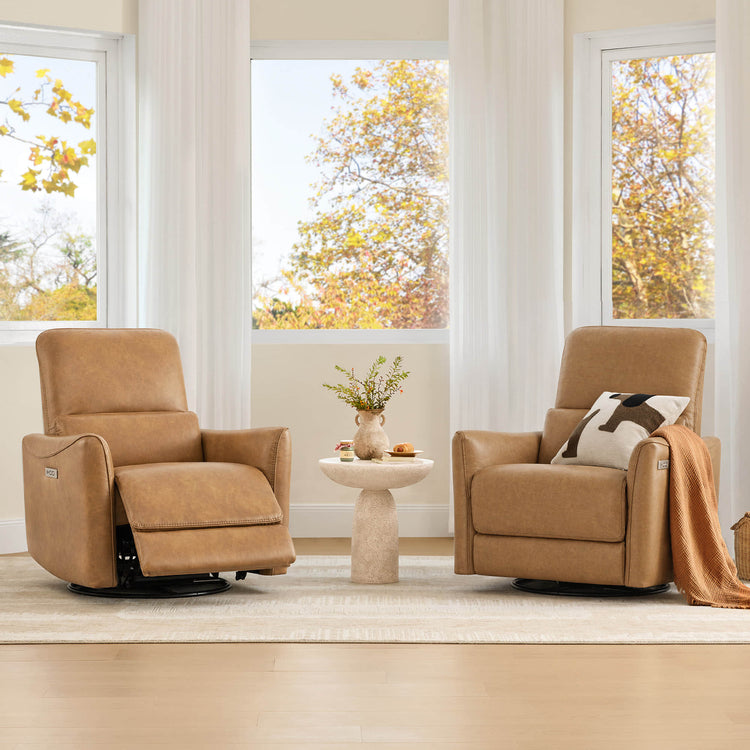
Point the chair toward whatever the room is actually used for, whether that's conversation, a television, a window, or another clear focal point. The swivel base lets the chair turn to support more than one use, but it should not sit visually pointed away from the room when it's not in motion.
Judge the Rug Relationship from the Main View
Stand in the main seating position and check whether the chair feels connected to the rug or stranded beside it. Use the chair's footprint, the surrounding furniture, and the traffic path to judge visual scale by eye, since specific clearance numbers depend on the room and aren't something to guess at.
Make One Final In-Room Adjustment
Turn the chair through its likely positions and look at the arrangement from the main entrance and from the seating position itself, since a chair that looks balanced from one angle can look lopsided from another. Before ordering, set the fabric swatch and rug sample together in the intended spot and check them again under changing light. Standard accent chair placement rules also apply to a grey swivel chair and its rug.
FAQs
Can a warm rug work with a cool grey swivel chair?
Yes, but only when a repeated bridge color, wood tone, or natural texture connects the two pieces somewhere else in the room. Without that shared element, a warm rug next to a clearly cool grey chair tends to look like two unrelated choices rather than one styled combination. Test the pairing in the room before committing.
Is jute a good match for every grey chair?
No. Jute is a warm-texture direction, not an automatic match for every grey chair. Check whether the chair's grey and the room's existing wood finishes share enough warmth first; a strongly blue-leaning slate chair may need a more muted or oak-toned bridge rather than jute on its own.
What if the grey chair looks different in morning and evening light?
Compare the chair fabric and rug sample beside a white reference in both morning and evening light before you decide. Grey upholstery can shift in apparent undertone as the light changes, so a combination that looks right at midday may need a second check before you order.
Recommended Products

More to Read
 7 Sofa Trends That Actually Improve Comfort in 2026
Upgrade your living room with furniture that supports your body. Here are 7 modern sofa features designed to maximize your daily comfort...
7 Sofa Trends That Actually Improve Comfort in 2026
Upgrade your living room with furniture that supports your body. Here are 7 modern sofa features designed to maximize your daily comfort...
 Mother's Day Gift Guide: Cozy and Stylish Furniture Picks for Modern Moms
Make Mother's Day more meaningful with furniture gifts that bring comfort, smart features, storage, and quiet luxury into her everyday routine.
Mother's Day Gift Guide: Cozy and Stylish Furniture Picks for Modern Moms
Make Mother's Day more meaningful with furniture gifts that bring comfort, smart features, storage, and quiet luxury into her everyday routine.
 Performance Fabric Reality Check: Does It Really Repel Pet Hair and Stains?
Performance fabric is often marketed as a miracle solution for homes with pets and kids, but the reality is more nuanced. It...
Performance Fabric Reality Check: Does It Really Repel Pet Hair and Stains?
Performance fabric is often marketed as a miracle solution for homes with pets and kids, but the reality is more nuanced. It...