























Many shoppers assume flat-pack furniture is the greener choice because it ships in smaller, denser boxes that reduce transport emissions. In 2026, however, the real sustainability metric is longevity: a piece that lasts 20 years avoids multiple replacement cycles that drive far more carbon, waste, and landfill burden than the original shipping difference.

The 12-Million-Ton Problem: Why Your Furniture’s 'End Date' Matters Most
Americans discard over 12 million tons of furniture every year, and EPA data show that roughly 80% of it ends up in landfills. Only about 0.3% is successfully recycled. This scale makes the “end date” of your sofa, media console, or storage unit one of the largest hidden drivers of furniture’s environmental footprint.
The fast-furniture cycle—low-cost, low-durability items replaced every two to five years—feeds this waste stream directly. True sustainability in 2026 therefore shifts from “how small is the box?” to “how many years will this piece stay out of the landfill?” When a single purchase lasts decades instead of a few years, you eliminate the repeated manufacturing, shipping, packaging, and disposal impacts that dominate the overall carbon story.
The Carbon-Per-Mile Myth: Why Shipping Efficiency Isn't the Greener Choice
Flat-pack furniture earns praise for shipping less air, yet a 2025 life-cycle assessment published in Scientific Reports shows that raw materials and pre-production account for an average of 76% of a furniture piece’s total environmental impact while distribution represents only 9%. Shipping density is a secondary lever; material choice and replacement frequency are the primary ones.

A piece engineered to last 20 years avoids three additional manufacturing, packaging, and transport cycles compared with a five-year “fast” alternative. This longevity gap outweighs the first-mile carbon savings of flat-pack in most living-room scenarios. As industry observers note, the narrow “carbon-per-mile” framing used to favor flat-pack misses the larger picture once replacement cycles are counted.
20-Year Sofa Lifecycle Carbon Comparison
Cumulative carbon impact over 20 years for one durable sofa versus four shorter-life sofas. The chart uses bounded ranges and a simple replacement scenario to show the trade-off between longevity and repeated manufacturing waste.
View chart data
| Category | Relative carbon impact |
|---|---|
| Durable sofa (20 years) | 1.0 |
| Fast sofa #1 (Years 0-5) | 4.0 |
| Fast sofa #2 (Years 5-10) | 4.0 |
| Fast sofa #3 (Years 10-15) | 4.0 |
| Fast sofa #4 (Years 15-20) | 4.0 |
This chart clarifies the likely pattern in typical setups: one durable sofa carries its embodied impact once, while four sequential fast sofas multiply manufacturing and end-of-life burdens across the same 20-year window.
The Hidden Environmental Cost of Shipping Damage and Returns
Parcel-shipped furniture faces damage rates that can reach 6% in the furniture industry. Each damaged piece triggers a carbon-intensive return or replacement shipment, effectively doubling or tripling the transport footprint of that single purchase and erasing much of the packaging-efficiency gain.
Flat-pack designs often rely on thinner materials and more packaging layers to survive transit, yet the added cardboard volume still fails to protect against common handling shocks. Fully assembled or pre-assembled modular pieces typically travel on pallets with robust crating and specialized freight handling, lowering the probability of damage. When a return is avoided, the environmental savings compound over the product’s longer life.
Built to Last: Why Solid Joinery Beats Knockdown Fittings in 2026
Knockdown fittings—cam locks, dowels, and Allen-key bolts—enable flat-pack efficiency but sacrifice long-term structural integrity. Daily use and even minor moves loosen these connections, producing the familiar wobble that often leads to early disposal.
In contrast, factory-assembled furniture uses permanent joinery such as mortise-and-tenon or dovetail joints that maintain rigidity for decades. These construction differences directly influence how many years the piece remains functional and attractive in your living room. Industry observations suggest high-quality assembled furniture typically lasts 15–25 years while many flat-pack items are replaced within 5–7 years; treat this range as a practical heuristic rather than a laboratory guarantee for every model.
Repairability vs. Replaceability: The Anti-Fast Furniture Advantage
Modular systems that let you replace individual components extend the life of the entire piece and reduce the need for full replacements. Our guide to the Repairability Index explains how high-quality modular design turns repair into a realistic, low-waste option instead of defaulting to landfill.
Choosing pieces with removable covers, replaceable cushions, and solid frames supports the anti-fast-furniture approach. This mindset avoids the disposable cycle and keeps functional furniture in homes longer. For families, pet owners, or anyone who reconfigures living spaces, modularity offers both practical flexibility and measurable sustainability gains.
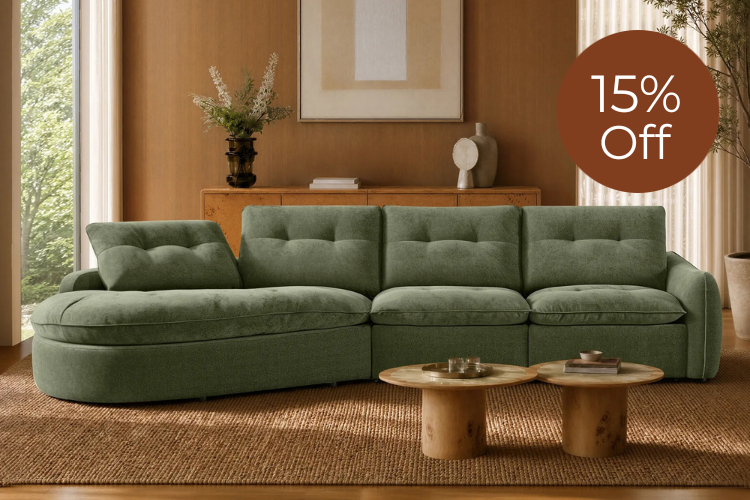
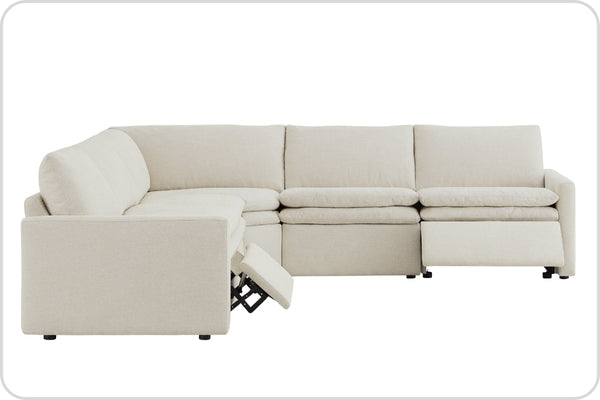
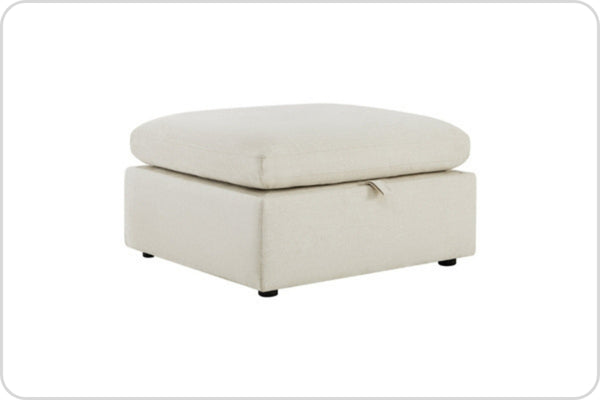
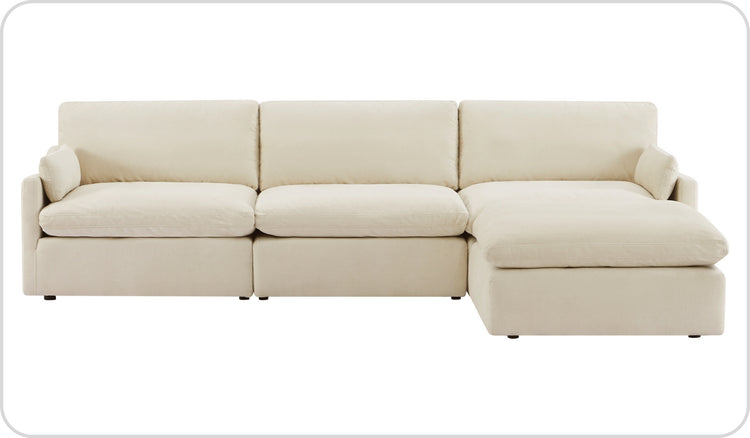
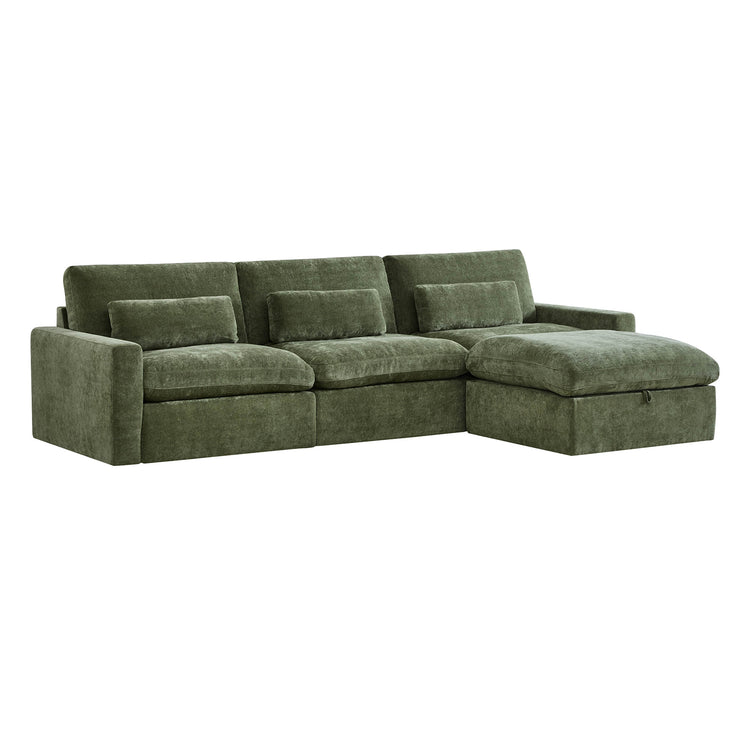
Many buyers exploring durable options also consider modular sofas that balance easy delivery with long-term repairability, or performance-fabric collections that resist wear without frequent replacement.
The 2026 Buyer’s Checklist: Choosing Furniture for the Long Haul
Use this practical checklist to evaluate sustainability through a longevity lens rather than box size alone:
- Verify materials: Look for FSC-certified wood frames and OEKO-TEX or PFAS-free fabrics that reduce upstream impact and improve indoor air quality.
- Inspect joinery and construction: Prefer pieces with mortise-and-tenon or dovetail joints over cam locks and dowels; test for stability in the showroom or read detailed assembly descriptions.
- Assess repairability: Confirm that cushions, covers, or modular sections can be replaced individually rather than discarding the whole item.
- Calculate cost per year: Divide the purchase price by expected lifespan (15–20+ years for quality assembled furniture versus 5–7 for many flat-pack options) to reveal the true ownership cost.
- Factor shipping protection: Choose retailers that use palletized, specialized freight for larger assembled or modular items when damage risk is a concern.
- Check certifications and transparency: Brands that publish clear lifespan estimates, material breakdowns, and repair guidance usually align better with low-waste goals.
Applying this framework helps you select living-room furniture—whether a sofa, media console, or storage piece—that minimizes environmental burden over its full life rather than just the delivery day.
Is flat pack furniture more sustainable than assembled?
Flat-pack can win on first-mile shipping emissions, but most analyses show that shorter average lifespans and higher damage/return rates often make the total 20-year impact larger. When a fully assembled or high-quality modular piece lasts three to four times longer, it typically delivers lower cumulative carbon, waste, and landfill contributions.
How does shipping damage affect furniture sustainability?
A 6% industry damage rate means many flat-pack orders require return shipments or replacements, roughly doubling the transport emissions for those units. Robust palletized delivery used for many assembled pieces reduces this risk and preserves the original carbon investment.
What is the real carbon footprint difference between flat-pack and assembled furniture?
Distribution accounts for roughly 9% of total impact according to life-cycle studies, while raw materials represent 76%. A longer-lived piece avoids multiple material-production and disposal cycles, making lifespan the larger variable in 2026 calculations.
Can modular furniture be both easy to ship and long-lasting?
Yes. Modern modular designs combine tool-free or minimal-tool assembly with solid frames and replaceable components. This approach reduces packaging volume compared with fully assembled freight while still supporting 15–20+ year service life through repair rather than replacement.
How should I calculate the true sustainability of a furniture purchase?
Divide expected years of use into the purchase price and factor in replacement frequency, repair potential, and end-of-life disposal likelihood. Prioritize FSC wood, durable joinery, and modular repairability over the smallest possible shipping box.
Does buying assembled furniture reduce landfill waste?
When the piece lasts significantly longer, yes. Avoiding three or four replacement cycles over 20 years prevents multiple items from entering the waste stream, where 80% of discarded furniture is landfilled and generates methane. Longevity is the most direct way to cut that burden.
Recommended Products

More to Read
 7 Sofa Trends That Actually Improve Comfort in 2026
Upgrade your living room with furniture that supports your body. Here are 7 modern sofa features designed to maximize your daily comfort...
7 Sofa Trends That Actually Improve Comfort in 2026
Upgrade your living room with furniture that supports your body. Here are 7 modern sofa features designed to maximize your daily comfort...
 Mother's Day Gift Guide: Cozy and Stylish Furniture Picks for Modern Moms
Make Mother's Day more meaningful with furniture gifts that bring comfort, smart features, storage, and quiet luxury into her everyday routine.
Mother's Day Gift Guide: Cozy and Stylish Furniture Picks for Modern Moms
Make Mother's Day more meaningful with furniture gifts that bring comfort, smart features, storage, and quiet luxury into her everyday routine.
 Performance Fabric Reality Check: Does It Really Repel Pet Hair and Stains?
Performance fabric is often marketed as a miracle solution for homes with pets and kids, but the reality is more nuanced. It...
Performance Fabric Reality Check: Does It Really Repel Pet Hair and Stains?
Performance fabric is often marketed as a miracle solution for homes with pets and kids, but the reality is more nuanced. It...