























2026 Warm Wood Furniture Trends for Living Rooms and Dining Rooms

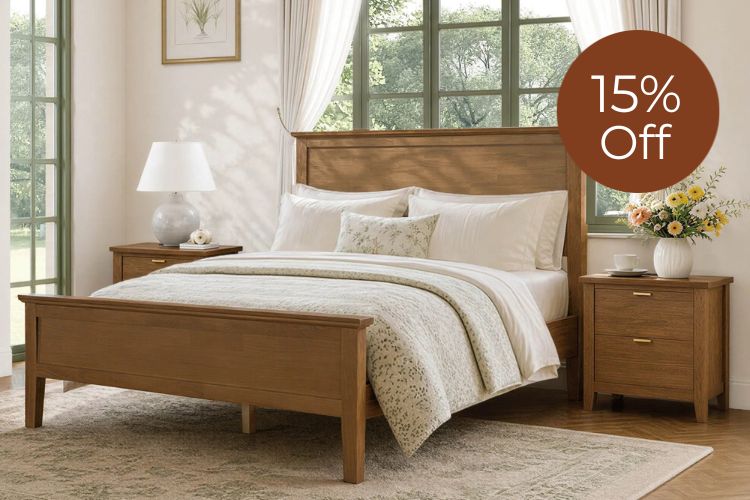
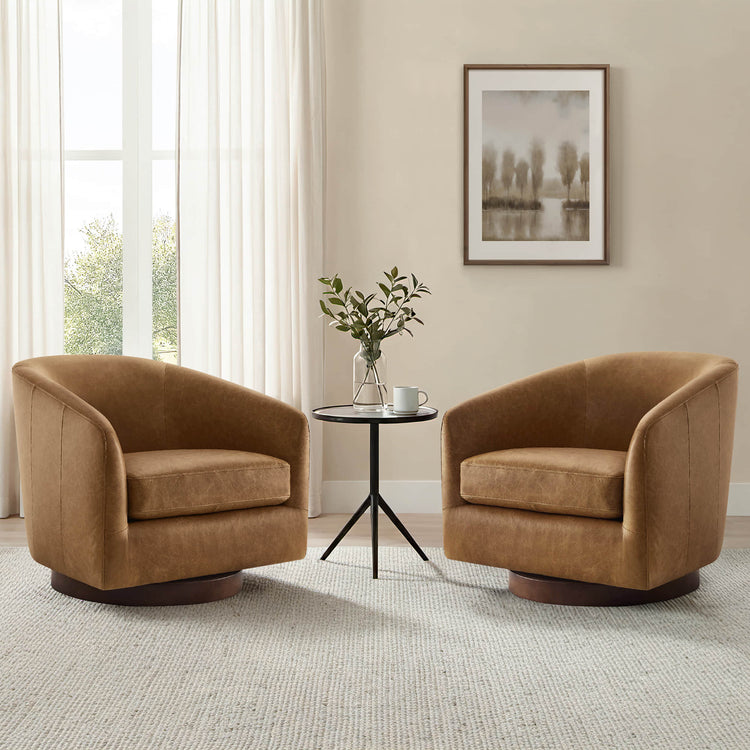
2026 warm wood furniture trends are moving living rooms and dining rooms toward softer, more grounded spaces. The short version: honey oak, caramel oak, and walnut-inspired finishes feel current again, especially if you want organic modern warmth without the flatness of cool gray.

What Warm Wood Means in 2026
In 2026, warm wood reads less like a rustic-only choice and more like a design reset. The trend favors finishes that feel sunlit, natural, and calm, which lines up with recent 2026 design roundups from Houzz, the NAHB's 2026 trend coverage, the ASID 2026 Trends Outlook, and organic modern guidance.
For most homeowners, the decision is not "wood or no wood." It is whether the tone feels warm enough to soften a room but restrained enough to stay relevant after the trend wave passes. That is why 2026 warm wood furniture trends lean toward simple silhouettes, visible grain, and undertones that feel cohesive across the room.
If your home already has a lot of cool finishes, warm wood can be the fastest way to make the space feel more lived-in. If your room is already busy with color, pattern, or heavy textures, the better move is usually one strong wood tone and a quieter supporting finish rather than adding more visual competition. For a related style angle, see the Mid-Century Modern living spaces guide.
The Wood Tones Leading 2026
Honey Oak for Softer Living Rooms
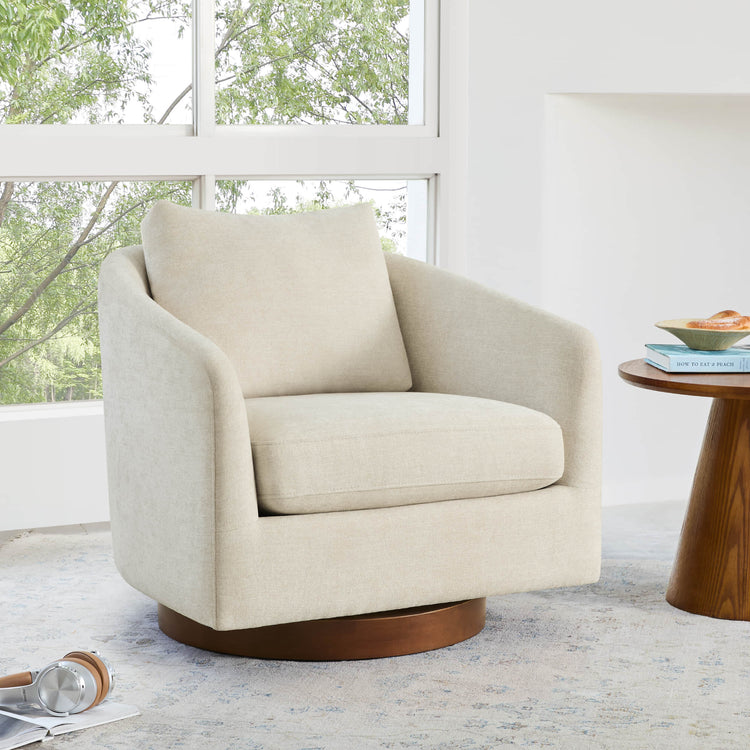
Honey oak is one of the easiest entry points into warm wood because it brightens a room while still adding warmth. It tends to work best when you want the furniture to feel friendly, not formal. In living rooms, that usually means low, open silhouettes, lighter upholstery, and fewer hard contrasts around the wood.

Honey oak is a good fit if your room needs warmth without heaviness. It is less useful if you already have a lot of yellow or red in the surrounding finishes, because the combined warmth can start to feel overly saturated.
Walnut for a Richer Dining Statement
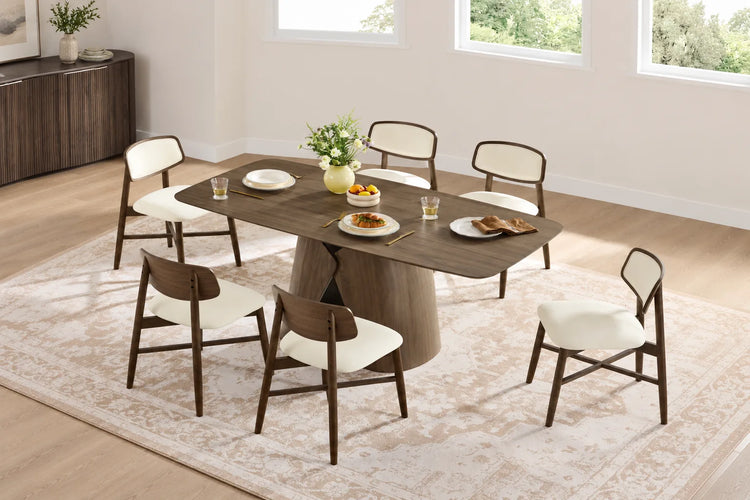
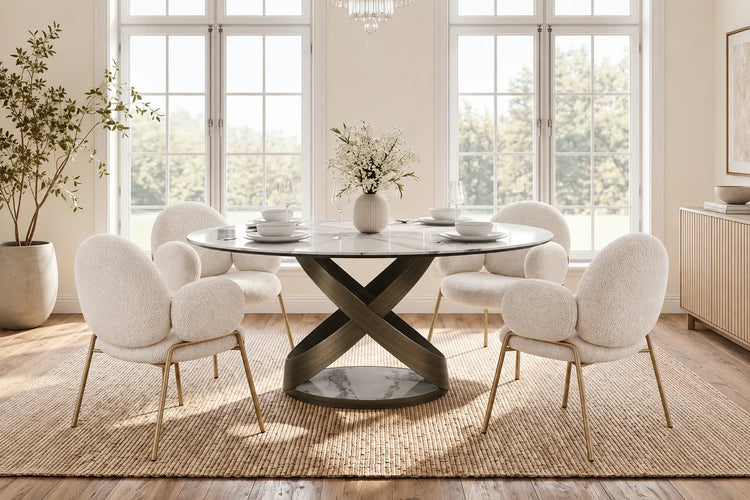
Walnut brings more depth, so it often makes the strongest impression on a dining table or a larger storage piece. In a dining room, that can be a strength: the table becomes the anchor, and the rest of the room can stay quieter. The NAHB's 2026 trend report reflects that broader move toward warmer, more nature-inspired interiors.
Walnut works especially well when you want the room to feel collected and substantial. It can feel too heavy, though, if the base is bulky, the room is small, or the lighting is dim. In those cases, a lighter walnut tone or a more open-leg profile usually ages better.
Mixed Wood Grain for Layered Spaces
Mixed wood grain can look rich and custom, but only when the tones stay in the same warm family. The practical rule is simple: one finish should lead, and the other should support. If both are trying to be the star, the room usually feels busy instead of layered.
This is where many homeowners get stuck. They see multiple warm woods in inspiration photos and assume any combination will work. In real rooms, undertone consistency matters more than matching the exact species. If one finish reads golden and another leans red, the mix can feel accidental unless the rest of the room is very calm.
Light-To-Mid Tone Balance Across Open Plans
Open-plan living and dining spaces usually need more editing than single rooms. A strong approach is to let one tone define the broader palette, then vary the intensity from room to room. For example, a lighter oak in the living area can keep the space airy while a deeper walnut in dining adds weight where it helps most.
That balance is one of the clearest themes in 2026 warm wood furniture trends: warmth should connect the rooms, not flatten them into one uninterrupted block of brown. If you want a more rustic lean, the rustic look furniture guide is a useful comparison point.
How to Coordinate Living and Dining Pieces
| Approach | Best For | Visual Effect | What To Pair | Watch Out For |
|---|---|---|---|---|
| One-tone continuity | Smaller homes and calm layouts | Clean, unified, easy to read | Repeated oak or walnut notes, textured neutrals | Can feel flat if every piece is the same height and shape |
| Warm-tone variation | Open plans that need separation | Softer and more layered | One dominant finish, one lighter or deeper support tone | Undertone clashes if the woods fight each other |
| Mixed-grain layering | Rooms with simple upholstery and fewer colors | Collected, custom, richer | Similar warmth, repeated curves, quiet fabrics | Too many finishes can look restless fast |
| Anchor-piece contrast | Buyers who want one standout moment | Strong focal point | Deeper dining table, lighter living storage | Heavy silhouettes can dominate the room |
For most households, the safest approach is one dominant finish plus one supporting tone. That gives you enough variety to avoid a showroom feel without turning the room into a finish sampler. A walnut dining table with a slightly lighter storage piece in the living zone is often easier to live with than trying to balance three or four wood colors at once.
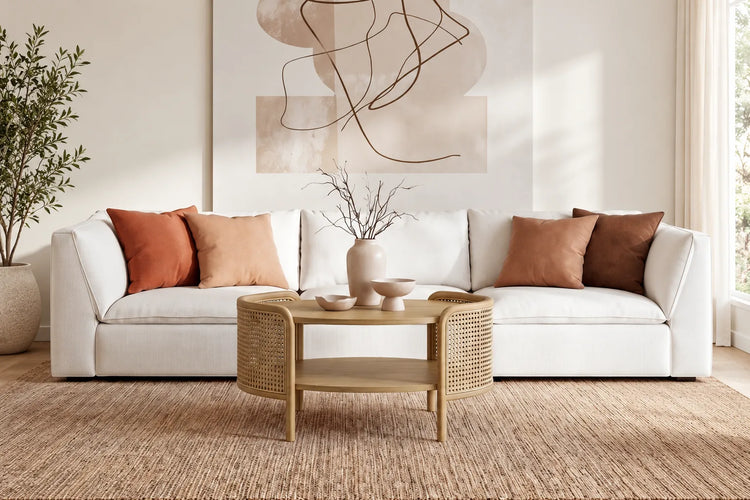
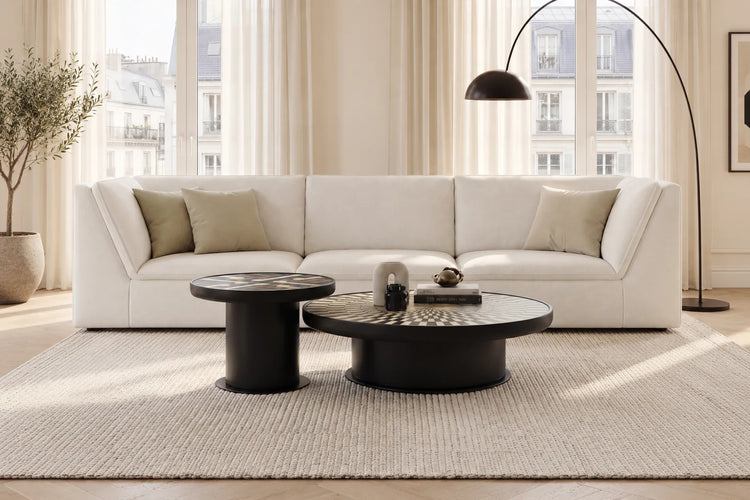
Textiles matter here too. Textured neutrals, woven upholstery, and earthy fabrics keep warm wood from feeling overly dense. They also help the room read intentional rather than themed. If the furniture has rounded edges or fluted fronts, repeat that language elsewhere so the eye has a few familiar cues.
If you want to browse by room, the Living Room Furniture & Decor Ideas collection is a practical starting point, and the Dining Room New Arrivals page is a useful way to compare current shapes and tones. The FSC Earth Day Picks collection offers another navigation path for sustainable warm-wood options.
Pieces That Carry the Trend
Dining Tables With Sculptural Bases
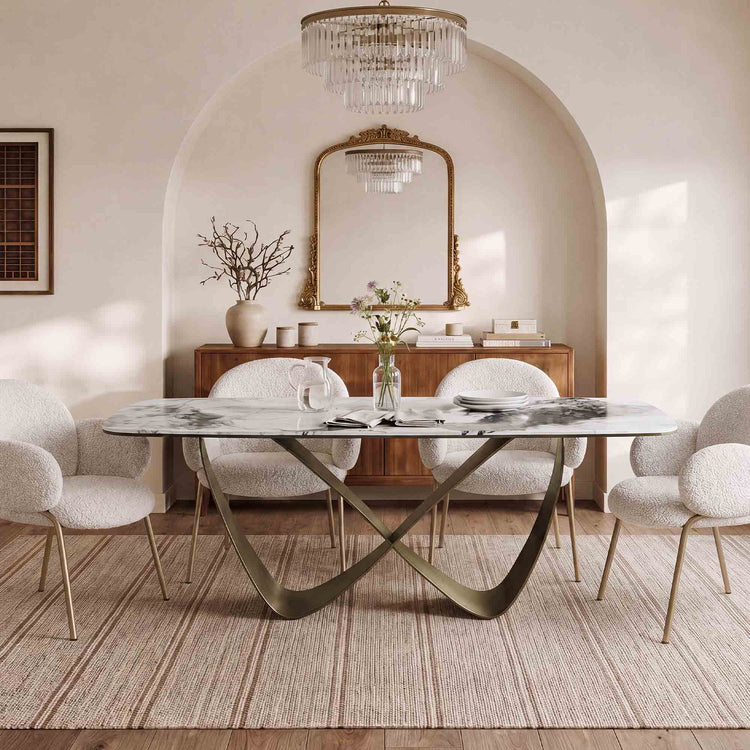
Dining tables usually set the tone fastest because the top surface is large and the base is visible from multiple angles. In 2026, sculptural legs, rounded edges, and softened profiles make warm wood feel current without depending on decoration. If the table is the anchor piece, it should be the clearest expression of the finish family.
A table like the Glacia Modern Wood Dining Table for 4 is worth checking if you want a warm wood dining anchor with a modern profile.
Sideboards and Buffets for Warm Storage
Sideboards and buffets extend the trend into storage, which matters because the room feels more designed when the practical pieces match the mood. These pieces work best when they do two jobs at once: hold everyday items and repeat the room's main wood tone or silhouette language.
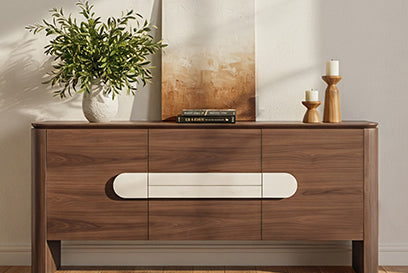
If you want a deeper walnut note, the 63" Todd Walnut Sideboard with Cylindrical Base is a natural check-before-buying option.
Media Consoles That Ground the Living Room
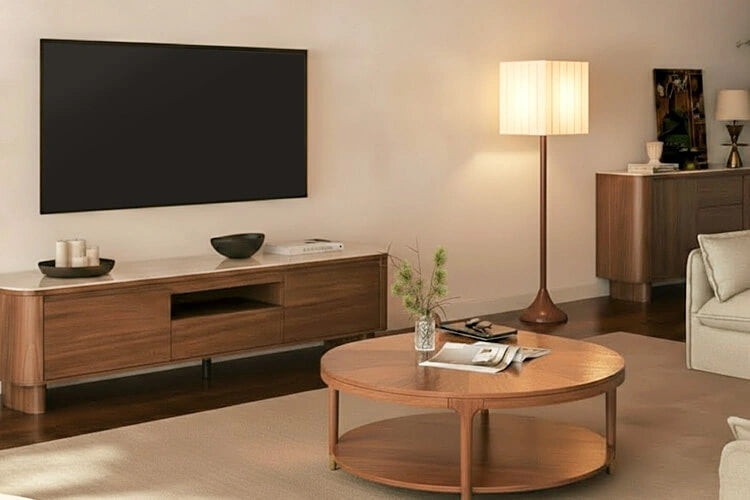
Media consoles are one of the easiest ways to bring warm wood into the living room without overcommitting the whole space. Because they sit under a screen, they usually need to feel quieter than a dining table but still substantial enough to ground the wall.
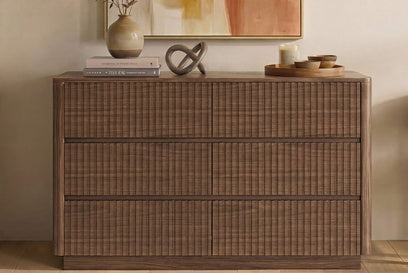
The 79" Coral Mid Century Fluted TV Stand with Four Doors is a strong navigation link if you want to evaluate a walnut-toned console with fluted detail.
Statement Tables That Keep the Room Light
The trick with statement furniture is to make it noticeable without making it bulky. In smaller spaces, that usually means open bases, curved corners, or a lighter-looking outline. If the silhouette stays airy, the wood can feel richer without dragging the room down.
If you are building a coordinated living area, the 71" Rex Curved Fluted Wooden TV Stand with Drawer is a relevant browsing option for a softer, more sculptural console shape.
Quality Checks Before You Buy
- Look at the wood finish from across the room, not only in close-up photos, because a tone that looks balanced at arm's length usually coordinates better with upholstery and flooring.
- Check whether the piece feels proportionate to the room, since oversized warm wood can make an open plan feel crowded even when the finish itself is attractive.
- Pay attention to the base, edges, and top shape, because those details affect whether the piece feels easy to live with around meals, remotes, trays, and traffic flow.
- Treat veneer, surface detailing, and joinery cues as practical buying signals, not just style language.
- If you expect the room to evolve, choose a piece that can stay useful after the 2026 warm wood moment settles down.
- When the room already has strong color or heavy texture, favor one wood hero piece and keep the rest quieter.
A good self-check is to ask whether the piece still feels right if you swap out the rug or sofa later. If the answer is yes, it is probably a better long-term buy. That is the kind of judgment that helps the 2026 warm wood furniture trends feel durable instead of trendy.
FAQs
Q1. What Wood Tones Feel Most Current in 2026?
Honey oak, warm oak, and walnut-inspired tones are leading because they feel softer and more natural than cooler gray-leaning finishes. The most current versions usually have visible grain, simple shapes, and a finish that feels warm without looking orange.
Q2. Can You Mix Light and Dark Warm Woods in One Room?
Yes, if the undertones stay in the same warm family and one finish clearly leads. A light oak living area and a deeper walnut dining table can work well together when the rest of the room stays restrained and the silhouettes feel related.
Q3. How Do You Keep Warm Wood From Looking Heavy?
Use lighter silhouettes, curved edges, and a little negative space. Textured neutrals, woven fabrics, and open legs help the room breathe. The biggest mistake is pairing a deep finish with several bulky pieces in the same visual line.
Q4. What Furniture Pieces Show the Trend Fastest?
Dining tables, sideboards, media consoles, and storage pieces show the trend fastest because they have enough surface area to carry the wood tone clearly. If you are refreshing only one room first, the dining table or media console usually has the biggest visual impact.
Q5. Why Does Warm Wood Pair Well With Organic Modern Style?
Organic modern spaces rely on clean lines, natural texture, and a calm palette. Warm wood adds depth and softness without breaking that simplicity, which is why it works so well when you want a room to feel current, relaxed, and lived-in at the same time.
A Warm Wood Plan That Will Age Well
Start with one dominant warm tone and repeat it sparingly across living and dining zones. Keep undertones consistent, favor open silhouettes, and let textured neutrals soften the look. This approach stays useful long after the 2026 moment passes and prevents the room from feeling overly matched or crowded.
Recommended Products

More to Read
 7 Sofa Trends That Actually Improve Comfort in 2026
Upgrade your living room with furniture that supports your body. Here are 7 modern sofa features designed to maximize your daily comfort...
7 Sofa Trends That Actually Improve Comfort in 2026
Upgrade your living room with furniture that supports your body. Here are 7 modern sofa features designed to maximize your daily comfort...
 Mother's Day Gift Guide: Cozy and Stylish Furniture Picks for Modern Moms
Make Mother's Day more meaningful with furniture gifts that bring comfort, smart features, storage, and quiet luxury into her everyday routine.
Mother's Day Gift Guide: Cozy and Stylish Furniture Picks for Modern Moms
Make Mother's Day more meaningful with furniture gifts that bring comfort, smart features, storage, and quiet luxury into her everyday routine.
 Performance Fabric Reality Check: Does It Really Repel Pet Hair and Stains?
Performance fabric is often marketed as a miracle solution for homes with pets and kids, but the reality is more nuanced. It...
Performance Fabric Reality Check: Does It Really Repel Pet Hair and Stains?
Performance fabric is often marketed as a miracle solution for homes with pets and kids, but the reality is more nuanced. It...