























Multigenerational living has become a defining feature of 2026 households, with financial pressures and caregiving needs driving more families to share homes. Standard sofas often fail in these environments because they cannot easily adapt to different generations' needs for accessibility, lounging comfort, and frequent reconfiguration. A modular sofa for multigenerational living offers the flexibility to create distinct zones while maintaining durability and a cohesive look that grows with changing family dynamics.

The 2026 Shift: Why Multigenerational Living Demands Modular Flexibility
Research from the Pew Research Center shows that financial reasons remain the top driver for multigenerational households, cited by about 67% of adults. The National Association of Realtors adds that Gen X and older Millennials are particularly active in this trend, often to support aging parents or increase family time. In these homes, the living room must serve as a shared hub for conversation, media, caregiving, and occasional guest sleeping.
Traditional fixed sofas create friction because they lock families into one layout. When seniors need easier entry and exit, adults want deep lounging, and children or guests require flexible surfaces, a single static piece cannot adapt without compromising someone's comfort or safety. Modular systems address this by letting you rearrange sections, add storage, or expand as needs evolve. This makes a modular sofa for multigenerational living a practical foundation rather than a temporary fix.
Planning Your Shared Space: Circulation and Safety Thresholds
Before choosing any furniture, measure your room against universal design standards. The AARP HomeFit Guide recommends maintaining at least 36-inch circulation paths throughout the living area to accommodate walkers, wheelchairs, or simply safer movement for all ages. Narrower pathways quickly become hazards in high-traffic homes with multiple generations.
Modular sofas help here because you can create intentional "islands" or cutouts that preserve these clear routes. Position larger sections against walls while leaving open lanes between the sofa and other furniture. This layout future-proofs the space as mobility needs change over time. Check your room dimensions against standard modular box sizes first. If you cannot maintain those 36-inch paths even with a compact configuration, a smaller or non-modular option may reduce clutter more effectively.

Prioritizing Senior Accessibility in Shared Seating
For aging parents, seat height and firmness directly affect ease of sitting and standing. Industry guidance consistently points to an 18- to 20-inch seat height as the practical "goldilocks zone" that supports safer transitions without feeling too low or too high. Many Chita models, including the Delaney, Brendon, Ivy, and Jonathan, sit at 18.5 inches, placing them comfortably in this range for multigenerational use.
Firm support in primary seating areas helps seniors rise more easily, while softer modules can be reserved for secondary lounging zones used mainly by younger adults. Place the firmer sections along main entry and exit paths so older family members have reliable access. This seat depth and height guidance helps translate body mechanics into buying decisions. If your primary seating ends up below 18 inches or feels excessively soft, it may create more struggle than support for seniors, making a higher, firmer traditional sofa a better boundary choice in that case.
The chart below helps visualize these thresholds across generational zones.
Zoning for Co-Living: How to Use Modular Flexibility for Every Age
One modular sofa can support multiple generations when you intentionally zone the layout. Create a firmer conversation or caregiving area near entry points for seniors, a deeper media zone for adults, and flexible guest or play space using ottomans or chaises. This approach reduces the need for separate furniture while keeping the room functional.
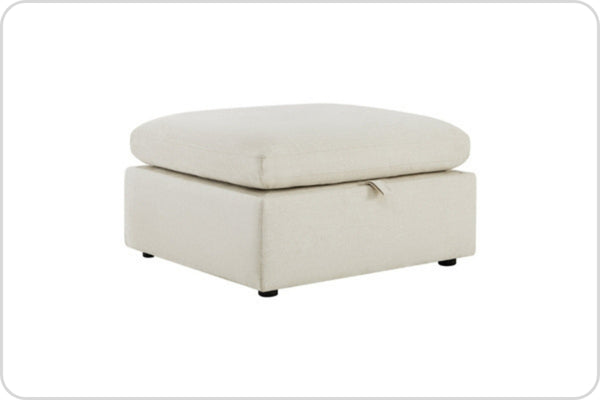
Hidden storage within seats proves especially useful. Place frequently used items for each generation close at hand: toys or tablets for children in one section, reading glasses or medical supplies for grandparents in another. Storage ottomans can serve as temporary surfaces or hold shared blankets. Our guide to modular configurations explores L-shaped versus U-shaped setups that often work best for these mixed-use rooms. If your household has very different daily schedules or extreme mobility differences, dedicated seating per generation may still reduce daily friction more than one large sectional.
Built for High-Traffic: Durability and Performance Fabric Standards
Large families generate heavy daily use, so fabric and construction must withstand spills, frequent rearranging, and general wear. Industry benchmarks for high-traffic residential upholstery typically call for 15,000 to 30,000 double rubs on the Wyzenbeek scale, with performance fabrics offering better resistance to stains and fading. Our 2026 guide to performance fabric durability breaks down these ratings and what they mean for real family life.
High-density foam cores around 2.0 lb per cubic foot or higher provide the resilience needed for daily sit-to-stand use, though this remains an industry heuristic rather than a strict rule. Regular vacuuming, prompt spot cleaning, and rotating cushions extend life significantly. Models like the Ivy performance fabric sectional or Delaney with storage ottomans incorporate these durable elements while offering the modularity multigenerational homes need. If your family includes pets that chew or very young children who spill frequently, test a fabric sample in real conditions before committing to light colors.
The Hidden Commitment: Maintaining Your Modular System Over Time
Modularity brings flexibility but also ongoing responsibilities. Connector hardware can loosen with repeated moves or heavy use, leading to sectional drift over months or years. Periodic tightening—every few months in active homes—helps maintain alignment. Community experiences show this maintenance is a normal part of ownership rather than a rare defect.
Long-term expansion depends on continued availability of matching fabrics and modules. While many lines remain stable, discontinued colors can break visual cohesion. Large sets also arrive with significant packaging that requires planning for disposal or recycling. Our comparison of modular versus traditional sofas discusses these real-world trade-offs. If you prefer a set-it-and-forget-it piece with minimal upkeep, a well-made non-modular sofa may create less regret despite lower adaptability.
Creating Visual Cohesion in a High-Function Shared Home
Large modular arrangements can look cluttered if not styled intentionally. Choose a limited color palette that bridges modern and classic tastes across generations, then use textures and lighting to define zones. Neutral performance fabrics in similar tones prevent the room from feeling like a patchwork of temporary solutions.
Accessories, rugs, and strategic lighting further separate areas without adding visual noise. A consistent leg style or trim detail across modules helps the entire system read as one intentional piece. When the layout feels cohesive, the practical benefits of modularity become the focus rather than the furniture itself.
Choosing the Right Modular Configuration for Your Household
Start your decision with the five practical checks from the opening: seat height in the 18-20 inch range, 36-inch circulation paths, generational zoning with storage, high-traffic fabric ratings, and willingness to handle occasional hardware maintenance. An L-shaped configuration often suits conversation-focused homes, while a U-shape works better for media-heavy rooms that double as guest space.
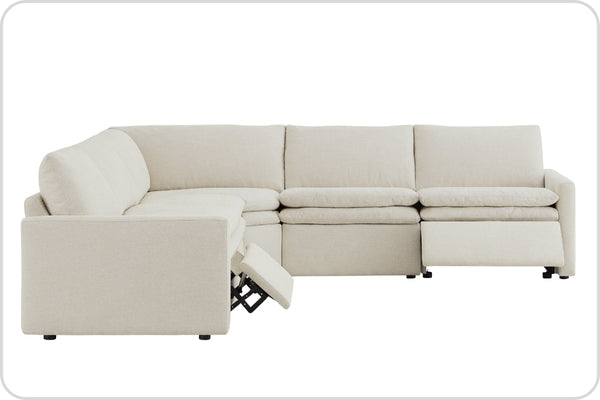
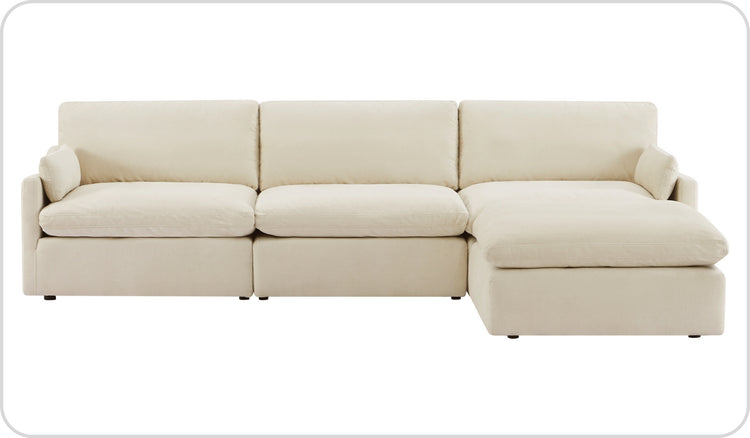
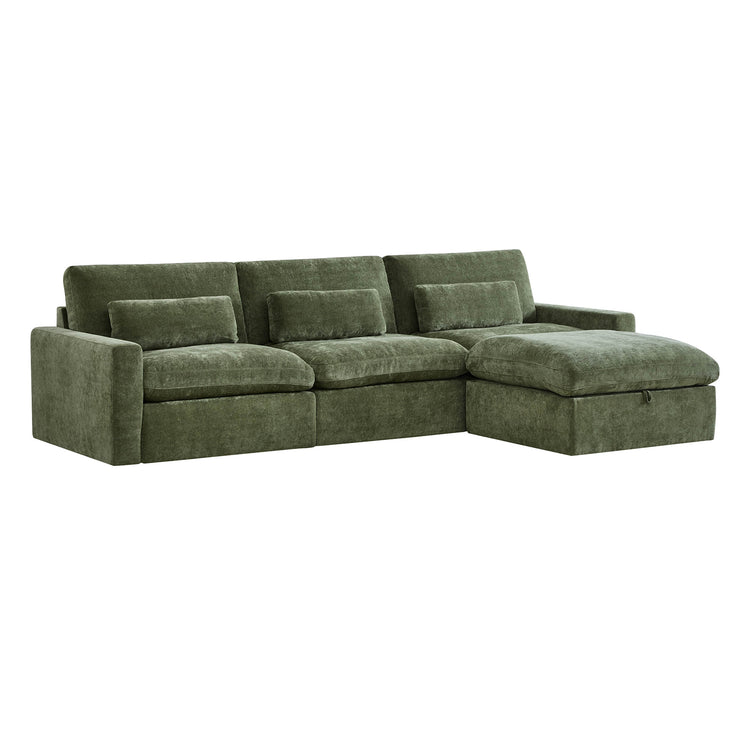
Review your current room dimensions against modular unit sizes before ordering. The Modular Sectional Sofas collection includes options like the Delaney, Brendon, Ivy, and Jonathan that align well with the senior-friendly measurements discussed. Measure twice and consider a scaled floor plan to test traffic flow. When these thresholds cannot be met, a smaller sectional or hybrid approach with some fixed seating may better serve your specific multigenerational needs.
How Much Circulation Space Is Really Needed in a Multigenerational Living Room?
The AARP HomeFit Guide recommends at least 36 inches of clear pathway to support safe movement with mobility aids or for general family traffic. Less space often forces awkward navigation and increases fall risk, especially when multiple generations share the room daily.
What Seat Height Works Best for Seniors in a Shared Modular Sofa?
Seat heights between 18 and 20 inches generally make sitting and standing easier for older adults. The 18.5-inch height found on many Chita modular pieces falls squarely in this practical range, though individual comfort and specific mobility needs should still guide final selection.
How Do You Keep a Large Modular Sofa Looking Intentional Rather Than Cluttered?
Limit the color palette, coordinate leg styles and trim details, and use lighting and rugs to define separate zones. Neutral performance fabrics in similar tones help the entire arrangement read as one cohesive system instead of separate temporary pieces.
What Maintenance Does a Modular Sofa Require in a High-Traffic Home?
Expect to check and tighten connectors every few months to prevent sectional drift. Performance fabrics simplify cleaning, but rotating cushions and addressing spills promptly remain essential to preserving appearance and support over years of family use.
Recommended Products

More to Read
 7 Sofa Trends That Actually Improve Comfort in 2026
Upgrade your living room with furniture that supports your body. Here are 7 modern sofa features designed to maximize your daily comfort...
7 Sofa Trends That Actually Improve Comfort in 2026
Upgrade your living room with furniture that supports your body. Here are 7 modern sofa features designed to maximize your daily comfort...
 Mother's Day Gift Guide: Cozy and Stylish Furniture Picks for Modern Moms
Make Mother's Day more meaningful with furniture gifts that bring comfort, smart features, storage, and quiet luxury into her everyday routine.
Mother's Day Gift Guide: Cozy and Stylish Furniture Picks for Modern Moms
Make Mother's Day more meaningful with furniture gifts that bring comfort, smart features, storage, and quiet luxury into her everyday routine.
 Performance Fabric Reality Check: Does It Really Repel Pet Hair and Stains?
Performance fabric is often marketed as a miracle solution for homes with pets and kids, but the reality is more nuanced. It...
Performance Fabric Reality Check: Does It Really Repel Pet Hair and Stains?
Performance fabric is often marketed as a miracle solution for homes with pets and kids, but the reality is more nuanced. It...