
























Ultra-short throw (UST) projectors, often marketed as laser TVs in 2026, deliver massive screens from just inches away from the wall. The right TV stand or media console is no longer optional—it must deliver precise height for eye-level comfort, sufficient depth to match the projector's throw ratio, proper ventilation to handle 100–300 W of laser power, and non-reflective surfaces that preserve ambient-light-rejecting (ALR) screen contrast. Choose a console 18–24 inches tall and at least 20 inches deep for most 100–120 inch setups, or you risk ceiling-clipped images, overheating, or distracting glare.

The Geometry of Immersion: Height and Depth Standards
UST projectors sit on furniture rather than mount high on a wall, so console dimensions directly control image placement and viewing ergonomics. Industry standards for immersive video design recommend a cabinet height of 18 to 24 inches to ensure the bottom third of the projection screen remains level with the viewer's eyes, minimizing neck strain (CEDIA/CTA-RP23 Recommended Practice).
For a typical 120-inch image, the projector lens usually sits 10–14 inches above the floor. Taller consoles push the entire image upward, forcing the top of the screen into the ceiling before reaching full size. This is why many homeowners discover their "standard" 30-inch entertainment center is suddenly too tall.
Depth creates an equally common mismatch. Most living-room TV stands measure 15–18 inches deep, yet a 100–120 inch UST setup typically needs 20–24 inches of total wall-to-lens clearance to avoid pulling the console away from the baseboard (ProjectorCentral UST Buyer's Guide). When the gap is 6–8 inches, a stable bridge or overhang becomes necessary; flimsy solutions cause focus drift or tipping hazards.
Vertical offset adds one more constraint. Most 2026 laser projectors use 114–124 % vertical offset, meaning the image starts several inches above the lens. Low-profile stands keep the lens low enough that the projected rectangle fits comfortably under an 8–9 foot ceiling.
The chart below visualizes safe ranges for a 120-inch setup.
Console Fit for a 120-inch Screen: Height and Depth Windows
Use this as a quick fit check: lower-profile consoles are usually safer for a 120-inch screen, while depth must still clear the TV base, cables, and ventilation needs.
View chart data
| Category | Lower bound | Upper bound |
|---|---|---|
| Height | 18.0 | 24.0 |
| Depth | 20.0 | 24.0 |
If your current stand falls outside these windows, measure twice and consider a purpose-built media console or a stable riser before purchasing the projector.
The Reflection Trap: Why Your Console Surface Matters
Even the best ALR screen cannot fully reject light that bounces off the furniture directly in front of the lens. Glossy ceramic or glass tops turn stray projector spill into ceiling ghosts or washed-out contrast, a frequent complaint in home-theater forums. Matte or satin finishes—such as travertine-style stone or low-sheen wood veneer—greatly reduce this risk.

Many buyers assume a premium glossy finish signals luxury and therefore belongs in a high-end setup. In practice, the surface in front of a UST projector acts like an unintended secondary screen. A quick test is to shine a phone flashlight across the top at night; any bright specular highlight visible from the seating area will likely contaminate the projected image.
Practical fixes include placing a thin matte black velvet runner under the projector or applying removable matte film to glossy surfaces. For new purchases, prioritize consoles with low-reflectance tops when the projector sits less than 18 inches from the screen.
Beyond the Surface: Heat, Cables, and 2026 Trends
Laser projectors in 2026 commonly draw 150–300 W, turning a sizable share of that power into heat. Enclosed AV cabinets must supply active ventilation; a widely accepted benchmark is 10 cubic feet per minute of airflow per 100 W of power draw to prevent thermal throttling and excessive fan noise (UL 1678 Standard).
Look for consoles with rear or side vents, removable back panels, or built-in fan cutouts. Acoustically transparent speaker grilles on the front door also let you hide a soundbar or subwoofer without blocking airflow.
Cable management has evolved from simple pass-through holes to integrated raceways and power grommets. Motorized lift drawers that raise the projector for use and lower it for a clean look are increasingly common, but verify the mechanism can support the projector's front-heavy weight without flexing.
The CHITA Compatibility Guide: Matching Consoles to UST Setups
Not every media console suits a laser TV. The following models illustrate how different designs solve—or fail to solve—the core geometry and surface challenges.
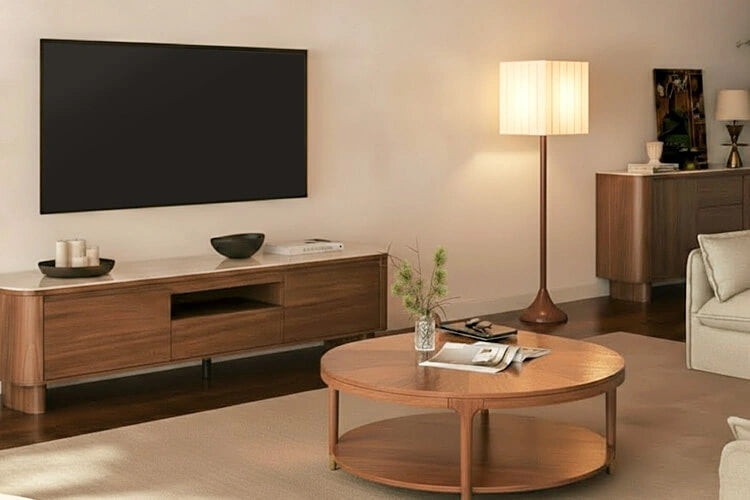
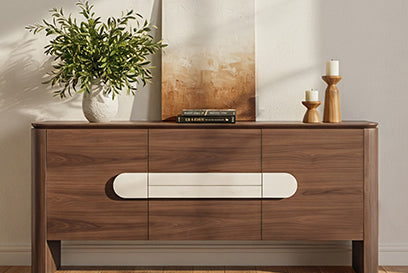
The 79" Samuel Rounded Panel TV Media Console offers 20-inch depth and slatted wood doors that provide both acoustic transparency for hidden audio and generous rear ventilation. Its Scandinavian profile keeps overall height in the low-20-inch range, making it suitable for 110–120 inch images in rooms with standard 8-foot ceilings. This console pairs well with TV stands with hidden cable management for a fully integrated look.
The 71" Otis Modern Wood Stylish Handles TV Stand and its counterpart 71" Chad Classic Open Shelf Functional TV Stand with Drawer feature matte ceramic tops that minimize reflections while delivering 18–19 inches of depth. Their open-shelf design aids airflow but may require a bridge plate for native 120-inch throw distances.
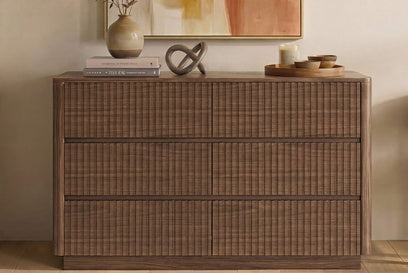
For maximum depth without sacrificing style, the Rowan Modern Rattan TV Stand with LED-Lit Display Cabinets reaches nearly 22 inches deep and includes rattan doors that diffuse sound while allowing airflow. Its lower height profile helps keep large projections safely below the ceiling.
If you already own a shallower stand, read our guide to fully assembled TV stands and media consoles for stability and bridging options that avoid wobbly aftermarket solutions.
Final Checklist: Planning Your 2026 Laser TV Installation
Before ordering furniture or the projector, run through these verifiable steps:
- Measure from the intended seating position to the wall and confirm the console height keeps the screen bottom at eye level (roughly 24–40 inches from the floor depending on seat height).
- Add the projector's published throw distance plus 2–3 inches of rear clearance; if the total exceeds your console depth by more than 4 inches, plan for a rigid bridge or select a deeper model.
- Verify the top surface is matte or will accept a matte overlay; test with a bright flashlight if possible.
- Confirm the console can support at least 50–70 lb centered near the front edge without tipping—front-heavy UST units stress traditional designs.
- Check ventilation: ensure at least 10 CFM airflow path exists and that power bricks have space to dissipate heat.
- Map cable routes in advance so power, HDMI, and any control wires remain hidden yet accessible.
Completing this checklist before purchase prevents the most common sources of regret: distorted geometry, noisy fans, or visible wiring in an otherwise premium theater.
Frequently Asked Questions
What Height Should a TV Stand Be for a UST Projector?
For most 2026 laser TV setups, aim for 18–24 inches tall. This range places the bottom of a 100–120 inch image at seated eye level while leaving ceiling clearance for the projector's vertical offset. Taller stands often force the image too high, clipping the top or requiring awkward screen repositioning.
How Much Depth Does a Media Console Need for a 120-Inch Laser TV?
Expect to need 20–24 inches of total depth for comfortable 120-inch projection. Standard 16-inch consoles usually require a stable 4–8 inch bridge or overhang. Measure your specific projector model, because throw ratios vary by 5–10 % between brands.
Can Glossy Furniture Tops Damage UST Picture Quality?
Glossy surfaces do not damage the projector, but they can scatter stray light onto the ALR screen or ceiling, reducing contrast and creating ghost images. Matte or low-sheen ceramic and wood finishes are safer; black velvet runners offer a quick retrofit for existing glossy consoles.
Do UST Projectors Need Special Ventilation in a Cabinet?
Yes. Most 2026 RGB laser models generate noticeable heat. Cabinets should provide at least 10 cubic feet per minute of airflow per 100 watts of power. Look for rear vents, removable panels, or active fan cutouts to keep the projector quiet and reliable during long viewing sessions.
Which CHITA Console Works Best With Hidden Audio and Projector Storage?
The Samuel media console combines 20-inch depth, acoustically transparent slatted doors, and ample internal space for soundbars or wireless subwoofers. Its motorized drawer options also allow the projector to be stored out of sight when not in use, preserving a clean living-room aesthetic.
How Do I Test a TV Stand for Stability With a Front-Heavy UST Projector?
Place the projector near the front edge and gently push downward on the lens area. The console should not rock or tip. If it does, add anti-tip straps anchored to the wall or choose a deeper, heavier model rated for at least 70 lb front-loaded weight.
Recommended Products

More to Read
 7 Sofa Trends That Actually Improve Comfort in 2026
Upgrade your living room with furniture that supports your body. Here are 7 modern sofa features designed to maximize your daily comfort...
7 Sofa Trends That Actually Improve Comfort in 2026
Upgrade your living room with furniture that supports your body. Here are 7 modern sofa features designed to maximize your daily comfort...
 Mother's Day Gift Guide: Cozy and Stylish Furniture Picks for Modern Moms
Make Mother's Day more meaningful with furniture gifts that bring comfort, smart features, storage, and quiet luxury into her everyday routine.
Mother's Day Gift Guide: Cozy and Stylish Furniture Picks for Modern Moms
Make Mother's Day more meaningful with furniture gifts that bring comfort, smart features, storage, and quiet luxury into her everyday routine.
 Performance Fabric Reality Check: Does It Really Repel Pet Hair and Stains?
Performance fabric is often marketed as a miracle solution for homes with pets and kids, but the reality is more nuanced. It...
Performance Fabric Reality Check: Does It Really Repel Pet Hair and Stains?
Performance fabric is often marketed as a miracle solution for homes with pets and kids, but the reality is more nuanced. It...