























Narrow Dining Tables for Small Spaces

A narrow dining table works best when it fits the room's circulation first and the style second. If the table leaves enough room to walk, pull out chairs, and cross the space without squeezing past corners, it can feel intentional instead of temporary. If you are choosing a narrow dining table for small space use, start with the room geometry before you get attached to a finish or shape.

Measure the Room Before You Shop
Start with the usable footprint, not just wall-to-wall dimensions. Doors, vents, radiators, and the path people already use can shrink the real table zone fast, especially in apartments and kitchen-dining combos.
Use this order:
- Measure the open area where the table will sit.
- Subtract anything that blocks chair pullout or walking paths.
- Check the space behind each chair, not only the tabletop size.
- Compare the remaining room to the table's full footprint, including the base.
A good first pass is the 36-inch walkway baseline, which is the standard minimum clear width for dining circulation. In busier paths, 42 to 44 inches of clearance usually feels more comfortable. In extremely tight layouts, 32 inches may work as a last-resort chair-pullout exception, but that is a compromise, not the ideal target.

What this means is simple: if the room only fits the table on paper, it may still fail in daily use. The table should leave enough room to sit down, stand up, and pass through without turning the dining area into a bottleneck.
For a quick fit check, ask whether the room still works when two chairs are occupied and one person needs to cross behind them. If the answer is no, the table is probably too large for the space even if the width sounds reasonable.
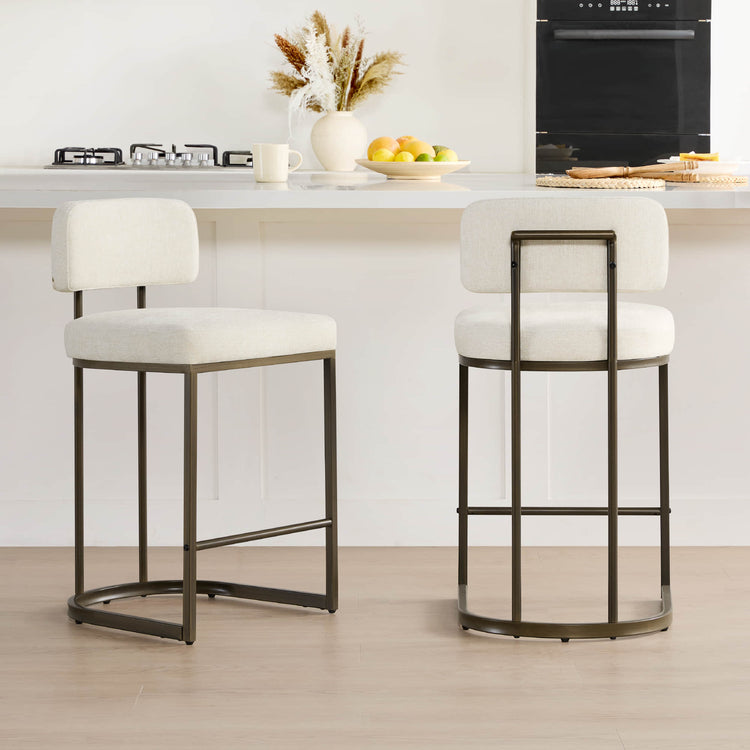
A helpful related read is bar stool height basics if your small dining area also doubles as a counter or island seating zone.
Which Table Shape Fits Narrow Layouts Best
Shape matters less than fit, but it still changes how a room feels and moves. A skinny dining table does not have to be the narrowest possible rectangle to work well; the best shape is the one that matches the room's traffic pattern.
| Table Shape | Best Room Layout | Space Feel | Seating Efficiency | Main Tradeoff |
|---|---|---|---|---|
| Rectangular | Long rooms and wall-adjacent layouts | Usually the most efficient and predictable | Often the easiest to line up with chairs | Can feel rigid if the room is already boxy |
| Oval | Narrow rooms that need softer edges | Feels lighter than a hard-cornered rectangle | Good when you want flow without sharp corners | Uses a little more visual width than a strict rectangle |
| Round | Compact nooks and shared-use corners | Visually soft and easy to approach | Works well for smaller groups | Can waste precious floor space in a long, narrow room |
| Pedestal-based shapes | Tight spaces where chair legs get crowded | Opens up the chair area visually | Can make sliding in and out easier | The base still needs to clear chair placement and traffic paths |
Rectangular tables are often the most space-efficient default in narrow rooms because they line up cleanly with walls and long layouts. That does not make them universally best, but it does make them the safest first shape to consider when floor space is tight.
Oval and round edges can make a small dining area feel visually lighter, especially in open-plan spaces where the table is seen from the living room. The gain is usually visual and practical at once: fewer sharp corners, easier movement, and a calmer look. For more material-focused comparisons, see wood, glass, and stone dining tables if finish and upkeep matter in your choice.
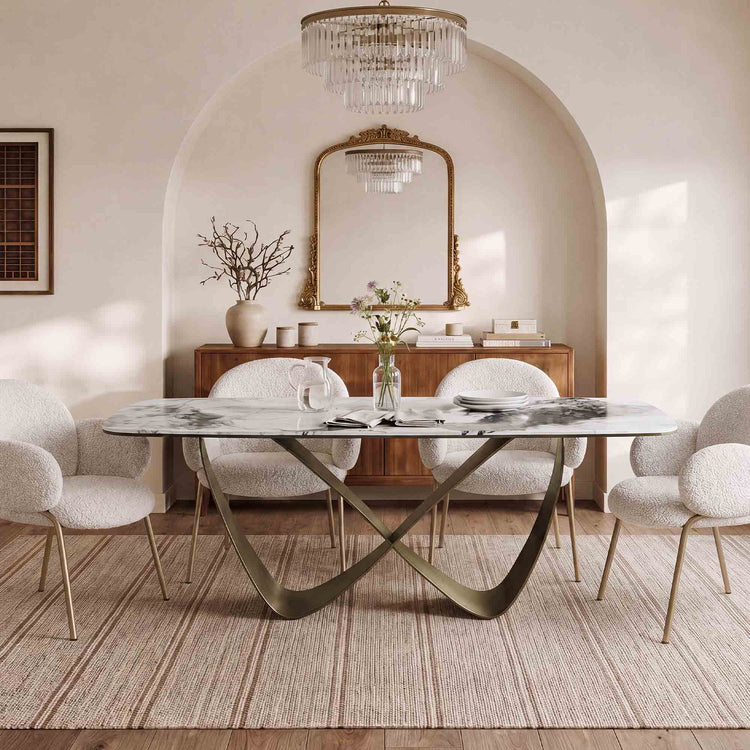
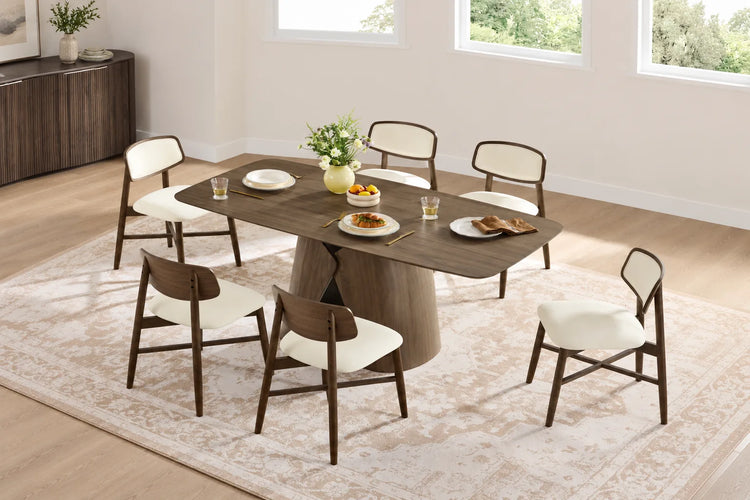
Pedestal bases can also help in tight layouts because they reduce corner-leg interference and give chairs more room to tuck in. That said, a pedestal is not a magic fix. If the base is wide or the room is already tight, you still need to verify that chair legs and traffic paths do not clash.
Choose Seating Without Crowding the Room
A narrow dining table can seat more people than it looks like it should, but only if the chair size and room clearance work together. Advertised seat count is useful only when you also check how much room each chair needs and whether anyone must walk behind the seated diners.
One Small Table, Two Very Different Seating Goals
The right seat count depends on how you actually use the table. A two-person setup that feels open every day may be the better choice than a four-seat setup that only works when nobody moves around it.
If the dining area is also a pass-through route, daily comfort usually matters more than maximum occupancy. In that case, a smaller table with easier circulation often makes more sense than a slightly larger one that turns every meal into a shuffle.
Chair Size Matters More Than Seat Count
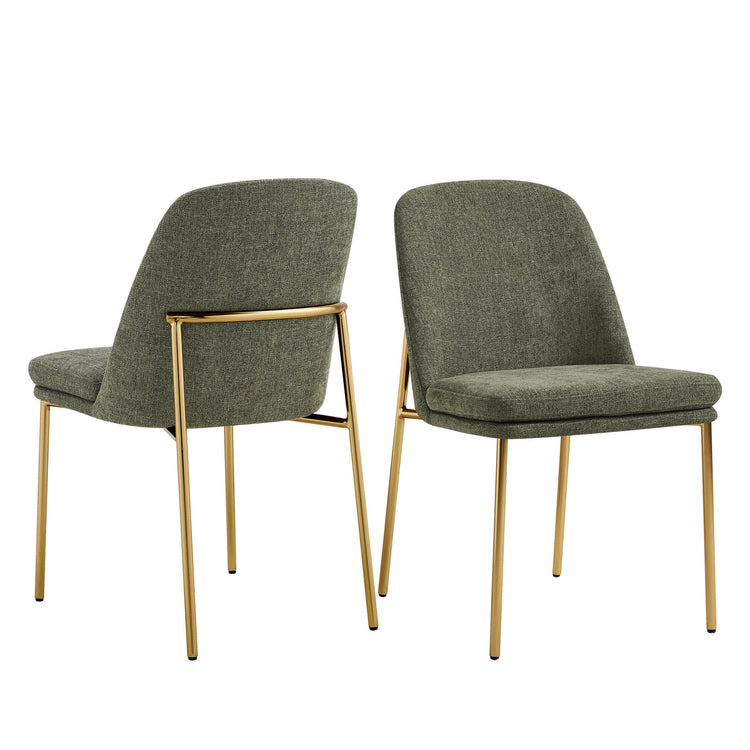
Chair width, armrests, and seat depth can change the whole fit picture. Slimmer or armless chairs usually work better in a narrow dining table setup because they reduce both visual bulk and physical crowding.
This is where many buyers misjudge the space. A table may technically seat four, but if the chairs are wide and the backs are bulky, the room can feel cramped even before anyone sits down. Always check the combined footprint of the table and the chairs together, not separately.
Bench Seating and Mixed Seating Options
A bench on one side can save space and reduce the number of chair backs that need clearance. It can also make one side of the table easier to slide past in a tight room.
Mixed seating is often the best compromise in small homes: chairs on the side that needs flexibility, bench seating on the wall side, or a lighter chair style for daily use and an extra seat only when guests arrive. That setup works well when the table has to stay useful every day without feeling overbuilt.
If you are deciding between a compact table and a slightly larger one, the safer rule is to choose for daily comfort first and guest capacity second. A table that fits your normal routine will usually age better than one chosen only for occasional overflow.
Make a Small Dining Area Feel Lighter
Once the table fits, style choices can help it feel intentional instead of crowded. Visual weight does not create more floor space, but it can change how calm the room feels when you walk in.
Visual Weight Starts With the Base
Slim legs and open bases usually look lighter than thick, blocky supports. In a narrow dining area, that matters because heavy bases can dominate the room even when the tabletop size is reasonable.
A pedestal base can also reduce the sense of clutter around the chairs, especially when the dining zone sits inside a kitchen-dining combo or open-plan room. The best visual result usually comes from a base that leaves the floor looking open and the sightlines simple.
Finish and Material Change the Room's Mood
Wood usually brings warmth, glass tends to feel more open, and heavier-looking surfaces can make a small room feel more grounded. None of those choices automatically saves space, but they do change how much visual attention the table takes.
If your room already feels busy, a lighter finish or a simpler surface can help the table blend in instead of shouting for attention. If the room feels plain, a warmer wood tone can make the area feel more finished without adding bulk.
Simple Shapes Make Tight Rooms Feel Calmer
Rounded corners, clean lines, and an understated profile usually work better than ornate details in small dining areas. The reason is practical: the eye reads less clutter, and the room tends to feel easier to move through.
For renters and apartment dwellers, that often matters as much as the actual dimensions. A narrow dining table in a compact space should look like part of the room, not a temporary fix.
A small refresh elsewhere can help the table feel more integrated. If you are updating an older space at the same time, simple dining room updates can make the table choice feel more deliberate.
A Narrow Dining Table Buying Checklist
Before you buy, run the room through one final check:
- Confirm the usable footprint, not just the wall-to-wall measurement.
- Keep at least the 36-inch circulation baseline in mind, then decide whether your room needs a more comfortable buffer.
- Check chair pullout on both long sides if you are using standard dining chairs.
- Measure the table base as carefully as the tabletop, especially in narrow walkways.
- Decide whether the table needs to handle everyday meals or only occasional guests.
- Make sure delivery, assembly, and doorway access will not create a second fit problem after purchase.
If the room is tight, choose the table that works on ordinary days, not the one that only works when the chairs are perfectly nested. A slightly smaller everyday table is often the better buy than a larger option that makes the space hard to live with.
If you want a browse-first path, start with best sellers and filter by footprint, shape, and seating style that match your room.
FAQs
How Wide Should a Narrow Dining Table Be for a Small Space?
There is no single width that fits every room. The better check is whether the table still leaves usable walkway space and chair pullout room after you account for doors, corners, and daily traffic. A table that looks slim on a listing can still feel too large once chairs are placed around it.
What Table Shape Works Best in a Narrow Dining Room?
Rectangular tables are often the easiest starting point in long or wall-adjacent rooms, while oval and round shapes can feel softer in compact nooks. The best choice depends on whether the room needs cleaner traffic flow, a lighter visual profile, or the most predictable wall placement.
Can a Narrow Dining Table Still Seat Four People?
Often yes, but only if the table, chairs, and circulation all work together. Four seats can feel comfortable in one room and cramped in another if the chairs are wide or the table sits in a pass-through path. Treat seat count as a room-wide decision, not just a table spec.
Why Does the Table Base Matter in a Small Dining Area?
The base affects legroom, how easily chairs slide in, and how crowded the floor looks. In narrow spaces, a bulky base can make a table feel much bigger than its top suggests. A simpler or more open base usually helps the room breathe a little better.
What Should I Check Before Buying a Skinny Dining Table Online?
Check the full footprint, the chair clearance, the delivery path, and whether the table is sized for daily meals or only occasional use. If the product page does not make those points easy to verify, measure your room first and compare it carefully before adding the table to cart.
Recommended Products

More to Read
 7 Sofa Trends That Actually Improve Comfort in 2026
Upgrade your living room with furniture that supports your body. Here are 7 modern sofa features designed to maximize your daily comfort...
7 Sofa Trends That Actually Improve Comfort in 2026
Upgrade your living room with furniture that supports your body. Here are 7 modern sofa features designed to maximize your daily comfort...
 Mother's Day Gift Guide: Cozy and Stylish Furniture Picks for Modern Moms
Make Mother's Day more meaningful with furniture gifts that bring comfort, smart features, storage, and quiet luxury into her everyday routine.
Mother's Day Gift Guide: Cozy and Stylish Furniture Picks for Modern Moms
Make Mother's Day more meaningful with furniture gifts that bring comfort, smart features, storage, and quiet luxury into her everyday routine.
 Performance Fabric Reality Check: Does It Really Repel Pet Hair and Stains?
Performance fabric is often marketed as a miracle solution for homes with pets and kids, but the reality is more nuanced. It...
Performance Fabric Reality Check: Does It Really Repel Pet Hair and Stains?
Performance fabric is often marketed as a miracle solution for homes with pets and kids, but the reality is more nuanced. It...