


















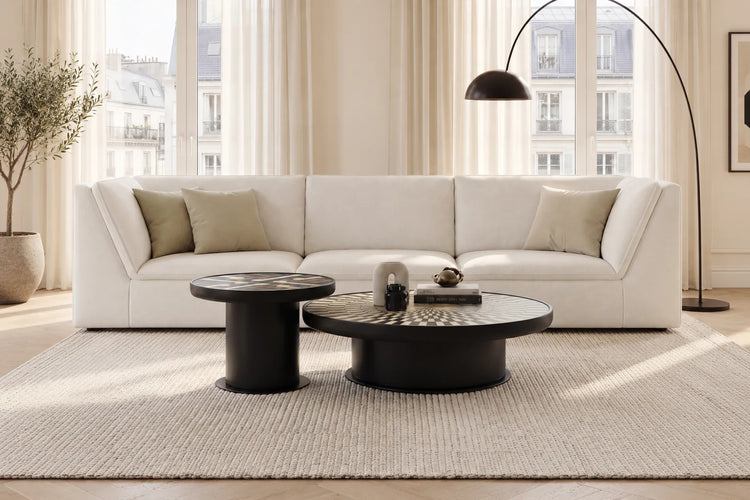

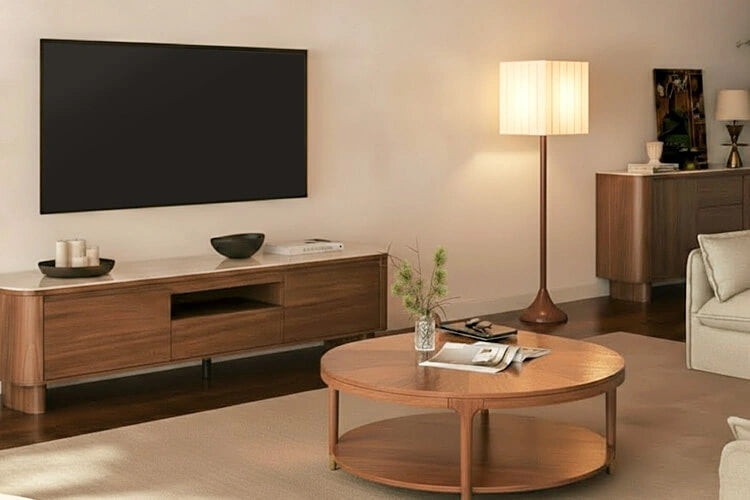










How Far Should Your Couch Be From the TV? Viewing Distance Guide

How far should your couch be from the TV? A comfortable starting point for the distance from TV to couch is usually one that keeps the screen easy to take in without feeling cramped or too far away. This article uses starting ranges and room-based adjustments rather than a universal rule, so if you are wondering how far should TV be from couch, think in terms of comfort first and exact numbers second. A simple TV viewing distance reference can help, but the best answer still depends on your room.

Start With the Comfort Zone
For most living rooms, the right sofa distance from TV is the one that lets you see the screen clearly and settle in without having to work for the view. Think of it as a comfortable viewing zone: not the closest seat you can tolerate, and not the farthest seat that still works. Room depth, traffic flow, and where the sofa can actually go may change the answer.
A good starting point is the middle of the range you are considering, then move a little closer or farther based on the room. That is why the question of how far should your couch be from the TV is less about a fixed number and more about how the room feels in daily use. If you are planning a shared living area, the couch may need to sit where it helps the room function, not just where the screen looks largest.
If your seating also has to define zones in a larger room, how to choose sofas for open-plan spaces is a useful follow-up.
How TV Size Changes Couch Distance
One of the most useful ways to estimate sitting distance from TV is by viewing angle. RTINGS points to SMPTE's 30-degree baseline as a comfortable starting point, while also noting THX's 40-degree immersive end for viewers who want a larger, more cinema-like image. In everyday terms, that gives you a practical range: a calmer baseline on one end and a more immersive setup on the other.
A simple way to read that range is to keep the baseline for relaxed everyday viewing, move toward the immersive end if you want a bigger picture, and choose the middle if the room does double duty. Higher-resolution screens can usually support a slightly closer seat than lower-resolution screens, all else equal, but that does not mean you need to sit very close.
Here is a practical best TV distance by screen size reference:

| TV size | Safer 30° baseline | Middle compromise | More immersive 40° end |
|---|---|---|---|
| 55 in | about 7.6 ft | about 6.7 ft | about 5.7 ft |
| 65 in | about 8.9 ft | about 7.8 ft | about 6.6 ft |
| 75 in | about 10.3 ft | about 9.1 ft | about 7.7 ft |
| 85 in | about 11.7 ft | about 10.3 ft | about 8.7 ft |
Use the 30-degree column if you want a more relaxed living-room feel. Use the middle compromise if you want a balanced setup that works well for most people. Use the 40-degree end only if you prefer a more enveloping image and your room layout supports it. In mixed-use rooms, the middle column is often the easiest compromise.
If you are also checking furniture proportions, how to choose a media console for 75-inch and 85-inch TVs can help.
What Room Layout Changes the Distance
A viewing distance that feels right in one room may feel off in another. Higher-resolution screens can usually be viewed from a shorter distance without looking coarse, but room layout still matters more than a formula. For a comfort-first setup, let the room, the seating, and the type of content guide the final choice.
If you mostly watch movies or sports, a slightly closer seat can feel more engaging. If you watch news, casual streaming, or captions-heavy content, a slightly farther seat may feel easier to live with because it gives the room more breathing space. In a larger sofa, the center seat and end seat may not feel identical, so choose the sofa distance from TV that works best from the seat you use most.
Layout can override the ideal number. A long, narrow room, a fireplace, windows, or a main walkway may force a compromise. In those cases, floating furniture can work better than pushing everything against the wall, especially if you need the room to feel open and easy to cross.
If you want a simple practical check, sit down and see whether you can take in the full screen without leaning forward. If you have to crane your neck, squint, or shift around to catch the edges of the picture, the seating is probably not quite right. A slightly larger TV or a small furniture adjustment may help more than moving the couch a lot closer.
How to Choose Sofas for Open-Plan Spaces is a helpful next step if your couch also has to define zones in an open room.
Place the TV at a Comfortable Eye Line
Distance is only part of the setup. Vertical placement matters too. Vogel's recommends keeping the TV at eye level or slightly below when seated, which is a helpful comfort-first rule for most living rooms.
For a typical sofa-and-TV arrangement, this usually means the center of the screen should line up close to your seated eye line, or just a little lower. If the TV is mounted too high, the room can feel less relaxed even if the distance from TV to couch is fine. If the TV sits very low, you may end up looking down more than necessary.
A few simple placement habits help:
- Keep the main seat centered with the screen.
- Avoid placing the screen so high that your chin tilts upward.
- Give yourself enough distance that the whole screen fits comfortably in view.
- Test the setup at night and during the day, since lighting can change how the picture feels.
The goal is not to force a perfect theater effect into a living room. It is to create an easy, everyday setup that works for real use.
Quick Placement Checks Before You Buy
Before you settle the furniture, use this quick checklist:
- Start with the middle of the 30-degree to 40-degree range unless you strongly prefer a wider image.
- Make sure the center of the TV sits at eye level or slightly below when you are seated.
- Check that you can see captions and menus without leaning forward.
- Leave enough open space for walking paths and everyday use.
- Choose the seat position that feels best for the person who watches most often.
If you are still deciding on the distance from TV to couch, use comfort, readability, and room flow as the final test. The best setup is usually the one that feels natural every day, not the one that follows the strictest number.
FAQs
How Far Should a Couch Be From a 65-Inch TV?
Start with a comfortable middle ground between a 30-degree baseline and a 40-degree immersive setup, then adjust based on how the picture feels in your room.
Is It Better to Sit Closer or Farther From the TV?
Usually, neither is automatically better. Closer feels more immersive, while farther often feels calmer and easier for everyday mixed-use rooms.
How Do You Measure TV Viewing Distance in a Living Room?
Measure from the main seat you use most often to the center of the TV screen, then compare that distance with your room depth and the size of the screen.
What If My Room Is Too Small for the Ideal TV Distance?
Choose the most comfortable position your room allows, and if needed, favor a calmer viewing angle rather than forcing a very large screen into a tight space.
Can a Sofa Be Too Far From the TV?
Yes. If the picture starts to feel small, text is harder to read, or the setup loses its sense of focus, the couch may be farther back than is comfortable.
Should the TV Be Above or Below Eye Level?
For most seated setups, keep it at eye level or slightly below, which is generally the most comfortable placement.
What Is the Easiest Rule of Thumb for TV Viewing Distance?
Start with a comfortable middle ground between a 30-degree baseline and a 40-degree immersive setup, then adjust based on how the picture feels in your room.
Recommended Products



More to Read
 7 Sofa Trends That Actually Improve Comfort in 2026
Upgrade your living room with furniture that supports your body. Here are 7 modern sofa features designed to maximize your daily comfort...
7 Sofa Trends That Actually Improve Comfort in 2026
Upgrade your living room with furniture that supports your body. Here are 7 modern sofa features designed to maximize your daily comfort...
 Mother's Day Gift Guide: Cozy and Stylish Furniture Picks for Modern Moms
Make Mother's Day more meaningful with furniture gifts that bring comfort, smart features, storage, and quiet luxury into her everyday routine.
Mother's Day Gift Guide: Cozy and Stylish Furniture Picks for Modern Moms
Make Mother's Day more meaningful with furniture gifts that bring comfort, smart features, storage, and quiet luxury into her everyday routine.
 Performance Fabric Reality Check: Does It Really Repel Pet Hair and Stains?
Performance fabric is often marketed as a miracle solution for homes with pets and kids, but the reality is more nuanced. It...
Performance Fabric Reality Check: Does It Really Repel Pet Hair and Stains?
Performance fabric is often marketed as a miracle solution for homes with pets and kids, but the reality is more nuanced. It...