



























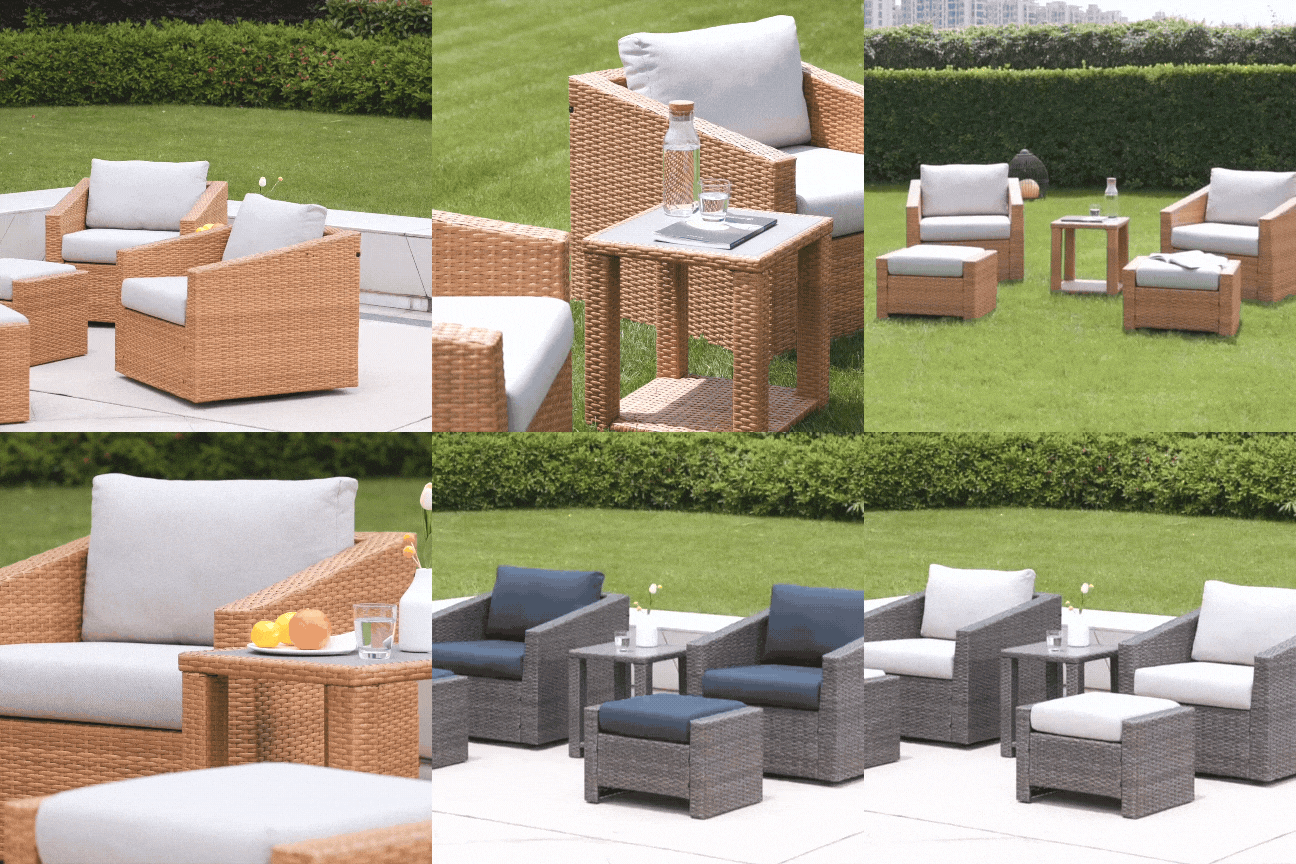







The right outdoor sofa depends less on style and more on four things: how exposed the spot is, how the cushions drain and dry, what the frame and fabric actually document, and whether the seat depth suits how you plan to sit. Start by matching your setting to a scenario below, then verify cushion construction and frame details before comparing comfort and delivery logistics.
Skipping straight to fabric color or frame material without checking these specifics often leads to seating that looks right initially but performs poorly outside.
Key Takeaways
- Fully exposed and humid settings need documented cushion drainage and drying guidance, not just a water-resistant label.
- A water-resistant or water-repellent cover does not prove the cushion core drains or dries quickly.
- UV resistance, water repellency, and waterproofing are separate claims; check fabric wording for each one individually.
- Aluminum, teak, and resin wicker are material labels, not proof of frame resilience; joints, hardware, finish, and care instructions decide that.
- Deep seating suits relaxed lounging more than upright activities; compare seat depth and height against your actual use.
Start With Exposure, Storage, and Space
Your placement decides which specifications matter most before you look at any single sofa. A fully exposed, humid, or high-sun spot demands stronger evidence on drainage, drying, and UV wording, while a covered porch loosens that requirement without removing it entirely.
Match the Sofa to the Exposure Scene
If your patio takes direct rain and sun with no overhang, prioritize documented cushion drainage, fabric UV wording, and a realistic cover or storage routine before you compare looks. A covered porch reduces exposure, but wind-driven rain and humidity still reach the seating, so don't treat "covered" as maintenance-free. Humid or rainy regions should treat slow drying as the central risk, since trapped moisture in cushions is what leads to lingering odor and staining rather than one heavy rainstorm.
Measure the Room and the Route
Before comparing materials, get the numbers that will actually block a purchase.
- Usable sofa width and depth for the seating area
- Walking clearance around the sofa and any coffee table
- Cushion or cover storage space, if you plan to bring cushions indoors seasonally
- The narrowest doorway, gate, or hallway on the delivery path, not just the assembled footprint
Use the product's packaged dimensions and any stated minimum doorway width for this last check; assembled dimensions alone can be misleading if the sofa arrives in one large box. For general layout and clearance math across a patio, deck, or balcony, our space clearance guide walks through how to plan a seating footprint before you shop.
Choose Cushions for Drainage, Not Just Water Resistance
A water-resistant or water-repellent cushion cover tells you the surface sheds some water, not that the whole cushion drains or dries quickly. That distinction matters most in humid climates and fully exposed patios, where a cushion that looks dry on top can still hold water in the core for days.

Water-resistant fabric slows moisture from soaking in; water-repellent fabric causes water to bead and roll off; waterproof fabric blocks water entirely. None of these terms describe what happens to a cushion after rain actually gets past the cover, through a seam, or up from a wet cushion resting on a solid seat pan. Before buying, look for five specific details on the product page: the cushion-core material, whether the underside is open or vented, any stated drainage channels or gaps in the seat pan, how the seams and zippers are constructed, and whether the listing includes drying or storage instructions.
If a listing doesn't document any of that, don't assume the cushion will resist mildew or dry quickly just because the cover is labeled water-resistant. Treat that sofa as one that needs a fitted cover, a drying plan after rain, and possibly off-season storage, and factor that ongoing effort into your decision rather than into the purchase price alone.
Compare Upholstery for UV Exposure and Care
UV resistance, water resistance, water repellency, and waterproofing each answer a different question, and a fabric can be strong on one and untested on another. Before buying for a sunny or mixed-weather spot, check the fiber content, any UV-related wording, the cleaning method, whether the cover is removable, and any stated exposure or storage limits.
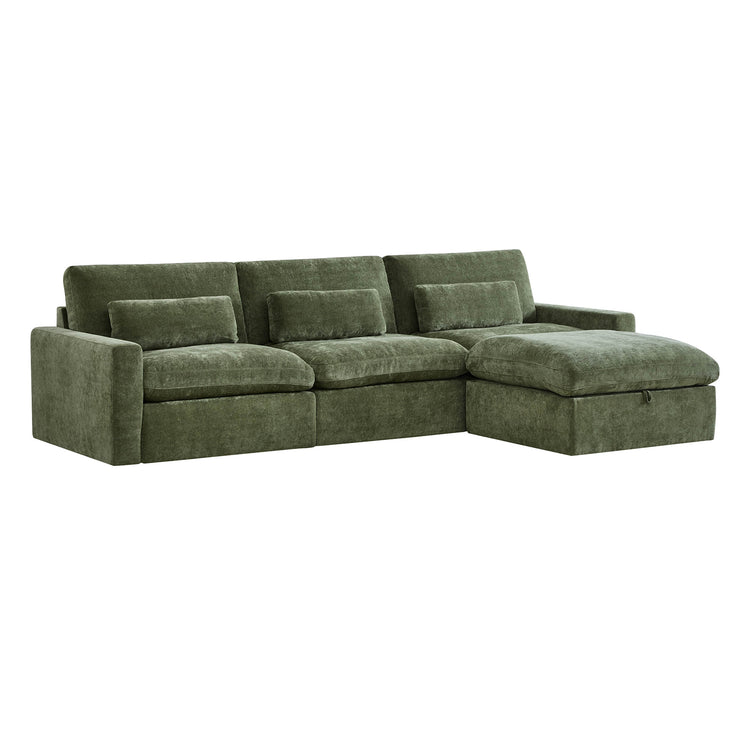
"All-weather" or "performance fabric" on its own is marketing language unless it's paired with a specific claim you can verify, such as a named fiber or a defined care process. As one bounded example, our Dylan Modern Outdoor Patio Sofa lists 100% olefin fabric described as durable, water-resistant, and UV-resistant, along with a machine-washable cushion cover. That listing doesn't include a numeric UV rating or a stated service life, so treat it as documented fabric information for that specific model rather than a guarantee that applies to every olefin fabric on the market. For a broader side-by-side of fiber types and how they hold up to sun and rain, our guide to weather-resistant fabrics is a useful next stop before you commit to a specific upholstery.
Compare Frame Materials and Structural Construction
Aluminum, teak, and resin wicker describe a material or an exterior layer, not the full construction that determines how well a frame holds up. The joints, hardware, finish, and care documentation behind that material matter as much as the label itself.
| Frame Material | Documented Signal | Buyer Decision |
|---|---|---|
| Aluminum | Rustproof by nature; our Dylan sofa documents an all-aluminum frame with a wood-grain finish option | Choose when the specific listing documents the frame and finish, and confirm care instructions rather than assuming all aluminum sofas match |
| Teak | No generic performance claim is supported here | Request the exact species, finish, hardware, and care instructions before buying; don't rely on teak's reputation alone |
| Resin wicker | Describes the woven exterior only, not the structural frame underneath | Confirm the underlying frame material, joint construction, and care routine before treating it as a resilience answer |
Aluminum resists rust because the metal itself doesn't corrode the way steel does, which is why our Dylan sofa's aluminum frame is a documented example worth pointing to, but that fact applies to the Dylan listing specifically, not to every aluminum sofa on the market. Teak has a strong general reputation for outdoor use, but the current evidence here doesn't support a generic recommendation without knowing the exact species, finish, and hardware used in a given product. Resin wicker is a woven exterior material wrapped around a substrate, usually metal, so the wicker label alone tells you almost nothing about how the frame underneath will hold up; ask for that substrate detail directly before buying.
Check Deep-Seating Comfort, Dimensions, and Delivery Access
Deep seating favors relaxed lounging, but whether that's comfortable for you depends on your body, your activities, and the exact dimensions, not on depth alone. A sofa that feels ideal for reading or napping can feel too low and too deep for meals, laptop work, or getting up and down often.
Match Dimensions to the Activity
If you mostly lounge, a deeper seat and lower seat height usually feel more relaxed. If you sit upright often, check the seat depth, seat height, and firmness scale closely, because a seat that's too deep can leave your back unsupported unless you sit forward. As one example, our Dylan 3-seat configuration lists a 20.5-inch seat depth, 17.7-inch seat height, 6.3-inch cushion thickness, and a firmness of 3 on our 1-to-5 scale, where 5 is firmest; those numbers describe that specific configuration only, since a loveseat or a different model can differ. A firmness number or spec sheet is useful for comparison, but it's not a substitute for sitting on the cushion or checking the return window if it doesn't feel right in person.
Clear the Delivery Path
Before ordering, confirm three things so the sofa actually reaches your patio.
- Compare the packaged shipping dimensions against the assembled size; the box is often larger and squarer than the finished sofa.
- Check the narrowest doorway, gate, or turning point on the delivery route, using the listing's stated minimum door width if one is given.
- Review the delivery service terms, placement expectations, and return window before you place the order.
For more on matching deep seating to a lounge-focused space like a pool deck, our guide to poolside lounging covers dimension and access checks specific to that setting.
Plan Maintenance Before You Buy
The routine you're realistically willing to keep up matters as much as any spec sheet, especially in exposed or humid locations where cushions need more frequent attention. Removable, machine-washable covers make cleaning easier, but that convenience doesn't mean the cushion core is waterproof or resistant to mildew.
Before buying, commit to a short, realistic routine:
- Follow the exact care label for your model rather than a generic outdoor-cushion routine.
- Let wet cushion surfaces air out so moisture doesn't stay trapped against the foam.
- Use a fitted cover or bring cushions in for storage if your listing recommends it for your climate.
- Clean covers using the stated method; our Dylan cushion covers are machine washable in cold water on a gentle cycle, dried flat, with no dry cleaning.
- Confirm the frame's care requirements, since some finishes need occasional cleaning or protectant even if the frame itself won't rust.
Decide on your maintenance boundary before ordering: if you lack indoor winter storage or dislike covering furniture after every rain, choose rustproof aluminum with removable washable covers and confirm the seller's return window before checkout.
FAQs
Can outdoor sofa cushions stay outside all year?
It depends on the cushion's documented construction, how exposed the spot is, and whether you follow a cover or storage routine that matches the seller's care instructions. There's no universal yes or no answer here; get direct guidance on drainage, drying, and storage for the exact configuration you're considering before leaving cushions out year-round.
Does resin wicker describe the whole outdoor sofa frame?
Not on its own. Resin wicker generally identifies the woven exterior material, not the structural frame underneath it, so a resin wicker label doesn't tell you how the sofa will hold up structurally. Ask for the underlying frame substrate, joint construction, finish, hardware, and frame-specific care instructions before deciding.
Is a deep-seating outdoor sofa suitable for upright use?
That depends on your activities and body more than the sofa's category. Deep seating tends to favor relaxed lounging, so compare the seat depth, seat height, firmness, and back support against a sofa you already find comfortable for the way you actually plan to sit, whether that's dining, working, or getting up and down frequently.
Recommended Products


More to Read
 7 Sofa Trends That Actually Improve Comfort in 2026
Upgrade your living room with furniture that supports your body. Here are 7 modern sofa features designed to maximize your daily comfort...
7 Sofa Trends That Actually Improve Comfort in 2026
Upgrade your living room with furniture that supports your body. Here are 7 modern sofa features designed to maximize your daily comfort...
 Mother's Day Gift Guide: Cozy and Stylish Furniture Picks for Modern Moms
Make Mother's Day more meaningful with furniture gifts that bring comfort, smart features, storage, and quiet luxury into her everyday routine.
Mother's Day Gift Guide: Cozy and Stylish Furniture Picks for Modern Moms
Make Mother's Day more meaningful with furniture gifts that bring comfort, smart features, storage, and quiet luxury into her everyday routine.
 Performance Fabric Reality Check: Does It Really Repel Pet Hair and Stains?
Performance fabric is often marketed as a miracle solution for homes with pets and kids, but the reality is more nuanced. It...
Performance Fabric Reality Check: Does It Really Repel Pet Hair and Stains?
Performance fabric is often marketed as a miracle solution for homes with pets and kids, but the reality is more nuanced. It...