
















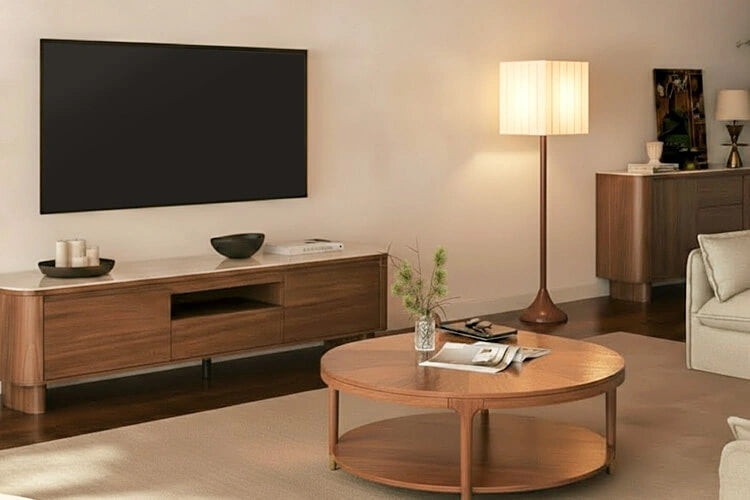


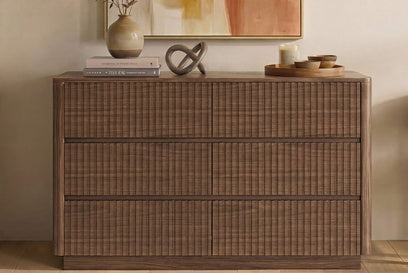
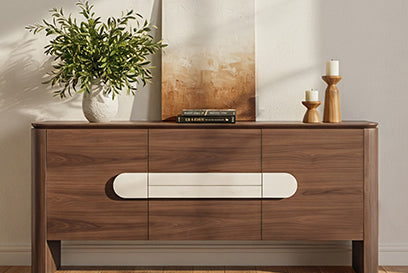








In 2026, the sideboard you choose to hide your mesh WiFi router can meaningfully affect signal strength and device performance. Higher-frequency 6GHz bands used by WiFi 7 systems lose more energy passing through dense materials than older 2.4GHz signals, so solid wood or metal enclosures often create noticeable dead zones or force the system to throttle speeds. The most signal-friendly sideboards combine fluted wood panels, rear cable cutouts for ventilation, and enough internal clearance to prevent overheating—turning the piece from simple storage into true smart-home infrastructure.

Why Your 2026 Mesh WiFi Needs Signal-Friendly Furniture
Mesh WiFi systems have become the default for whole-home coverage, yet many homeowners still tuck the primary node or satellites inside traditional cabinets. The result is often slower speeds, dropped connections in distant rooms, or devices that run hot and throttle under load. As WiFi 7 and 6GHz bands become standard, the “transparent” quality of furniture matters as much as its looks. Traditional sideboards optimize for storage; today’s best options function as smart-home command centers that balance concealment with radio-frequency performance.
Hiding a premium mesh router behind the wrong door can erase much of the speed advantage you paid for. A seemingly attractive closed cabinet may reduce effective coverage by forcing the system to reroute traffic or lower modulation rates. For apartment dwellers, families in open-concept homes, or anyone managing a media wall, the right sideboard preserves both aesthetics and network reliability.
Material Science: Why Wood Density and Metal Accents Matter
Different sideboard materials interact with WiFi signals in predictable ways. According to Huawei’s analysis of signal attenuation, solid wood such as oak or walnut typically introduces 3–9 dB of loss. That range matters more on short-range 6GHz links because higher frequencies already struggle with penetration; the same cabinet that barely affects a 2.4GHz signal can noticeably degrade a WiFi 7 backhaul.
Research on wideband penetration at 6.75 GHz confirms that higher-frequency bands experience greater loss through physical barriers, making material choice a practical constraint rather than a minor detail. Metal mesh doors or solid metal accents create an additional problem: reflection. As Linksys support documentation explains, metal surfaces tend to bounce signals instead of letting them pass, which can generate shadow zones inside and outside the cabinet.
Fluted wood designs, such as those on the Bowen Fluted Wood Sideboard, strike a useful middle ground. By removing mass from the signal path while retaining structural strength, fluted panels reduce attenuation compared with solid hardwood. The Chad Mid-Century Natural Wood Sideboard adds a ceramic top that is relatively transparent to radio waves and offers a durable, easy-to-clean surface for living-room use.
Material Transparency for Hiding Mesh Routers
This chart helps visualize typical signal-loss patterns for common sideboard materials in mesh WiFi setups. Lower attenuation generally means more signal-friendly placement, while metal adds reflection risk and can create dead zones. Ranges are bounded and should be read as typical setup guidance, not precise coverage predictions.
View chart data
| Category | Typical dB Loss (Range) |
|---|---|
| Solid Wood | 6.0 |
| Fluted Wood | 4.0 |
| Glass/Ceramic | 2.5 |
| Metal Mesh | 10.0 |
The chart above summarizes relative transparency across common materials. Solid wood sits in a moderate-loss zone, fluted panels improve the picture, glass or ceramic perform best for signal, and metal introduces both high loss and reflection risk. These are planning guidelines drawn from technical studies; real-world results also depend on wall materials, room layout, and exact router placement.

The Heat Factor: Why Passive Ventilation is Non-Negotiable
Signal loss is only half the story. High-performance mesh nodes generate noticeable heat during sustained traffic. Enclosing them without airflow can trigger thermal throttling, where the device deliberately slows down to protect components. This often feels like a sudden drop in speed or intermittent stuttering on video calls and 4K streams.
Community reports and support articles consistently note that routers hidden in sealed cabinets run hotter and may reduce lifespan. The practical fix is passive ventilation: look for sideboards with adjustable shelves that create vertical airflow channels and rear cable cutouts that double as exhaust ports. Maintaining at least four inches of clearance around the router helps dissipate heat without active fans that add noise or power draw.
For families or remote workers relying on stable mesh coverage, a “set it and forget it” aesthetic choice can become a source of recurring frustration if heat builds up. The 70” Bowen Fluted Wood Sideboard and similar designs with adjustable interiors make it easier to meet both signal and thermal needs.
The Smart Home Command Center Checklist for 2026 Buyers
Use this checklist to evaluate any sideboard you consider for mesh-router storage:
- Material preference: Choose fluted wood, thin veneers, or ceramic surfaces over thick solid hardwood or metal-lined doors. The Bowen and Chad collections illustrate workable options that keep material mass low in the signal path.
- Internal clearance: Confirm at least four inches of open space around the router on all sides for airflow and to avoid direct contact with shelves or walls.
- Cable management: Integrated rear ports or channels prevent cable clutter that can block airflow or create additional RF obstacles. See our guide on sideboards with cable management for more details.
- Ventilation features: Adjustable or removable shelves and open or slatted backs outperform fully sealed designs. Avoid cabinets that trap heat even when doors are closed.
- Placement height: Elevating the primary node on a top shelf or open surface within the sideboard reduces floor-level interference from furniture, rugs, and people.
Applying these criteria early prevents the common regret of buying attractive storage that later limits network performance. The Storage collection contains several models already designed with tech-friendly features.
Optimizing Placement: Turning Your Sideboard into a Signal Hub
Even the best sideboard performs better when positioned thoughtfully. Netgear’s router placement guidance emphasizes central, elevated locations that minimize the number of walls and dense objects the signal must cross. In practice this often means placing the sideboard near the middle of the main living area rather than against an exterior brick wall.
Use the “top-shelf rule”: locate the main mesh hub on the highest internal shelf or even on top of the sideboard if the design allows a clean look. This improves line-of-sight to other nodes and reduces attenuation from the cabinet itself. In open-concept homes, one centrally placed sideboard can serve as the network heart while concealing all the associated cables and power bricks.
Avoid corners, deep alcoves, or positions directly behind large appliances. If your floor plan forces the sideboard against a thick concrete or stone wall, consider a model with an open back or add a small riser to lift the router higher inside the cabinet. These small adjustments often deliver more reliable coverage than upgrading the mesh system itself.
Our guide to low-profile media consoles explores similar placement ideas for TV zones where both aesthetics and signal matter.
Frequently Asked Questions
Does hiding a mesh router in a sideboard always weaken WiFi?
Not always, but it frequently does when the cabinet uses dense solid wood or metal. Signal-friendly designs with fluted panels, ventilation cutouts, and proper clearance usually keep performance close to open placement. The difference becomes more noticeable on 6GHz bands.
Is fluted wood better than solid wood for signal transparency?
Yes in most setups. Fluted designs remove material from the radio path, reducing attenuation compared with solid hardwood of the same thickness. They also tend to allow better passive airflow, lowering the chance of thermal throttling.
Can a ceramic-top sideboard block WiFi signals?
Ceramic is relatively transparent to WiFi frequencies and generally performs better than thick wood or metal. However, if the router sits directly beneath a thick ceramic slab, some additional loss can occur. Elevating the node or using an open shelf mitigates this.
How much clearance does a router need inside a sideboard?
Leave at least four inches on all sides for airflow and to avoid direct material contact. This spacing helps manage heat and gives the signal a short buffer zone before encountering the cabinet walls.
Should I choose a sideboard with metal mesh doors for my mesh system?
Metal mesh doors look modern but introduce reflection risk that can create dead zones. They are usually less ideal than fluted wood or open shelving unless the mesh is very open and the router is placed carefully on an elevated shelf.
What is the best location for a sideboard that holds the main mesh node?
A central, elevated position in the main living area gives the strongest results. Avoid exterior walls, corners, or spots behind dense obstacles. The top shelf inside the sideboard is often the sweet spot for balancing concealment and coverage.
Recommended Products

More to Read
 7 Sofa Trends That Actually Improve Comfort in 2026
Upgrade your living room with furniture that supports your body. Here are 7 modern sofa features designed to maximize your daily comfort...
7 Sofa Trends That Actually Improve Comfort in 2026
Upgrade your living room with furniture that supports your body. Here are 7 modern sofa features designed to maximize your daily comfort...
 Mother's Day Gift Guide: Cozy and Stylish Furniture Picks for Modern Moms
Make Mother's Day more meaningful with furniture gifts that bring comfort, smart features, storage, and quiet luxury into her everyday routine.
Mother's Day Gift Guide: Cozy and Stylish Furniture Picks for Modern Moms
Make Mother's Day more meaningful with furniture gifts that bring comfort, smart features, storage, and quiet luxury into her everyday routine.
 Performance Fabric Reality Check: Does It Really Repel Pet Hair and Stains?
Performance fabric is often marketed as a miracle solution for homes with pets and kids, but the reality is more nuanced. It...
Performance Fabric Reality Check: Does It Really Repel Pet Hair and Stains?
Performance fabric is often marketed as a miracle solution for homes with pets and kids, but the reality is more nuanced. It...