
















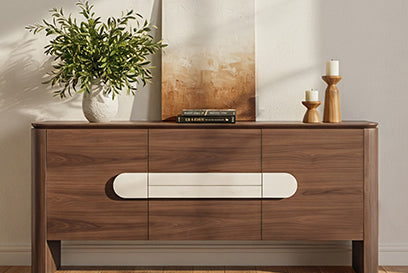








Sideboard vs. Console Table: Which Works Better for Your Space?

Choose a console table when your space needs a slim surface for display, a landing spot for keys and mail, or a piece to sit behind a sofa. Choose a sideboard when you need enclosed storage for dishes, linens, or living-room clutter, and your wall has the width and depth to support it. For a sideboard vs. console table decision, start with the job the room needs the piece to do.

The Quick Choice: Console Table for Placement, Sideboard for Storage
For this sideboard vs console table choice, measure the intended wall or sofa zone before comparing styles. Record the usable width, maximum projection, height relationship, and nearby opening paths so you can test each listing against the space.

Sideboard, Console Table, and Sofa Table: What Each Label Means
These three terms overlap in everyday use, but each one points to a slightly different job. Knowing the distinction helps you search for the right thing and avoid buying a piece that looks right but works wrong.
What a Sideboard Usually Does
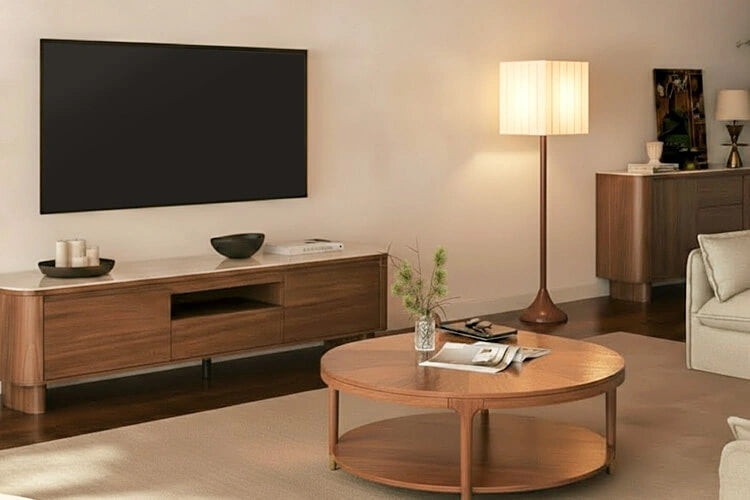
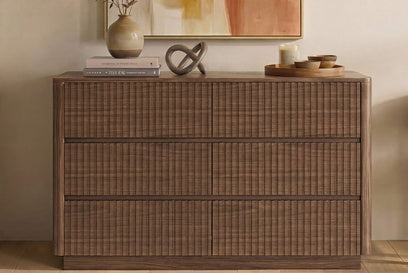
A sideboard is generally built for enclosed storage. Cabinets, drawers, or a mix of both keep dishes, linens, flatware, and serving pieces out of sight. The top surface can double as a serving station during meals or a display shelf the rest of the time. Not every sideboard is designed strictly for dining use. Many work just as well in a living room holding media accessories, games, or extra linens.
What a Console Table Usually Does
A console table is generally a surface-led piece. Its main job is to hold a lamp, decor, mail, or keys at a convenient height. Some console tables include open shelves, a drawer, or even a small cabinet, so storage capacity varies a lot by model. Don't assume a console has no storage, and don't assume it has much either. Check the specific listing when storage is part of the decision.
Where the Sofa-Table Name Fits
"Sofa table" is not a separate category with its own fixed shape. It usually describes a console-format table placed behind a sofa. The name tells you about placement, not construction. A table sold as a console table can become a sofa table simply by where you put it, as long as its height and depth work with your sofa.
The Comparison at a Glance: Height, Depth, Storage, and Use
This sideboard vs console table comparison is strongest for storage and primary use. Height and depth need a separate check: use the bounded dining-style references only as planning context, then compare the exact listing with your measured space.
| Dimension | Sideboard | Console Table | What It Means for Your Choice |
|---|---|---|---|
| Height | Dining-style planning reference: 34 to 38 inches; not a category rule | No category range supplied; check the listed height | Compare the exact height with your wall, sofa back, or nearby furniture |
| Depth | Dining-style planning reference: 20 to 22 inches; not a category rule | No category range supplied; check the listed depth because the label does not guarantee a shallow projection | Measure the product's actual depth against your available floor space |
| Storage | Cabinets, drawers, and shelves are typical, built for concealed storage | Ranges from none to shelves, drawers, or a small cabinet | Confirm the specific model's storage layout instead of assuming by category |
| Primary use | Storage and serving support | Surface-led display, drop zone, or light storage | Match the format to the job you actually need done |
Storage, Footprint, and Visual Weight: The Tradeoff That Decides the Fit
Mark the full projection of a candidate on the floor, then walk the route around it. Compare the space that footprint takes from nearby furniture and walkways with the storage or serving function you need before choosing a deeper piece.
Choose the Sideboard When Storage Solves the Problem
Pick a sideboard when dining essentials or living-room clutter genuinely need to disappear. The interior layout still needs to provide enough usable room for the items you plan to hide. A large-looking cabinet will not solve the problem if its storage zones do not match those items.
Choose the Console When Openness and Placement Matter More
Pick a console table when the room needs a lighter footprint, a display surface, or a spot behind the sofa. If the console would crowd a walkway, its lighter appearance does not offset the lost passage space.
Entryway: Choose for the Drop Zone You Actually Need
Choose a console for a light drop zone when depth is limited; choose a sideboard only when enclosed storage is needed without harming circulation.
Console for a Lighter Landing Surface
A console table works well when the entryway mainly needs somewhere for keys, mail, or a quick display. If its projection narrows the main walkway, choose a different piece or location.
Sideboard for Concealed Entryway Storage
A sideboard makes sense in an entryway when shoes, bags, or other everyday items need to disappear and the available path can absorb the larger form. If its doors or drawers would block foot traffic, choose another piece or placement.
Dining Room: When Enclosed Storage Earns the Space
A dining room usually favors a sideboard when dishware, linens, flatware, or serving support matter. A console is enough only when the room mainly needs a surface, not substantial enclosed storage.
Why Sideboards Usually Win for Dining Storage
Enclosed storage keeps dishes, linens, and serving pieces together and out of sight between meals. The top surface still works for staging food or drinks during a meal, giving the piece a dual role that a plain surface table can't match.
When a Console Is Enough
If your dining room already has ample storage elsewhere and just needs a display or serving surface, a console table can fill that role without adding unnecessary bulk. Don't lean on a console as a substitute for real storage if you actually need to hide dining essentials.
Use Dining-Style Measurements as a Starting Point
Dining-style planning references suggest roughly 20 to 22 inches of depth, 34 to 38 inches of height, and at least 24 inches of clearance between furniture for comfortable circulation. Treat these as bounded starting points, not guarantees. Test the room's actual traffic flow, especially with chairs pulled out, before choosing.
Living Room: Console Behind the Sofa, Sideboard on the Wall
A living room often splits the decision by location. A console tends to fit better behind a sofa, while a sideboard tends to fit better against an open wall when storage is the priority.
Behind the Sofa: Prioritize Height and Projection
A behind-sofa console is commonly planned roughly level with or slightly below the sofa back. Choose one only when its height suits that relationship and its projection leaves the intended path usable.
Against a Living-Room Wall: Decide Whether Storage Earns the Mass
A sideboard is the stronger option on a living-room wall when concealed storage for media accessories, games, or other clutter is the real problem. A console stays preferable when the wall mainly needs a lighter display surface and the room cannot spare the extra depth a sideboard requires.
Measure First: A Five-Step Choice Path
Start by recording your available wall width, maximum depth, height relationship, and circulation space before you open a single product page.
- Measure the available wall width, maximum depth, and height relationship to nearby furniture, such as a sofa back.
- Mark the full footprint on the floor, including door or drawer swing, and walk through the space to test circulation.
- List what the piece needs to store or display, and how often you'll need access to it.
- Check the exact product listing for its dimensions, opening clearances, and orientation. If you're furnishing a compact apartment, a small-apartment storage guide can help you compare narrow options and delivery access before you commit.
- Choose console or sideboard based on your measurements, then stop browsing formats that don't match your footprint.
Explore Chita Living Options After You Measure
Once you know your wall width, depth, and storage need, two of our pieces line up with the two decision paths above.
For a Storage-Forward Sideboard Need
If your wall can accommodate the listed 78.74-inch width and 18.90-inch depth, our 79" Riley Modern Sideboard with Metal Handles is worth comparing. It is listed at 78.74 inches wide, 18.90 inches deep, and 29.53 inches tall, with cabinets and drawers, removable three-level adjustable shelves, and a rear cable port for routing small appliances or lighting. It is listed as fully assembled. Confirm the current listing details before you buy.
For a Console-Format Need
Our Kenna Storage Console Table is listed at 13.0 inches W × 40.5 inches D × 25.6 inches H, with a storage compartment measuring 10.2 by 16.9 by 19.7 inches. The listed 40.5-inch depth deserves special attention before treating this as a narrow-space solution. Confirm the current listing details before purchase.
FAQs
Can a Console Table Be Used Behind a Sofa?
Yes. Use one when its height works with the sofa back and its projection leaves the walkway usable.
Is a Sofa Table the Same as a Console Table?
The terms usually overlap. A sofa table typically describes a console-format table placed behind a sofa, while console table is the broader label used in entryways, living rooms, and other spots.
When Should I Choose a Sideboard Instead of a Console Table?
Choose a sideboard when enclosed storage for dishes, linens, serving items, or living-room belongings is worth its greater depth and visual weight, and your space can accommodate it.
What Should I Measure Before Buying?
Use the five-step path to record the room's limits, storage need, and access path, then compare those notes with each candidate.
Recommended Products



More to Read
 7 Sofa Trends That Actually Improve Comfort in 2026
Upgrade your living room with furniture that supports your body. Here are 7 modern sofa features designed to maximize your daily comfort...
7 Sofa Trends That Actually Improve Comfort in 2026
Upgrade your living room with furniture that supports your body. Here are 7 modern sofa features designed to maximize your daily comfort...
 Mother's Day Gift Guide: Cozy and Stylish Furniture Picks for Modern Moms
Make Mother's Day more meaningful with furniture gifts that bring comfort, smart features, storage, and quiet luxury into her everyday routine.
Mother's Day Gift Guide: Cozy and Stylish Furniture Picks for Modern Moms
Make Mother's Day more meaningful with furniture gifts that bring comfort, smart features, storage, and quiet luxury into her everyday routine.
 Performance Fabric Reality Check: Does It Really Repel Pet Hair and Stains?
Performance fabric is often marketed as a miracle solution for homes with pets and kids, but the reality is more nuanced. It...
Performance Fabric Reality Check: Does It Really Repel Pet Hair and Stains?
Performance fabric is often marketed as a miracle solution for homes with pets and kids, but the reality is more nuanced. It...