









































Sintered Stone vs. Marble Dining Tables: Care and Everyday Use

A dining table meets more than plates and glasses. It may also hold homework, serving dishes, flower vases, and the occasional spilled drink. When comparing sintered stone and marble, think through those uses and the care you are comfortable doing after a meal.
What each tabletop is made from
Natural marble is stone cut from a quarried slab. Geologically, it forms when limestone or dolostone recrystallizes, as described in the University of Pittsburgh's marble geology reference. Its mineral composition and veining vary, so the delivered tabletop can have different markings from a display photograph.
Sintered stone is a manufactured surface formed from mineral ingredients using heat and pressure, a process described in Neolith's sintered stone manufacturing overview. It can have a plain finish or a stone-inspired pattern. The phrase marble-look describes an appearance; a marble-look tabletop may use a manufactured surface.
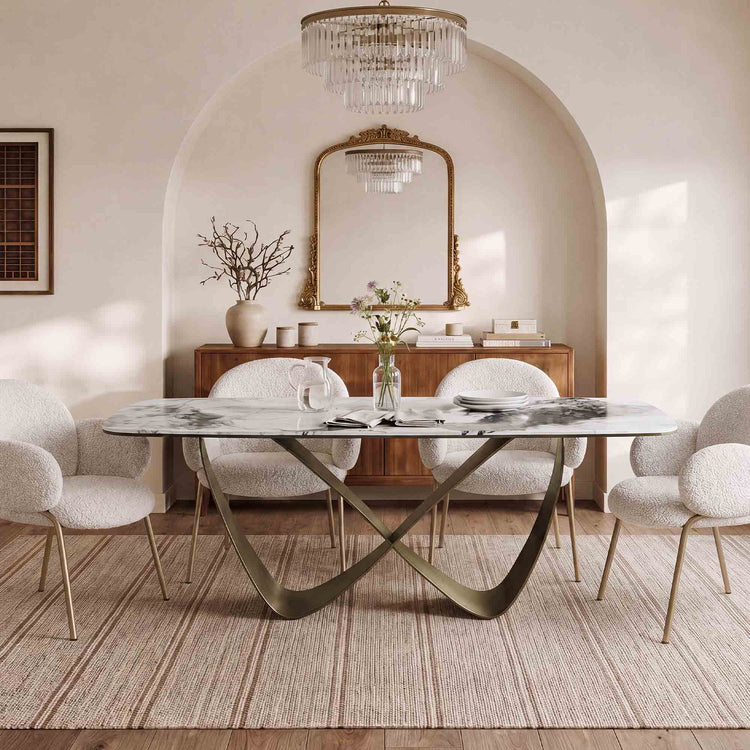
Check the listed material, finish, edge profile, and support beneath the top. Our 63-inch Teresa dining table, for example, uses a Pandora sintered stone top. Its veined appearance belongs to that specified surface.

Compare the care you will do after meals
| What you are comparing | Sintered stone | Natural marble |
|---|---|---|
| Appearance | Manufactured colors and patterns; inspect the finish and pattern placement. | Individual natural veining; expect variation between slabs. |
| Routine spills | Typically a low-absorption surface; clean with products suitable for its finish. | Prompt spill handling matters, especially with oil, colored liquids, and acidic food. |
| Sealing | Usually supplied without a routine sealing requirement; use the table's care instructions. | Some surfaces use an impregnating sealer; the stone and treatment determine maintenance. |
| Edges and corners | Check the edge profile and keep heavy objects from striking it. | Check corners and edges for chips, and protect them during moving. |
| Hot dishes | Use an appropriate trivet and follow the tabletop's heat-care instructions. | Use trivets under hot cookware and serving dishes. |
Stains and etching are different problems
A stain changes the color of the stone as a substance enters or marks the surface. Acid etching changes the surface finish. Lemon juice or vinegar can leave a dull area on marble even after the liquid has been cleaned away.
An impregnating sealer is intended to reduce liquid absorption. It does not prevent the acid reaction responsible for etching. A polished marble surface may make a dull etched patch particularly visible in reflected light.
The Natural Stone Institute's care guidance distinguishes acid-related etch marks from stains and recommends mild, suitable cleaners, prompt spill attention, coasters, and trivets. For a dining table, keep a soft cloth handy and use the cleaner specified for its finish. If a mark remains, identify the surface and the type of mark before trying a treatment.

Heat, scratches, and edge impacts
Surface resistance and resistance to a hard impact are separate considerations. A tabletop can cope well with routine wiping and still be damaged by a heavy object striking an exposed edge. Put cookware down gently and use a cutting board for food preparation.
Check the whole table when comparing durability: how the top is supported, whether the base feels stable, and where the legs sit relative to your chairs. A top's material alone gives you only part of that information. When choosing dining chairs with arms or armless chairs, check both knee room and clearance beneath the table apron. Include the width and arm height of your selected dining chairs when checking whether each place setting fits between the supports.
For either surface, move plates and serving pieces by lifting them. Keep grit out from under placemats, and avoid dragging a rough-bottomed planter across the finish.

Choose a table for your dining routine
- Daily family meals: a sintered stone top can suit a preference for straightforward cleanup. Look at the exact finish and the edge shape as well as the material.
- A room built around natural stone: marble offers individual slab markings. Decide whether you are comfortable with careful spill handling and changes in the surface over time.
- A table used for several tasks: consider protective mats for crafts or writing, plus storage for trivets and cleaning supplies.
Compare the table's full dimensions with your room, then check the space between the legs or around the pedestal. Our dining tables have different shapes and bases; those details affect how your chairs fit. Our dining table material guide also covers wood and glass. For a shared living and dining area, our open-plan dining set placement guide shows how to mark the table and pulled-out chairs together.
Sintered stone and marble questions
Does every marble table need annual sealing?
No. Marble tables do not all need resealing every year. Renew stain protection when it has worn off, using a sealer compatible with the marble and its existing finish. A water spill that leaves a temporary dark patch after wiping is a sign that the stone is absorbing moisture and may need renewed protection. A factory-coated top can have different maintenance needs from exposed marble. Sealing will not prevent acid etching or remove a dull ring left by lemon juice or vinegar.
Is a white veined table always marble?
No. White veining describes the pattern, not the material. A listing may use natural marble, sintered stone, or another manufactured surface to achieve that look. Find the tabletop's material field and read it separately from the color name. For example, Teresa's Pandora description refers to its veined sintered stone top; it does not make the table natural marble.
Which is easier to live with?
For frequent meals and everyday spills, sintered stone is usually the easier choice. Its routine care typically involves a soft cloth and a cleaner suited to the finish. Marble needs closer attention to lemon juice, vinegar, and other acidic foods because they can leave dull etched marks. Choose marble if its natural slab variation matters more to you than that extra care, and use coasters and trivets with either surface.
Recommended Products




More to Read
 7 Sofa Trends That Actually Improve Comfort in 2026
Upgrade your living room with furniture that supports your body. Here are 7 modern sofa features designed to maximize your daily comfort...
7 Sofa Trends That Actually Improve Comfort in 2026
Upgrade your living room with furniture that supports your body. Here are 7 modern sofa features designed to maximize your daily comfort...
 Mother's Day Gift Guide: Cozy and Stylish Furniture Picks for Modern Moms
Make Mother's Day more meaningful with furniture gifts that bring comfort, smart features, storage, and quiet luxury into her everyday routine.
Mother's Day Gift Guide: Cozy and Stylish Furniture Picks for Modern Moms
Make Mother's Day more meaningful with furniture gifts that bring comfort, smart features, storage, and quiet luxury into her everyday routine.
 Performance Fabric Reality Check: Does It Really Repel Pet Hair and Stains?
Performance fabric is often marketed as a miracle solution for homes with pets and kids, but the reality is more nuanced. It...
Performance Fabric Reality Check: Does It Really Repel Pet Hair and Stains?
Performance fabric is often marketed as a miracle solution for homes with pets and kids, but the reality is more nuanced. It...