
































How to Clean a Nursery Glider Recliner: Spills, Fabric, and Power Parts

Milk on an armrest, crumbs in a seat seam, and dust near a gliding base call for different cleaning steps. Work on the upholstery and moving parts separately, keeping liquid away from the chair's controls, charging ports, and power connections.
Match the cleaning method to the upholstery
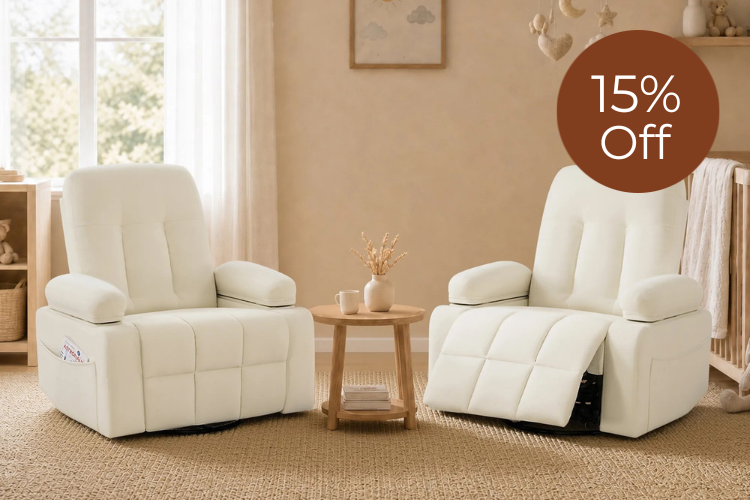
Check the care label for your chair's exact fabric or leather option. A removable pillow or cover may have separate instructions from the fixed seat and back. Look up the model and upholstery selection from your order if the label is difficult to locate. Our nursery glider recliner collection can help you match a current model to its listed upholstery options.
- W: use the specified water-based upholstery cleaner for spot treatment.
- S: use a mild water-free upholstery solvent as directed, with the required ventilation.
- WS or W/S: use a permitted water-based or solvent method suitable for the stain.
- X: vacuum or gently brush; have remaining stains assessed professionally.
The Association for Contract Textiles' upholstery cleaning-code definitions distinguish these treatment categories. Test any approved cleaner in an inconspicuous place and let the area dry before treating the visible stain. Look for color transfer, a ring, or a change in texture. For leather or faux leather, follow that material's specific care directions. Keep children away from the chair while you work. Store cleaning supplies in their original containers in a locked cabinet, following the U.S. Consumer Product Safety Commission's household-cleaner storage guidance.

Performance fabric still has a care method for its particular fibers and finish. Our performance fabric care guide explains how stain resistance differs from the cleaning treatment a fabric allows.
Clean milk, formula, and food spills
Fresh milk, formula, or spit-up
Lift any loose residue gently, then press a clean, absorbent white cloth onto the wet area. Work toward the center and switch to a dry section of the cloth as it picks up liquid. Use light pressure so the spill stays near the surface.
After blotting, use the fabric's approved spot-cleaning method on the remaining mark. A water-based method belongs on upholstery labeled for it; S-code upholstery needs the specified water-free product. Follow the cleaner's application and residue-removal directions and give the treated area time to dry.
Dried food or crumbs
Remove loose dry material with a soft upholstery attachment, paying attention to the seat seams and arm edges. Gently lift any remaining loose deposit without scraping the fibers. Treat the mark underneath only with the approved product. Repeated hard scrubbing can change the fabric's texture. Our sofa and chair dust-removal guide explains how to work across cushions and seams while keeping each material on its own care method.
Oily creams or stubborn marks
Lift excess cream from the surface without spreading it, then blot gently. Oil-based marks may need a different approved cleaner from a water-based spill. If the permitted method leaves a mark, give an upholstery cleaner the care code and the name of the spilled product before further treatment.
If a smell remains after the surface is clean and dry, the spill may have reached the padding. More surface cleaner can add moisture without reaching the source. Arrange an assessment of the cushion or fixed upholstery, especially where the smell returns after drying.
Care for the lumbar area
A lumbar cushion supports the lower-back area of the chair. Some models use a removable pillow, some have fixed padding, and others have an adjustable powered support. Clean the construction you have.
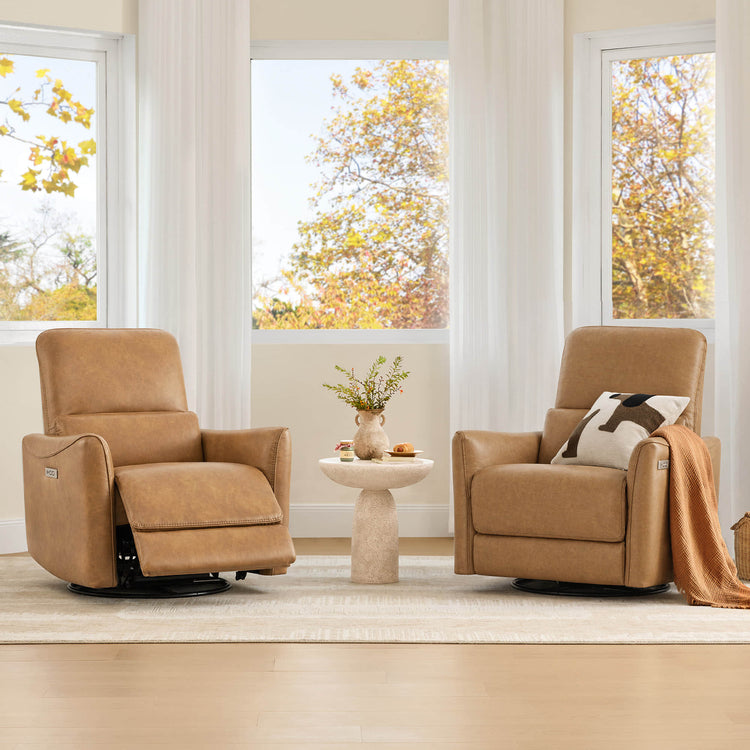
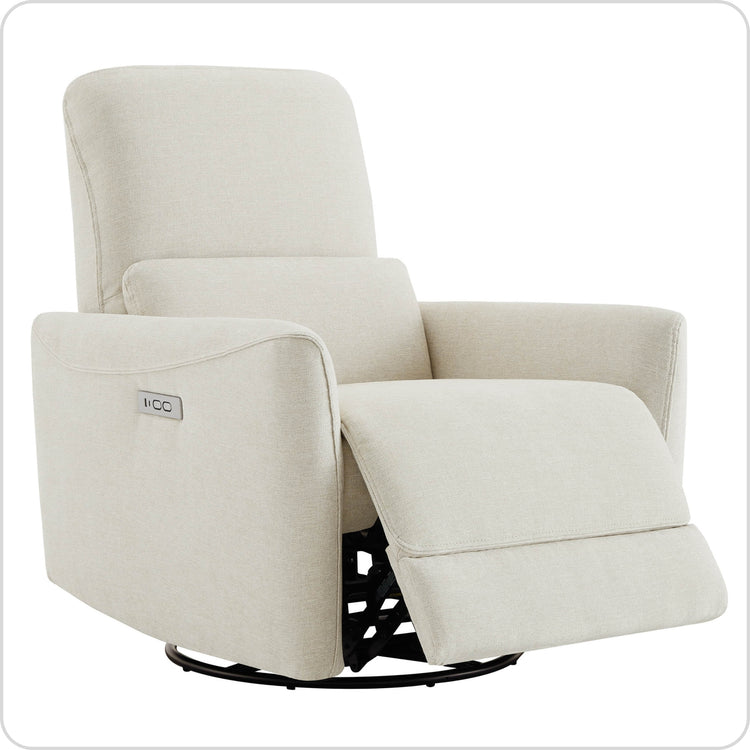
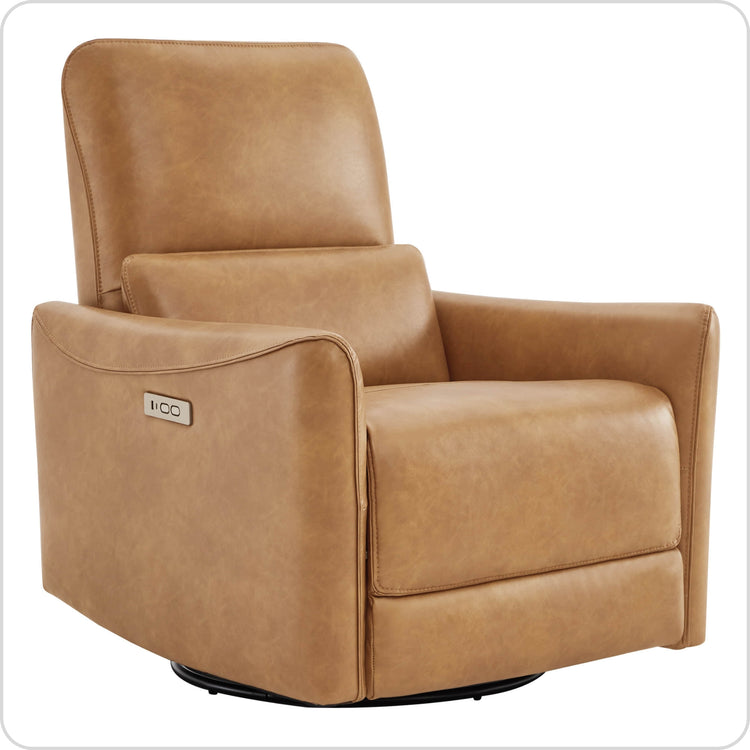
Our Tracee Power Swivel Nursery Glider Recliner has a fixed lumbar cushion. Keep that cushion in place and clean its surface according to the upholstery instructions. Use gentle blotting near the stitching and avoid soaking the padding.
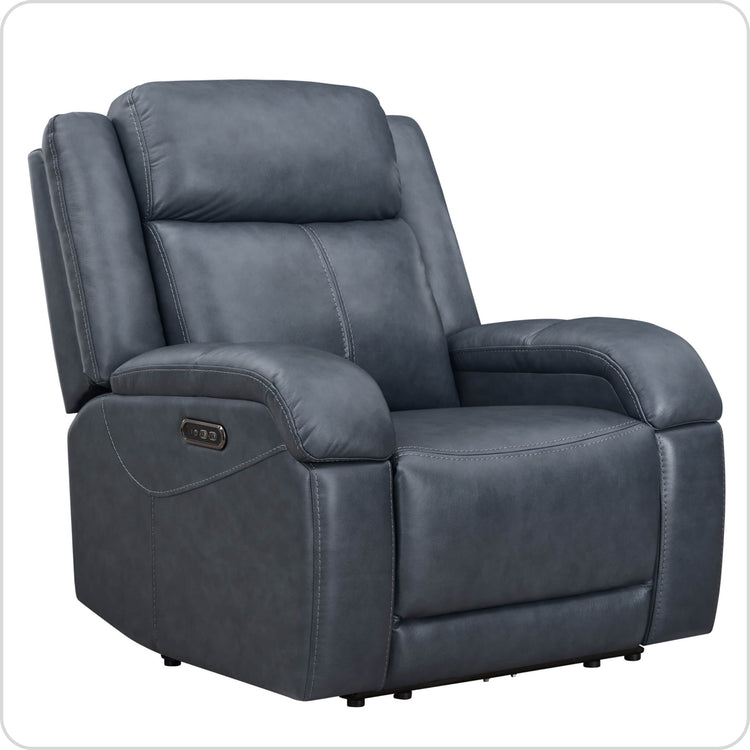
For a separate lumbar pillow, remove or wash the cover only when its label allows that method. For powered lumbar support, keep moisture away from controls and openings. Our Maxwell recliner with independently adjustable lumbar support is an example of this powered construction. A zipper or visible seam is insufficient information for disassembly.


Clean around the glide base and power parts
- Prepare the area. Keep children and pets away, return the chair to its usual upright position, and follow the manual's power-disconnection steps. Unplug a powered chair before cleaning around its base or electrical parts.
- Remove accessible dust. Use a dry cloth or vacuum attachment around the outside of the base and the reachable floor. Keep hands and tools out of the linkage and pinch points.
- Check the cord route. Look for a cable near the moving base, footrest, or a furniture leg. A damaged cable needs service.
- Check motion after cleaning. Reconnect only after the upholstery and surrounding area are dry and the path is clear. Operate the chair from the normal control position as its manual directs.
For the floor around a low base, our guide to measuring under-furniture cleaning clearance explains how to match an attachment to the gap and keep it clear of cables. For a squeak, note when it occurs and check for visible debris or a nearby object touching the chair. Persistent noise, catching, or uneven movement needs model-specific service. Use lubricant only where the manual identifies both the product and the application point; keep sealed mechanisms closed.
If liquid reaches a control, charging port, adaptor, or motor area, stop using the chair. Disconnect it from power if this can be done safely and contact our recliner support team for service guidance. For water-damaged electrical equipment, the Electrical Safety Foundation calls for a qualified assessment before restoring power.
Let the chair dry before using it
Keep the room ventilated and follow the cleaning product's drying directions. Leave the chair in a safe position with its moving parts inaccessible to children and pets. Give seams and padding time to dry, as the surface may dry first. Avoid direct heat or strong sunlight as a shortcut.
Use a washable cloth for small feeding spills where it can stay clear of the mechanism, then remove and wash it separately. Keep throws and loose fabric away from the base and footrest. Respond to spills immediately and remove visible dust or crumbs during normal room cleaning; the amount of use determines the routine.
Frequently asked questions
How do I clean milk from a nursery glider?
Blot the liquid promptly with a clean, absorbent cloth, then spot-treat the remaining mark using the upholstery's approved method. W and WS fabrics allow specified water-based treatment; S fabrics require water-free cleaner. If an odor remains after drying, have the padding assessed.
Can I put glider cushion covers in the washing machine?
Machine-wash only a removable cover whose label explicitly permits it. Follow the stated cycle and drying method. Fixed cushions and covers without washing instructions should remain in place for their approved surface treatment.
Can I use a steam cleaner on my nursery recliner?
Use steam only when the instructions for the exact chair and upholstery approve it. A W cleaning code specifies water-based spot care, not automatic permission for steam or extraction. Choose the stated spot-cleaning method or a professional service for larger areas.
Do I need to unplug a power glider before cleaning?
Yes. Follow its manual to disconnect power before cleaning around the base, controls, cords, or other electrical parts. Use dry methods around those components and keep the mechanism clear. Liquid inside a powered component needs service guidance before reuse.
How do I clean the lumbar cushion without flattening it?
Use gentle surface blotting with the cleaner allowed for the upholstery and keep the padding from becoming saturated. Leave a fixed lumbar cushion attached. Wash a removable pillow cover only under its own care instructions, then let it dry by the specified method.
What should I do if the chair squeaks after cleaning?
Check for visible debris, a cord, or another object touching the moving base while the chair is disconnected from power. If noise persists or movement catches, stop operating it and send us the model, order details, and a description of the motion. Follow the model's service instructions for any adjustment.
Recommended Products


More to Read
 7 Sofa Trends That Actually Improve Comfort in 2026
Upgrade your living room with furniture that supports your body. Here are 7 modern sofa features designed to maximize your daily comfort...
7 Sofa Trends That Actually Improve Comfort in 2026
Upgrade your living room with furniture that supports your body. Here are 7 modern sofa features designed to maximize your daily comfort...
 Mother's Day Gift Guide: Cozy and Stylish Furniture Picks for Modern Moms
Make Mother's Day more meaningful with furniture gifts that bring comfort, smart features, storage, and quiet luxury into her everyday routine.
Mother's Day Gift Guide: Cozy and Stylish Furniture Picks for Modern Moms
Make Mother's Day more meaningful with furniture gifts that bring comfort, smart features, storage, and quiet luxury into her everyday routine.
 Performance Fabric Reality Check: Does It Really Repel Pet Hair and Stains?
Performance fabric is often marketed as a miracle solution for homes with pets and kids, but the reality is more nuanced. It...
Performance Fabric Reality Check: Does It Really Repel Pet Hair and Stains?
Performance fabric is often marketed as a miracle solution for homes with pets and kids, but the reality is more nuanced. It...