













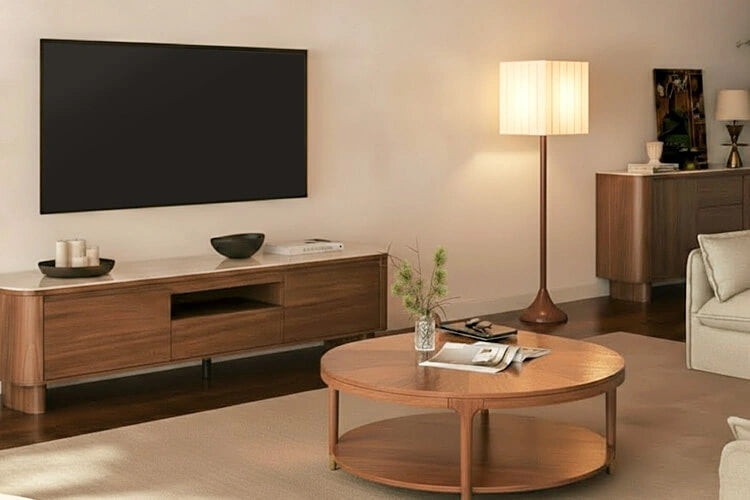


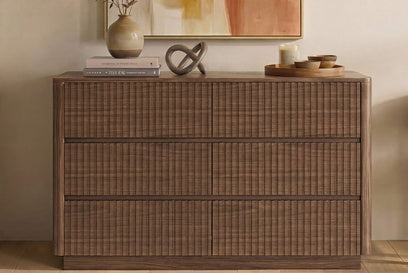
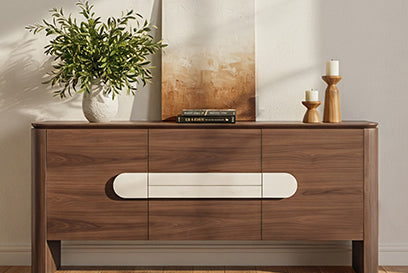








Modular sideboards let you achieve the polished, high-end look of a custom media wall without the cost, permanence, or disruption of built-in cabinetry. By thoughtfully combining CHITA units such as the Moore TV stand, Moore sideboard, Clara sideboard, and Kyle tall cabinet, homeowners and renters can create scalable storage that adapts to large TVs, multiple devices, and future upgrades while maintaining flexibility for moves or room changes.

Beyond the Console: The Rise of the Modular Media Wall in 2026
The modular media wall has become a leading 2026 trend for living rooms and home theaters. Instead of a single shallow TV stand, it combines multiple sideboards, low consoles, and tall cabinets into one cohesive installation that reads as bespoke millwork. This approach delivers far more concealed storage for streaming devices, soundbars, game consoles, and media collections than a traditional console can provide.
The appeal lies in “modular complexity”: mixing heights, textures, and depths creates a curated, non-catalog look. For renters or those avoiding renovation, it offers the visual weight of custom cabinetry with the advantage of easy rearrangement. The key is planning so that separate pieces feel intentional rather than assembled.
Measuring for Your Composition: The 2/3 Rule and Eye-Level Ergonomics
Accurate measurement prevents the most common visual mistakes. Start by determining your wall width and TV size. The widely recommended 2/3 rule suggests your TV width should occupy roughly two-thirds of the total media wall width to avoid a crowded or floating appearance. Complement this with a visual margin of about 30 cm (12 inches) on each side of the screen, as noted in media wall planning resources, to give the composition breathing room and space for future upgrades.
Ergonomics matter equally. Position the center of your TV screen at seated eye level—typically 37–45 inches from the floor—depending on your sofa height. This expert viewing guide confirms that aligning to seated eye level prevents neck strain during long viewing sessions. Measure from the floor to the intended center of the mounted or placed screen before choosing module heights.
For a 75-inch TV (roughly 66 inches wide), aim for a total media wall of 100–110 inches. Larger 85-inch screens need 120–140 inches of combined furniture to maintain balance. Always verify outlet locations and baseboard height; uneven floors or deep baseboards can create visible gaps that undermine the built-in illusion.
Combining Modules: The Moore and Clara Layout Guide
CHITA’s collections simplify matching because several units share finishes and design languages. The Moore collection stands out for seamless pairing: its 79-inch modern wood TV stand and 71-inch rounded corner sideboard both use dark brown oak veneer and matte black metal bases. This makes the Moore run the safest starting point for a unified 12-foot wall.
For texture-forward designs, introduce the 62-inch Clara contemporary wood sideboard with its distinctive wave panels. Pair it with the 83-inch Kyle solid wood arched tall cabinet to add vertical interest and close the composition. The Kyle works best as a flanking element rather than a center piece because its height creates intentional stepping rather than competing with the TV.
Practical scaling examples include:
- 10 ft wall: One Moore TV stand centered with modest side storage. Ideal for smaller living rooms or minimal device setups.
- 12 ft wall: Moore TV stand plus one Moore sideboard. This creates about 150 inches of total width with balanced storage and a clean, symmetrical look.
- 15 ft wall: Symmetrical flanking using Moore in the center, Clara for detailed lower storage, and Kyle cabinets on the ends. This delivers maximum storage and a more architectural feel.
These combinations appear in our guide on choosing a media console for 75-inch and 85-inch TVs and our overview of modern sideboards for open-concept homes. The main risk is mismatched top heights; plan for either perfect alignment or deliberate stepped symmetry so the wall reads as one intentional installation rather than separate boxes.
Achieving the Built-in Illusion: Symmetry, Anchoring, and Gap Control
The “built-in” look is an optical effect, not a structural one. It depends on controlling seams, fixing the units in place, and unifying light and shadow across the composition. Start with symmetry or soft balance. Symmetrical layouts feel traditional and stable; asymmetrical ones with intentional stepping can feel more contemporary. Either way, treat the entire wall—including the space above and beside the furniture—as part of the design.
Anchoring is non-negotiable for both safety and the fixed appearance. The U.S. Consumer Product Safety Commission’s STURDY Act standard, while focused on clothing storage, underscores the importance of securing tall or heavy furniture to wall studs. For modular media walls supporting large TVs, this anchoring removes the visual cue that pieces could shift independently. Most CHITA units over 27 inches tall benefit from this step.
Gap control matters more than many expect. Use felt pads or adjustable feet to keep seams parallel and consistent—ideally under 3–5 mm. Inconsistent gaps break the illusion instantly. A single LED strip run along the top or back of the entire run can wash the surfaces with even light, visually bridging separate units and softening shadows that would otherwise highlight the modular nature of the setup.
High-Spec Tech Integration: Thermal Management and Cable Stealth
Hiding electronics inside modular sideboards requires balancing concealment with thermal safety. Gaming consoles, AV receivers, and streaming devices generate significant heat. Industry thermal management standards recommend at least 5 cm (2 inches) of clearance around enclosed gear and, for vented doors or panels, roughly 64% open area to allow proper airflow. When temperatures inside the cabinet exceed 85 °F, prioritize ventilation over a fully sealed aesthetic.
The “chimney effect” helps: align rear cutouts or cable ports so heat rises and exits naturally. Many CHITA pieces, including the Moore and Clara models, include built-in cable management ports that let you centralize a power strip behind one unit while routing cords neatly to others. This keeps the visible face clean without trapping heat.
For high-heat setups, choose units with adjustable shelves or vented doors rather than fully solid fronts. If your gear runs hot, consider leaving the cabinet doors slightly ajar during extended use or adding low-profile fans. These practical steps prevent hardware failure while preserving the polished look of your media wall.

The Bespoke Storage Checklist: Choosing Your Modular Configuration
Before ordering, run through this checklist to confirm your configuration will deliver both function and the desired custom look:
- Measure wall width and TV size first; confirm at least a 30 cm side margin and proper eye-level placement.
- Choose a finish anchor—such as Moore Dark Brown—for at least 70 % of the run to simplify visual cohesion.
- Map your electronics and verify ventilation: high-heat devices need 5 cm clearance and adequate exhaust paths.
- Plan cable routes using built-in ports so power strips stay hidden behind a single unit.
- Anchor every piece to the wall per safety guidelines; this step is essential for stability and the fixed, built-in appearance.
- Finally, evaluate future flexibility: modular pieces can be rearranged or supplemented as your tech or living situation changes.
This structured approach helps you avoid common pitfalls such as mismatched heights, insufficient airflow, or a layout that looks temporary rather than intentional. When executed well, a modular media wall using CHITA sideboards and TV stands delivers the luxury storage and presence of custom millwork at a fraction of the cost and commitment.
FAQs
Can modular sideboards really create a built-in media wall look in a rental?
Yes, provided you choose units with matching finishes and anchor them securely without damaging walls (use appropriate anchors for your rental’s construction). Focus on consistent gaps, unified lighting, and treating the wall as one composition. The look is optical rather than structural, so it can be disassembled when you move.
How do I calculate the right total width for a 75-inch or 85-inch TV?
Apply the 2/3 rule and add at least 30 cm (12 inches) of margin on each side of the TV. A 75-inch TV (about 66 inches wide) typically pairs well with 100–120 inches of combined furniture; an 85-inch TV benefits from 130 inches or more. Always measure your specific wall and account for baseboards or outlets.
What is the minimum clearance needed for electronics inside enclosed sideboards?
Maintain at least 5 cm (2 inches) of clearance around high-heat devices such as receivers or game consoles. For vented doors, aim for roughly 64 % open area or add active cooling if internal temperatures rise above 85 °F. Proper airflow prevents performance issues and extends equipment life.
Should I choose symmetrical or asymmetrical layouts for a modular media wall?
Symmetrical layouts create a traditional, balanced feel and are easiest for beginners. Asymmetrical designs with intentional height stepping can feel more modern but require careful planning to avoid looking random. Either approach works as long as top lines and materials remain visually connected.
Do CHITA modular units come with wall-anchoring hardware?
Most taller units are designed to be anchored, but specific hardware may vary by model. Check the product manual or contact support for the exact kit needed. Using appropriate wall anchors that reach studs is recommended for safety and to achieve the stable, built-in appearance.
How can I hide cables effectively across multiple joined sideboards?
Route all cables through the built-in ports on Moore and Clara units so a single centralized power strip can serve the entire run. Keep the strip behind one cabinet and use cord covers or channels where pieces meet. This keeps the visible front clean while allowing easy access for upgrades.
What should I do if my floor is uneven or walls are not perfectly straight?
Use adjustable feet or thin shims under the cabinets to level each unit and keep seams parallel. Avoid forcing pieces tightly together on very uneven surfaces, as this can create stress or visible gaps. In extreme cases, a narrow filler strip painted to match the wall can bridge minor inconsistencies without sacrificing the overall custom look.
Recommended Products

More to Read
 7 Sofa Trends That Actually Improve Comfort in 2026
Upgrade your living room with furniture that supports your body. Here are 7 modern sofa features designed to maximize your daily comfort...
7 Sofa Trends That Actually Improve Comfort in 2026
Upgrade your living room with furniture that supports your body. Here are 7 modern sofa features designed to maximize your daily comfort...
 Mother's Day Gift Guide: Cozy and Stylish Furniture Picks for Modern Moms
Make Mother's Day more meaningful with furniture gifts that bring comfort, smart features, storage, and quiet luxury into her everyday routine.
Mother's Day Gift Guide: Cozy and Stylish Furniture Picks for Modern Moms
Make Mother's Day more meaningful with furniture gifts that bring comfort, smart features, storage, and quiet luxury into her everyday routine.
 Performance Fabric Reality Check: Does It Really Repel Pet Hair and Stains?
Performance fabric is often marketed as a miracle solution for homes with pets and kids, but the reality is more nuanced. It...
Performance Fabric Reality Check: Does It Really Repel Pet Hair and Stains?
Performance fabric is often marketed as a miracle solution for homes with pets and kids, but the reality is more nuanced. It...