






















2026 Open-Plan Zoning: A Pillar Guide to Modular Layouts

2026 Open-Plan Zoning: A Pillar Guide to Modular Layouts
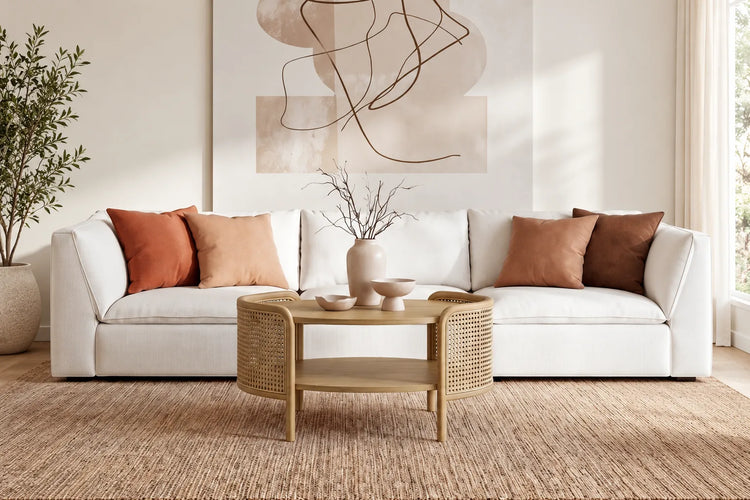
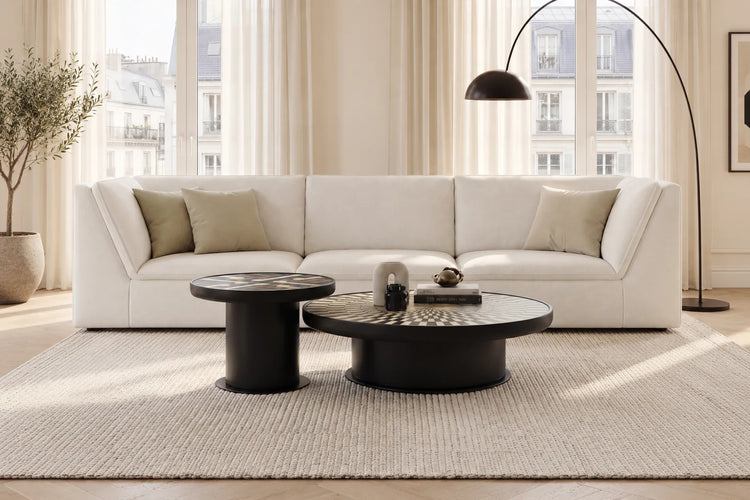
Recent design trends for open-plan homes are moving away from completely open layouts toward intentional "micro-zoning." Modular sofas that stay firmly connected allow you to define distinct living, dining, and work areas without walls while preserving flow and sightlines. The key is choosing configurations that match your primary daily intent—social intimacy, focused work, or relaxed decompression—then anchoring them properly to minimize the risk of sections drifting apart.
The Shift Toward Micro-Zoning: Why Open-Plan Homes Need Definition
Traditional open-concept designs promised freedom but often resulted in spatial ambiguity. Current design approaches are increasingly favoring micro-zoning: carving large rooms into purposeful pockets that support different activities and emotional states without permanent partitions. This approach aims to improve both organization and daily well-being by giving each area a clear role.
Emotional zoning maps layouts to psychological needs—calm for rest, energized for socializing, grounded for work—using texture, lighting, and furniture placement as subtle cues. While not a substitute for structural soundproofing, these zoned arrangements may offer a subtle improvement in subjective acoustic comfort by using soft surfaces to dampen echoes between high-activity and quiet areas.
The risk of skipping this step is a layout that looks good on paper but shifts or feels undefined, creating visual clutter. For renters and apartment dwellers especially, a modular sofa for open plan living that reconfigures cleanly is often a practical long-term investment, provided the connection system is robust enough to handle daily use.

Mapping Function to Intent: Modular Layout Scenarios
The most effective modular layout begins with your dominant daily need. Based on common interior design patterns, three core scenarios help most homeowners decide:
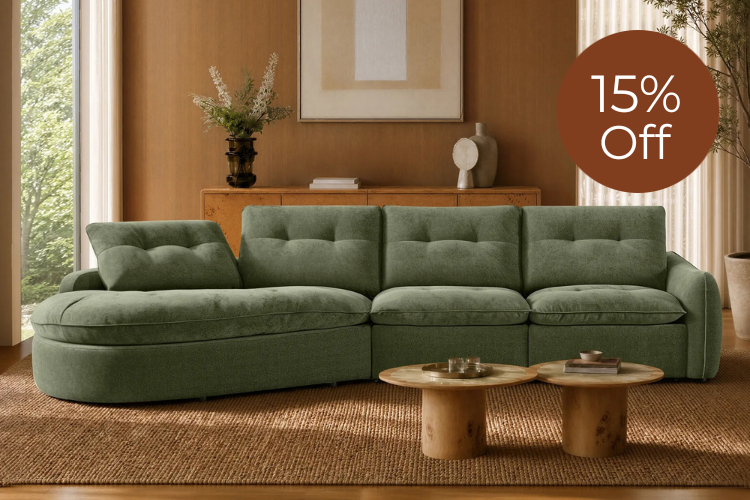
A Deep Social Pit suits families or frequent entertainers who want intimacy without isolating the space. A generous U-shaped sectional creates an enclosed conversation area while leaving the main circulation spine open. Tactile fabrics like bouclé or chenille can further signal a "gathering" zone.
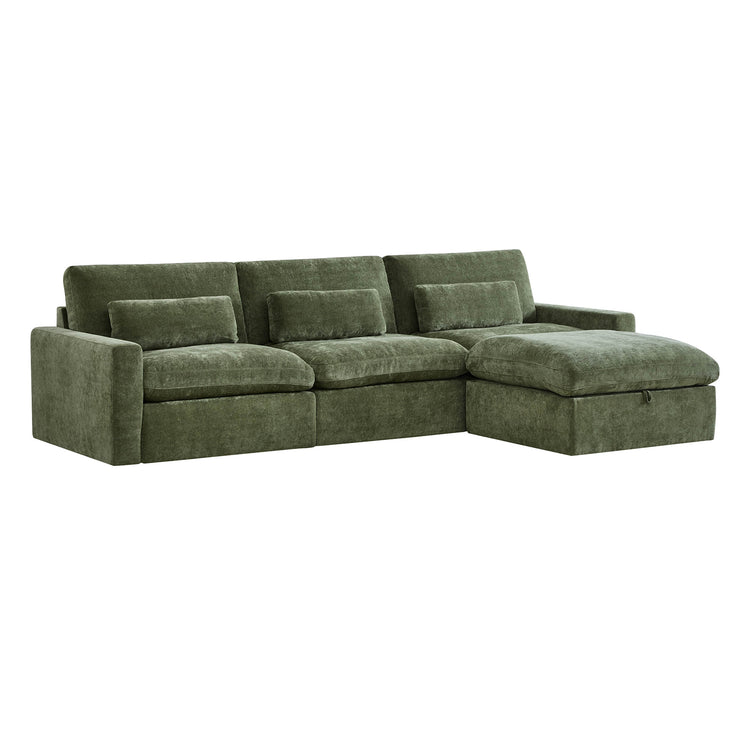
An Acoustic Work-Ledge is often preferred by remote workers needing focus within a shared living room. An L-shaped configuration with one longer side turned toward the room’s edge acts as a soft visual barrier. Placing this zone near a window or secondary light source reinforces the "focus" cue.
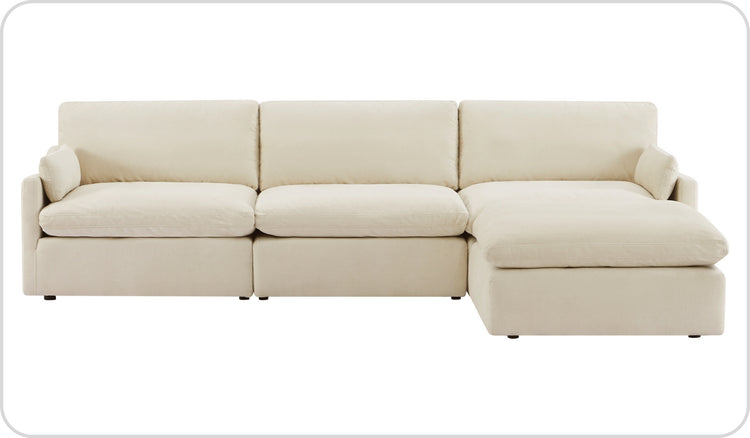
A Transitional Rest-Nook fits multi-use family spaces. Looser L or chaise configurations with lower arms preserve openness and easy movement. These setups are particularly effective in smaller apartments where one room must handle lounging and quick layout changes for guests.
In each case, aim to preserve at least 36-inch primary walkways around every zone. This common design heuristic helps prevent the cluttered feeling that can defeat the purpose of open-plan living. This guide to modular sofa configurations explores how switching between L-shaped and U-shaped layouts changes the functional tone of a room.
The Logic of Layout: From Room Reading to Sofa Configuration
Effective zoning follows a repeatable sequence. First, identify the room’s natural circulation spine—the main path people use to move through the space. Place your largest sectional so it reinforces rather than blocks this flow.
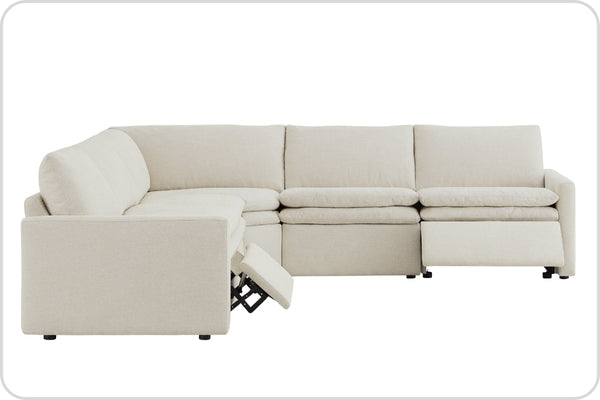
Next, select modules that create "invisible walls." Corner pieces and chaise modules turn a straight run into a defined boundary, while armless sections let you extend a zone without adding bulk. For most open-plan rooms, combining three to five modular pieces typically provides sufficient flexibility without overwhelming the square footage.
Finally, apply the rug anchor rule. An area rug that sits fully under the primary seating visually grounds the zone. Without this anchor, even a well-chosen sectional can appear to "float" aimlessly. Many homeowners find that a cloud sectional sofa only looks small when it lacks proper anchoring and scale relative to the room.

How Sectional Shape Defines Space in Small vs. Large Rooms
Room size dictates which shapes deliver the best zoning outcomes. In compact apartments, armless modules such as the Delaney series allow for flexible arrangements that preserve sightlines. You can create a compact work ledge or rest nook without sacrificing walkways.
Larger homes benefit from more enclosed forms. A Jonathan 5-seat U-shaped sectional can carve out a distinct "room within a room" for socializing while still leaving generous pathways. For dining-to-living transitions, an L-shaped banquette like the Lila offers a low back that maintains openness, working well in hybrid spaces where the area must switch from workday focus to evening entertaining.
Always map your intended zones on the floor with painter’s tape first. Verify that every primary walkway stays at least 36 inches wide. The 2026 guide to modular power reclining sectionals provides additional detail on balancing motion features with these zoning needs.
The Stability Factor: Preventing Modular Drift
A carefully planned micro-zone can be undermined if sections slowly drift apart, creating gaps and a disordered appearance. Stability depends on the combination of hardware, floor surface, and maintenance.
Connector Selection and Installation Ratchet-style alligator clips generally offer higher lateral stability than simple U-brackets because they provide multiple interlocking points. To ensure a stable fit:
- Alignment Check: Ensure modules are perfectly level before engaging clips; uneven floors can prevent a full lock.
- Engagement: Listen for the "click" or feel the teeth engage fully.
- Maintenance: Check and re-tighten or re-align connectors after the first month of use and during seasonal deep cleans.
Floor-Specific Strategies
- Hard Floors (Wood/Tile): These are most prone to shifting. Use a high-grip, rubberized rug pad that extends slightly beyond the sofa footprint to provide maximum friction.
- Carpeted Floors: While carpet provides more natural grip, heavy modules can still "walk" over time. Ensure the connectors are fully engaged to prevent the modules from tilting into the carpet pile.
CHITA’s anti-shift connector technology is designed to address these challenges, providing a more secure hold for active households. For further technical tips, see Beyond the Brackets: 5 Ways to Prevent Modular Sofa Shifting in 2026 and How to Join Modular Couches.
The Master Blueprint: Practical Measurements for Flow
Professional-grade zoning relies on a few key dimensions. Maintain 36-inch primary walkways wherever two people must pass comfortably; this 36-inch walkway rule is a widely accepted ergonomic standard.
Keep 14 to 18 inches between the front edge of your sofa and the coffee table. This range typically balances easy reach with enough legroom to move around without bumping knees.
For sightline management, favor lower-profile modules such as the Sophia series in rooms where preserving an open feel is a priority. Taller backs can unintentionally close off a zone and make the overall space feel smaller. Use low-height storage or open shelving between zones when you need light visual separation without blocking views.
Choosing Your Modular Setup: A Final Checklist
Match your primary intent to the right configuration, then verify the supporting details. Before finalizing a purchase, run through this checklist:
- Walkways: Does every zone preserve 36-inch primary walkways (or at least 30 inches in very low-traffic pinch points)?
- Stability: Is the sectional equipped with multi-point connectors suitable for your floor type?
- Anchoring: Do you have an area rug and non-slip pad ready to anchor the main seating group?
- Sightlines: Will the chosen back height maintain comfortable views across the open plan?
When these conditions are met, your modular sofa becomes a stable foundation for a functional, zoned home. Explore the latest arrivals in the Sofa Latest collection or the Sophia Feather Modular Sofa Collection to find configurations that match your vision.
FAQ: Modular Zoning and Stability
How much space should I leave between zones in an open-plan room?
Aim for at least 36 inches for primary circulation paths and 14–18 inches between sofas and coffee tables. In small apartments, 30-inch pinch points may be acceptable in light-traffic areas. Always test the layout with tape on the floor first to ensure two people can pass comfortably.
Can a modular sofa really replace walls for zoning?
Yes, when you combine the right shape with a properly sized rug and consistent sensory cues like lighting. A U-shaped sectional creates a clear social boundary, while an L-shape can define a work area. However, the effect depends on the modules staying together; without stable connectors, the "wall" will eventually develop gaps.
What is the best modular sofa for open concept homes?
The best choice depends on your dominant need. U-shaped models with strong ratchet connectors are ideal for social zones. L-shaped designs with integrated storage work well for work-ledges. Prioritize models with OEKO-TEX fabrics and robust anti-shift hardware to ensure the layout remains functional over time.
How do I stop my modular sections from shifting apart?
Use ratchet-style alligator clips and ensure they are fully engaged during installation. Place a high-quality non-slip rug pad under the arrangement, especially on hard surfaces. Periodically check the alignment of the modules, as heavy use can cause slight shifts that may require re-tightening.
Does sectional shape affect acoustic privacy?
It can offer a subjective improvement. A deeper U-shape or L-shape with soft textiles can help absorb sound reflections within a specific zone. While this is not a substitute for professional soundproofing, it can make a large, echoey room feel more intimate and quiet.
Recommended Products

More to Read
 7 Sofa Trends That Actually Improve Comfort in 2026
Upgrade your living room with furniture that supports your body. Here are 7 modern sofa features designed to maximize your daily comfort...
7 Sofa Trends That Actually Improve Comfort in 2026
Upgrade your living room with furniture that supports your body. Here are 7 modern sofa features designed to maximize your daily comfort...
 Mother's Day Gift Guide: Cozy and Stylish Furniture Picks for Modern Moms
Make Mother's Day more meaningful with furniture gifts that bring comfort, smart features, storage, and quiet luxury into her everyday routine.
Mother's Day Gift Guide: Cozy and Stylish Furniture Picks for Modern Moms
Make Mother's Day more meaningful with furniture gifts that bring comfort, smart features, storage, and quiet luxury into her everyday routine.
 Performance Fabric Reality Check: Does It Really Repel Pet Hair and Stains?
Performance fabric is often marketed as a miracle solution for homes with pets and kids, but the reality is more nuanced. It...
Performance Fabric Reality Check: Does It Really Repel Pet Hair and Stains?
Performance fabric is often marketed as a miracle solution for homes with pets and kids, but the reality is more nuanced. It...