






















The 2026 Guide to Quiet Power Recliners for Nurseries

The 2026 Guide to Quiet Power Recliners for Nurseries
New parents in 2026 often choose quiet power recliners for nurseries because these chairs deliver silent recline motion, easy-exit support after long feeding sessions, and compact footprints that fit small rooms without waking a sleeping baby. The key is matching motor technology, seat height, wall clearance, and fabric safety to your specific postpartum routine and nursery layout rather than relying on marketing claims.

The Modern Nursery Priority: Silence, Support, and Space
Many expecting parents shift from traditional manual gliders to power recliners because motorized operation removes the physical effort of rocking or reclining while holding an infant. In late-night feeding scenarios, this support becomes especially valuable during postpartum recovery when core strength may be limited.
To balance comfort, safety, and room size, we recommend a three-pillar decision framework:
- Acoustic Integrity: Motor noise that stays within a range unlikely to disturb infant REM cycles.
- Ergonomic Leverage: Seat heights and cushion densities that facilitate a "no-hands" stand-up while cradling a baby.
- Operational Footprint: A compact recline arc that preserves safe walkways in rooms under 100 square feet.
The primary risk remains the "startle clunk"—a mechanical latch sound at the end of a recline cycle. Checking for soft-start and soft-stop programming helps avoid this common regret that wakes light-sleeping infants.
Judging Motor Performance: How to Find a Truly Quiet Recliner
To determine whether a power recliner is quiet enough for a nursery, use motor architecture and motion programming as reliable proxies instead of depending on vague brand language.
- Motor Type: Look for linear actuators. While not a universal guarantee, certain linear designs are engineered to produce a lower-frequency hum compared to traditional high-speed gear motors.
- Programming: Soft-start and soft-stop technology is essential. This electronic ramping prevents the abrupt mechanical "thud" when the motor reaches its limit—a sound often more disruptive than the motor itself.
- Noise Benchmarks: As a heuristic for screening, look for products with a peak operational noise between 45–55 dB (measured at approximately 1 meter). Note that actual performance varies based on floor type (hardwood vs. carpet) and room acoustics.
Distinguish between steady motor hum, which may be masked by white noise machines, and vibration transferred through the floor. Dual-motor setups can reduce strain on individual components, potentially extending the "quiet life" of the chair, but they require verification of synchronized programming to avoid grinding.
Nursery Recliner Screening Thresholds: Quietness, Fit, and Stand-Up Ease
Use this as a quick screening aid for nursery-ready recliners when you cannot do a floor test in store.
View chart data
| Category | Screening guidance |
|---|---|
| Quietness proxy | 1 |
| Wall clearance | 1 |
| Seat height | 1 |
| Motion programming | 1 |
| Motor type | 1 |
| Safety note | 1 |
Nursery Recliner Screening Thresholds
Use this table to audit technical specifications before purchase.
| Category | Screening Checkpoint | Target / Field to Verify |
|---|---|---|
| Quietness Proxy | Motion Programming | Must specify "Soft-start/Soft-stop" or "Smooth-transition" |
| Wall Clearance | Operational Clearance | Check "Distance from Wall" field; target <6" for small rooms |
| Postpartum Support | Seat Height | 18–20 inches (measured from floor to top of crown) |
| Air Quality | VOC Emissions | Greenguard Gold Certification |
| Chemical Safety | Textile Treatment | Explicit "PFAS-Free" or "Mechanical Performance Weave" |
The Postpartum Pivot: Features That Make Standing Up Easier
After extended nursing sessions, many parents benefit from a seat height of 18–20 inches. This range provides better leverage for standing without straining recovering abdominal muscles, serving as a useful ergonomic heuristic for most users.
- Cushion Density: Firmer seat cushions with moderate sink-in depth help maintain posture and make it easier to push off while holding a baby.
- Power Headrests: These help reduce neck strain during 20- to 45-minute feeding sessions by allowing customized support.
Decision Priority Rule: If you are recovering from a C-section, prioritize Seat Height (19"+) and Power Headrests over swivel range. If your baby is an extremely light sleeper, prioritize Soft-Stop Programming and Linear Actuators above all else.
Maximizing Your Layout: Compact Footprints and Wall-Hugger Realities
Small nurseries require careful attention to operational rather than static footprint. Many chairs marketed as "wall-huggers" still need 10–14 inches of rear clearance for full recline.
- Zero-Wall Designs: True zero-wall models can operate with as little as 4–6 inches of clearance. Always verify the "operational clearance" specification in the manual.
- Swivel Safety: In rooms under 100 square feet, plan a 360-degree clear zone around swivel models to avoid cord tangles or wall scuffs.
This guide to zero gravity and wall-hugger recliners for small spaces offers additional layout considerations that apply well to nursery conversions.
Nursery-Safe Materials: Certifications and Cleanup
GREENGUARD Gold certification verifies low chemical and VOC emissions, which is a strong baseline for nursery air quality. However, it does not automatically guarantee the absence of PFAS (per- and polyfluoroalkyl substances).
- PFAS-Free: Treat this as a separate requirement. Look for "mechanical performance weaves" that achieve stain resistance through tight construction rather than topical chemical coatings.
- Oeko-Tex Standard 100: This focuses on harmful substances in the textile itself and complements Greenguard for skin-contact safety.
- Cleaning Protocol: Biological spills like milk typically require enzymatic cleaners. Check for "Code W" (Water-based) cleaning instructions, and always ensure the area is dry and ventilated before returning the baby to the room.

Safety Standards for Powered Nursery Furniture
Any motorized nursery chair should meet UL 962, the standard for safety in household motor-operated furnishings. This addresses electrical safety and mechanical stability.
The Baby Safety Alliance (formerly JPMA) provides voluntary testing relevant to infant environments. While these certifications provide a reliable baseline, parents should still:
- Verify pinch-point protection (shrouded mechanisms).
- Check for child-lock features on the power wand or buttons.
- Ensure power cords are secured and out of reach of crawling infants.
Choosing the Right Chair for Your Room and Routine
Match your recliner to your dominant scenario:
- The "Small Apartment" Profile: Prioritize zero-wall mechanisms and a compact base.
- The "Recovery" Profile: Prioritize 19-inch seat height and power-adjustable headrests.
- The "Night-Owl" Profile: Prioritize soft-stop motor programming and integrated nightlights.
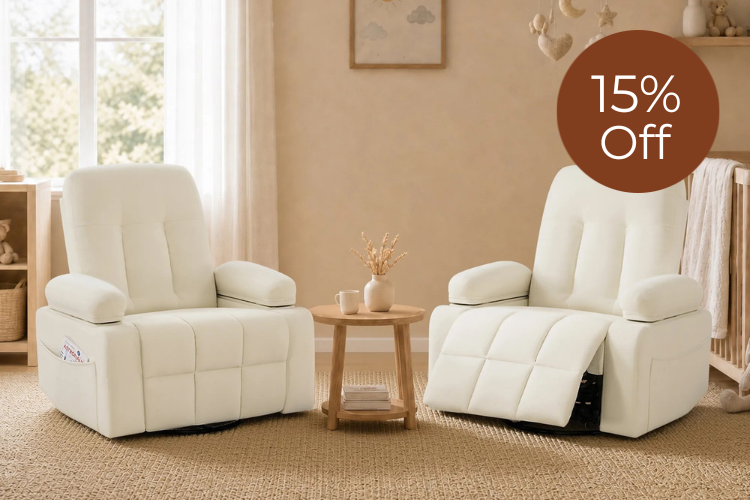
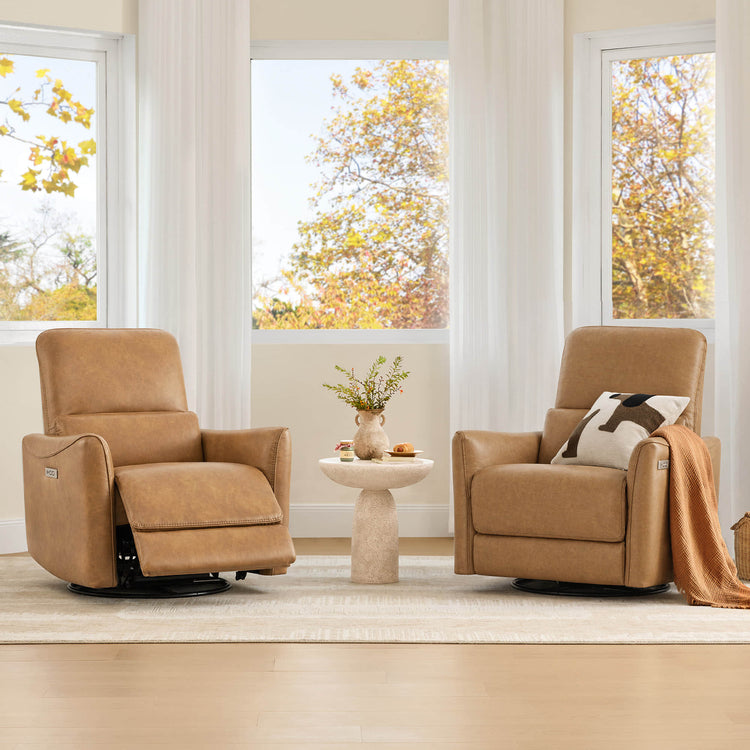
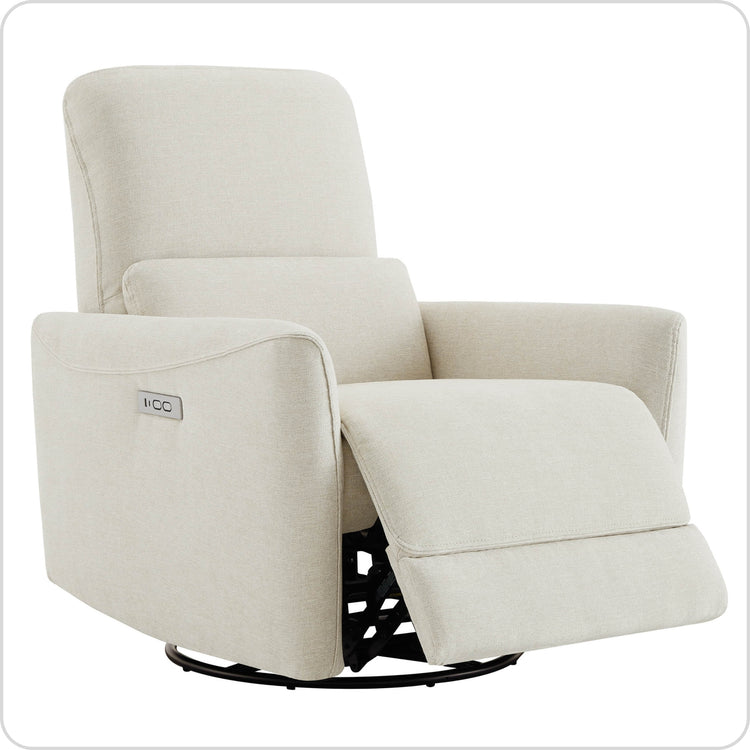
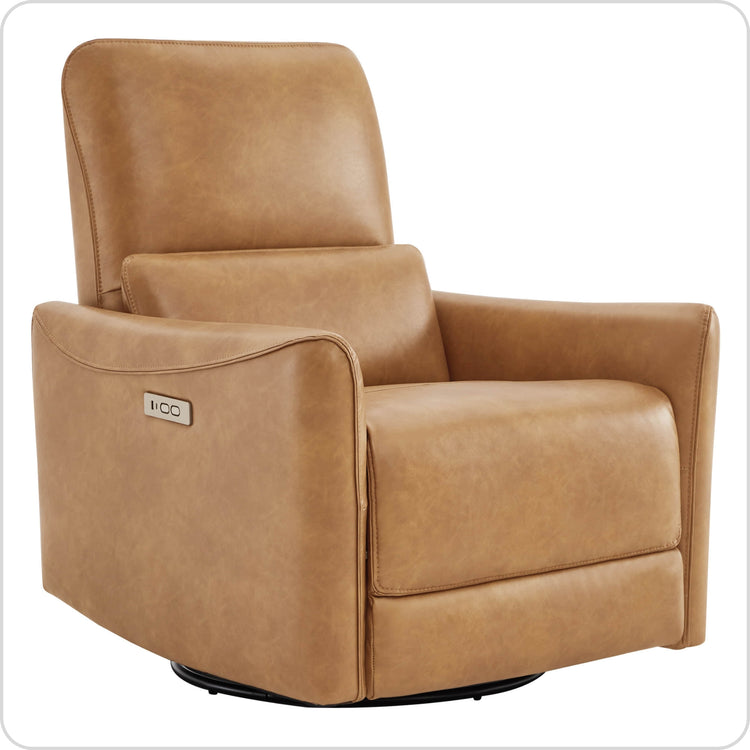
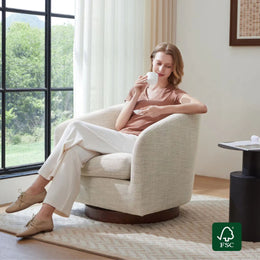
Our Tracee Power Swivel Nursery Glider Recliner and Lulla Power Swivel Nursery Glider Recliner with Power Headrest and Nightlight represent strong 2026 options for many parents seeking balanced quiet performance and easy-exit support. The Janice Power Swivel Nursery Glider Recliner with Power Headrest adds extra adjustability for longer sessions.
For broader inspiration on power features, read our article on hidden tech in the best power recliner models. Those exploring swivel versus rocking motion may also find value in recliner bases decoded. Parents furnishing during pregnancy often reference this nursery recliner comfort guide for early planning.
Are Power Recliners Practical for Nurseries in 2026?
Yes, modern power recliners with linear actuators and soft-start programming work well in nurseries when selected for noise levels around or below 50 dB (as a reference range) and appropriate seat height. They provide meaningful assistance during postpartum recovery but require verification of actual clearance and fabric maintenance needs.
How Can I Test Quietness Before Buying?
Ask retailers for motor type details and look for explicit soft-start/soft-stop mentions in specifications. While phone decibel apps can provide a rough showroom estimate, look for "linear actuator" language as a stronger indicator of engineering intent than generic "quiet motor" claims.
Do Greenguard Gold Chairs Guarantee PFAS-Free Construction?
No. Greenguard Gold primarily addresses VOC emissions. To ensure a PFAS-free environment, check for explicit "PFAS-free" labeling or opt for mechanical performance weaves that rely on construction rather than chemical repellents.
What Seat Height Works Best After a C-Section?
An 18–20 inch seat height generally provides better leverage for standing while holding a baby, reducing strain on healing abdominal muscles. Because individual height and core recovery differ, testing the "sit-to-stand" motion without using your hands is the best practical test.
How Much Wall Clearance Do Nursery Recliners Actually Need?
True zero-wall models can operate with as little as 4–6 inches, but many standard wall-hugger designs require 10–14 inches for full recline. Always confirm the "operational clearance" listed in the technical manual rather than relying on marketing terms.
Recommended Products

More to Read
 7 Sofa Trends That Actually Improve Comfort in 2026
Upgrade your living room with furniture that supports your body. Here are 7 modern sofa features designed to maximize your daily comfort...
7 Sofa Trends That Actually Improve Comfort in 2026
Upgrade your living room with furniture that supports your body. Here are 7 modern sofa features designed to maximize your daily comfort...
 Mother's Day Gift Guide: Cozy and Stylish Furniture Picks for Modern Moms
Make Mother's Day more meaningful with furniture gifts that bring comfort, smart features, storage, and quiet luxury into her everyday routine.
Mother's Day Gift Guide: Cozy and Stylish Furniture Picks for Modern Moms
Make Mother's Day more meaningful with furniture gifts that bring comfort, smart features, storage, and quiet luxury into her everyday routine.
 Performance Fabric Reality Check: Does It Really Repel Pet Hair and Stains?
Performance fabric is often marketed as a miracle solution for homes with pets and kids, but the reality is more nuanced. It...
Performance Fabric Reality Check: Does It Really Repel Pet Hair and Stains?
Performance fabric is often marketed as a miracle solution for homes with pets and kids, but the reality is more nuanced. It...