
























The 2026 Guide to Fully Assembled TV Stands & Storage
In 2026, a fully assembled TV stand delivers the fastest path to a clean, elevated living room by eliminating assembly frustration while prioritizing structural safety and proper electronics ventilation. Renters and busy homeowners who value immediate usability now treat factory-assembled media consoles as the default choice, provided they also address cable airflow and STURDY Act compliance.
Related Guides & Inspiration
- Mastering Minimalist Storage: Modern Sideboards for Open-Concept Homes
- Beyond the Screen: Expert Tips for Styling Your TV Stand and Media Console
- Finding the Perfect Proportion: How to Choose a Media Console for 75-Inch and 85-Inch TVs
- Sleek and Grounded: Why Low-Profile Media Consoles Are the Ultimate Minimalist Choice
- Banish the Tangle: How to Choose a TV Stand for Flawless Cable Management

Why Fully Assembled is the 2026 Standard for Hassle-Free Media Storage
Fully assembled TV stands transform your space the moment they arrive. You avoid the tools, instructions, and hours that flat-pack kits typically demand, letting you go from delivery to movie night in minutes. This convenience removes the primary barrier many people face when refreshing a living room.
Beyond time savings, factory joinery creates tighter seams and more consistent finishes than most home assembly can achieve. The result looks polished and intentional rather than pieced together. For style-conscious shoppers and first-time buyers, that ready-to-use quality delivers immediate satisfaction and a more elevated aesthetic.
A common pattern observed in urban living is that skipping assembly makes homeowners far more likely to actually complete a media-wall upgrade instead of postponing it indefinitely. The psychological lift of a finished room without leftover parts or mismatched panels is significant.
The Structural Case for Factory-Assembled Furniture and Safety
Modern TV stands and storage units must comply with the mandatory ASTM F2057-23 safety standard, which sets rigorous stability requirements to prevent tip-over accidents. This federal rule, often called the STURDY Act, applies to furniture that could hold a television.
Factory-assembled pieces gain an edge here because permanent glue-and-dowel joinery tends to maintain rigidity better than cam-lock systems after repeated stress. For households with children or heavy 75-inch and larger TVs, this structural integrity matters. Factory pieces arrive already quality-checked, reducing the chance that user error during assembly compromises stability.
Renters who move frequently especially benefit. Factory-assembled furniture is often described as moving-proof because the joints resist loosening over time. A rigid frame protects both the TV and your electronics from wobble or failure during relocation.
Anti-tip devices remain a standard safety inclusion on compliant media consoles. Always secure the unit to the wall according to manufacturer instructions, regardless of assembly method.
When assembly method becomes a safety threshold: Factory-assembled stands reduce the biggest hidden failure mode in ready-to-assemble furniture—improper tightening at critical load-bearing joints. For 2026 safety, the question is whether the stand will stay stable after real-world movement, not just on day one.
The Thermal Paradox: Choosing Cable Management That Doesn't Kill Your Console
Hiding cables creates a cleaner look, yet poor routing can raise component temperatures significantly due to blocked airflow. This thermal penalty can shorten the life of gaming consoles, streaming devices, and receivers stored inside enclosed cabinets.
The best fully assembled TV stands with cable management solve this by combining neat routing channels with ventilated back panels. Tiered or separated pathways keep power cords and signal cables from bundling tightly against intake or exhaust vents. Convection remains possible only when air can still move.
Look for designs that prioritize airflow safety rather than total concealment. A media console that appears tidy but traps heat will throttle performance or reduce hardware longevity. Ventilated backs and strategic cutouts matter more than completely invisible wiring.
Cable hiding only works if air can move: Integrated cable management helps only when it preserves convection paths. Airflow blockages from cables can lead to estimated temperature increases of nearly 10°F in restricted environments, so prioritize stands that keep both aesthetics and thermal safety in balance. This is especially important for high-heat devices like the PS5 or Xbox Series X.

Apartment-Friendly Media Storage: Maximizing Capacity in Small Spaces
Apartment living demands media storage that fits compact floor plans without dominating the room. For 65- to 85-inch TVs, a common rule of thumb is to choose a console roughly 1.2 to 1.5 times the TV width to maintain visual balance while providing enough surface and internal capacity.
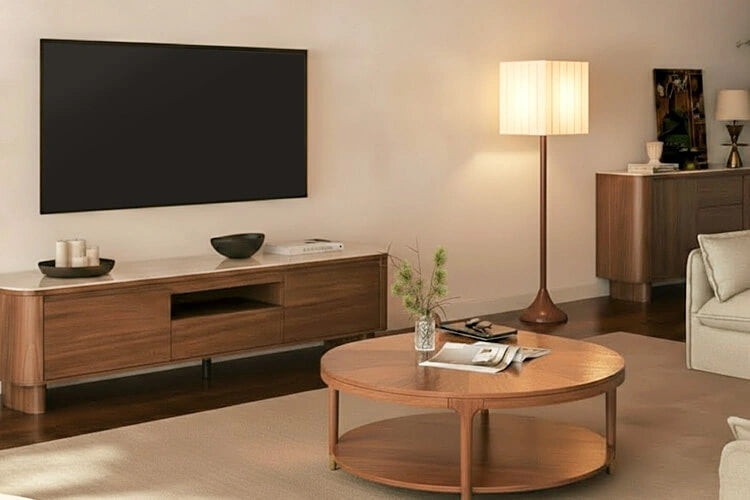
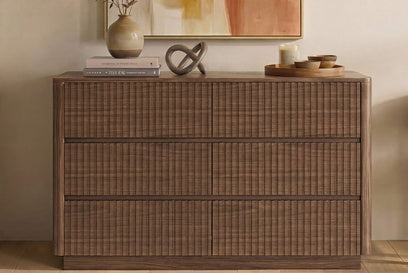
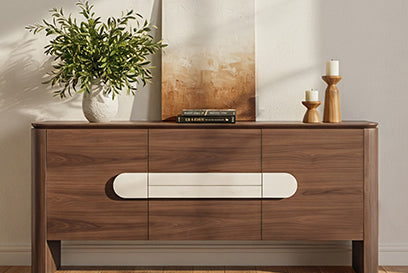
Sideboards and media consoles serve different needs. A deeper media console offers better accommodation for receivers and multiple devices, while a 70" Bowen Fluted Wood Sideboard provides versatile adjustable shelving for mixed storage. The 79" Samuel Rounded Panel TV Media Console strikes a balance with its rounded, softening details that keep the piece from feeling bulky in smaller rooms.
Low-profile and fluted designs help prevent a large TV from overwhelming the space. These styles maintain clean lines while hiding components effectively. Many renters find that one high-capacity, fully assembled unit replaces several smaller pieces, freeing up square footage and reducing visual clutter.
When selecting for an apartment, verify that the stand’s depth accommodates your specific electronics without forcing cables into tight bends that restrict airflow.
Decision Guide: How to Choose Your Perfect Ready-to-Use Media Console
Choosing the right fully assembled TV stand starts with three non-negotiable checks: STURDY Act compliance (or equivalent stability testing), adequate ventilation for your devices, and routing options that preserve airflow. Match storage depth to your actual electronics rather than chasing maximum capacity.
Consider your likely next move. Pieces built with permanent joinery tend to travel better and maintain their appearance longer, making them a stronger long-term investment for renters or those planning to relocate.
Which assembly and storage features match your specific room scale and device load?
Assembly and Storage Fit by Room Scale and Device Load
Use this tiered comparison to match assembly and storage features to the room and load profile, with safety and thermal management taking priority for 2026.
View chart data
| Category | Storage Capacity | Airflow Safety | Move-Readiness | TV Size Compatibility |
|---|---|---|---|---|
| Apartment / Light Load | 1.0 | 2.0 | 3.0 | 2.0 |
| Apartment / Moderate Load | 1.0 | 2.0 | 3.0 | 2.0 |
| Family Room / Light Load | 2.0 | 2.0 | 3.0 | 1.0 |
| Family Room / Heavy Load | 2.0 | 3.0 | 2.0 | 3.0 |
Built from planner guidance on STURDY Act compliance, factory-integrity assembly, cable-airflow clearance, anti-tip priorities, and scenario cards for apartment versus family room layouts.
This tiered view helps visualize how different room scales and device loads shift priorities. Apartment setups often favor higher move-readiness and balanced sizing, while family rooms with heavier loads benefit from superior airflow safety and capacity.
Chita Living’s 2026 lineup of fully assembled consoles, including the Samuel and Bowen collections, focuses on these exact trade-offs. Review your TV size, primary devices, and likely future moves before deciding. The right ready-to-use media console should improve your space immediately and continue performing safely for years.
FAQs
Are fully assembled TV stands worth the higher price?
They are when you value immediate usability, consistent factory finish, and reduced risk of structural loosening over time. The time and frustration saved, plus better long-term rigidity under heavy TV loads, often justify the investment for busy households and frequent movers.
How important is cable management in a fully assembled media console?
Cable management is essential for both appearance and device longevity. However, the best systems combine neat routing with ventilation so that hidden cables do not block airflow and raise temperatures.
What should I look for in an apartment-friendly TV stand?
Prioritize widths that suit your TV size without overwhelming the room, adequate depth for your electronics, and low-profile or softening design details. Fully assembled construction ensures you can place it immediately without tools.
Does every fully assembled TV stand meet the STURDY Act?
No. Always verify that the specific model complies with ASTM F2057-23 stability requirements and includes appropriate anti-tip hardware. Compliance is not automatic across all furniture.
Can a media console replace multiple smaller storage pieces?
Yes, especially high-capacity sideboards or wide consoles with adjustable shelving. One well-chosen unit often consolidates media, receivers, and general storage, freeing floor space in apartments and smaller homes.
How do I ensure my electronics stay cool inside a closed console?
Choose models with ventilated backs and avoid tightly bundling cables directly in front of vents. Leave some clearance and consider tiered routing that separates power and signal lines.
Is factory-assembled furniture truly more durable when moving?
Factory joinery generally maintains tighter connections through relocation compared with many ready-to-assemble cam-lock systems. This makes it a practical choice for renters who expect to move every few years.
Recommended Products


More to Read
 7 Sofa Trends That Actually Improve Comfort in 2026
Upgrade your living room with furniture that supports your body. Here are 7 modern sofa features designed to maximize your daily comfort...
7 Sofa Trends That Actually Improve Comfort in 2026
Upgrade your living room with furniture that supports your body. Here are 7 modern sofa features designed to maximize your daily comfort...
 Mother's Day Gift Guide: Cozy and Stylish Furniture Picks for Modern Moms
Make Mother's Day more meaningful with furniture gifts that bring comfort, smart features, storage, and quiet luxury into her everyday routine.
Mother's Day Gift Guide: Cozy and Stylish Furniture Picks for Modern Moms
Make Mother's Day more meaningful with furniture gifts that bring comfort, smart features, storage, and quiet luxury into her everyday routine.
 Performance Fabric Reality Check: Does It Really Repel Pet Hair and Stains?
Performance fabric is often marketed as a miracle solution for homes with pets and kids, but the reality is more nuanced. It...
Performance Fabric Reality Check: Does It Really Repel Pet Hair and Stains?
Performance fabric is often marketed as a miracle solution for homes with pets and kids, but the reality is more nuanced. It...