




























Interior designers working on mid-market residential projects in 2026 can capture high-spec quality and a bespoke look without the usual budget or timeline blowouts by treating manufacturing-direct sourcing as industrial arbitrage. This approach shifts focus from brand prestige to verifiable specs, modularity, and controlled risk, allowing you to deliver polished, durable rooms that align with client expectations and your project margins.

The strategy works best when you prioritize measurable thresholds over marketing language, standardize your bills of quantities early, and match modular paths to the specific speed and customization needs of each job. It breaks down when you chase unverified "cloud-like" comfort or accept vague lead-time promises without buffers.
The 2026 Industrial Arbitrage: Interior Designer Furniture Sourcing Reimagined
Industrial arbitrage in this context means leveraging manufacturing-direct models to secure contract-minded durability and tailored configurations at mid-market price points. Rather than relying on traditional wholesale markups or imported custom pieces with unpredictable delays, you act as a strategic procurer who verifies specs, controls variation through modularity, and minimizes fulfillment risk across multiple rooms.
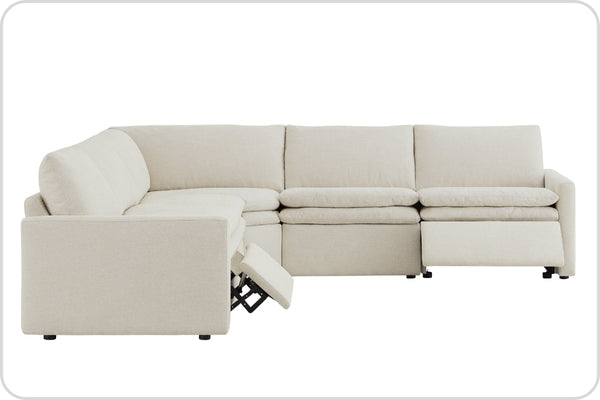
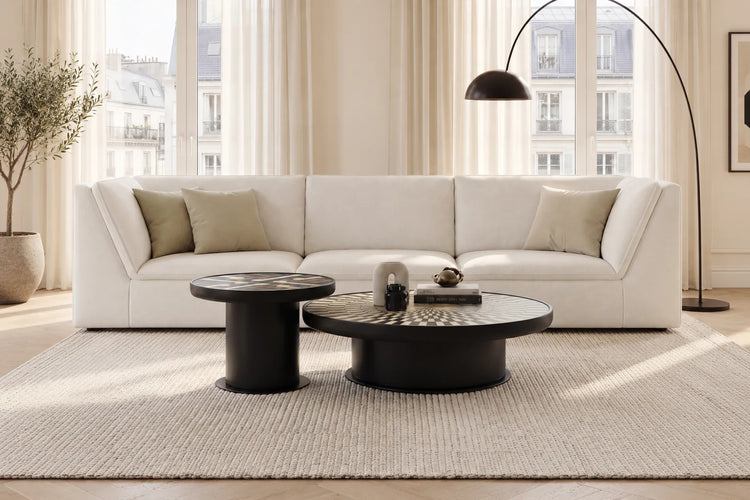
In 2026, this model has become a practical alternative for designers handling living rooms, family spaces, or open-concept projects on defined budgets. It emphasizes high-spec modular sofas and sectionals that offer repairability and flexibility instead of disposable fast furniture. The key is shifting your evaluation from aesthetics alone to performance data that predicts real-world longevity.
Designers who master this approach often reduce procurement friction and improve client satisfaction by delivering elevated results without premium pricing. However, it requires upfront spec verification and clear client communication about realistic timelines.
The High-Spec Threshold: Evaluating Spec Sheets for Longevity
When you cannot visit a showroom, your primary defense is translating spec sheets into pass-or-fail gates that protect project outcomes. Start with abrasion resistance: for high-traffic residential settings, fabrics with a minimum Martindale rub count of 30,000 provide a credible floor, while 40,000 to 60,000 rubs better support longevity in homes with pets or children.
Structural integrity matters more for seating that sees daily use. Commercial-grade testing to ANSI/BIFMA standards, typically involving 250,000 to 500,000 cycles, offers a professional safety net that exceeds standard residential testing by a wide margin. This difference often separates pieces that maintain support after two years from those that soften prematurely.
Two common red flags deserve close attention. First, the slouch trap: sofas marketed as cloud-like frequently use lower-density foam that looks inviting in photos but may compress and lose shape under repeated use, making them a poor primary seating choice for family rooms or workspaces. Second, the maintenance illusion: many performance fabrics are labeled Code S (dry-clean only) despite marketing claims; always confirm washable specifications in writing to avoid costly upkeep surprises.

For most mid-market projects, the safest filter is to require Martindale 30k+, BIFMA-level structural data where available, and explicit care instructions. Pieces that fail any of these checks are usually better ruled out early, even if they photograph beautifully. See our companion resource on Spec-Sheet Savvy: How to Compare Furniture Engineering Like a Pro for a deeper checklist.
Protecting Project Timelines: Lead-Time Reliability and Fulfillment Risk
Lead-time uncertainty remains one of the largest risks in 2026 sourcing. Stocked or quick-ship items typically arrive in 2 to 4 weeks, while domestic custom upholstery often requires 8 to 16 weeks and imported made-to-order pieces can stretch to 12 to 24 weeks. These ranges, drawn from industry benchmarks, help set client expectations before commitments are made.
The most effective protection is standardization. Create a detailed Bill of Quantities (BOQ) with exact dimensions, finishes, and references at the proposal stage. This reduces mismatch errors and simplifies factory communication. In a manufacturing-direct relationship, insist on pre-shipment quality control at the production facility rather than discovering issues after delivery to the job site.
Client conversations should include explicit buffers: add two to four weeks beyond published estimates for high-spec modular orders. When a project demands immediate installation, limit selection to stocked modular components rather than hybrid or fully custom options. This sourcing risk mitigation guide outlines additional practical steps that many studios now embed in their workflows.
The setup breaks down when designers accept verbal promises instead of written timelines or fail to align the client's urgency with the chosen path. In those cases, even a strong spec sheet cannot prevent schedule slippage or strained relationships.
Modular Customization Secrets: Achieving a Bespoke Look on a Budget
Modularity functions best as controlled variation rather than pure speed. By combining standard components in site-specific arrangements, you can create unique configurations that appear custom without triggering full bespoke lead times. This approach also improves long-term repairability, making modular systems a strong anti-fast-furniture choice.
Three practical paths usually cover most 2026 mid-market projects:
- Fast (Stocked): 2–4 week delivery with limited configuration options. Ideal for tight timelines but lower customization depth.
- Balanced (Hybrid): 8–16 weeks with selective custom finishes on stocked bases. This path often delivers the best compromise between distinctive appearance and schedule reliability.
- Full Custom: 12–24 weeks reserved for projects where non-standard dimensions are truly non-negotiable.
The chart below clarifies how these paths typically trade off in real designer workflows.
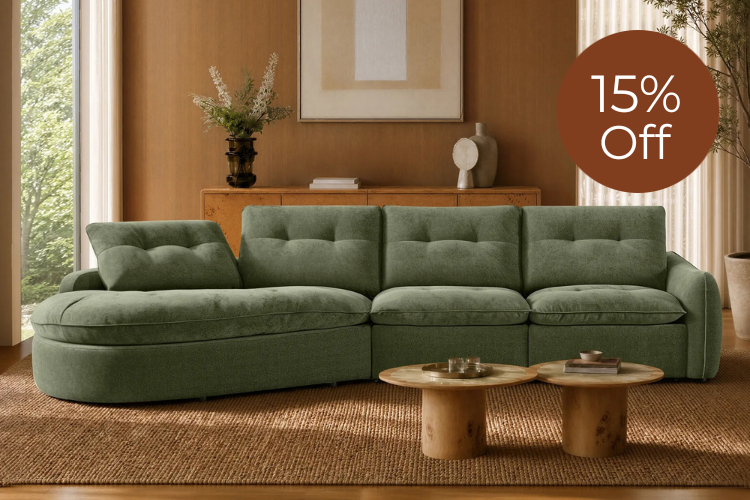
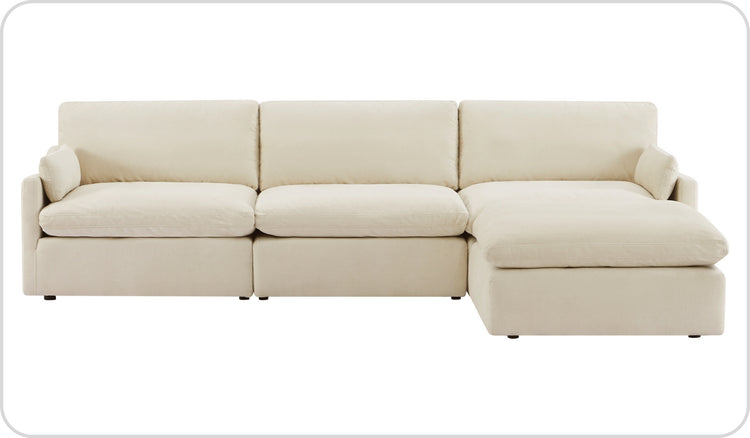
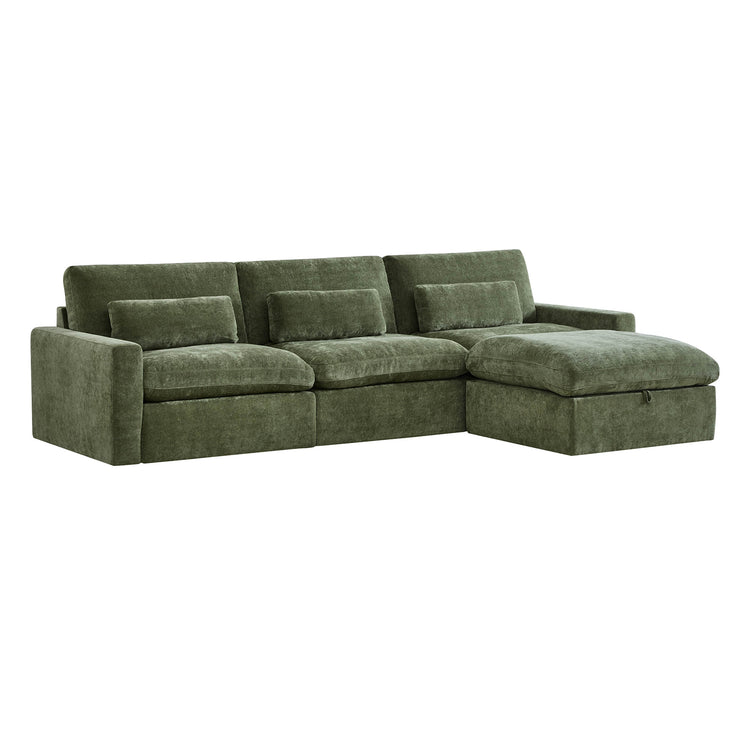
Hybrid configurations frequently provide the highest value for living room bundles or multi-room packages because they balance visual interest with manageable procurement complexity. Explore options like the Josie Modular Collection or Kenna Modular Collection as starting points, then verify exact specifications against your project thresholds. Additional ideas appear in The Designer's Secret: Using Modular Systems for a Bespoke Aesthetic and The Repairability Index: Why Modular is the Ultimate Anti-Fast Furniture.
Maximizing the Trade Ecosystem: Discounts, Samples, and Support
A well-structured trade program in 2026 typically provides 20% to 50% discounts off retail, tax exemption on qualifying orders, volume pricing, and concierge logistics for multi-room deliveries. These advantages become especially powerful when you consolidate purchases through living room bundles that coordinate sofas, sectionals, and accent pieces.
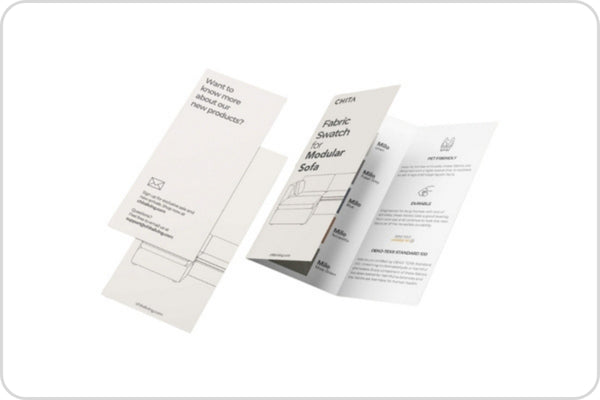
The sample-to-spec workflow remains essential. Ordering physical swatches lets you evaluate texture, color accuracy, and performance under actual lighting conditions before committing to larger quantities. Dedicated account support can further streamline approvals and coordinate deliveries across trades.
For many studios, the combination of trade pricing and modular flexibility turns mid-market budgets into high-spec outcomes. Review current options in the Performance Fabric collection or Living Room Bundles to see how these benefits apply in practice. Our overview of The Smart Alternative: Why High-Spec Furniture Costs Less in 2026 provides additional context on capturing these efficiencies.
The 2026 Designer’s Sourcing Checklist
Translate the playbook into immediate action with this five-step verification process before finalizing any order:
- Spec Verification: Confirm Martindale 30k+ for fabrics and seek ANSI/BIFMA cycle data where available.
- Maintenance Audit: Require explicit washable or easy-care instructions; avoid assuming performance equals easy cleaning.
- Timeline Buffer: Match the path (stocked, hybrid, or custom) to your install date and add a realistic contingency.
- Configuration Strategy: Use modular components for controlled variation rather than defaulting to fixed or fully bespoke pieces.
- Trade Advantage: Verify applicable discounts, tax status, sample access, and account support before signing.
Apply this checklist early in the proposal phase. It helps you rule out attractive but unsuitable options and protects both your margins and your client relationships. For family-oriented projects, cross-reference guidance from The 2026 Guide to Family-Proof Modular Sectionals.
How Do Trade Programs for Interior Designers Actually Work in 2026?
Trade programs generally require an application that verifies your professional credentials. Once approved, you gain access to net pricing, the ability to order samples at reduced cost, and support for tax-exempt purchases when you provide a resale certificate. The practical advantage is the ability to test multiple fabrics or configurations on a single project without inflating client invoices. Always confirm whether the program charges restocking fees and what documentation is needed for each order.
What Lead Time Should I Quote Clients for High-Spec Modular Sofas?
Quote 4 to 8 weeks for stocked modular configurations and 10 to 18 weeks when hybrid customization is required. These ranges give you a buffer while remaining competitive. The critical rule is to select the path that matches the client's move-in date before presenting options. If the client needs delivery in under six weeks, restrict choices to in-stock items and clearly state that bespoke finishes will not be possible.
How Can I Tell if a Modular Sofa Will Hold Up in a High-Traffic Residential Project?
Look past marketing terms and check the published Martindale rating and foam density specifications. A minimum of 30,000 rubs combined with high-resilience foam (typically 2.0 lb/ft³ or higher where disclosed) provides reasonable confidence for daily family use. Request wear-test reports or third-party summaries when available. Sofas lacking these details often underperform after the first year regardless of initial appearance.
Is Modular Furniture More Cost-Effective Than Traditional Custom Pieces for Mid-Market Projects?
Modular systems usually prove more cost-effective because they reduce manufacturing complexity and allow replacement of individual components rather than entire frames. The savings become clearest on multi-room projects where you can standardize bases while varying covers or accessories. The exception occurs when a project demands highly irregular dimensions that no standard module can accommodate; in those narrow cases, traditional custom may still be required despite longer lead times and higher unit costs.
What Should I Check Before Ordering Performance Fabric for Client Projects?
Always verify the exact cleaning code in the technical data sheet rather than relying on the "performance" label. Many fabrics marketed as easy-care still require dry-cleaning only. Cross-check abrasion ratings against the expected traffic level and request lightfastness data if the room receives direct sunlight. This quick audit prevents the most common sources of post-installation complaints and costly replacements.
Recommended Products




More to Read
 7 Sofa Trends That Actually Improve Comfort in 2026
Upgrade your living room with furniture that supports your body. Here are 7 modern sofa features designed to maximize your daily comfort...
7 Sofa Trends That Actually Improve Comfort in 2026
Upgrade your living room with furniture that supports your body. Here are 7 modern sofa features designed to maximize your daily comfort...
 Mother's Day Gift Guide: Cozy and Stylish Furniture Picks for Modern Moms
Make Mother's Day more meaningful with furniture gifts that bring comfort, smart features, storage, and quiet luxury into her everyday routine.
Mother's Day Gift Guide: Cozy and Stylish Furniture Picks for Modern Moms
Make Mother's Day more meaningful with furniture gifts that bring comfort, smart features, storage, and quiet luxury into her everyday routine.
 Performance Fabric Reality Check: Does It Really Repel Pet Hair and Stains?
Performance fabric is often marketed as a miracle solution for homes with pets and kids, but the reality is more nuanced. It...
Performance Fabric Reality Check: Does It Really Repel Pet Hair and Stains?
Performance fabric is often marketed as a miracle solution for homes with pets and kids, but the reality is more nuanced. It...