
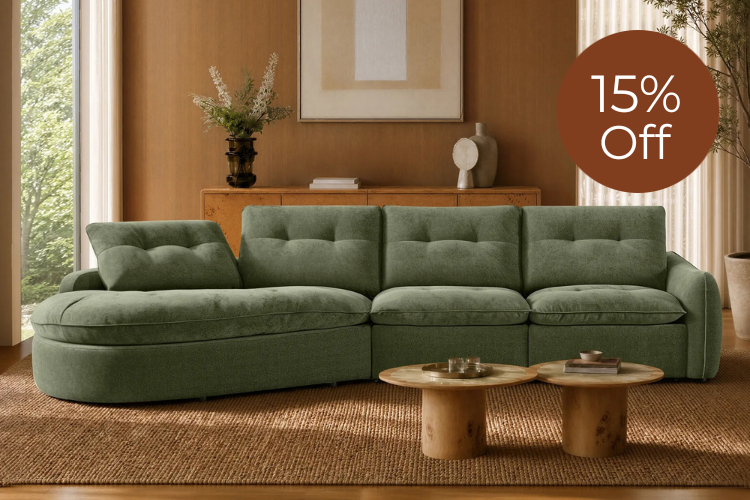























Are modular sectional sofas Worth It for multi-generational homes?

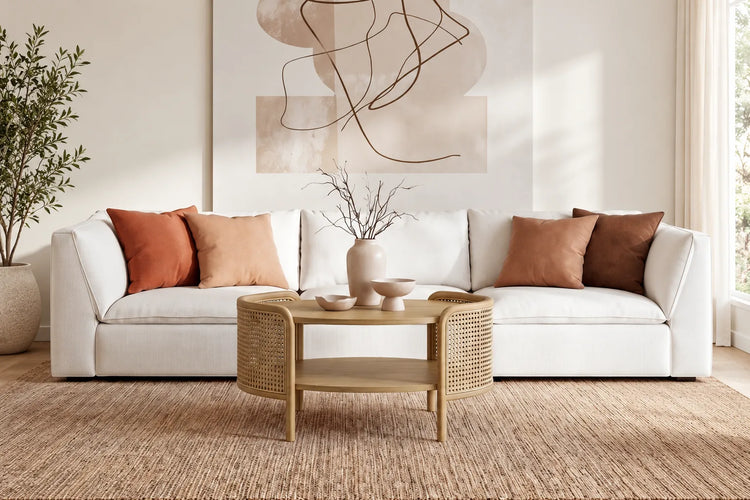
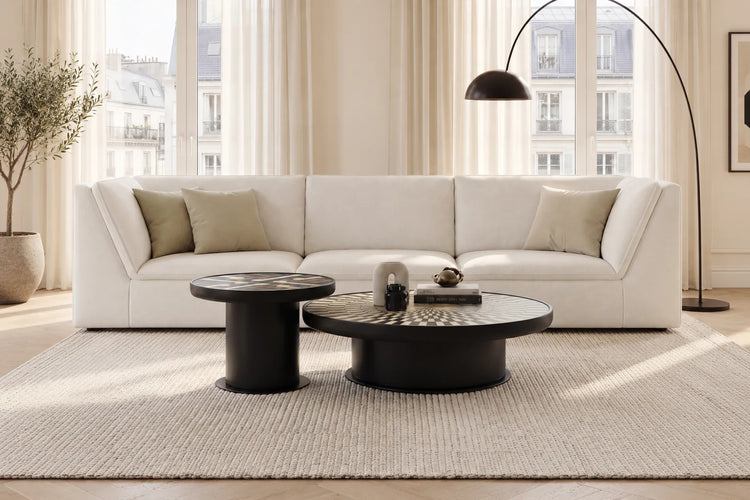
A modular sectional sofa is often worth it for multi-generational homes when the room has to do more than one job, but it is not the best choice for every family. If your seating needs change often, a modular layout can reduce crowding, reconfiguring, and premature replacement. If your room stays stable and you want the simplest setup, a fixed sectional may be easier to live with.

Why Multi-Generational Homes Need Flexible Seating
Multi-generational living is no longer a niche setup. The U.S. Census Bureau says 7.2% of family households were multigenerational in 2020, and Pew Research has found that young adults are much more likely than they were 50 years ago to live in multigenerational households. That matters because one living room now has to serve more ages, more routines, and more overlap.
In real life, that usually means the sofa must handle TV time, toddler play, senior support, and guest overflow without making the room feel crowded. A fixed sofa can do one layout well, but it cannot expand, split, or reshape itself when the household changes. A modular sectional is more useful when the room needs to flex week by week, not just look good on move-in day.
This is why the question is not simply, "Do modular sectionals look modern?" It is, "Will one purchase solve more than one seating problem over the next few years?" If the answer is yes, the higher upfront price can make more sense. If the household is stable and the room rarely changes, that flexibility may not be worth paying for.
For a deeper planning lens, the 2026 co-living layout guide looks at circulation, seat height, and layout zoning for shared homes.
What Makes a Modular Sectional Different
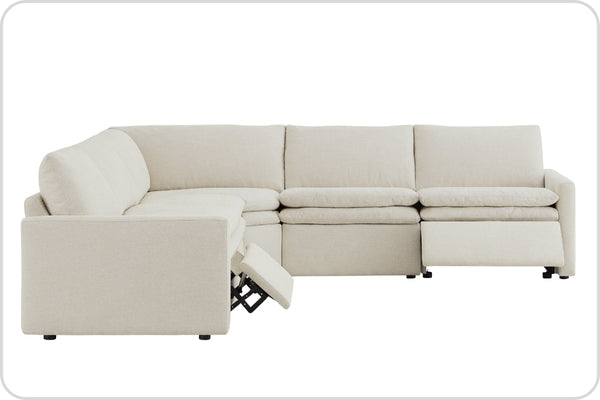
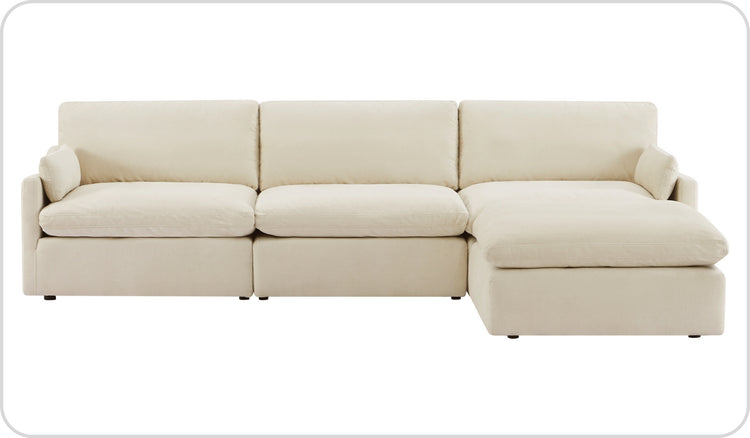
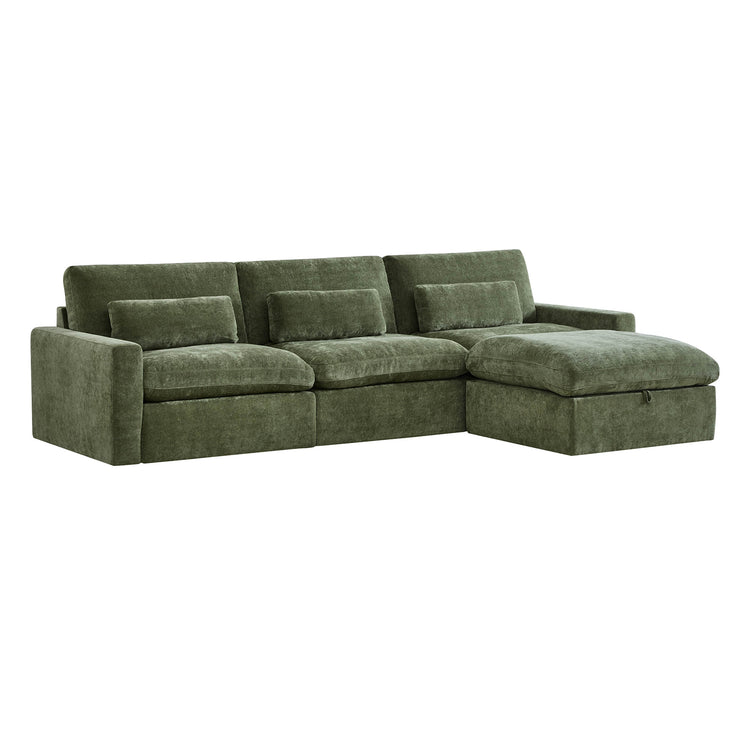
A modular sectional is built from separate pieces that can be rearranged instead of staying locked into one shape. That is the core difference from many traditional sectionals. You are not buying one fixed footprint; you are buying a seating system that can be adjusted as the room changes.
Pieces That Reconfigure With the Room
For a multi-generational home, this matters when the room has to switch between open floor space and deeper lounge seating. You may want a more open arrangement during the day, then a larger setup for family movie night. Modular pieces make those transitions easier than a fixed L-shape that always occupies the same space.
Adding or Removing Seats as Life Changes
The biggest value is not novelty. It is the ability to grow or shrink the seating plan as people come and go. That can be especially useful if adult children move back in, grandchildren visit often, or the room is expected to change within the next few years.
Chaise, Corner, and Ottoman Options
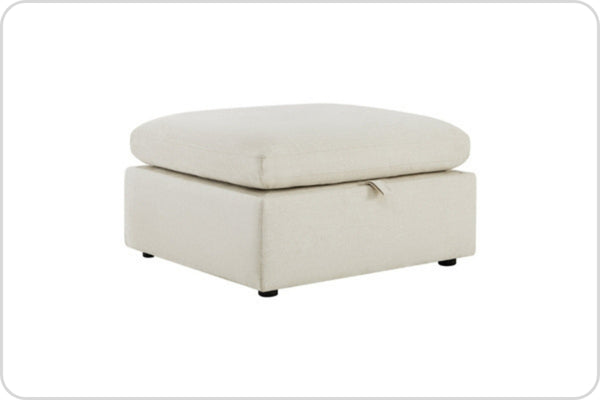
A modular sectional is also useful because the same basic system can be built with different pieces. A chaise can create a place to stretch out, corner pieces can help define the room, and ottomans can add flexible seating or a footrest. That versatility is why some families prefer it over a single fixed silhouette.
If you want a fuller breakdown of the connection system itself, see How to Join Modular Couches. It is a useful follow-up if you are worried about pieces shifting or not staying aligned.
Benefits That Matter in Shared Living Spaces
The strongest benefits are practical, not decorative.
- Reconfigurable seating: Helps one room handle everyday use and larger gatherings without adding a second sofa.
- Performance fabric: Can make cleanup easier in homes with toddlers, snacks, pets, or heavy daily traffic. The performance fabric guide is worth reading if you want to compare upholstery types before buying.
- Storage ottomans or hidden compartments: Can help when toys, blankets, remotes, and chargers pile up quickly.
- More even use patterns: A modular layout can spread out pressure and traffic across more seating zones, which may help the sofa feel less cramped in daily use.
One practical upside is that modular seating can reduce the "furniture domino effect." If one person wants to nap, another wants to sit upright, and a child wants floor space, the room can often be reshaped instead of feeling overfilled. That is the sort of everyday friction a shared living room either handles well or handles badly.
If shifting seats and gaps are a concern, the zero-gap sectional guide is a useful companion piece.

Where the Trade-Offs Show Up
Modular sectionals are not automatically better. They are better in specific situations, and that boundary matters.
| Factor | Modular Sectional Advantage | Standard Sectional Advantage | Best Fit For |
|---|---|---|---|
| Flexibility | Can change with the room | Fixed shape is simpler | Households that change often |
| Initial Cost | More adaptable, but often pricier | Usually simpler to buy | Buyers focused on lower upfront spend |
| Space Efficiency | Can be reworked for different layouts | Easier to plan around one footprint | Rooms with a stable layout |
| Guest Seating | Easier to expand for overflow | Works if guest needs are modest | Homes with regular visitors |
| Maintenance | Pieces can be easier to move or replace | Fewer moving parts | Buyers who prefer a simpler setup |
| Style Consistency | Useful, but less visually fixed | Clean, consistent silhouette | Formal rooms or static layouts |
| Long-Term Value | Strong if household needs evolve | Good if needs stay steady | Buyers thinking beyond one stage |
The trade-off is simple: modular wins when your home changes, while a fixed sectional wins when consistency matters more than flexibility. That is the key decision sentence. If your household size, seating needs, or room function is likely to change, modular is the safer long-term bet. If the room is mostly static, the added complexity may not pay off.
A second decision sentence is just as important: if you need a sofa that looks polished and stays in one place, a fixed sectional may fit better. A modular sectional is worth it when the room must adapt, not when the room is already solved.
For shoppers comparing styles and layouts, the sectional vs. modular sofa guide is a useful internal comparison point.
How to Decide If It Is Worth It
Use this as a quick filter before you buy.
- Map normal-day use versus peak use. Count how many people use the room most evenings, then compare that with holiday weekends or family visits.
- Check how many jobs the sofa must do. Lounging, napping, kid play, and guest seating all point toward modular flexibility.
- Measure the biggest and smallest layouts. A modular sectional only works if both versions fit the room comfortably.
- Match materials to daily wear. If the home sees heavy traffic, spills, or lots of moving around, the upholstery choice matters as much as the frame.
- Compare flexibility against extra cost. If the household is likely to change, the extra cost can be easier to justify. If not, simpler seating may be the smarter buy.
A useful not-a-fit filter: do not pay for modular construction if you already know the sofa will stay in one shape for years and the room is not expected to change. In that case, you are buying flexibility you may never use.
If you are browsing options after that check, the Sofas collection is the broadest place to start, while the Best Selling Sofas collection is a practical shortcut for narrowing the field.
If you want a more future-proof design angle, the modular living manifesto is helpful for thinking through long-term room planning.
Best-Fit Scenarios and Final Takeaway
Best for Growing or Changing Households
A modular sectional sofa makes the most sense when the household is likely to add, lose, or reshuffle members over time. That includes families with adult children moving in and out, grandparents staying long term, or rooms that need to shift from play space to lounge space.
Best for Frequent Guests and Holiday Gatherings
It also makes sense when the living room has to absorb extra people without forcing a second purchase. If you often need overflow seating, modular pieces are easier to expand or rework than a fixed sofa.
Less Ideal for Very Small or Highly Formal Rooms
If the room is tiny, highly symmetrical, or rarely used for anything beyond one purpose, the flexibility may be more than you need. In that case, a fixed sectional can be the simpler and cleaner choice.
The short answer is this: a modular sectional sofa is worth it when flexibility protects you from future furniture regret. If your household changes often, it is a smart investment. If your seating needs are stable, keep the simpler layout and save the extra money.
Related Resources
- Exploring the Versatility of Modular Sofas: A Comprehensive Overview
- Decoding Upholstery Standards: The 2026 Guide to Performance Fabric Durability
FAQs
Q1. How Do You Know If a Modular Sectional Sofa Is Worth It?
It is usually worth it when your household size or room use changes often. If the same living room has to handle daily lounging, grandkids, guests, or napping, modular flexibility can reduce crowding and make the furniture useful for longer.
Q2. What Is the Biggest Advantage of a Modular Sectional Sofa in a Family Home?
The biggest advantage is reconfiguration. You can change the layout as your needs change instead of replacing the whole sofa. That is especially useful in homes where seating has to shift between everyday life and larger gatherings.
Q3. Can a Modular Sectional Sofa Work in a Small Living Room?
Yes, if you measure carefully and keep the layout proportional to the room. The main mistake is choosing too many pieces for a tight space. In a small room, modular works best when you use the flexibility to simplify the setup, not crowd it.
Q4. Why Does Performance Fabric Matter for Multi-Generational Homes?
Performance fabric matters because shared homes usually see more daily wear, more snacks, and more mixed-use activity. It can make routine cleanup easier and reduce the stress of keeping a busy room presentable, though it is not a substitute for normal care.
Q5. What Should You Check Before Buying a Modular Sectional Sofa?
Check the room size, how many people use the space on a normal day, how often visitors stay over, and whether the layout will still work if the room changes. Also confirm the care routine fits your household, because a flexible sofa still needs practical maintenance.
Recommended Products


More to Read
 7 Sofa Trends That Actually Improve Comfort in 2026
Upgrade your living room with furniture that supports your body. Here are 7 modern sofa features designed to maximize your daily comfort...
7 Sofa Trends That Actually Improve Comfort in 2026
Upgrade your living room with furniture that supports your body. Here are 7 modern sofa features designed to maximize your daily comfort...
 Mother's Day Gift Guide: Cozy and Stylish Furniture Picks for Modern Moms
Make Mother's Day more meaningful with furniture gifts that bring comfort, smart features, storage, and quiet luxury into her everyday routine.
Mother's Day Gift Guide: Cozy and Stylish Furniture Picks for Modern Moms
Make Mother's Day more meaningful with furniture gifts that bring comfort, smart features, storage, and quiet luxury into her everyday routine.
 Performance Fabric Reality Check: Does It Really Repel Pet Hair and Stains?
Performance fabric is often marketed as a miracle solution for homes with pets and kids, but the reality is more nuanced. It...
Performance Fabric Reality Check: Does It Really Repel Pet Hair and Stains?
Performance fabric is often marketed as a miracle solution for homes with pets and kids, but the reality is more nuanced. It...