




















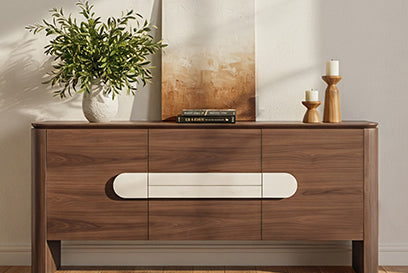









The 2026 Storage Specification: Comparing Internal Joinery and Load-Bearing Capacity in Sideboards

Not every sideboard can safely support heavy stoneware dinnerware, stacked books, or AV equipment without eventually sagging or loosening. In 2026, the real difference between lasting furniture and short-lived pieces comes down to published load capacity specs, internal joinery quality, and whether the unit arrives fully assembled rather than in flat-pack form. Prioritizing these structural details over styling helps avoid the common regret of shelves that look fine at first but develop visible deflection or racking within a few years.

Why Sideboard Load Capacity and Structural Integrity Matter in 2026
Appearance alone cannot reliably predict how well a sideboard will perform under real-world weight. Many units marketed for dining rooms look substantial yet rely on thin particleboard shelves or basic fasteners that degrade under sustained loads. This creates the industrial arbitrage opportunity: a higher-spec, fully assembled sideboard often delivers better lifetime value because it resists the material creep that causes gradual sagging.
Material creep refers to the slow additional deflection that occurs in wood and engineered panels when a constant load is applied over years. According to technical guidance from the Composite Panel Association, initial sag in particleboard or MDF shelving can increase by an additional 50% over a 5- to 10-year period under constant load. This is why a shelf rated for 50 pounds per square foot may eventually show visible bowing when holding heavy stoneware or tech stacks.
The gap between light display use (decorative items) and heavy storage (dense dinnerware or stacked electronics) further widens the decision. Light-duty pieces may suffice for occasional vases, but heavy storage demands stronger joinery and thicker, shorter-span shelves to maintain stability. For more on why high-spec choices often prove more economical long term, see our guide to why high-spec furniture costs less in 2026.
Decoding the Specification: How to Read Shelf Ratings and Deflection Limits
Shelf load ratings and deflection limits translate engineering tests into practical buying signals. The primary industry benchmark is ANSI/BIFMA X5.9, which sets rigorous requirements for structural adequacy and stability in storage units. When a manufacturer references compliance with this standard, it signals the piece has passed standardized tests for safety and performance rather than relying on marketing claims alone.
A key metric to watch is the L/360 deflection limit. Furniture engineering typically targets this threshold, meaning the shelf should not sag more than 1/360th of its span under expected load. For a 36-inch shelf, that equates to no more than about 0.1 inch of deflection before the sag becomes noticeable. Look for this value or equivalent testing notes in detailed spec sheets; its absence often indicates lighter-duty construction.
Load geometry also matters. A uniform load spreads weight evenly across the shelf surface, while a point load concentrates force in one area—such as a tall stack of ceramic plates or a heavy receiver. The latter creates significantly more stress. Conservative engineering practice therefore treats published uniform-load ratings as a starting baseline only.
This chart helps visualize the creep gap that develops over a decade:
Shelf Creep Gap Over 10 Years
Shows how long-term sag can widen beyond the initial deflection when creep and concentrated loads are considered. The visual uses tiered ranges to compare short-term and 10-year behavior against the L/360 visible-sag line.
View chart data
| Scenario | Low load | Moderate load | Heavy load | Concentrated heavy load |
|---|---|---|---|---|
| Initial deflection | 1.0 | 2.0 | 3.0 | 4.0 |
| 10-year sag | 2.0 | 3.0 | 4.0 | 4.0 |
| Visible sag threshold (L/360) | 2.0 | 3.0 | 4.0 | 4.0 |
For heavy stoneware storage, treat the listed rating as a ceiling and apply a practical derating of roughly 30-50% when planning for 10-year performance. This accounts for both creep and the higher stress of point loads. Shelves that stay well below the L/360 line in these adjusted conditions are far less likely to develop visible sag or compromise cabinet stability.
Internal Joinery Comparison: From Dovetails to Hybrid RTA Systems
The hidden strength of a sideboard lies in its internal joinery. Traditional dovetail joints interlock drawer and frame components with mechanical strength that resists pulling apart under load. Industry comparisons indicate dovetails can provide approximately 30% higher tensile strength than standard dowel joints, particularly in high-stress drawer applications.
Dowel joints, while common and cost-effective, rely on glue and precise alignment. They perform adequately for lighter use but can loosen over time when subjected to repeated opening, heavy contents, or racking forces. Hybrid ready-to-assemble (RTA) systems improve on basic dowels by combining cam-lock hardware with wooden dowels, offering better shear stress distribution—often cited as up to 40% stronger than dowels alone in comparative testing.
For demanding storage, dovetail construction in both drawers and structural frames remains the premium choice. It delivers superior racking resistance and long-term rigidity. The Renee Scandinavian sideboard and Megan reclaimed fir sideboard both exemplify this high-spec approach, using robust joinery and solid-wood elements that support heavier loads without relying solely on fasteners.
In contrast, purely cam-lock flat-pack designs can experience fastener fatigue under sustained heavy use. The decision split is therefore straightforward: choose dovetail or high-quality hybrid joinery when storing dense items; hybrid RTA may suffice for lighter decorative display where ease of delivery is prioritized over decades of service.

Fully Assembled vs. Flat-Pack: The 2026 Durability and Longevity Gap
Assembly method directly affects long-term structural integrity. Fully assembled sideboards benefit from factory-controlled joinery, tighter tolerances, and pre-applied adhesives or fasteners that reduce the risk of racking during transport and daily use. This construction typically supports heavier loads with less movement over time.
Budget flat-pack units often depend on consumer assembly and cam-lock or similar mechanical fasteners. While convenient for moving or first apartments, these systems can develop play in the joints after years of heavy storage, leading to doors that no longer align or shelves that feel less stable. Comparative signals suggest fully assembled units with traditional joinery tend to maintain performance far longer than entry-level flat-pack under similar conditions.
The practical trade-off in 2026 is clear. When longevity beyond 10–15 years is the goal, the premium for a factory-assembled piece like the Bryan solid wood sideboard or Ethan tall display cabinet usually pays off through reduced replacement frequency and better resistance to joint fatigue. For transitional living or frequent moves, a well-specified hybrid RTA unit can still deliver acceptable durability if loads remain moderate.
Readers comparing options may also want to review the 2026 guide to fully assembled TV stands and storage for related insights on structural advantages, or explore sideboard versus buffet differences when sizing storage for dining rooms.
How to Calculate Your Real-World Storage Needs Before You Buy
Begin with an honest inventory of what you will actually store. A typical 12-piece stoneware dinner set weighs roughly 25–35 pounds; add serving platters or stacked bowls and the total per shelf can easily reach 40–60 pounds in a concentrated area. Tech stacks—receivers, routers, and gaming consoles—add both weight and potential heat that may accelerate material aging in some engineered panels.
Apply the creep trap adjustment: if a shelf is rated for 50 pounds uniform load, plan for no more than 25–35 pounds of real-world point-loaded stoneware to keep long-term deflection comfortably below the visible-sag threshold. This 30–50% derating acts as a conservative rule of thumb rather than a precise engineering formula, but it helps prevent the common disappointment of shelves that bow noticeably after a couple of years.
Distinguish between static shelves and high-traffic drawers. Drawers experience repeated shear and pull forces, making robust dovetail construction especially valuable. Shorter shelf spans and thicker stock also improve resistance to sag regardless of joinery type. By running these simple calculations before purchase, you translate abstract ratings into a personalized safe capacity that matches your actual habits.
Final Checklist: Verifying Structural Proof in a High-Spec Sideboard
Use this practical checklist to evaluate any sideboard before buying:
- Confirm explicit reference to ANSI/BIFMA X5.9 or equivalent structural testing in the product documentation.
- Look for mentions of dovetail drawers, mortise-and-tenon framing, or hybrid RTA with wooden dowels rather than generic “solid wood” claims.
- Prioritize factory-assembled construction for maximum racking resistance, especially if the unit will hold heavy or uneven loads.
- Check shelf thickness, material, and maximum span; shorter spans with thicker panels resist deflection better under both uniform and point loads.
- Verify adjustable shelf pins or supports are robust and that the overall cabinet depth and height do not create excessive leverage on joints.
Applying this list shifts the decision from style and price to verifiable engineering. A sideboard that meets most of these criteria is far more likely to deliver stable, sag-free performance for heavy storage over the long term.
FAQs
What Does a Sideboard Load Capacity Rating Actually Mean?
A published load capacity usually reflects short-term uniform loading under controlled test conditions. It does not automatically account for long-term creep, point loads from stacked stoneware, or repeated drawer use. Treat the number as a conservative ceiling and derate it 30–50% for 10-year planning to stay well below visible sag thresholds.
Are Dovetail Joints Worth the Premium in a Sideboard?
For heavy or frequently accessed storage, yes. Dovetails offer approximately 30% higher tensile strength than basic dowel joints and resist pulling apart under lateral stress. This makes them a practical upgrade for drawers that will hold dense dinnerware or serve as high-traffic storage, reducing the likelihood of loosening over time.
How Much Weight Can a Typical Sideboard Shelf Hold Safely?
Safe capacity depends on span, thickness, material, and load type. A well-engineered shelf might list 40–60 pounds per square foot uniformly distributed, but real-world point loads from stoneware stacks require derating. Aim to stay at or below 50–60% of the stated rating for long-term, sag-free performance.
Does Fully Assembled Construction Last Longer Than Flat-Pack?
Factory-assembled units generally maintain better joint integrity and racking resistance because tolerances are controlled in a production setting. Budget flat-pack with cam-lock systems can perform adequately for lighter use but often shows faster fastener fatigue under heavy, sustained loads. Choose assembled construction when multi-decade service is the priority.
What Is the L/360 Deflection Limit and Why Does It Matter?
L/360 is an engineering guideline that limits shelf sag to no more than 1/360th of its span under load. For a 36-inch shelf this means roughly 0.1 inch maximum deflection before the bow becomes noticeable. Sideboards that meet or exceed this standard under expected loads are less likely to develop visible sagging that affects appearance or door alignment.
Should I Avoid Sideboards Without BIFMA Certification?
Certification to ANSI/BIFMA X5.9 provides independent verification that the unit has passed standardized structural and stability tests. While not every quality piece carries the label, its presence offers stronger assurance than unverified marketing claims, especially when planning to store heavy items long term.
Can Heat from Electronics Accelerate Shelf Sag?
Yes, elevated temperatures from AV receivers or gaming consoles can modestly accelerate creep in engineered wood panels. When placing tech gear inside a sideboard, choose units with thicker solid-wood or high-density shelves and ensure adequate ventilation to minimize this effect over time.
Recommended Products




More to Read
 7 Sofa Trends That Actually Improve Comfort in 2026
Upgrade your living room with furniture that supports your body. Here are 7 modern sofa features designed to maximize your daily comfort...
7 Sofa Trends That Actually Improve Comfort in 2026
Upgrade your living room with furniture that supports your body. Here are 7 modern sofa features designed to maximize your daily comfort...
 Mother's Day Gift Guide: Cozy and Stylish Furniture Picks for Modern Moms
Make Mother's Day more meaningful with furniture gifts that bring comfort, smart features, storage, and quiet luxury into her everyday routine.
Mother's Day Gift Guide: Cozy and Stylish Furniture Picks for Modern Moms
Make Mother's Day more meaningful with furniture gifts that bring comfort, smart features, storage, and quiet luxury into her everyday routine.
 Performance Fabric Reality Check: Does It Really Repel Pet Hair and Stains?
Performance fabric is often marketed as a miracle solution for homes with pets and kids, but the reality is more nuanced. It...
Performance Fabric Reality Check: Does It Really Repel Pet Hair and Stains?
Performance fabric is often marketed as a miracle solution for homes with pets and kids, but the reality is more nuanced. It...